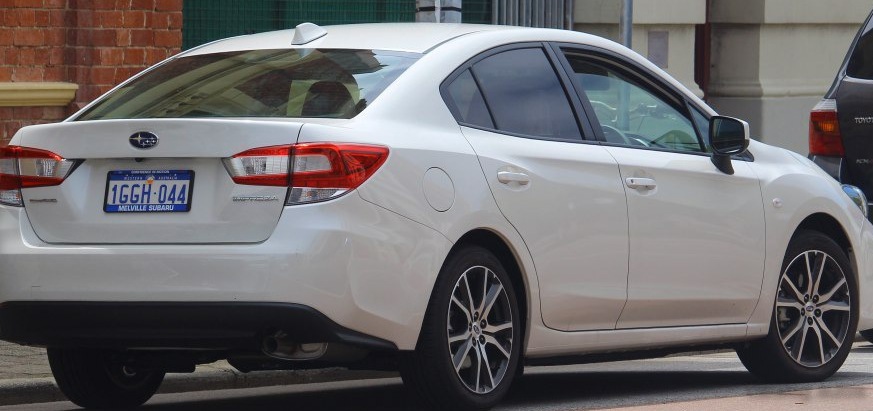
The Subaru Impreza V Sedan 2.0i, produced between 2016 and 2020, represents the fifth generation of Subaru’s popular compact car. Positioned as a mainstream offering within the Impreza lineup, the 2.0i variant aimed to provide a balance of fuel efficiency, standard all-wheel drive, and practicality for everyday driving. It served as the entry point to the Impreza sedan range, slotting below the more performance-oriented trims. This generation Impreza (internally designated as the GE/GP/GV series) marked a significant shift for Subaru, utilizing the Subaru Global Platform (SGP) which promised improved rigidity, safety, and driving dynamics. The 2.0i model was primarily sold in North America, Europe, and Australia, catering to buyers seeking a reliable and capable all-weather vehicle.
Technical Specifications
| Brand | Subaru |
| Model | Impreza |
| Generation | Impreza V Sedan |
| Type (Engine) | 2.0i (152 Hp) AWD |
| Start of production | 2016 |
| End of production | 2020 |
| Powertrain Architecture | Internal Combustion engine |
| Body type | Sedan |
| Seats | 5 |
| Doors | 4 |
| Fuel consumption (urban) | 9.8 l/100 km (24 US mpg) |
| Fuel consumption (extra urban) | 7.1 l/100 km (33.1 US mpg) |
| Fuel Type | Petrol (Gasoline) |
| Weight-to-power ratio | 8.3 kg/Hp |
| Weight-to-torque ratio | 6.4 kg/Nm |
| Power | 152 Hp @ 6000 rpm |
| Power per litre | 76.2 Hp/l |
| Torque | 197 Nm @ 4000 rpm (145.3 lb.-ft. @ 4000 rpm) |
| Engine layout | Front, Longitudinal |
| Engine Model/Code | FB20 |
| Engine displacement | 1995 cm3 (121.74 cu. in.) |
| Number of cylinders | 4 |
| Engine configuration | Boxer |
| Cylinder Bore | 84 mm (3.31 in.) |
| Piston Stroke | 90 mm (3.54 in.) |
| Number of valves per cylinder | 4 |
| Fuel injection system | Direct injection |
| Engine aspiration | Naturally aspirated engine |
| Valvetrain | DOHC |
| Engine oil capacity | 4.4 l (4.65 US qt | 3.87 UK qt) |
| Coolant | 7.8 l (8.24 US qt | 6.86 UK qt) |
| Kerb Weight | 1267 kg (2793.26 lbs.) |
| Fuel tank capacity | 50 l (13.21 US gal | 11 UK gal) |
| Length | 4625 mm (182.09 in.) |
| Width | 1778 mm (70 in.) |
| Height | 1455 mm (57.28 in.) |
| Wheelbase | 2670 mm (105.12 in.) |
| Front track | 1539 mm (60.59 in.) |
| Rear track | 1544 mm (60.79 in.) |
| Ride height (ground clearance) | 130 mm (5.12 in.) |
| Minimum turning circle | 10.7 m (35.1 ft.) |
| Drive wheel | All wheel drive (4×4) |
| Number of gears | 5 |
| Gearbox type | Manual transmission |
| Front suspension | Independent, McPherson with coil spring and anti-roll bar |
| Rear suspension | Double wishbone |
| Front brakes | Ventilated discs |
| Rear brakes | Disc |
| Assisting systems | ABS (Anti-lock braking system) |
| Steering type | Steering rack and pinion |
| Power steering | Electric |
| Tires size | 205/55 R16 89V |
| Wheel rims size | 6.5J x 16 |
Powertrain & Engine Architecture
The heart of the Impreza 2.0i is the FB20 2.0-liter naturally aspirated boxer engine. This engine is a hallmark of Subaru, known for its horizontally opposed pistons which contribute to a low center of gravity and reduced vibration. The FB20 utilizes direct fuel injection, enhancing fuel efficiency and responsiveness. The engine features a dual overhead camshaft (DOHC) valvetrain with four valves per cylinder. The 2.0i was exclusively paired with a 5-speed manual transmission in many markets, though a continuously variable transmission (CVT) was also offered as an option. The CVT aimed to improve fuel economy, but at the expense of some driver engagement. The engine’s longitudinal layout, combined with Subaru’s symmetrical all-wheel drive system, provides excellent traction and balanced handling.
Driving Characteristics
The 152 horsepower and 145 lb-ft of torque produced by the FB20 engine in the 2.0i Impreza provided adequate, but not exhilarating, performance. Acceleration from 0 to 60 mph typically took around 8.5-9.5 seconds. The 5-speed manual transmission offered a more connected driving experience, allowing drivers to better utilize the engine’s powerband. However, the gear ratios were somewhat widely spaced, requiring frequent shifting in everyday driving. Compared to higher-trim Impreza models equipped with the 2.5-liter engine, the 2.0i felt noticeably less powerful, particularly when fully loaded or climbing hills. The CVT-equipped models prioritized fuel economy over performance, often exhibiting a “rubber band” feel during acceleration. Despite the modest power output, the Impreza 2.0i’s all-wheel drive system provided confident handling in various weather conditions.
Equipment & Trim Levels
The Impreza 2.0i typically came standard with features such as air conditioning, power windows and locks, a basic audio system with Bluetooth connectivity, and Subaru’s EyeSight driver-assist technology (depending on the market and year). EyeSight included features like adaptive cruise control, lane departure warning, and automatic emergency braking. Interior upholstery was typically cloth, with a relatively simple dashboard layout. Optional extras included a sunroof, upgraded audio system, heated front seats, and keyless entry. The 2.0i trim generally represented the base level of equipment, with higher trims offering more luxurious features and styling enhancements.
Chassis & Braking
The Impreza V Sedan benefited from the new Subaru Global Platform, which increased structural rigidity by up to 70% compared to the previous generation. This resulted in improved handling and reduced noise, vibration, and harshness. The front suspension utilized McPherson struts with a coil spring and anti-roll bar, while the rear suspension employed a double wishbone setup. Braking duties were handled by ventilated discs at the front and solid discs at the rear. Anti-lock braking system (ABS) was standard. The suspension tuning was geared towards comfort and everyday usability, rather than outright sportiness. The all-wheel drive system employed a variable torque distribution system, automatically adjusting power delivery between the front and rear wheels based on driving conditions.
Market Reception & Comparison
The Impreza 2.0i was generally well-received by automotive critics as a practical and reliable compact car. Its standard all-wheel drive was a significant selling point, particularly in regions with inclement weather. Fuel economy was considered competitive for its class, although not class-leading. Compared to other trims in the Impreza lineup, the 2.0i offered a more affordable entry point, but at the cost of performance. The 2.5-liter models provided noticeably more power and a more refined driving experience. Competitors such as the Mazda3, Honda Civic, and Toyota Corolla offered similar levels of practicality and fuel efficiency, but typically lacked standard all-wheel drive.
Legacy
The FB20 engine, while not known for being a powerhouse, has proven to be a relatively reliable powertrain. Common issues are generally minor, such as oil consumption in some early models and occasional sensor failures. The Impreza V Sedan 2.0i remains a popular choice in the used car market, particularly for buyers seeking a dependable and affordable all-wheel drive vehicle. Its combination of practicality, safety features, and Subaru’s renowned reliability has ensured its continued appeal. The introduction of the SGP platform in this generation Impreza laid the foundation for future Subaru models, further enhancing their safety and driving dynamics.