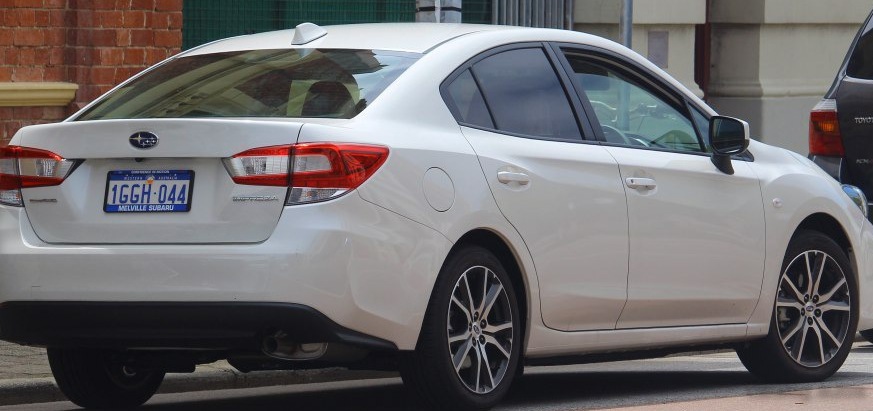
The Subaru Impreza V Sedan 2.0i, produced between 2016 and 2020, represents the fifth generation of Subaru’s popular compact car. This particular variant, equipped with a 2.0-liter naturally aspirated boxer engine and a Lineartronic continuously variable transmission (CVT), served as a key model within the Impreza lineup, offering a blend of standard all-wheel drive, fuel efficiency, and practicality. It was positioned as a mainstream offering, appealing to buyers seeking a reliable and capable daily driver. The Impreza V series (internally designated as the GE/GJ platform) marked a significant step forward in refinement and safety compared to previous generations.
Technical Specifications
| Brand | Subaru |
| Model | Impreza |
| Generation | Impreza V Sedan |
| Type (Engine) | 2.0i (152 Hp) AWD Lineartronic |
| Start of production | 2016 |
| End of production | 2020 |
| Powertrain Architecture | Internal Combustion engine |
| Body type | Sedan |
| Seats | 5 |
| Doors | 4 |
| Fuel consumption (urban) | 8.4 l/100 km (28 US mpg) |
| Fuel consumption (extra urban) | 6.1 l/100 km (38.6 US mpg) |
| Fuel Type | Petrol (Gasoline) |
| Weight-to-power ratio | 9.1 kg/Hp |
| Weight-to-torque ratio | 7 kg/Nm |
| Power | 152 Hp @ 6000 rpm |
| Power per litre | 76.2 Hp/l |
| Torque | 197 Nm @ 4000 rpm (145.3 lb.-ft. @ 4000 rpm) |
| Engine layout | Front, Longitudinal |
| Engine Model/Code | FB20 |
| Engine displacement | 1995 cm3 (121.74 cu. in.) |
| Number of cylinders | 4 |
| Engine configuration | Boxer |
| Cylinder Bore | 84 mm (3.31 in.) |
| Piston Stroke | 90 mm (3.54 in.) |
| Number of valves per cylinder | 4 |
| Fuel injection system | Direct injection |
| Engine aspiration | Naturally aspirated engine |
| Valvetrain | DOHC |
| Engine oil capacity | 4.4 l (4.65 US qt | 3.87 UK qt) |
| Coolant | 7.8 l (8.24 US qt | 6.86 UK qt) |
| Kerb Weight | 1376 kg (3033.56 lbs.) |
| Fuel tank capacity | 50 l (13.21 US gal | 11 UK gal) |
| Length | 4625 mm (182.09 in.) |
| Width | 1778 mm (70 in.) |
| Height | 1455 mm (57.28 in.) |
| Wheelbase | 2670 mm (105.12 in.) |
| Front track | 1539 mm (60.59 in.) |
| Rear track | 1544 mm (60.79 in.) |
| Ride height (ground clearance) | 130 mm (5.12 in.) |
| Minimum turning circle | 10.7 m (35.1 ft.) |
| Drive wheel | All wheel drive (4×4) |
| Number of gears and type of gearbox | automatic transmission Lineartronic |
| Front suspension | Independent, type McPherson with coil spring and anti-roll bar |
| Rear suspension | Double wishbone |
| Front brakes | Ventilated discs |
| Rear brakes | Disc |
| Assisting systems | ABS (Anti-lock braking system) |
| Steering type | Steering rack and pinion |
| Power steering | Electric Steering |
| Tires size | 205/55 R16 89V |
| Wheel rims size | 6.5J x 16 |
Powertrain & Engine Architecture
The heart of the Impreza 2.0i is the FB20 2.0-liter horizontally-opposed (boxer) four-cylinder engine. This engine is a hallmark of Subaru engineering, known for its smooth operation and inherent balance. The FB20 utilizes direct fuel injection, contributing to improved fuel efficiency and responsiveness. The engine produces 152 horsepower at 6000 rpm and 197 Nm (145.3 lb-ft) of torque at 4000 rpm. The Lineartronic CVT, replacing traditional stepped automatic transmissions, is designed to maximize fuel economy and provide seamless acceleration. It simulates gear changes through varying pulley ratios, offering a continuously adjustable drive. While not known for its sporty character, the Lineartronic CVT is programmed with simulated shift points to mimic a conventional automatic transmission for a more familiar driving experience.
Driving Characteristics
The 2.0i Lineartronic Impreza delivers a comfortable and predictable driving experience. The CVT prioritizes fuel efficiency, resulting in smooth, if not particularly exhilarating, acceleration. Compared to the available six-speed manual transmission, the CVT sacrifices some driver engagement but offers greater ease of use, especially in urban environments. The all-wheel-drive system provides excellent traction in various weather conditions, a key selling point for Subaru. The CVT’s continuously variable ratios help keep the engine within its optimal power band, but can sometimes feel disconnected from the engine’s output. The overall driving experience is geared towards practicality and comfort rather than performance.
Equipment & Trim Levels
The 2.0i trim level typically included standard features such as automatic climate control, a touchscreen infotainment system with Apple CarPlay and Android Auto compatibility, rearview camera, and Subaru’s EyeSight driver-assist technology, which includes adaptive cruise control, lane departure warning, and automatic emergency braking. Interior upholstery was generally cloth, with options for upgraded materials available. Optional extras included a power sunroof, premium audio system, and keyless access with push-button start. The Impreza 2.0i aimed to provide a well-equipped package at a competitive price point.
Chassis & Braking
The Impreza V Sedan utilizes a McPherson strut front suspension and a double-wishbone rear suspension, providing a comfortable ride and predictable handling. The chassis is designed to balance rigidity with weight savings. Braking duties are handled by ventilated discs at the front and solid discs at the rear. Anti-lock braking system (ABS) is standard, enhancing safety and control during emergency braking situations. The suspension tuning is geared towards everyday comfort, prioritizing ride quality over sporty handling. Stabilizer bars are included to reduce body roll during cornering.
Market Reception & Comparison
The Impreza 2.0i Lineartronic was generally well-received by automotive critics for its standard all-wheel drive, fuel efficiency, and comprehensive safety features. However, the CVT was often criticized for its lack of responsiveness and somewhat uninspiring driving experience. Compared to the more powerful 2.0i Premium trim with the manual transmission, the Lineartronic version offered less driver engagement but greater convenience. Against competitors like the Honda Civic and Toyota Corolla, the Impreza distinguished itself with its standard AWD, a feature not commonly found in this segment. Fuel economy figures were competitive, averaging around 28 mpg in city driving and 38 mpg on the highway.
Legacy
The FB20 engine, in general, has proven to be a reliable powerplant, with relatively few major issues reported. The Lineartronic CVT, while not without its critics, has also demonstrated reasonable durability with proper maintenance. In the used car market, the Impreza V Sedan 2.0i Lineartronic represents a good value proposition for buyers seeking a dependable and well-equipped compact car with all-wheel drive. Regular maintenance, including CVT fluid changes, is crucial for ensuring the longevity of the powertrain. The Impreza’s reputation for reliability and safety continues to make it a popular choice among used car shoppers.