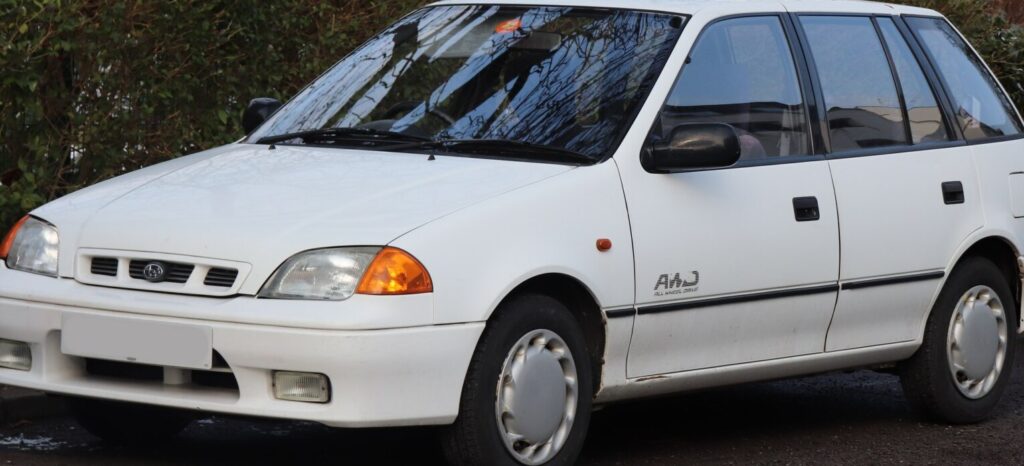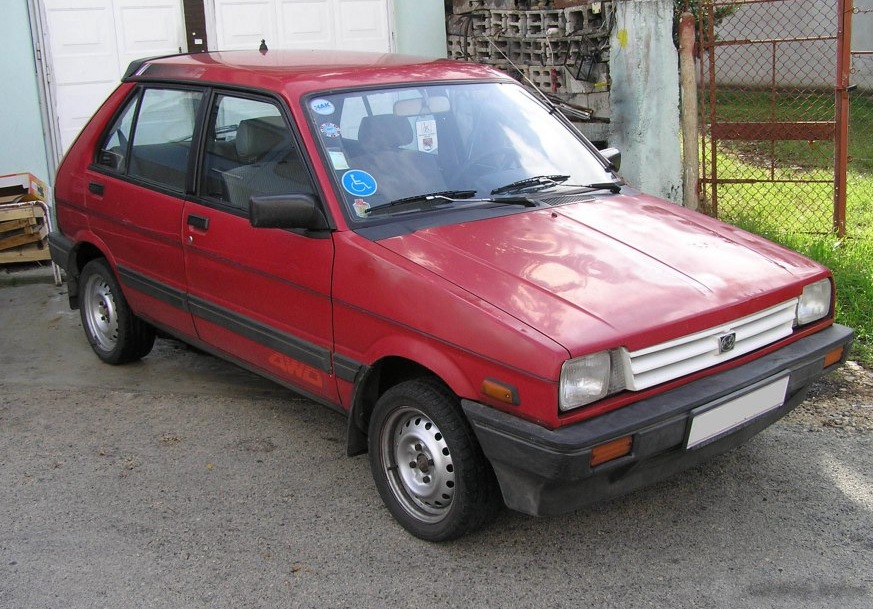
The Subaru Justy I (KAD) 1200 4WD, produced between 1986 and 1990, represents a unique entry in Subaru’s early lineup. Positioned as a small, affordable, and surprisingly capable vehicle, the Justy aimed to provide economical transportation with the added benefit of all-wheel drive – a Subaru hallmark. This first-generation Justy, designated chassis code KAD, was a key part of Subaru’s strategy to broaden its appeal beyond the more rugged, performance-oriented models it was known for. It occupied the entry-level position in Subaru’s range, offering a more accessible price point than the larger Leone or RX models. The 1200 4WD variant, powered by the J12 engine, was particularly significant as it combined Subaru’s all-wheel-drive system with a small displacement engine, focusing on fuel efficiency and practicality.
Technical Specifications
| Brand | Subaru |
| Model | Justy |
| Generation | Justy I (KAD) |
| Type (Engine) | 1200 4WD (68 Hp) |
| Start of production | 1986 |
| End of production | 1990 |
| Powertrain Architecture | Internal Combustion engine |
| Body type | Hatchback |
| Fuel Type | Petrol (Gasoline) |
| Power | 68 Hp |
| Engine Model/Code | J12 |
| Engine aspiration | Naturally aspirated engine |
| Engine oil capacity | 2.8 l (2.96 US qt | 2.46 UK qt) |
| Coolant capacity | 4.9 l (5.18 US qt | 4.31 UK qt) |
| Fuel tank capacity | 35 l (9.25 US gal | 7.7 UK gal) |
Powertrain & Engine Architecture
The heart of the Justy 1200 4WD is the J12 engine, a 1.2-liter (1189cc) naturally aspirated, three-cylinder petrol engine. This engine, while modest in output, was designed for efficiency and reliability. It featured a single overhead camshaft (SOHC) valvetrain operating two valves per cylinder. Fuel delivery was managed by a carburetor, a common feature for vehicles of this era, prioritizing simplicity over the more complex fuel injection systems. The J12 produced 68 horsepower at approximately 6,000 rpm and around 78 lb-ft of torque at 3,600 rpm. The engine’s relatively low compression ratio (typically around 9.5:1) contributed to its ability to run on lower octane fuel, further enhancing its affordability.
The transmission paired with the J12 in the 4WD variant was a four-speed manual gearbox. An optional three-speed automatic transmission was available, but the manual was more common, particularly in markets where fuel economy was a primary concern. The all-wheel-drive system was a part-time system, engaging the rear wheels when traction was needed. It wasn’t a sophisticated system like later Subaru AWD setups, but it provided a noticeable improvement in grip on slippery surfaces.
Driving Characteristics
The Justy 1200 4WD’s driving experience was defined by its lightweight construction and modest power output. Acceleration was leisurely, with 0-60 mph times estimated to be around 15-17 seconds. However, the all-wheel-drive system provided a surefootedness that belied its size and power. The car felt stable and predictable in corners, and the 4WD system offered enhanced traction on loose gravel or in inclement weather. The four-speed manual transmission offered a reasonable spread of gears, allowing the driver to keep the engine in its optimal power band. The automatic transmission, while offering convenience, noticeably reduced performance and fuel economy. The steering was light and responsive, making the Justy easy to maneuver in urban environments. Ride quality was acceptable for a vehicle in this class, though it could be somewhat firm on rough roads.
Equipment & Trim Levels
The Justy 1200 4WD was typically offered with a fairly basic level of equipment, reflecting its position as an entry-level vehicle. Standard features generally included cloth upholstery, a basic instrument cluster, and manual windows and door locks. Air conditioning and a radio were often optional extras. Interior trim was functional rather than luxurious, with hard plastic surfaces dominating the cabin. The rear seats were typically split-folding, allowing for increased cargo capacity. Exterior features were similarly simple, with steel wheels, black plastic bumpers, and minimal chrome trim. Higher trim levels, if available, might have included features like upgraded upholstery, a more comprehensive instrument cluster, and body-colored bumpers.
Chassis & Braking
The Justy I (KAD) utilized a relatively simple chassis design. It featured a MacPherson strut front suspension and a trailing arm rear suspension. The suspension was tuned for comfort and ride quality, rather than sporty handling. Braking was typically accomplished with disc brakes on the front wheels and drum brakes on the rear. The braking system was adequate for the vehicle’s weight and performance, but it lacked the sophistication of more modern braking systems. Steering was rack and pinion, providing a reasonably direct feel. The car’s lightweight construction contributed to its nimble handling characteristics.
Market Reception & Comparison
The Subaru Justy 1200 4WD was generally well-received as an affordable and practical small car with the added benefit of all-wheel drive. Critics praised its fuel efficiency and its ability to handle challenging road conditions. However, some reviewers noted its lack of power and its somewhat basic interior. Compared to other small cars of the era, such as the Fiat Panda or the Renault 5, the Justy stood out for its all-wheel-drive system, which provided a significant advantage in terms of traction and stability. Compared to other Subaru models, like the Leone, the Justy offered a more affordable entry point into the brand, appealing to a different segment of the market. The 1.8L versions of the Justy, while offering more power, were significantly more expensive and less fuel-efficient.
Legacy
The Subaru Justy I (KAD) 1200 4WD holds a unique place in Subaru’s history as the brand’s first foray into the truly affordable small car segment. While not a performance icon, it demonstrated Subaru’s commitment to all-wheel drive technology and its ability to offer it in a compact and economical package. Today, the Justy I is a relatively rare sight on the roads, but it has gained a following among collectors and enthusiasts who appreciate its simplicity, reliability, and unique character. The J12 engine, while not known for its high performance, is generally considered to be a durable and reliable unit, and well-maintained examples can still provide years of service. The car’s relatively simple construction makes it relatively easy to maintain and repair, further adding to its appeal among enthusiasts. The Justy I paved the way for future Subaru models, demonstrating the brand’s ability to innovate and offer a diverse range of vehicles to meet the needs of different customers.