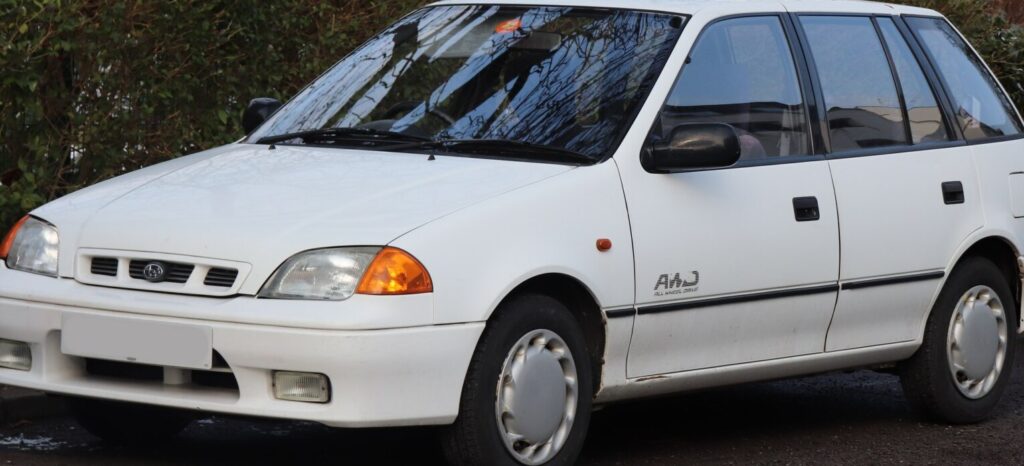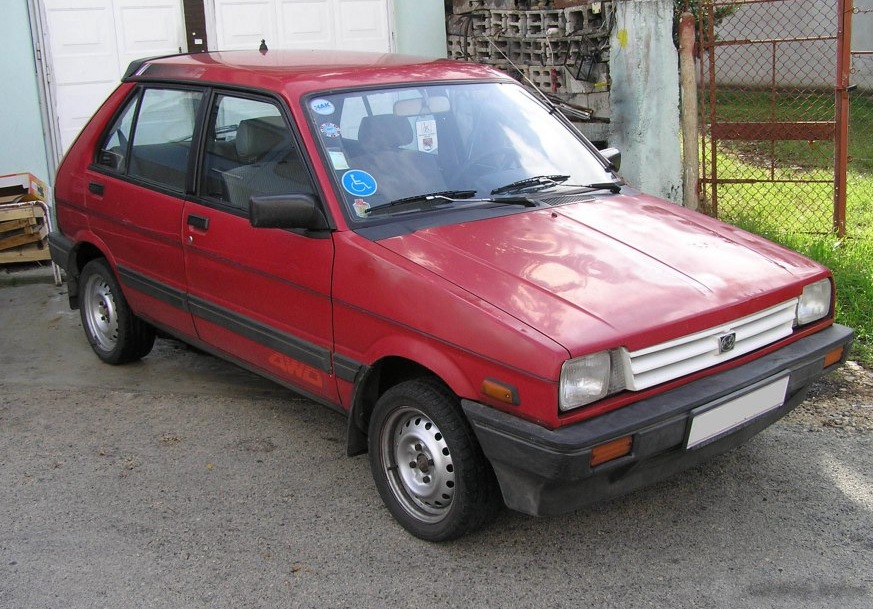
The Subaru Justy I (KAD) 1200, produced from 1987 to 1995, represents Subaru’s entry into the burgeoning microcar segment, particularly aimed at the European and Japanese markets. This first generation Justy, designated chassis code KAD, was a collaborative effort with Daihatsu, leveraging their expertise in small-displacement engines and efficient packaging. The 1200 variant, powered by the J12 engine producing 67 horsepower, served as the base model, offering affordable transportation and Subaru’s renowned all-wheel-drive capability in a compact form. It was positioned as a practical and economical alternative to larger, more expensive vehicles, appealing to urban drivers and those seeking a second car for short trips.
Technical Specifications
| Brand | Subaru |
| Model | Justy |
| Generation | Justy I (KAD) |
| Type (Engine) | 1200 (67 Hp) |
| Start of production | 1987 |
| End of production | 1995 |
| Powertrain Architecture | Internal Combustion engine |
| Body type | Hatchback |
| Fuel Type | Petrol (Gasoline) |
| Power | 67 Hp |
| Engine Model/Code | J12 |
| Engine aspiration | Naturally aspirated engine |
| Engine oil capacity | 2.8 l (2.96 US qt | 2.46 UK qt) |
| Coolant capacity | 4.9 l (5.18 US qt | 4.31 UK qt) |
| Fuel tank capacity | 35 l (9.25 US gal | 7.7 UK gal) |
Powertrain & Engine Architecture
The heart of the Justy 1200 is the Subaru J12 engine, a 1.2-liter (1196 cc) three-cylinder, four-stroke petrol engine. This engine, developed in collaboration with Daihatsu, features a single overhead camshaft (SOHC) operating two valves per cylinder. The J12 is a naturally aspirated engine, meaning it doesn’t employ a turbocharger or supercharger. Fuel delivery is managed by a carburetor in earlier models, transitioning to electronic fuel injection (EFI) in later years, improving fuel efficiency and reducing emissions. The engine’s relatively simple design prioritized reliability and ease of maintenance. The J12 produces 67 horsepower at 6000 rpm and approximately 73 lb-ft of torque at 4800 rpm. The engine is typically paired with a four-speed manual transmission, although a three-speed automatic transmission was also available, albeit less common. The automatic transmission, while offering convenience, noticeably impacted acceleration and fuel economy.
Driving Characteristics
The Subaru Justy 1200, even with the manual transmission, wasn’t designed for outright performance. Acceleration from 0 to 60 mph takes approximately 14-16 seconds, and top speed is around 90 mph. The 67 horsepower engine feels adequate for city driving and navigating smaller roads, but struggles when fully loaded or attempting to overtake on highways. The automatic transmission further diminishes performance, with sluggish gear changes and a noticeable power loss. However, the Justy’s compact size and light weight (around 1,650 lbs) contribute to nimble handling. The standard all-wheel-drive system, a hallmark of Subaru, provides enhanced traction and stability, particularly in inclement weather. The steering is light and responsive, making it easy to maneuver in tight spaces. The suspension, while basic, offers a reasonably comfortable ride, absorbing bumps and imperfections in the road surface.
Equipment & Trim Levels
The Justy 1200, as the base model, was relatively sparsely equipped. Standard features typically included cloth upholstery, a basic instrument cluster, and manual windows and door locks. Air conditioning was often an optional extra, as were power steering and a radio. Interior trim was functional and durable, prioritizing practicality over luxury. Later models saw the addition of features like a more modern dashboard design and improved seat fabrics. The Justy was available in a range of exterior colors, typically solid colors like white, red, and blue. The overall interior design was minimalist, reflecting the car’s affordable price point.
Chassis & Braking
The Justy I (KAD) utilizes a front-engine, all-wheel-drive layout. The chassis is a monocoque construction, providing a good balance of rigidity and weight. The suspension consists of MacPherson struts at the front and a twist-beam axle at the rear. Braking is typically accomplished with disc brakes at the front and drum brakes at the rear. The braking system is adequate for the car’s weight and performance, but lacks the stopping power of more modern vehicles. Steering is rack and pinion, providing precise control. The all-wheel-drive system employs a viscous coupling to distribute torque between the front and rear axles, automatically adjusting to maintain optimal traction.
Market Reception & Comparison
The Subaru Justy 1200 was generally well-received as an affordable and practical city car. Critics praised its all-wheel-drive capability, fuel efficiency (around 45-50 mpg), and compact size. However, the engine’s lack of power was a common criticism, particularly when paired with the automatic transmission. Compared to other microcars of the era, such as the Fiat Panda and the Citroën AX, the Justy offered the advantage of all-wheel drive, setting it apart from the competition. The 1.3L and 1.6L variants of the Justy offered significantly improved performance, but at a higher price point. The 1200 model appealed to buyers prioritizing economy and practicality over outright speed.
Legacy
The Subaru Justy I (KAD) 1200, while not a performance icon, holds a significant place in Subaru’s history as their first foray into the microcar segment. The J12 engine, while simple, proved to be relatively reliable, and many examples are still on the road today. The car’s all-wheel-drive system established a precedent for Subaru’s commitment to all-weather capability. In the used car market, the Justy 1200 remains an affordable and practical option for those seeking a basic, reliable, and economical vehicle. Maintenance is generally straightforward, and parts are still reasonably available. However, potential buyers should be aware of the engine’s limited power and the potential for rust, particularly in vehicles that have spent time in harsh climates. The Justy paved the way for future Subaru models and solidified the brand’s reputation for building durable and capable vehicles.