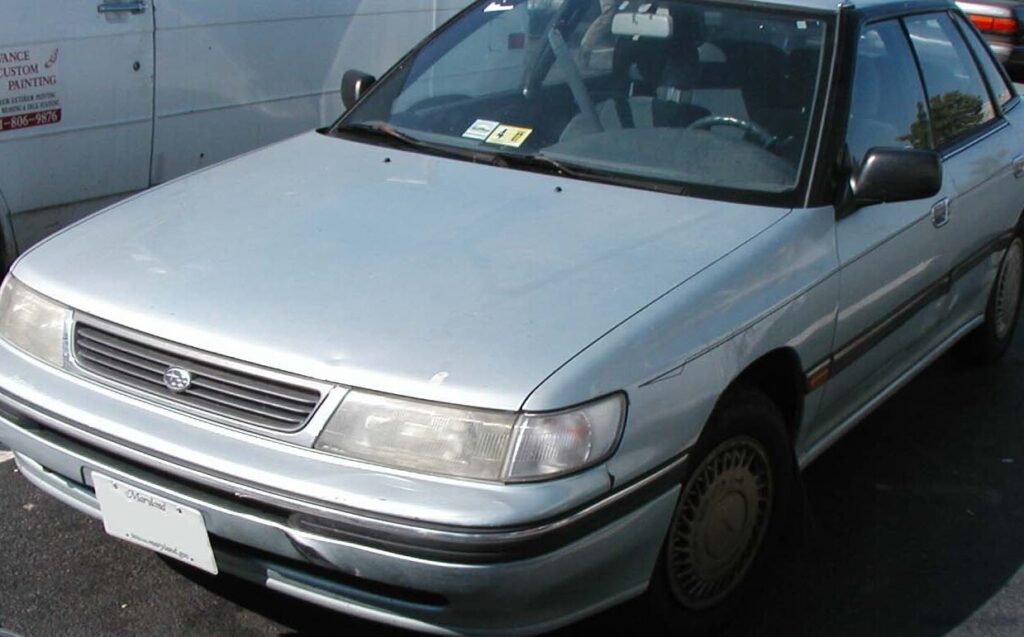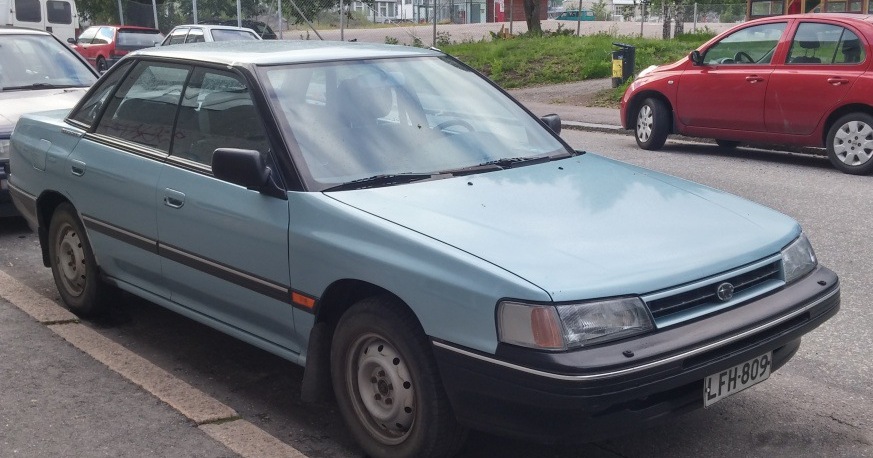
The Subaru Legacy I (BC) 2200, produced between 1989 and 1991, represented Subaru’s entry into the mid-size sedan market, aiming to provide a more spacious and refined alternative to their smaller offerings. This particular variant, equipped with a 2.2-liter naturally aspirated boxer engine producing 136 horsepower and paired with a four-speed automatic transmission, and all-wheel drive, occupied a middle ground within the Legacy lineup. It wasn’t the sportiest option – that role fell to manual transmission variants – nor was it the most economical, but it offered a compelling blend of comfort, practicality, and Subaru’s signature symmetrical all-wheel drive system. The BC series was the first generation of the Legacy, built on Subaru’s new “C Platform” and was a significant departure from the front-wheel drive Leone models that previously defined the brand in many markets.
Technical Specifications
| Brand | Subaru |
| Model | Legacy |
| Generation | Legacy I (BC) |
| Type | 2200 (136 Hp) AWD Automatic |
| Start of production | 1989 |
| End of production | 1991 |
| Powertrain Architecture | Internal Combustion engine |
| Body type | Sedan |
| Seats | 5 |
| Doors | 4 |
| Fuel consumption (urban) | 13.8 l/100 km (17 US mpg, 20.5 UK mpg, 7.2 km/l) |
| Fuel consumption (extra urban) | 7.5 l/100 km (31.4 US mpg, 37.7 UK mpg, 13.3 km/l) |
| Fuel consumption (combined) | 9.7 l/100 km (24.2 US mpg, 29.1 UK mpg, 10.3 km/l) |
| Fuel Type | Petrol (Gasoline) |
| Maximum speed | 192 km/h (119.3 mph) |
| Weight-to-power ratio | 9.6 kg/Hp, 104.6 Hp/tonne |
| Weight-to-torque ratio | 6.9 kg/Nm, 145.4 Nm/tonne |
| Power | 136 Hp @ 6000 rpm |
| Power per litre | 61.5 Hp/l |
| Torque | 189 Nm @ 4800 rpm (139.4 lb.-ft. @ 4800 rpm) |
| Engine layout | Front, Longitudinal |
| Engine Model/Code | EJ22E |
| Engine displacement | 2212 cm3 (134.98 cu. in.) |
| Number of cylinders | 4 |
| Engine configuration | Boxer |
| Cylinder Bore | 97 mm (3.82 in.) |
| Piston Stroke | 75 mm (2.95 in.) |
| Compression ratio | 9.5:1 |
| Number of valves per cylinder | 4 |
| Fuel injection system | Multi-port manifold injection |
| Engine aspiration | Naturally aspirated |
| Engine oil capacity | 4.5 l (4.76 US qt | 3.96 UK qt) |
| Coolant capacity | 5.9 l (6.23 US qt | 5.19 UK qt) |
| Kerb Weight | 1300 kg (2866.01 lbs.) |
| Max. weight | 1425 kg (3141.59 lbs.) |
| Max load | 125 kg (275.58 lbs.) |
| Trunk (boot) space – minimum | 405 l (14.3 cu. ft.) |
| Trunk (boot) space – maximum | 630 l (22.25 cu. ft.) |
| Fuel tank capacity | 60 l (15.85 US gal | 13.2 UK gal) |
| Length | 4510 mm (177.56 in.) |
| Width | 1690 mm (66.54 in.) |
| Height | 1385 mm (54.53 in.) |
| Wheelbase | 2580 mm (101.57 in.) |
| Front track | 1475 mm (58.07 in.) |
| Rear track | 1460 mm (57.48 in.) |
| Minimum turning circle | 10.1 m (33.14 ft.) |
| Drive wheel | All wheel drive (4×4) |
| Number of gears | 4 |
| Gearbox type | Automatic transmission |
| Front suspension | Wishbone |
| Rear suspension | Several levers and rods |
| Front brakes | Ventilated discs |
| Rear brakes | Disc |
| Assisting systems | ABS (Anti-lock braking system) |
| Steering type | Steering rack and pinion |
| Power steering | Hydraulic |
| Tires size | 175/70 R14 |
| Wheel rims size | 14 |
Powertrain & Engine Architecture
The heart of the Legacy I 2200 Automatic is the EJ22E engine, a 2.2-liter horizontally opposed four-cylinder, commonly known as a boxer engine. This configuration, a Subaru hallmark, provides a low center of gravity, contributing to improved handling. The EJ22E utilizes multi-port fuel injection, delivering fuel directly into the intake ports, and a single overhead camshaft (SOHC) design with four valves per cylinder. This engine produced 136 horsepower at 6000 rpm and 189 Nm (139.4 lb-ft) of torque at 4800 rpm. The four-speed automatic transmission was a conventional hydraulic unit, offering smooth but not particularly quick shifts. It was designed to provide comfortable cruising rather than sporty acceleration. The engine’s longitudinal mounting, combined with the all-wheel drive system, required a more complex drivetrain layout than traditional front-wheel drive cars.
Driving Characteristics
The 2200 Automatic offered a comfortable and predictable driving experience. The automatic transmission, while not offering manual control, provided smooth gear changes suitable for everyday driving. Acceleration was adequate, but not brisk, with the 0-60 mph time estimated around 10-11 seconds. The all-wheel drive system provided enhanced traction, particularly in inclement weather, making it a capable all-season vehicle. Compared to the five-speed manual versions of the 2200, the automatic suffered a noticeable performance deficit. The manual transmission allowed the engine to operate in its optimal power band more effectively. The automatic’s gear ratios were geared towards fuel efficiency and comfort, rather than outright performance.
Equipment & Trim Levels
The Legacy I 2200 Automatic typically came with a reasonable level of standard equipment for its time. This included power steering, a basic audio system, cloth upholstery, and manual windows and locks. Air conditioning was often an optional extra. The interior design was functional and straightforward, prioritizing practicality over luxury. Higher trim levels, if available in specific markets, might have added features like upgraded audio systems, power windows, and central locking. The dashboard layout was clean and easy to use, with clearly marked controls.
Chassis & Braking
The Legacy I featured a MacPherson strut front suspension and a multi-link rear suspension, providing a comfortable ride and decent handling. The chassis was designed to balance rigidity with weight savings. The braking system consisted of ventilated discs on the front wheels and solid discs on the rear, providing adequate stopping power for the vehicle’s weight and performance. An Anti-lock Braking System (ABS) was available, enhancing safety by preventing wheel lockup during hard braking. The steering was a rack-and-pinion system with hydraulic power assistance, offering precise and responsive steering feel.
Market Reception & Comparison
The Subaru Legacy I was generally well-received by automotive critics, who praised its spacious interior, comfortable ride, and standard all-wheel drive. However, the automatic transmission was sometimes criticized for its lack of responsiveness and its impact on fuel economy. Compared to other mid-size sedans of the era, the Legacy offered a unique combination of features, particularly its all-wheel drive system, which was relatively uncommon in that segment. Fuel economy was average for the time, with combined figures around 24.2 US mpg. Reliability was generally good, although the EJ22E engine was known to be susceptible to head gasket failures in some cases, a common issue with early Subaru boxer engines.
Legacy
The Subaru Legacy I established the Legacy as a credible competitor in the mid-size sedan market. The 2200 Automatic, while not the most exciting variant, proved to be a popular choice for buyers seeking a comfortable, practical, and all-weather capable vehicle. Today, these cars are relatively rare, and well-maintained examples are sought after by Subaru enthusiasts. The EJ22E engine, while prone to certain issues, is relatively straightforward to work on, and parts are still available. The Legacy I’s enduring appeal lies in its combination of practicality, reliability, and the unique driving experience offered by Subaru’s symmetrical all-wheel drive system.