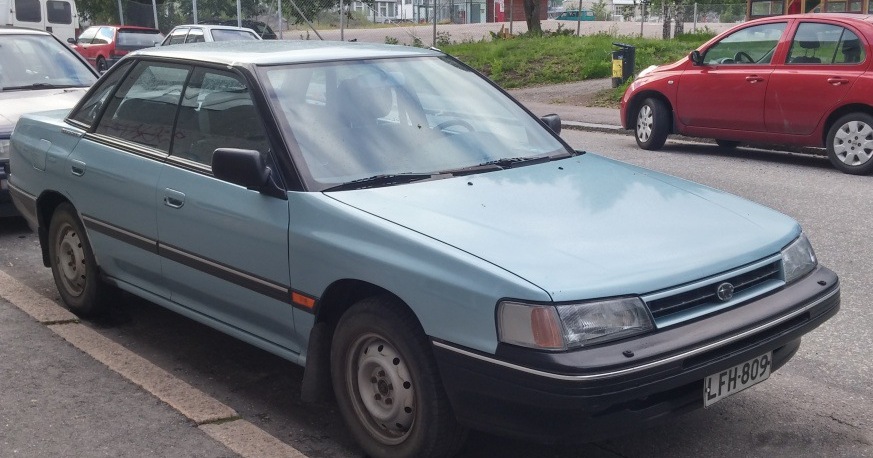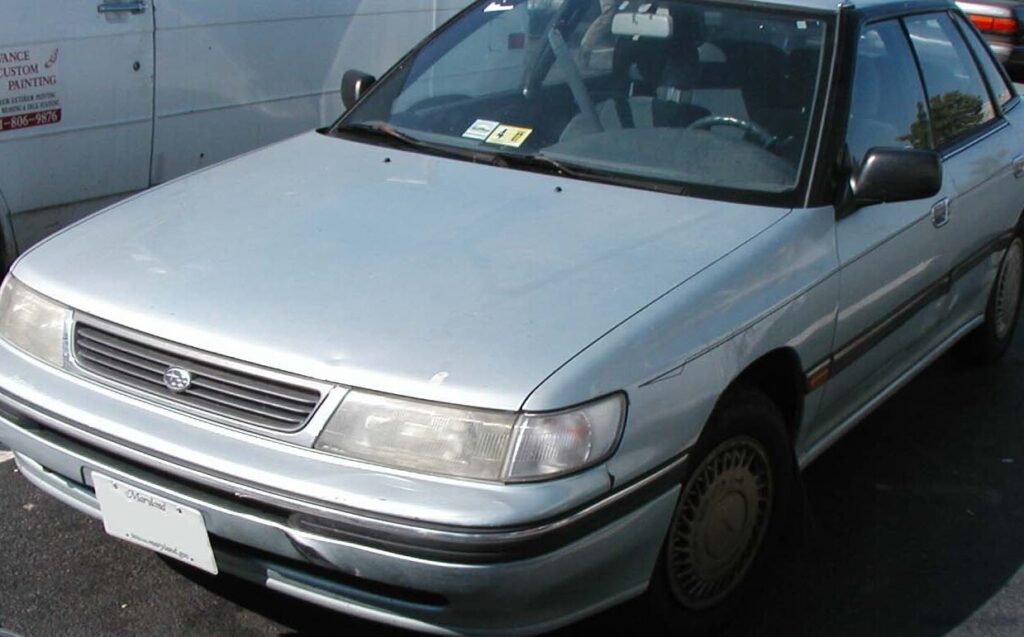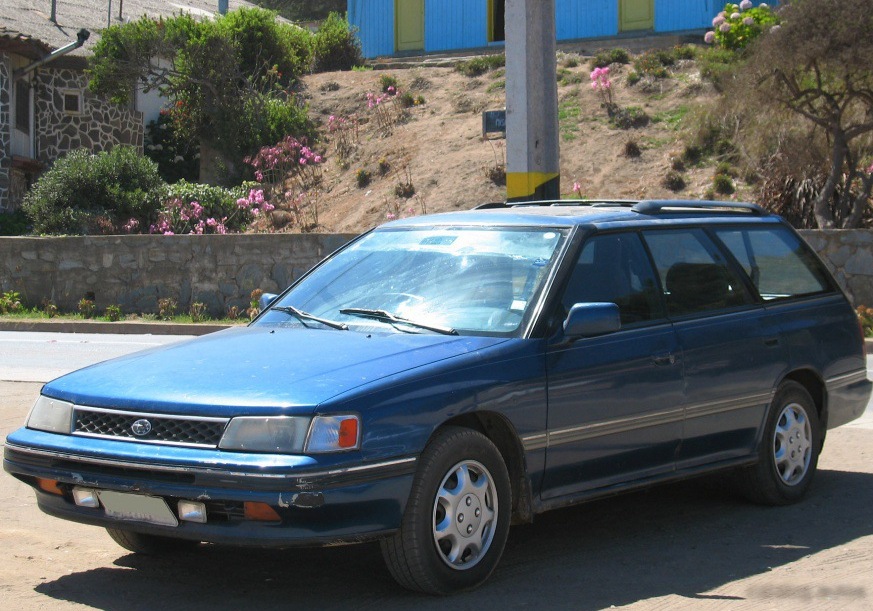
The Subaru Legacy I Station Wagon (BJF) 2200, produced between 1989 and 1991, represented Subaru’s entry into the competitive mid-size wagon market. This variant, equipped with the 2.2-liter EJ22E engine producing 136 horsepower and paired with a five-speed manual transmission, was a key offering within the first generation Legacy (BJ) lineup, which spanned from 1989 to 1994. The BJF model specifically targeted buyers seeking a practical, all-weather vehicle with a focus on space and utility, capitalizing on Subaru’s established reputation for symmetrical all-wheel drive. It was positioned as a step up from the base 1.8L models, offering increased performance and a more refined driving experience.
Technical Specifications
| Brand | Subaru |
| Model | Legacy |
| Generation | Legacy I Station Wagon (BJF) |
| Type (Engine) | 2200 (136 Hp) AWD |
| Start of production | 1989 |
| End of production | 1991 |
| Powertrain Architecture | Internal Combustion engine |
| Body type | Station wagon (estate) |
| Seats | 5 |
| Doors | 5 |
| Fuel consumption (urban) | 13.1 l/100 km (18 US mpg, 21.6 UK mpg, 7.6 km/l) |
| Fuel consumption (extra urban) | 7.5 l/100 km (31.4 US mpg, 37.7 UK mpg, 13.3 km/l) |
| Fuel consumption (combined) | 9.4 l/100 km (25 US mpg, 30.1 UK mpg, 10.6 km/l) |
| Fuel Type | Petrol (Gasoline) |
| Acceleration 0 – 100 km/h | 9.5 sec |
| Acceleration 0 – 62 mph | 9.5 sec |
| Acceleration 0 – 60 mph | 9 sec |
| Maximum speed | 193 km/h (119.92 mph) |
| Weight-to-power ratio | 10.1 kg/Hp, 98.6 Hp/tonne |
| Weight-to-torque ratio | 7.3 kg/Nm, 137 Nm/tonne |
| Power | 136 Hp @ 6000 rpm |
| Power per litre | 61.5 Hp/l |
| Torque | 189 Nm @ 4800 rpm (139.4 lb.-ft. @ 4800 rpm) |
| Engine layout | Front, Longitudinal |
| Engine Model/Code | EJ22E |
| Engine displacement | 2212 cm3 (134.98 cu. in.) |
| Number of cylinders | 4 |
| Engine configuration | Boxer |
| Cylinder Bore | 97 mm (3.82 in.) |
| Piston Stroke | 75 mm (2.95 in.) |
| Compression ratio | 9.5:1 |
| Number of valves per cylinder | 4 |
| Fuel injection system | Multi-port manifold injection |
| Engine aspiration | Naturally aspirated engine |
| Engine oil capacity | 4.5 l (4.76 US qt | 3.96 UK qt) |
| Coolant capacity | 5.9 l (6.23 US qt | 5.19 UK qt) |
| Kerb Weight | 1380 kg (3042.38 lbs.) |
| Trunk (boot) space – minimum | 420 l (14.83 cu. ft.) |
| Trunk (boot) space – maximum | 1550 l (54.74 cu. ft.) |
| Fuel tank capacity | 60 l (15.85 US gal | 13.2 UK gal) |
| Length | 4600 mm (181.1 in.) |
| Width | 1690 mm (66.54 in.) |
| Height | 1480 mm (58.27 in.) |
| Wheelbase | 2580 mm (101.57 in.) |
| Front track | 1470 mm (57.87 in.) |
| Rear track | 1460 mm (57.48 in.) |
| Drive wheel | All wheel drive (4×4) |
| Number of gears | 5 gears, manual transmission |
| Front suspension | Wishbone |
| Rear suspension | Several levers and rods |
| Front brakes | Ventilated discs |
| Rear brakes | Disc |
| Assisting systems | ABS (Anti-lock braking system) |
| Steering type | Steering rack and pinion |
| Power steering | Hydraulic Steering |
| Tires size | 185/70 R14 |
| Wheel rims size | 14 |
Powertrain & Engine Architecture
The heart of the BJF 2200 was the EJ22E, a 2.2-liter horizontally-opposed (boxer) four-cylinder engine. This engine design, a Subaru hallmark, offered inherent balance and a lower center of gravity, contributing to the car’s handling characteristics. The EJ22E featured multi-port fuel injection, providing precise fuel delivery for improved efficiency and performance. The engine utilized a single overhead camshaft (SOHC) valvetrain with four valves per cylinder. The five-speed manual transmission was a robust unit, designed to handle the engine’s torque output and provide a responsive driving experience. The longitudinally mounted engine and all-wheel drive system required a more complex drivetrain layout compared to front-wheel drive vehicles, but it delivered superior traction in various conditions.
Driving Characteristics
The 136 horsepower and 189 Nm (139.4 lb-ft) of torque provided by the EJ22E engine offered a respectable level of performance for its time. Acceleration from 0 to 60 mph took approximately 9 seconds, and the car could reach a top speed of 193 km/h (119.92 mph). While not a sports car, the Legacy 2200 offered sufficient power for comfortable highway cruising and overtaking. Compared to the base 1.8L models, the 2200 provided noticeably more punch, especially at higher speeds. The all-wheel drive system instilled confidence in slippery conditions, making it a practical choice for regions with inclement weather. The manual transmission allowed for greater driver control, but the gear ratios were tuned for fuel economy and everyday usability rather than outright performance.
Equipment & Trim Levels
The BJF 2200 typically came equipped with features considered standard for a mid-size wagon in the late 1980s and early 1990s. This included power steering, a basic audio system, and cloth upholstery. Higher trim levels, often denoted by additional badging, could add features like alloy wheels, upgraded audio systems, and power windows. The interior design was functional and straightforward, prioritizing practicality over luxury. Optional extras included a sunroof, air conditioning, and upgraded seat materials.
Chassis & Braking
The Legacy I Station Wagon utilized a wishbone front suspension and a multi-link rear suspension, providing a comfortable ride and decent handling. The chassis was designed to accommodate the all-wheel drive system and provide a stable platform. Braking duties were handled by ventilated discs at the front and solid discs at the rear. An anti-lock braking system (ABS) was available, enhancing safety by preventing wheel lockup during hard braking. The steering was rack and pinion, offering precise control and a reasonable turning radius.
Market Reception & Comparison
The Subaru Legacy I Station Wagon, particularly the 2200 AWD variant, was well-received by critics for its practicality, all-weather capability, and relatively spacious interior. It was often praised for its robust build quality and reliable drivetrain. Compared to competitors like the Toyota Camry Wagon or Honda Accord Wagon, the Legacy offered the advantage of standard all-wheel drive, making it a compelling choice for buyers in regions with snow or challenging road conditions. Fuel economy was average for the class, with combined consumption around 9.4 l/100 km (25 US mpg). The 2200 model offered a better balance of performance and fuel economy compared to the larger, less efficient engine options.
Legacy
The EJ22E engine, while generally reliable, is now showing its age. Common issues in used examples include oil leaks, particularly from the valve cover gaskets, and potential for head gasket failure. The all-wheel drive system requires regular maintenance, including fluid changes, to ensure optimal performance. Despite these potential issues, the Legacy I Station Wagon 2200 remains a popular choice among Subaru enthusiasts and those seeking a classic, practical wagon. Its robust construction and all-weather capability have ensured its longevity, and well-maintained examples can still provide years of reliable service. The BJF model represents a significant step in Subaru’s evolution as a manufacturer of capable and dependable vehicles.