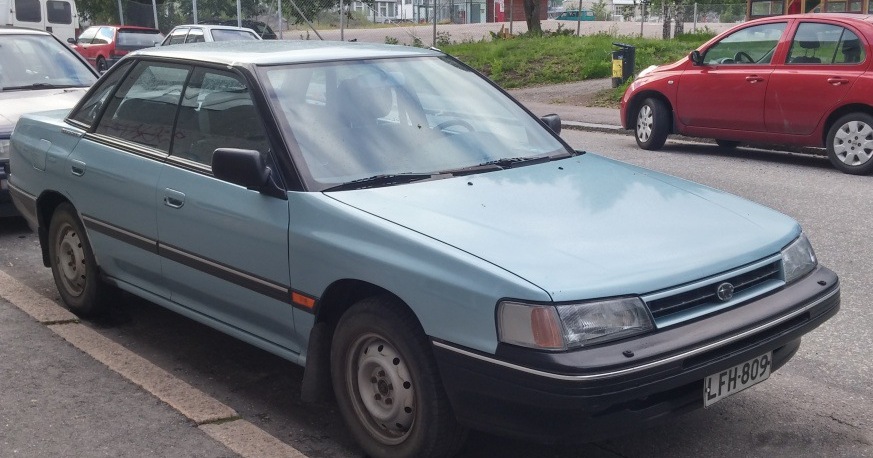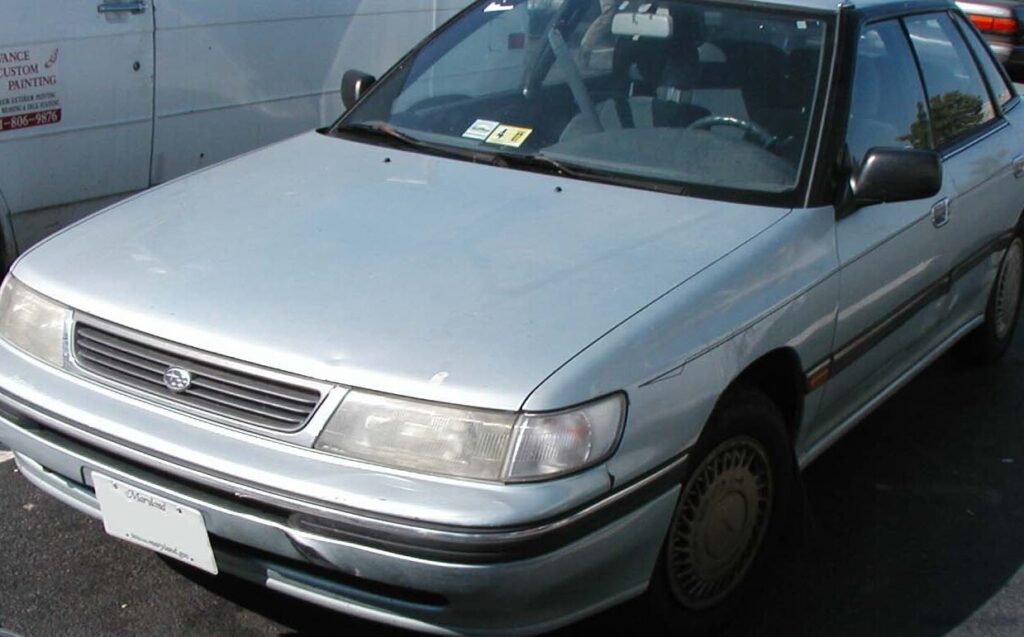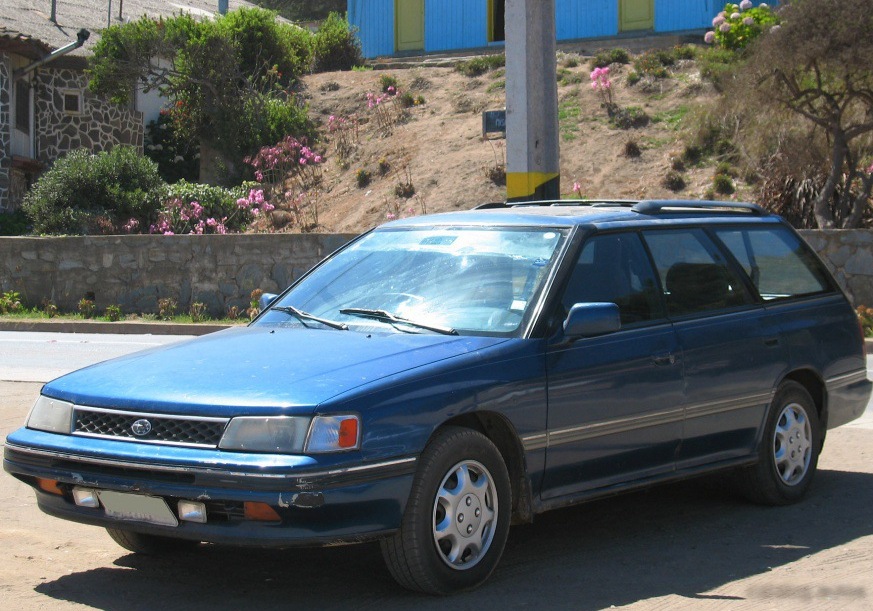
The Subaru Legacy I Station Wagon, specifically the BJF model produced between 1989 and 1991, represented a significant step forward for the Japanese automaker in the competitive mid-size wagon segment. This variant, equipped with a 2.0-liter turbocharged engine producing 200 horsepower and all-wheel drive (AWD), was positioned as the performance-oriented flagship of the first-generation Legacy wagon lineup. It aimed to appeal to buyers seeking a practical family vehicle with enhanced driving dynamics and all-weather capability. The BJF model was primarily sold in Japan and select European markets, offering a unique blend of practicality and performance not commonly found in wagons of the era.
Technical Specifications
| Brand | Subaru |
| Model | Legacy |
| Generation | Legacy I Station Wagon (BJF) |
| Type (Engine) | 2000 turbo (200 Hp) AWD |
| Start of production | 1989 |
| End of production | 1991 |
| Powertrain Architecture | Internal Combustion engine |
| Body type | Station wagon (estate) |
| Seats | 5 |
| Doors | 5 |
| Fuel consumption (urban) | 12.3 l/100 km (19.1 US mpg, 23 UK mpg, 8.1 km/l) |
| Fuel consumption (extra urban) | 7.4 l/100 km (31.8 US mpg, 38.2 UK mpg, 13.5 km/l) |
| Fuel consumption (combined) | 9 l/100 km (26.1 US mpg, 31.4 UK mpg, 11.1 km/l) |
| Fuel Type | Petrol (Gasoline) |
| Weight-to-power ratio | 7.2 kg/Hp, 139.9 Hp/tonne |
| Weight-to-torque ratio | 5.5 kg/Nm, 181.8 Nm/tonne |
| Power | 200 Hp @ 6000 rpm |
| Power per litre | 100.3 Hp/l |
| Torque | 260 Nm @ 3600 rpm (191.77 lb.-ft. @ 3600 rpm) |
| Engine layout | Front, Longitudinal |
| Engine Model/Code | EJ20G |
| Engine displacement | 1994 cm3 (121.68 cu. in.) |
| Number of cylinders | 4 |
| Engine configuration | Boxer |
| Cylinder Bore | 92 mm (3.62 in.) |
| Piston Stroke | 75 mm (2.95 in.) |
| Compression ratio | 8.5:1 |
| Number of valves per cylinder | 4 |
| Fuel injection system | Multi-port manifold injection |
| Engine aspiration | Turbocharger |
| Valvetrain | DOHC |
| Engine oil capacity | 4.5 l (4.76 US qt | 3.96 UK qt) |
| Coolant capacity | 6.1 l (6.45 US qt | 5.37 UK qt) |
| Kerb Weight | 1430 kg (3152.61 lbs.) |
| Max. weight | 1950 kg (4299.01 lbs.) |
| Max load | 520 kg (1146.4 lbs.) |
| Trunk (boot) space – minimum | 420 l (14.83 cu. ft.) |
| Trunk (boot) space – maximum | 1550 l (54.74 cu. ft.) |
| Fuel tank capacity | 60 l (15.85 US gal | 13.2 UK gal) |
| Length | 4600 mm (181.1 in.) |
| Width | 1690 mm (66.54 in.) |
| Height | 1480 mm (58.27 in.) |
| Wheelbase | 2580 mm (101.57 in.) |
| Front track | 1465 mm (57.68 in.) |
| Rear track | 1455 mm (57.28 in.) |
| Drive wheel | All wheel drive (4×4) |
| Number of gears | 5 gears, manual transmission |
| Front suspension | Wishbone |
| Rear suspension | Several levers and rods |
| Front brakes | Disc |
| Rear brakes | Disc |
| Assisting systems | ABS (Anti-lock braking system) |
| Steering type | Steering rack and pinion |
| Power steering | Hydraulic Steering |
| Tires size | 205/60 R15 |
| Wheel rims size | 15 |
Powertrain & Engine Architecture
The heart of the BJF Legacy wagon was the EJ20G, a 2.0-liter (1994 cc) turbocharged, four-cylinder boxer engine. Subaru’s horizontally-opposed “boxer” configuration, where pistons move horizontally rather than vertically, provided inherent balance and a lower center of gravity, contributing to improved handling. The EJ20G featured a single overhead camshaft (SOHC) per cylinder bank, operating four valves per cylinder. Fuel delivery was managed by a multi-port fuel injection system. The turbocharger, a key component of the engine’s performance, provided a significant boost in power output. The engine produced 200 horsepower at 6000 rpm and 260 Nm (191.77 lb-ft) of torque at 3600 rpm. This power was transmitted to all four wheels through a robust five-speed manual transmission, the only transmission option available for this high-performance variant. The longitudinal engine layout, coupled with the symmetrical all-wheel drive system, was a hallmark of Subaru engineering.
Driving Characteristics
The 200 hp turbo engine transformed the Legacy wagon’s driving experience. Compared to the naturally aspirated versions, the BJF offered significantly quicker acceleration and a more engaging driving feel. The turbocharger provided a noticeable surge of power, making overtaking maneuvers effortless. While not a sports car, the Legacy wagon handled surprisingly well for its size and weight, thanks to the boxer engine’s low center of gravity and the effective all-wheel drive system. The five-speed manual transmission allowed for precise control over the engine’s power band. However, turbo lag was present, requiring drivers to anticipate and manage the power delivery. The all-wheel drive system provided excellent traction in various weather conditions, making it a practical choice for drivers in regions with inclement weather.
Equipment & Trim Levels
The BJF trim level was generally well-equipped for its time. Standard features typically included power windows, power steering, central locking, and an AM/FM radio. The interior featured cloth upholstery, and the dashboard layout was functional and straightforward. Optional extras could include a sunroof, upgraded audio system, and alloy wheels. The overall interior ambiance was practical and comfortable, prioritizing functionality over luxury. The focus was on providing a well-rounded package for active families who also appreciated a degree of performance.
Chassis & Braking
The Legacy wagon’s chassis featured an independent front suspension with MacPherson struts and a multi-link rear suspension. This setup provided a good balance between ride comfort and handling. The BJF model benefited from slightly stiffer suspension components compared to lower-spec versions, further enhancing its handling capabilities. Braking duties were handled by disc brakes on all four wheels, providing adequate stopping power. An Anti-lock Braking System (ABS) was included as standard equipment, improving braking performance and stability, especially on slippery surfaces.
Market Reception & Comparison
The Subaru Legacy I Station Wagon 2000 turbo (BJF) was generally well-received by automotive critics. It was praised for its unique combination of practicality, performance, and all-weather capability. However, some critics noted the presence of turbo lag and the relatively high fuel consumption compared to naturally aspirated models. Compared to other wagons of the era, the Legacy turbo offered a more engaging driving experience and a higher level of performance. It stood out from competitors like the Volvo 240 wagon and the Ford Sierra wagon, which prioritized comfort and practicality over outright performance.
Legacy
The EJ20G engine, while robust, is now showing its age. Common issues in used examples include turbocharger wear, oil leaks, and potential for head gasket failure, a common issue with early Subaru engines. However, with proper maintenance, these engines can remain reliable for many years. The BJF Legacy wagon has gained a cult following among Subaru enthusiasts, who appreciate its unique character and performance potential. Today, well-maintained examples are becoming increasingly collectible, representing a piece of Subaru’s heritage and a testament to the brand’s commitment to engineering innovation.