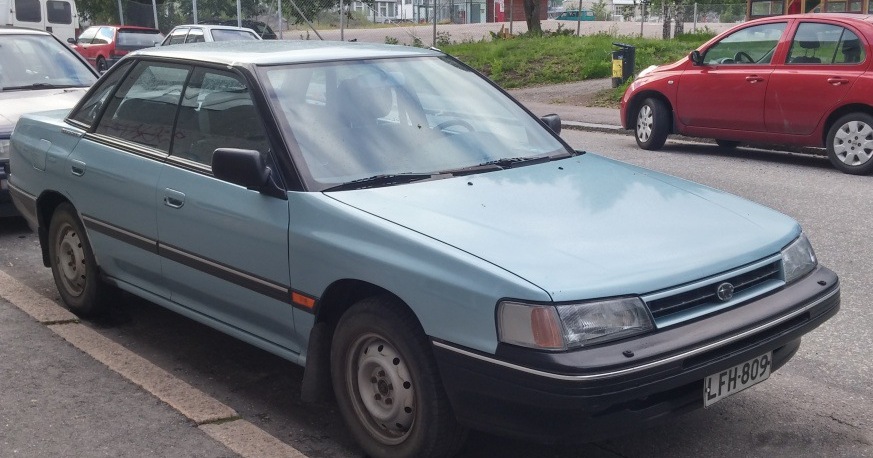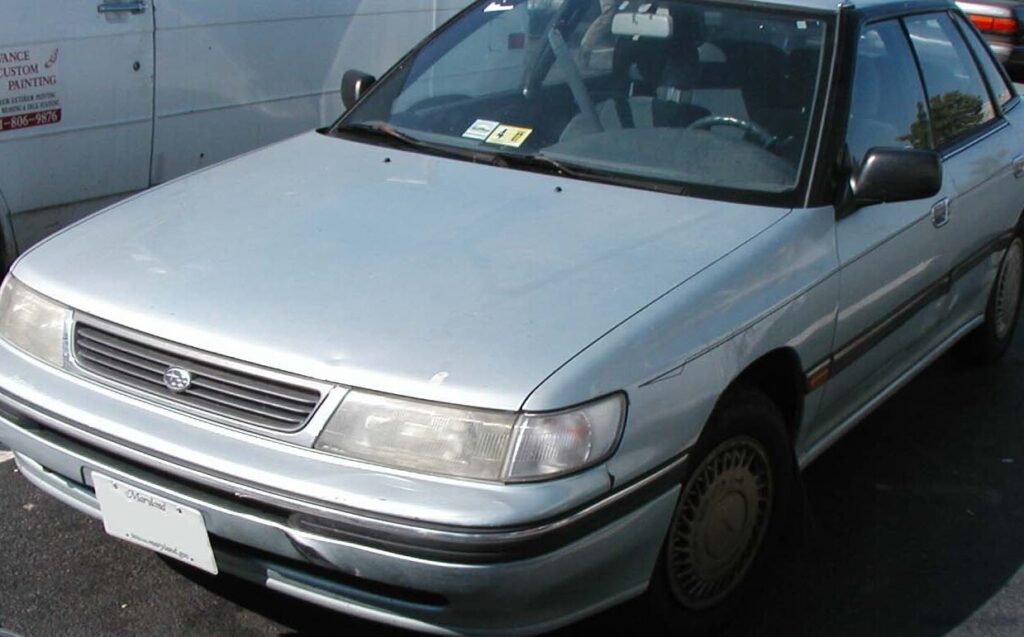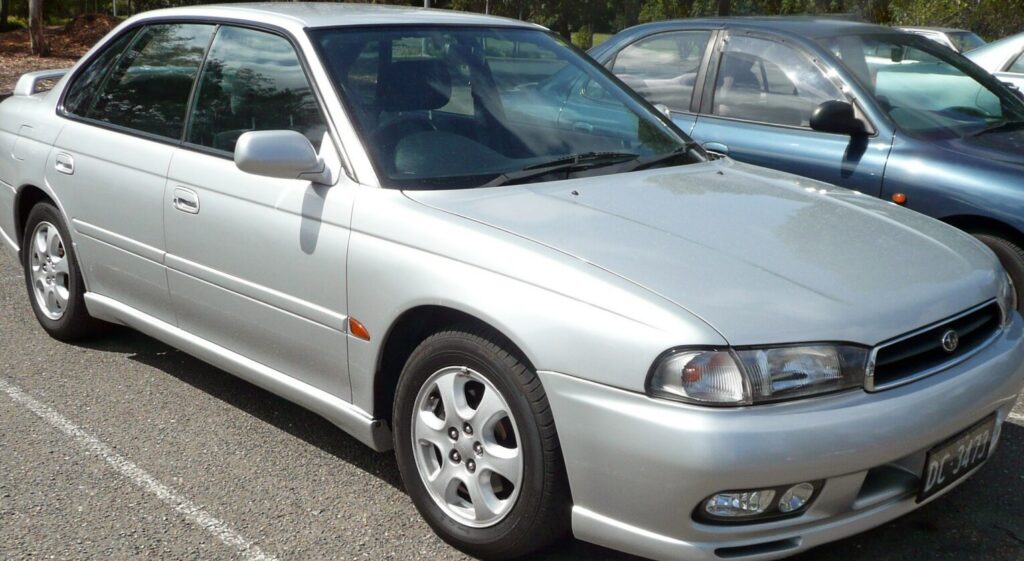
The Subaru Legacy II (BD, BG) 2.0, producing 115 horsepower with an automatic transmission and all-wheel drive, was a significant model within the second generation of Subaru’s popular Legacy line. Produced from 1993 to 1999, this variant occupied a middle ground in the Legacy lineup, offering a balance between affordability, practicality, and Subaru’s renowned symmetrical all-wheel drive system. It was primarily marketed towards families and individuals seeking a reliable and capable vehicle for all-weather conditions. The BD chassis represented the sedan body style, while the BG denoted the wagon (Touring) variant. This generation of Legacy marked a substantial step forward in refinement and features compared to its predecessor, aiming to compete more directly with established Japanese and European sedans.
Technical Specifications
| Brand | Subaru |
| Model | Legacy |
| Generation | Legacy II (BD,BG) |
| Type (Engine) | 2.0 (115 Hp) AWD Automatic |
| Start of production | 1993 |
| End of production | 1999 |
| Powertrain Architecture | Internal Combustion engine |
| Body type | Sedan |
| Seats | 5 |
| Doors | 4 |
| Fuel consumption (urban) | 13 l/100 km (18.1 US mpg, 21.7 UK mpg, 7.7 km/l) |
| Fuel consumption (extra urban) | 8.1 l/100 km (29 US mpg, 34.9 UK mpg, 12.3 km/l) |
| Fuel consumption (combined) | 9.9 l/100 km (23.8 US mpg, 28.5 UK mpg, 10.1 km/l) |
| Fuel Type | Petrol (Gasoline) |
| Acceleration 0 – 100 km/h | 12 sec |
| Acceleration 0 – 62 mph | 12 sec |
| Acceleration 0 – 60 mph | 11.4 sec |
| Maximum speed | 187 km/h (116.2 mph) |
| Weight-to-power ratio | 12.2 kg/Hp, 82.1 Hp/tonne |
| Weight-to-torque ratio | 8.2 kg/Nm, 121.4 Nm/tonne |
| Power | 115 Hp @ 5600 rpm |
| Power per litre | 57.7 Hp/l |
| Torque | 170 Nm @ 4400 rpm (125.39 lb.-ft. @ 4400 rpm) |
| Engine layout | Front, Longitudinal |
| Engine Model/Code | EJ20 |
| Engine displacement | 1994 cm3 (121.68 cu. in.) |
| Number of cylinders | 4 |
| Engine configuration | Boxer |
| Cylinder Bore | 92 mm (3.62 in.) |
| Piston Stroke | 75 mm (2.95 in.) |
| Compression ratio | 9.5:1 |
| Number of valves per cylinder | 4 |
| Fuel injection system | Multi-port manifold injection |
| Engine aspiration | Naturally aspirated engine |
| Engine oil capacity | 4 l (4.23 US qt | 3.52 UK qt) |
| Coolant capacity | 6 l (6.34 US qt | 5.28 UK qt) |
| Kerb Weight | 1400 kg (3086.47 lbs.) |
| Max. weight | 1780 kg (3924.23 lbs.) |
| Max load | 380 kg (837.76 lbs.) |
| Trunk (boot) space – minimum | 451 l (15.93 cu. ft.) |
| Fuel tank capacity | 60 l (15.85 US gal | 13.2 UK gal) |
| Max. roof load | 80 kg (176.37 lbs.) |
| Permitted trailer load with brakes (12%) | 1500 kg (3306.93 lbs.) |
| Permitted trailer load without brakes | 500 kg (1102.31 lbs.) |
| Length | 4595 mm (180.91 in.) |
| Width | 1695 mm (66.73 in.) |
| Height | 1405 mm (55.31 in.) |
| Wheelbase | 2630 mm (103.54 in.) |
| Front track | 1460 mm (57.48 in.) |
| Rear (Back) track | 1455 mm (57.28 in.) |
| Drive wheel | All wheel drive (4×4) |
| Number of gears and type of gearbox | 4 gears, automatic transmission |
| Front suspension | Wishbone |
| Rear suspension | Several levers and rods |
| Front brakes | Ventilated discs |
| Rear brakes | Disc |
| Assisting systems | ABS (Anti-lock braking system) |
| Steering type | Steering rack and pinion |
| Power steering | Hydraulic Steering |
| Tires size | 195/60 R15H |
| Wheel rims size | 15 |
Powertrain & Engine Architecture
The heart of the Legacy II 2.0 was the EJ20 engine, a 1.994-liter (121.68 cubic inches) naturally aspirated, horizontally-opposed (boxer) four-cylinder gasoline engine. This engine configuration, a Subaru hallmark, offered inherent balance and a lower center of gravity, contributing to the car’s handling characteristics. The EJ20 in this application featured multi-port fuel injection, delivering fuel directly into the intake ports. The engine produced 115 horsepower at 5600 rpm and 170 Nm (125.39 lb-ft) of torque at 4400 rpm. The automatic transmission was a conventional four-speed unit, designed for smooth operation and ease of use. While not particularly sporty, it provided adequate performance for everyday driving. The engine code, EJ20, is crucial for identifying specific parts and maintenance requirements.
Driving Characteristics
The 115 hp, automatic transmission combination in the Legacy II delivered a comfortable, if not exhilarating, driving experience. Acceleration from 0-60 mph took around 11.4 seconds, and top speed was approximately 116 mph. The automatic transmission, while smooth, did detract from the engine’s available power, resulting in a noticeable delay in response compared to the available five-speed manual transmission. The all-wheel drive system provided excellent traction in various weather conditions, making it a particularly appealing choice in regions with snow or rain. The gear ratios were tuned for fuel efficiency and relaxed cruising, rather than aggressive acceleration. The boxer engine’s low center of gravity helped to minimize body roll during cornering, contributing to a stable and predictable feel.
Equipment & Trim Levels
The 2.0-liter automatic Legacy II typically came with a reasonable level of standard equipment. This included power windows, power locks, and air conditioning. Interior upholstery was typically cloth, with a relatively simple dashboard layout. Optional extras included a sunroof, upgraded audio systems, and alloy wheels. The trim level varied slightly depending on the market, but generally, this variant represented a mid-range offering, positioned above the base models but below the more powerful and better-equipped 2.2-liter versions. Safety features included ABS (Anti-lock Braking System) as standard equipment.
Chassis & Braking
The Legacy II utilized a MacPherson strut front suspension and a multi-link rear suspension, providing a comfortable ride and decent handling. The front brakes were ventilated discs, while the rear brakes were solid discs. The suspension was tuned for a balance between comfort and control, prioritizing ride quality over outright sportiness. Steering was rack-and-pinion with hydraulic power assistance. The all-wheel drive system employed a viscous coupling center differential, automatically distributing torque between the front and rear axles as needed.
Market Reception & Comparison
The Subaru Legacy II 2.0 AWD Automatic was generally well-received by critics as a practical and reliable family sedan. It was praised for its all-wheel drive system, comfortable ride, and spacious interior. However, the automatic transmission was sometimes criticized for its lack of responsiveness. Compared to the more powerful 2.2-liter models, the 2.0-liter offered lower running costs and slightly better fuel economy (around 23.8 US mpg combined). The 2.2-liter models, particularly those with a manual transmission, provided significantly more performance but came at a higher price point. The 1.8L models were even more fuel efficient but lacked the power and refinement of the 2.0L.
Legacy
The EJ20 engine, in its various iterations, proved to be a remarkably durable and reliable powerplant. The four-speed automatic transmission, while not the most advanced, also demonstrated reasonable longevity. Today, the Legacy II 2.0 AWD Automatic can be found in the used car market at relatively affordable prices. While maintenance costs may be higher due to the age of the vehicles, the Legacy’s reputation for reliability and its all-wheel drive capability continue to make it an attractive option for those seeking a dependable and capable used car. Common issues include oil leaks from the valve cover gaskets and potential for head gasket failure, typical for older Subaru engines. However, with proper maintenance, these vehicles can provide many more years of service.