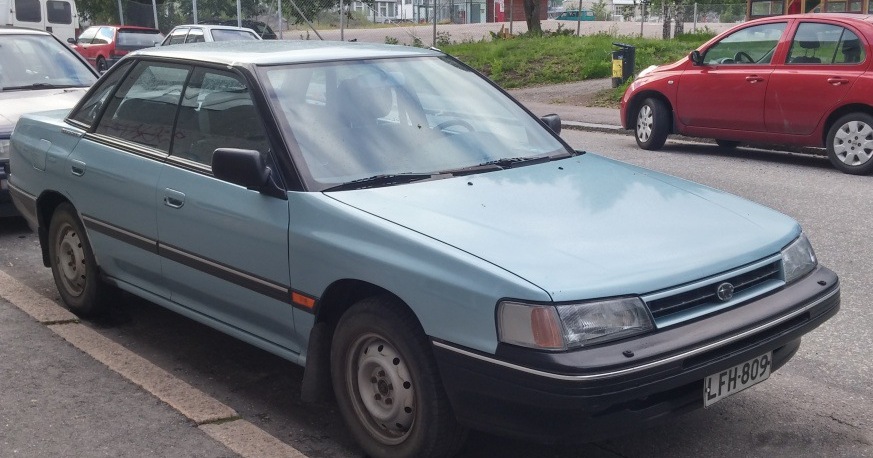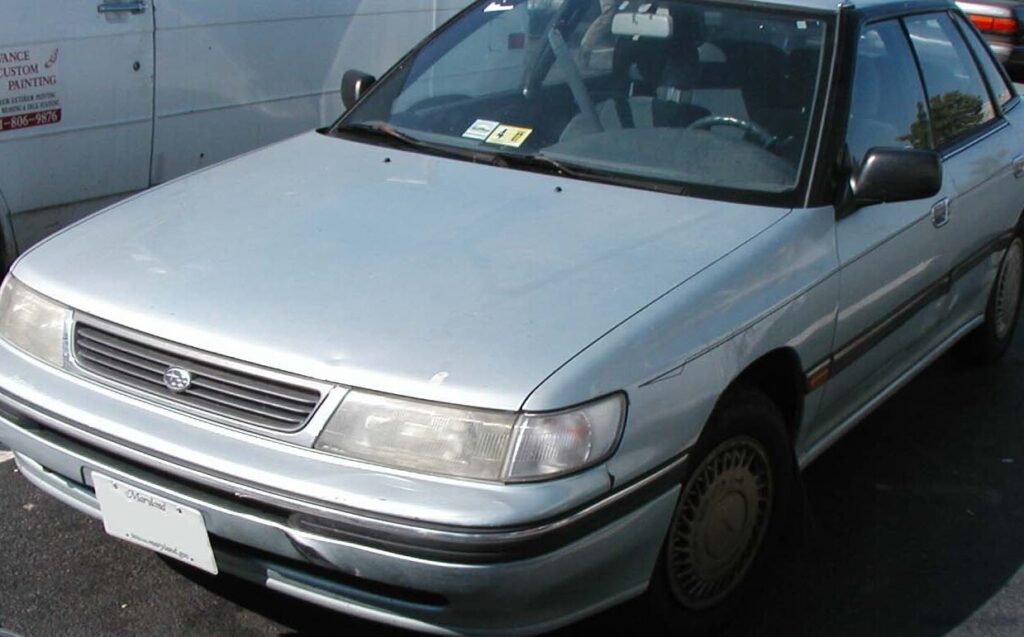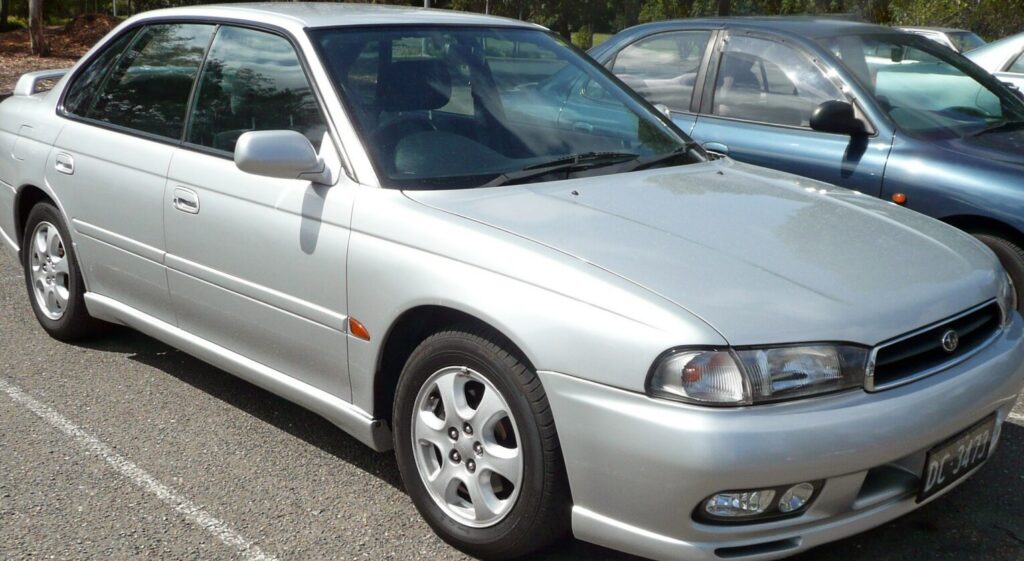
The Subaru Legacy II (BD, BG) 2.0 turbo, produced between 1993 and 1999, represented a significant step forward for Subaru’s mid-size offering. Falling within the second generation of the Legacy, designated chassis codes BD and BG (with the BG representing the facelifted model from 1996 onwards), this variant occupied a performance-oriented niche within the lineup. It catered to drivers seeking all-weather capability combined with respectable power, particularly in markets where all-wheel drive was highly valued. The 2.0 turbo model was positioned as a step up from the naturally aspirated engines, offering a more engaging driving experience and appealing to enthusiasts.
Technical Specifications
| Brand | Subaru |
| Model | Legacy |
| Generation | Legacy II (BD,BG) |
| Type (Engine) | 2.0 turbo (200 Hp) AWD |
| Start of production | 1993 |
| End of production | 1999 |
| Powertrain Architecture | Internal Combustion engine |
| Body type | Sedan |
| Seats | 5 |
| Doors | 4 |
| Fuel Type | Petrol (Gasoline) |
| Weight-to-power ratio | 7 kg/Hp, 143.9 Hp/tonne |
| Weight-to-torque ratio | 5.3 kg/Nm, 187.1 Nm/tonne |
| Power | 200 Hp @ 6000 rpm |
| Power per litre | 100.3 Hp/l |
| Torque | 260 Nm @ 3600 rpm, 191.77 lb.-ft. @ 3600 rpm |
| Engine layout | Front, Longitudinal |
| Engine Model/Code | EJ20T |
| Engine displacement | 1994 cm3, 121.68 cu. in. |
| Number of cylinders | 4 |
| Engine configuration | Boxer |
| Cylinder Bore | 92 mm, 3.62 in. |
| Piston Stroke | 75 mm, 2.95 in. |
| Compression ratio | 8.3:1 |
| Number of valves per cylinder | 4 |
| Fuel injection system | Multi-port manifold injection |
| Engine aspiration | Turbocharger |
| Valvetrain | DOHC |
| Engine oil capacity | 4.5 l, 4.76 US qt | 3.96 UK qt |
| Coolant | 7.2 l, 7.61 US qt | 6.34 UK qt |
| Kerb Weight | 1390 kg, 3064.43 lbs |
| Max. weight | 1870 kg, 4122.64 lbs |
| Max load | 480 kg, 1058.22 lbs |
| Trunk (boot) space – minimum | 451 l, 15.93 cu. ft |
| Fuel tank capacity | 60 l, 15.85 US gal | 13.2 UK gal |
| Length | 4595 mm, 180.91 in |
| Width | 1695 mm, 66.73 in |
| Height | 1405 mm, 55.31 in |
| Wheelbase | 2630 mm, 103.54 in |
| Front track | 1460 mm, 57.48 in |
| Rear (Back) track | 1455 mm, 57.28 in |
| Ride height (ground clearance) | 160 mm, 6.3 in |
| Drive wheel | All wheel drive (4×4) |
| Number of gears and type of gearbox | 5 gears, manual transmission |
| Front suspension | Wishbone |
| Rear suspension | Several levers and rods |
| Front brakes | Ventilated discs |
| Rear brakes | Ventilated discs |
| Assisting systems | ABS (Anti-lock braking system) |
| Steering type | Steering rack and pinion |
| Power steering | Hydraulic Steering |
| Tires size | 205/60 R15 |
| Wheel rims size | 15 |
Powertrain & Engine Architecture
The heart of the Legacy II 2.0 turbo was the EJ20T engine, a 2.0-liter (1994cc) horizontally-opposed, four-cylinder “boxer” engine. This engine was a key component of Subaru’s identity, offering a low center of gravity for improved handling. The ‘T’ designation signified the presence of a turbocharger, boosting power output significantly compared to the naturally aspirated 2.0-liter variants. The EJ20T utilized multi-port fuel injection and a dual overhead camshaft (DOHC) valvetrain, contributing to its responsive nature. The turbocharger itself was typically a Garrett unit, and intercooling was employed to reduce intake air temperatures, further enhancing performance and preventing detonation. The engine’s longitudinal mounting allowed for a more balanced weight distribution, crucial for Subaru’s symmetrical all-wheel-drive system.
Driving Characteristics
The 200 horsepower and 260 Nm (191.77 lb-ft) of torque delivered by the EJ20T provided a noticeable performance increase over the base Legacy models. While not a sports car, the turbo engine offered brisk acceleration and confident passing power. The five-speed manual transmission, standard on this trim, allowed drivers to fully exploit the engine’s capabilities. The all-wheel-drive system provided excellent traction in various conditions, making it a capable vehicle year-round. Compared to the naturally aspirated versions, the turbo model felt more responsive and eager, though turbo lag was present, typical of turbochargers of that era. The gear ratios were tuned to balance acceleration and fuel economy, with a focus on providing usable power in the mid-range.
Equipment & Trim Levels
The 2.0 turbo variant of the Legacy II typically came with a higher level of standard equipment than the base models. This often included power windows, power locks, air conditioning, and a better-quality audio system. Interior upholstery was usually cloth, but leather options were available. The dashboard layout was functional and straightforward, typical of Japanese automotive design of the 1990s. Optional extras could include a sunroof, upgraded audio systems, and alloy wheels. The BG facelift brought minor interior refinements and updated trim materials.
Chassis & Braking
The Legacy II featured a MacPherson strut front suspension and a multi-link rear suspension, providing a comfortable ride while maintaining good handling characteristics. The 2.0 turbo models generally had slightly stiffer suspension components compared to the base models to better manage the increased power. Braking duties were handled by ventilated disc brakes on all four wheels, providing adequate stopping power. An Anti-lock Braking System (ABS) was standard, enhancing safety and control, particularly on slippery surfaces. Steering was rack-and-pinion with hydraulic power assistance, offering a responsive and precise feel.
Market Reception & Comparison
The Subaru Legacy II 2.0 turbo was generally well-received by automotive critics. It was praised for its all-weather capability, responsive engine, and comfortable ride. However, some reviewers noted the presence of turbo lag and the relatively high price compared to other mid-size sedans. Compared to the naturally aspirated Legacy models, the 2.0 turbo offered a significant performance upgrade but came at a higher cost and with slightly lower fuel economy. Against competitors like the Honda Accord or Toyota Camry, the Legacy II 2.0 turbo stood out with its standard all-wheel drive and unique boxer engine.
Legacy
The EJ20T engine, while robust, is now showing its age. Common issues with used examples include turbocharger wear, oil leaks, and potential head gasket failures – a common ailment for many Subaru engines of this era. However, the engine is relatively straightforward to work on, and parts availability is generally good. The Legacy II 2.0 turbo has developed a cult following among Subaru enthusiasts, who appreciate its unique character and all-weather performance. Today, well-maintained examples are becoming increasingly collectible, representing a piece of Subaru’s heritage and a testament to the brand’s commitment to all-wheel-drive technology.