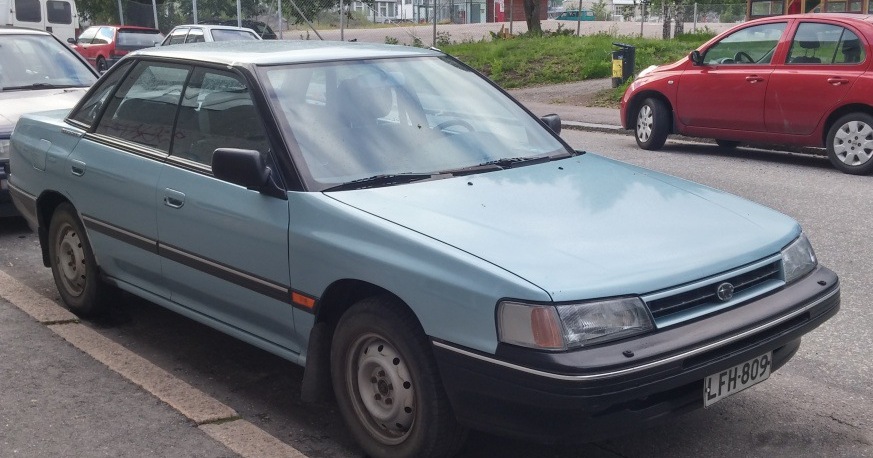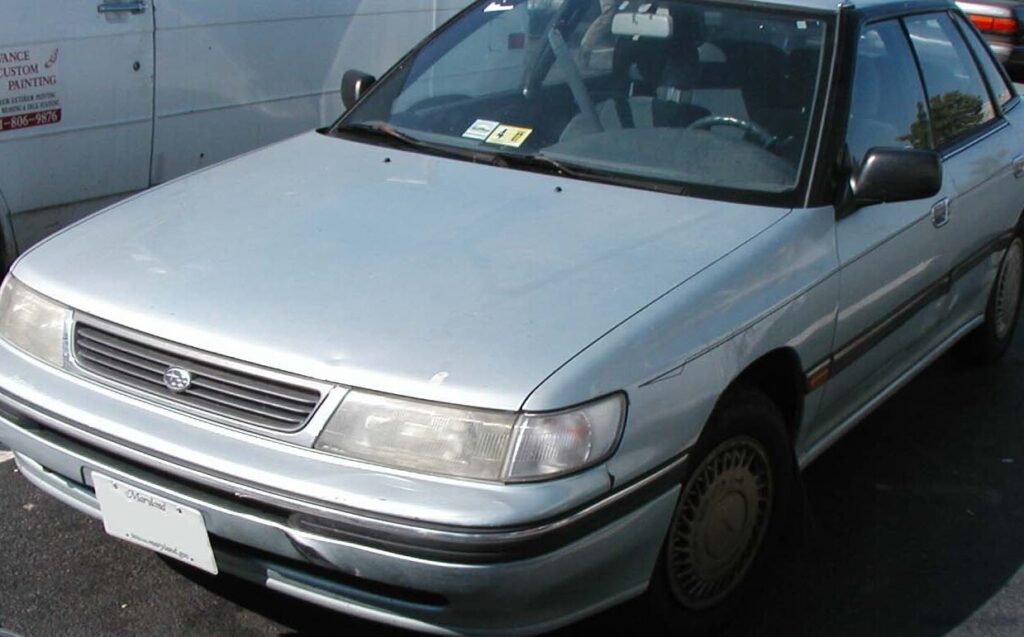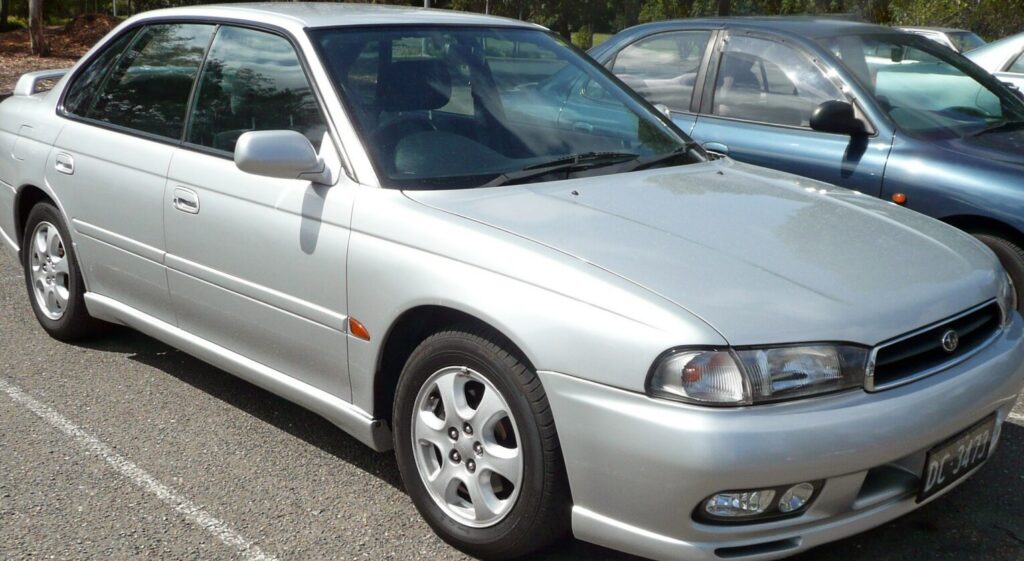
The Subaru Legacy II (BD, BG) 2.0 turbo, produced between 1997 and 1999, represented a significant step forward for Subaru’s mid-size offering. Positioned as the performance variant within the second-generation Legacy lineup (chassis codes BD for the sedan and BG for the wagon), this model aimed to deliver a blend of practicality, all-weather capability, and spirited driving. It occupied the top end of the Legacy range, offering a more potent alternative to the naturally aspirated engines available. The Legacy II was primarily marketed in Japan, Australia, and Europe, establishing Subaru’s reputation for reliable, technologically advanced vehicles.
Technical Specifications
| Brand | Subaru |
| Model | Legacy |
| Generation | Legacy II (BD,BG) |
| Type (Engine) | 2.0 turbo (250 Hp) AWD Automatic |
| Start of production | 1997 |
| End of production | 1999 |
| Powertrain Architecture | Internal Combustion engine |
| Body type | Sedan |
| Seats | 5 |
| Doors | 4 |
| Fuel consumption (combined) | 10.6 l/100 km (22.2 US mpg, 26.6 UK mpg, 9.4 km/l) |
| Fuel Type | Petrol (Gasoline) |
| Weight-to-power ratio | 5.5 kg/Hp, 182.5 Hp/tonne |
| Weight-to-torque ratio | 4 kg/Nm, 248.2 Nm/tonne |
| Power | 250 Hp @ 6500 rpm |
| Power per litre | 125.4 Hp/l |
| Torque | 340 Nm @ 3600 rpm (250.77 lb.-ft. @ 3600 rpm) |
| Engine layout | Front, Longitudinal |
| Engine Model/Code | EJ20T |
| Engine displacement | 1994 cm3 (121.68 cu. in.) |
| Number of cylinders | 4 |
| Engine configuration | Boxer |
| Cylinder Bore | 92 mm (3.62 in.) |
| Piston Stroke | 75 mm (2.95 in.) |
| Compression ratio | 9.5:1 |
| Number of valves per cylinder | 4 |
| Fuel injection system | Multi-port manifold injection |
| Engine aspiration | Turbocharger |
| Valvetrain | DOHC |
| Engine oil capacity | 4.5 l (4.76 US qt | 3.96 UK qt) |
| Coolant | 7.2 l (7.61 US qt | 6.34 UK qt) |
| Kerb Weight | 1370 kg (3020.33 lbs.) |
| Trunk (boot) space – minimum | 451 l (15.93 cu. ft.) |
| Fuel tank capacity | 60 l (15.85 US gal | 13.2 UK gal) |
| Length | 4595 mm (180.91 in.) |
| Width | 1695 mm (66.73 in.) |
| Height | 1405 mm (55.31 in.) |
| Wheelbase | 2630 mm (103.54 in.) |
| Front track | 1460 mm (57.48 in.) |
| Rear (Back) track | 1455 mm (57.28 in.) |
| Ride height (ground clearance) | 140 mm (5.51 in.) |
| Drive wheel | All wheel drive (4×4) |
| Number of gears and type of gearbox | 4 gears, automatic transmission |
| Front suspension | Wishbone |
| Rear suspension | Several levers and rods |
| Front brakes | Ventilated discs |
| Rear brakes | Ventilated discs |
| Assisting systems | ABS (Anti-lock braking system) |
| Steering type | Steering rack and pinion |
| Power steering | Hydraulic Steering |
| Tires size | 215/45 R17 |
| Wheel rims size | 17 |
Powertrain & Engine Architecture
The heart of the Legacy II 2.0 turbo was the EJ20T engine, a 1994cc, horizontally-opposed (boxer) four-cylinder. This engine was a hallmark of Subaru’s engineering, known for its smooth operation and inherent balance. The EJ20T featured a single turbocharger with an intercooler, boosting power output to 250 horsepower at 6500 rpm and 340 Nm (250.77 lb-ft) of torque at 3600 rpm. Fuel delivery was managed by a multi-port fuel injection system. The engine utilized a dual overhead camshaft (DOHC) valvetrain with four valves per cylinder, optimizing airflow for increased performance. The automatic transmission was a conventional four-speed unit, chosen to provide ease of use for a broader range of drivers. This transmission was specifically tuned to handle the increased torque output of the turbocharged engine.
Driving Characteristics
The 2.0 turbo automatic Legacy offered a noticeable performance upgrade compared to the base models. While the automatic transmission wasn’t as responsive as the available five-speed manual, it provided smooth and comfortable shifts. Acceleration was brisk, and the all-wheel-drive system provided excellent traction in various conditions. The turbocharger provided a surge of power in the mid-range, making overtaking maneuvers effortless. However, the automatic transmission’s gear ratios were geared more towards comfort and fuel efficiency than outright performance, meaning it didn’t feel as quick as some of its rivals. Compared to the manual transmission version, the automatic sacrificed some responsiveness, but gained in everyday usability.
Equipment & Trim Levels
The 2.0 turbo automatic trim typically included features such as power windows, power locks, air conditioning, and a decent audio system. Upholstery was usually cloth, although leather options were available. Higher-spec models could be equipped with features like a sunroof, upgraded audio systems, and alloy wheels. The interior design was functional and well-built, reflecting Japanese automotive standards of the era. The dashboard layout was straightforward, with easy-to-read gauges and logically placed controls.
Chassis & Braking
The Legacy II featured a MacPherson strut front suspension and a multi-link rear suspension, providing a comfortable ride and good handling characteristics. The all-wheel-drive system was a symmetrical design, distributing power evenly to all four wheels. Braking duties were handled by ventilated disc brakes on all four corners, providing ample stopping power. An Anti-lock Braking System (ABS) was standard, enhancing safety and control during emergency braking situations. The suspension was tuned to balance comfort and handling, making it suitable for both daily commuting and spirited driving.
Market Reception & Comparison
The Legacy II 2.0 turbo automatic was generally well-received by automotive critics. It was praised for its performance, all-weather capability, and comfortable ride. However, some reviewers noted that the automatic transmission detracted slightly from the overall driving experience. Compared to other turbocharged sedans of the time, such as the Mitsubishi Galant VR-4, the Legacy offered a more balanced package, prioritizing practicality and reliability alongside performance. Fuel economy was reasonable for a turbocharged vehicle, averaging around 10.6 l/100 km (22.2 US mpg). Reliability was generally good, although regular maintenance was essential to ensure the longevity of the turbocharged engine.
Legacy
The EJ20T engine, in its various iterations, became a cornerstone of Subaru’s performance lineup for many years. The Legacy II 2.0 turbo automatic, while not the most sought-after variant today, remains a popular choice among Subaru enthusiasts. The powertrain is known for its durability, but like any turbocharged engine, it requires regular maintenance, including oil changes and turbocharger inspections. In the used car market, these models are often valued for their unique combination of performance, practicality, and all-wheel-drive capability. Finding well-maintained examples can be challenging, but they offer a compelling alternative to more common performance sedans of the late 1990s.