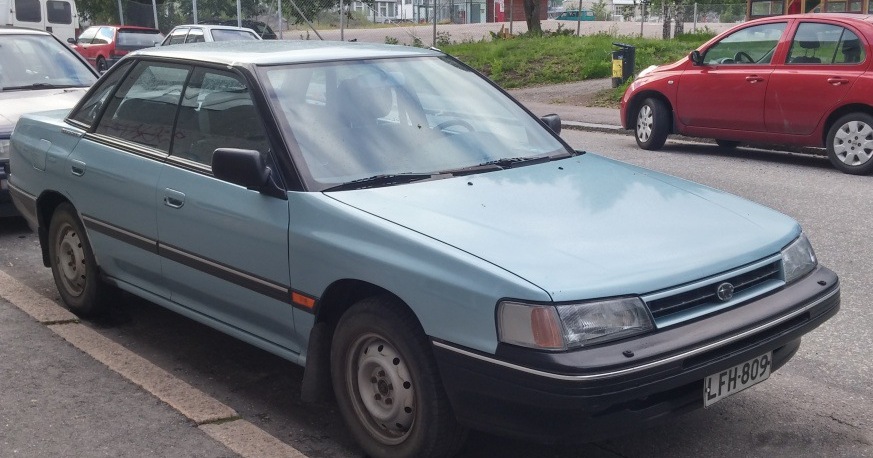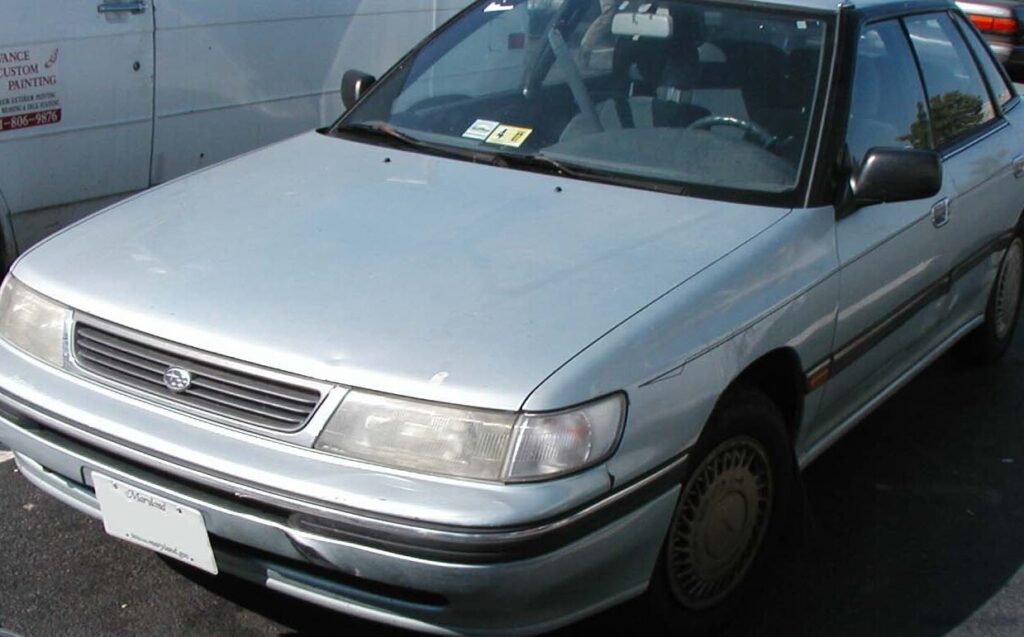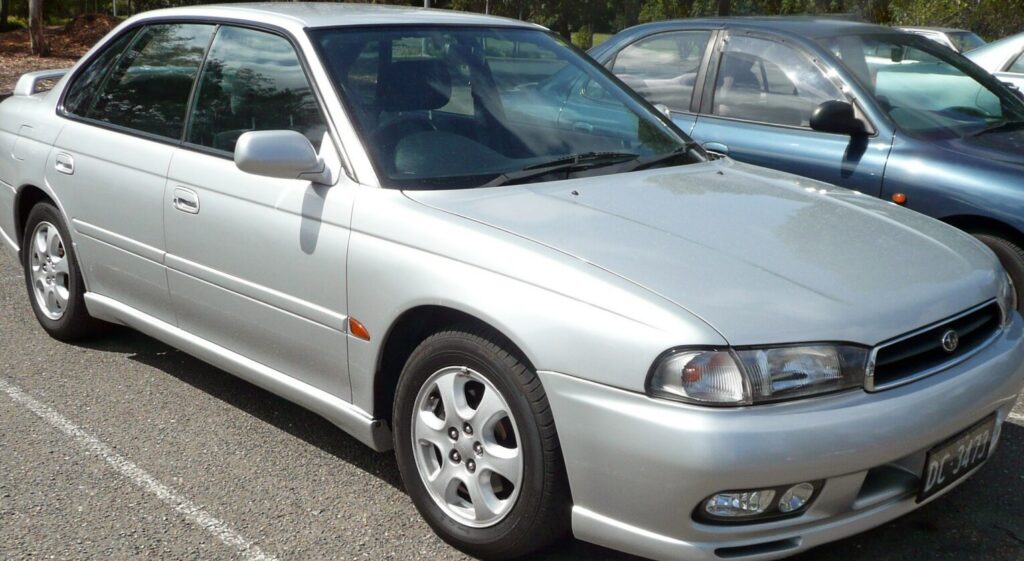
The Subaru Legacy II, internally designated as the BD and BG series, represented a significant evolution of Subaru’s mid-size offering when it debuted in 1993 and continued through 1999. Positioned as a practical and technologically advanced sedan, the Legacy II aimed to broaden Subaru’s appeal beyond its established niche of outdoorsy, all-wheel-drive enthusiasts. The 2.2-liter, 128 horsepower, all-wheel-drive variant occupied a middle ground in the Legacy II lineup, offering a balance of performance, fuel efficiency, and affordability. It served as a step up from the base 1.8-liter models, while remaining more accessible than the more powerful 2.5-liter options. This generation of Legacy was crucial in establishing Subaru’s reputation for safety and reliability in the North American market.
Technical Specifications
| Brand | Subaru |
| Model | Legacy |
| Generation | Legacy II (BD,BG) |
| Type (Engine) | 2.2 (128 Hp) AWD |
| Start of production | 1993 |
| End of production | 1999 |
| Powertrain Architecture | Internal Combustion engine |
| Body type | Sedan |
| Seats | 5 |
| Doors | 4 |
| Fuel consumption (urban) | 9 l/100 km (26.1 US mpg, 31.4 UK mpg, 11.1 km/l) |
| Fuel consumption (combined) | 6.5 l/100 km (36.2 US mpg, 43.5 UK mpg, 15.4 km/l) |
| Fuel Type | Petrol (Gasoline) |
| Acceleration 0 – 100 km/h | 9.5 sec |
| Acceleration 0 – 62 mph | 9.5 sec |
| Acceleration 0 – 60 mph | 9 sec |
| Maximum speed | 195 km/h (121.17 mph) |
| Weight-to-power ratio | 10.3 kg/Hp, 97.3 Hp/tonne |
| Weight-to-torque ratio | 6.9 kg/Nm, 144.5 Nm/tonne |
| Power | 128 Hp @ 5200 rpm |
| Power per litre | 57.9 Hp/l |
| Torque | 190 Nm @ 4400 rpm (140.14 lb.-ft. @ 4400 rpm) |
| Engine layout | Front, Longitudinal |
| Engine Model/Code | EJ22E |
| Engine displacement | 2212 cm3 (134.98 cu. in.) |
| Number of cylinders | 4 |
| Engine configuration | Boxer |
| Cylinder Bore | 96.9 mm (3.81 in.) |
| Piston Stroke | 75 mm (2.95 in.) |
| Compression ratio | 9.7:1 |
| Number of valves per cylinder | 4 |
| Fuel injection system | Multi-port manifold injection |
| Engine aspiration | Naturally aspirated engine |
| Engine oil capacity | 4 l (4.23 US qt | 3.52 UK qt) |
| Coolant | 5.8 l (6.13 US qt | 5.1 UK qt) |
| Kerb Weight | 1315 kg (2899.08 lbs.) |
| Max. weight | 1795 kg (3957.3 lbs.) |
| Max load | 480 kg (1058.22 lbs.) |
| Trunk (boot) space – minimum | 451 l (15.93 cu. ft.) |
| Fuel tank capacity | 60 l (15.85 US gal | 13.2 UK gal) |
| Length | 4595 mm (180.91 in.) |
| Width | 1695 mm (66.73 in.) |
| Height | 1405 mm (55.31 in.) |
| Wheelbase | 2630 mm (103.54 in.) |
| Front track | 1460 mm (57.48 in.) |
| Rear (Back) track | 1455 mm (57.28 in.) |
| Ride height (ground clearance) | 160 mm (6.3 in.) |
| Drive wheel | All wheel drive (4×4) |
| Number of gears and type of gearbox | 5 gears, manual transmission |
| Front suspension | Wishbone |
| Rear suspension | Several levers and rods |
| Front brakes | Ventilated discs |
| Rear brakes | Disc |
| Assisting systems | ABS (Anti-lock braking system) |
| Steering type | Steering rack and pinion |
| Power steering | Hydraulic Steering |
| Tires size | 185/70 R14 |
| Wheel rims size | 14 |
Powertrain & Engine Architecture
The heart of this Legacy variant was the EJ22E 2.2-liter horizontally-opposed (boxer) four-cylinder engine. This engine was a hallmark of Subaru’s engineering philosophy, prized for its inherent balance and smooth operation. The EJ22E featured a single overhead camshaft (SOHC) design with four valves per cylinder, and utilized multi-port fuel injection for precise fuel delivery. The engine’s 9.7:1 compression ratio was a compromise between performance and the ability to run on readily available fuel grades. The engine produced 128 horsepower at 5200 rpm and 190 Nm (140 lb-ft) of torque at 4400 rpm. This power was delivered to all four wheels through a standard five-speed manual transmission. The all-wheel-drive system was a symmetrical design, utilizing a viscous limited-slip center differential to distribute power between the front and rear axles.
Driving Characteristics
The 2.2-liter Legacy II with a manual transmission offered a reasonably engaging driving experience. Acceleration to 60 mph took around 9 seconds, which was competitive for its class in the mid-1990s. While not a sports car, the engine provided adequate power for everyday driving and highway cruising. The boxer engine’s low center of gravity contributed to stable handling, and the all-wheel-drive system provided excellent traction in various weather conditions. Compared to the base 1.8-liter models, the 2.2-liter engine offered noticeably more power and responsiveness. However, it lacked the outright performance of the 2.5-liter variants. The five-speed manual transmission was well-matched to the engine’s powerband, offering precise shifts and good control.
Equipment & Trim Levels
The 2.2-liter AWD Legacy II typically came with a respectable level of standard equipment. This included power steering, power windows, power locks, and an AM/FM stereo. Air conditioning was often standard, but could be optional depending on the specific package. Interior upholstery was typically cloth, with a durable and practical design. Higher trim levels offered upgrades such as a sunroof, upgraded audio systems, and leather upholstery. Optional extras included alloy wheels and a rear spoiler. The dashboard layout was functional and straightforward, prioritizing ease of use over flashy aesthetics.
Chassis & Braking
The Legacy II utilized a MacPherson strut front suspension and a multi-link rear suspension, providing a comfortable ride and good handling characteristics. The chassis was designed to be rigid, contributing to improved stability and responsiveness. Braking duties were handled by ventilated discs at the front and solid discs at the rear. An anti-lock braking system (ABS) was standard, enhancing safety by preventing wheel lockup during hard braking. The car’s relatively light weight (around 2900 lbs) helped to offset the modest engine output, contributing to acceptable braking performance.
Market Reception & Comparison
The Subaru Legacy II 2.2 AWD was generally well-received by automotive critics. It was praised for its all-weather capability, comfortable ride, and solid build quality. Fuel economy was considered respectable for a vehicle of its size and drivetrain, averaging around 36 mpg combined. Compared to competitors like the Honda Accord and Toyota Camry, the Legacy II offered a unique combination of all-wheel-drive capability and a distinctive engine configuration. However, some critics noted that the interior design was somewhat bland and that the engine lacked the refinement of some of its rivals. Reliability was generally good, although some owners reported issues with the head gasket, a common problem with early Subaru boxer engines.
Legacy
The Subaru Legacy II 2.2 AWD has proven to be a durable and reliable vehicle, with many examples still on the road today. The EJ22E engine, while prone to head gasket issues if not properly maintained, is generally considered a robust and long-lasting powerplant. In the used car market, these Legacys are often sought after by enthusiasts who appreciate their all-wheel-drive capability and unique driving experience. Parts availability is generally good, and the car’s relatively simple mechanical design makes it relatively easy to maintain. The Legacy II 2.2 AWD represents a significant chapter in Subaru’s history, helping to establish the brand as a leader in all-wheel-drive technology and a provider of practical, reliable transportation.