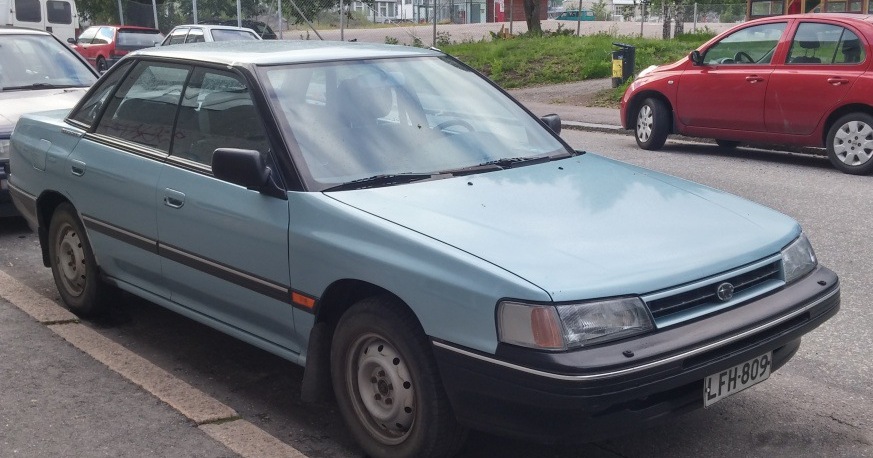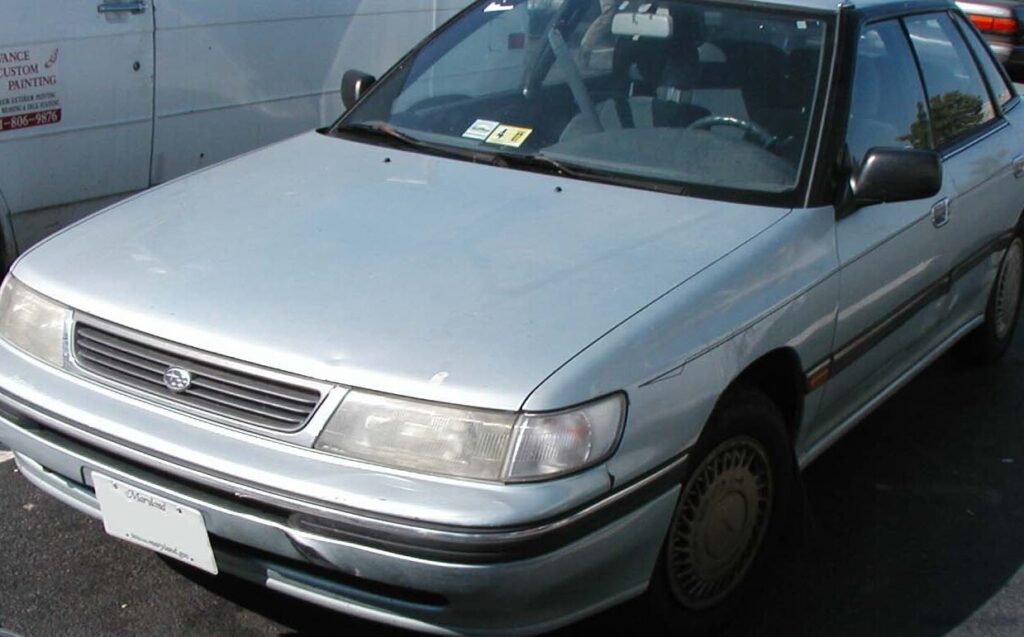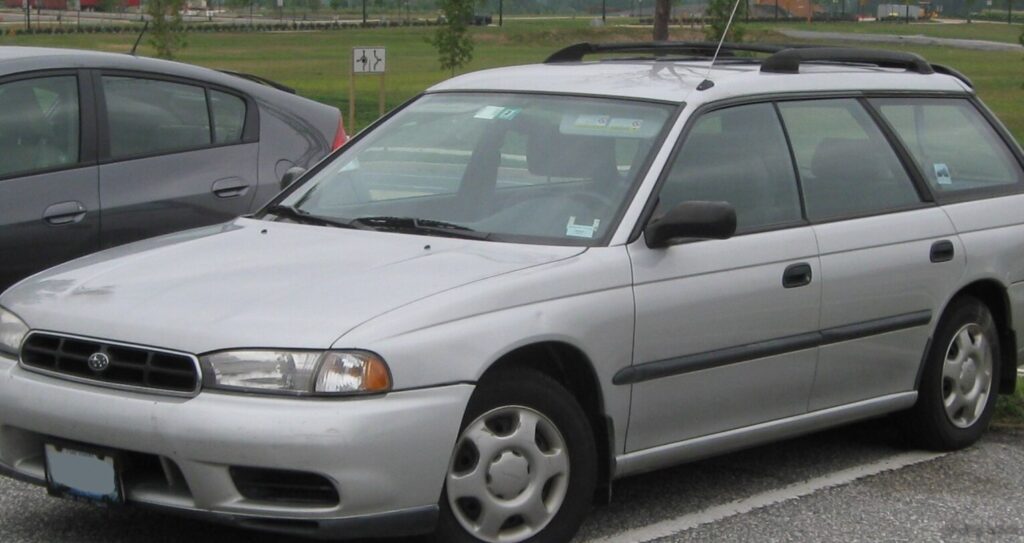
The Subaru Legacy II Station Wagon, specifically the 2.5-liter, 150 horsepower, all-wheel-drive variant (chassis codes BD and BG), was produced between 1996 and 1998. This model represented Subaru’s continued commitment to offering practical, reliable, and capable vehicles, particularly in markets where all-weather capability was highly valued. Positioned as a mid-range offering within the Legacy II wagon lineup, it bridged the gap between the more economical base models and the potentially more powerful, though less common, turbocharged options. It was primarily sold in markets like North America, Europe, and Australia, where the combination of space, safety, and all-wheel drive resonated with family buyers.
Technical Specifications
| Brand | Subaru |
| Model | Legacy |
| Generation | Legacy II Station Wagon (BD,BG) |
| Type (Engine) | 2.5 (150 Hp) AWD |
| Start of production | 1996 |
| End of production | 1998 |
| Powertrain Architecture | Internal Combustion engine |
| Body type | Station wagon (estate) |
| Seats | 5 |
| Doors | 5 |
| Fuel consumption (urban) | 13.9 l/100 km (16.9 US mpg, 20.3 UK mpg, 7.2 km/l) |
| Fuel consumption (extra urban) | 8.1 l/100 km (29 US mpg, 34.9 UK mpg, 12.3 km/l) |
| Fuel Type | Petrol (Gasoline) |
| Acceleration 0 – 100 km/h | 10.5 sec |
| Acceleration 0 – 62 mph | 10.5 sec |
| Acceleration 0 – 60 mph | 10 sec |
| Maximum speed | 200 km/h (124.27 mph) |
| Weight-to-power ratio | 10.2 kg/Hp, 97.7 Hp/tonne |
| Weight-to-torque ratio | 6.9 kg/Nm, 144 Nm/tonne |
| Power | 150 Hp @ 5600 rpm |
| Power per litre | 61.1 Hp/l |
| Torque | 221 Nm @ 4000 rpm (163 lb.-ft. @ 4000 rpm) |
| Engine layout | Front, Longitudinal |
| Engine Model/Code | EJ25 |
| Engine displacement | 2457 cm3 (149.94 cu. in.) |
| Number of cylinders | 4 |
| Engine configuration | Boxer |
| Cylinder Bore | 99.5 mm (3.92 in.) |
| Piston Stroke | 79 mm (3.11 in.) |
| Compression ratio | 9.5:1 |
| Number of valves per cylinder | 4 |
| Fuel injection system | Multi-port manifold injection |
| Engine aspiration | Naturally aspirated engine |
| Engine oil capacity | 4.5 l (4.76 US qt | 3.96 UK qt) |
| Kerb Weight | 1535 kg (3384.1 lbs.) |
| Max. weight | 1945 kg (4287.99 lbs.) |
| Max load | 410 kg (903.9 lbs.) |
| Trunk (boot) space – minimum | 488 l (17.23 cu. ft.) |
| Trunk (boot) space – maximum | 700 l (24.72 cu. ft.) |
| Fuel tank capacity | 60 l (15.85 US gal | 13.2 UK gal) |
| Max. roof load | 100 kg (220.46 lbs.) |
| Permitted trailer load with brakes (12%) | 1800 kg (3968.32 lbs.) |
| Permitted trailer load without brakes | 500 kg (1102.31 lbs.) |
| Length | 4670 mm (183.86 in.) |
| Width | 1695 mm (66.73 in.) |
| Height | 1490 mm (58.66 in.) |
| Wheelbase | 2630 mm (103.54 in.) |
| Front track | 1460 mm (57.48 in.) |
| Rear (Back) track | 1455 mm (57.28 in.) |
| Ride height (ground clearance) | 160 mm (6.3 in.) |
| Drive wheel | All wheel drive (4×4) |
| Number of gears and type of gearbox | 4 gears, automatic transmission |
| Front suspension | Wishbone |
| Rear suspension | Several levers and rods |
| Front brakes | Ventilated discs |
| Rear brakes | Disc |
| Assisting systems | ABS (Anti-lock braking system) |
| Steering type | Steering rack and pinion |
| Power steering | Hydraulic Steering |
| Tires size | 205/50 R16V |
| Wheel rims size | 16 |
Powertrain & Engine Architecture
The heart of this Legacy wagon is the EJ25 2.5-liter naturally aspirated four-cylinder boxer engine. Subaru’s horizontally-opposed “boxer” configuration, where pistons move horizontally rather than vertically, provides inherent balance, reducing vibrations and contributing to a smoother driving experience. The EJ25 featured a single overhead camshaft (SOHC) per cylinder bank, operating four valves per cylinder. Fuel delivery was handled by a multi-point fuel injection system, providing precise fuel metering for improved efficiency and emissions. The engine produced 150 horsepower at 5600 rpm and 221 Nm (163 lb-ft) of torque at 4000 rpm. This power was then channeled through a four-speed automatic transmission to Subaru’s symmetrical all-wheel-drive system. The automatic transmission, while offering convenience, was a traditional hydraulic control unit, lacking the electronic sophistication of later transmissions.
Driving Characteristics
The 2.5-liter automatic Legacy wagon offered a comfortable and predictable driving experience. Acceleration to 60 mph took around 10 seconds, which was adequate for everyday driving but not particularly sporty. The automatic transmission, while smooth, wasn’t known for its quick shifts or responsiveness. Compared to the five-speed manual transmission available on other Legacy models, the automatic resulted in a noticeable decrease in both acceleration and fuel economy. The all-wheel-drive system provided excellent traction in various weather conditions, making it a particularly appealing choice for drivers in regions with snow or rain. The boxer engine’s low center of gravity contributed to stable handling, though the suspension was tuned more for comfort than outright performance.
Equipment & Trim Levels
The 2.5-liter automatic Legacy wagon typically came standard with features like air conditioning, power windows and locks, and an AM/FM stereo. Higher trim levels, often denoted by “L” or “Limited” designations, added features such as alloy wheels, a sunroof, upgraded upholstery (often cloth or velour), and a more sophisticated audio system. Optional extras included a CD player, cruise control, and power-adjustable seats. Interior appointments were generally functional and durable, prioritizing practicality over luxury.
Chassis & Braking
The Legacy II wagon utilized a MacPherson strut front suspension and a multi-link rear suspension, providing a comfortable ride and reasonable handling. The front brakes were ventilated discs, offering good stopping power, while the rear brakes were solid discs. Anti-lock braking system (ABS) was standard, enhancing safety by preventing wheel lockup during hard braking. The chassis was designed to accommodate the all-wheel-drive system, with a robust drivetrain capable of handling various road conditions. Stabilizer bars were fitted to both the front and rear axles to reduce body roll during cornering.
Market Reception & Comparison
The 2.5-liter automatic Legacy wagon was generally well-received by critics as a practical and reliable family vehicle. It was praised for its spacious interior, comfortable ride, and all-weather capability. However, the automatic transmission was often criticized for its lack of responsiveness and impact on fuel economy. Compared to the more powerful turbocharged Legacy models, the 2.5-liter version offered a more affordable and fuel-efficient alternative, albeit with less exhilarating performance. Against competitors like the Toyota Camry Wagon or Honda Accord Wagon, the Legacy stood out with its standard all-wheel drive, a feature not commonly found in its class.
Legacy
The EJ25 engine, in its various iterations, proved to be a durable and reliable powerplant. While not without its potential issues (such as head gasket failures in some later versions), the EJ25 in the BD/BG Legacy wagons generally held up well over time with proper maintenance. Today, these vehicles are relatively affordable on the used car market, making them attractive options for budget-conscious buyers seeking a practical and capable wagon. The combination of all-wheel drive and a spacious interior continues to appeal to those needing a versatile vehicle for family duties or outdoor adventures. Parts availability remains reasonably good, ensuring that these Legacy wagons can be kept on the road for years to come.