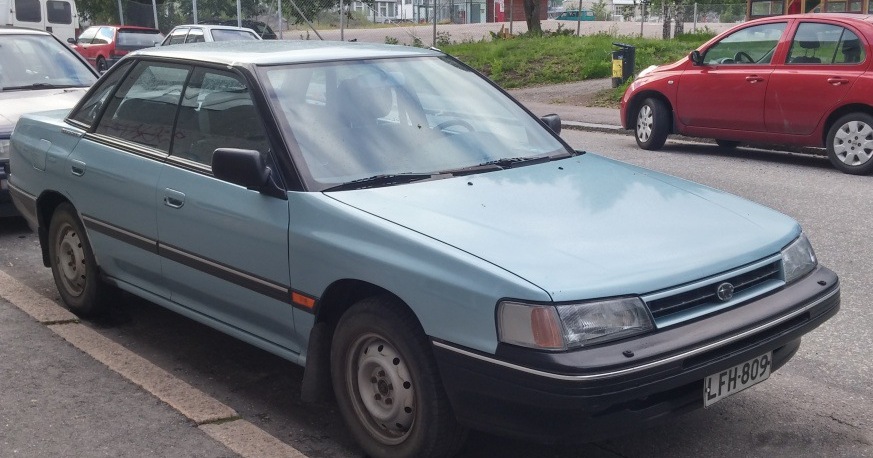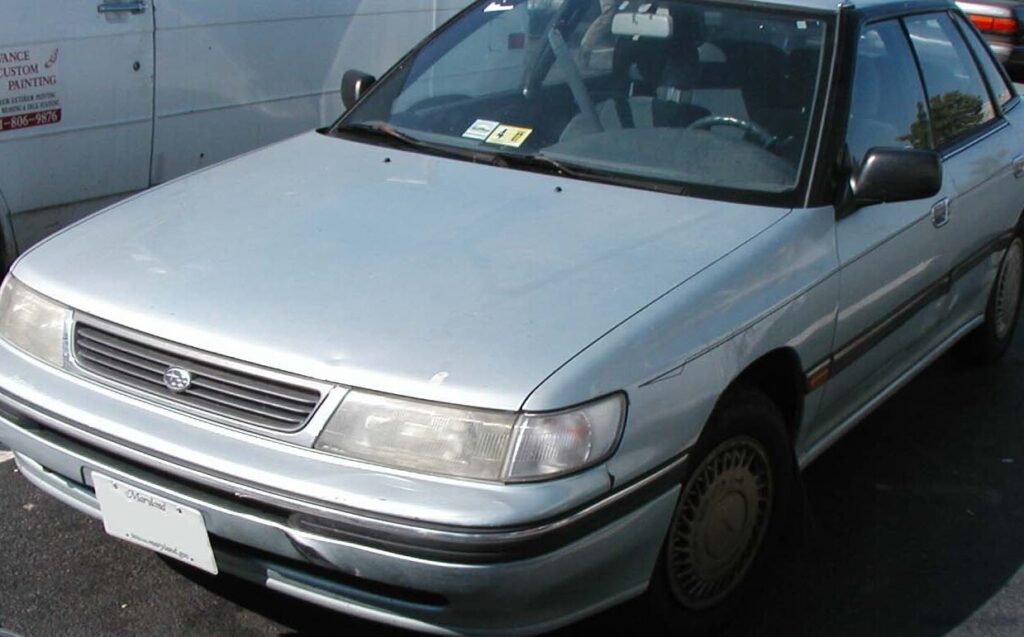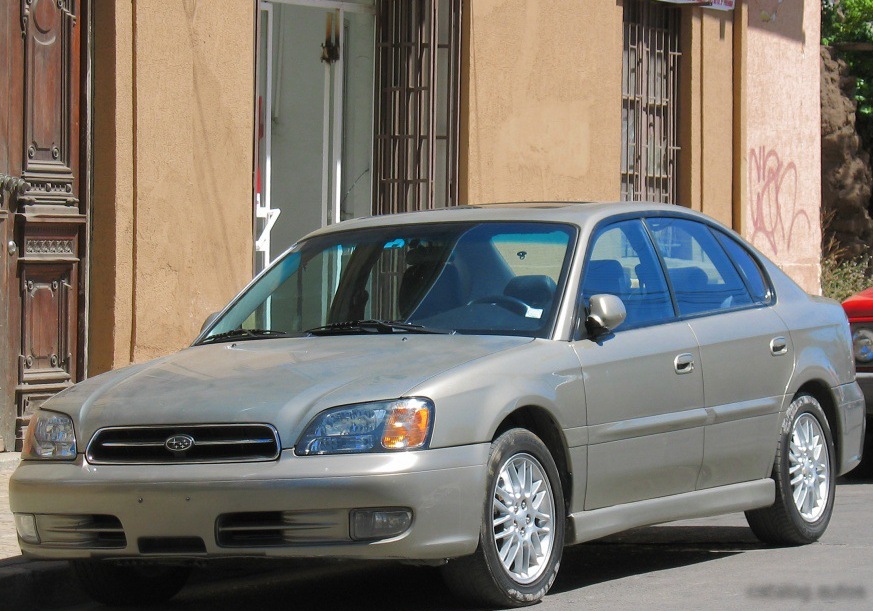
The Subaru Legacy III (BE/BH) 2.5 AWD, produced between 1998 and 2001, represented a significant evolution of Subaru’s mid-size sedan. Positioned as a step up from the base 2.2-liter models, the 2.5-liter variant offered a compelling blend of performance, all-weather capability thanks to Subaru’s symmetrical all-wheel drive system, and a relatively spacious interior. This generation Legacy competed directly with other mid-size sedans like the Honda Accord, Toyota Camry, and Nissan Maxima, but distinguished itself with its standard AWD and unique boxer engine configuration. The BE/BH series was a crucial model for Subaru, solidifying their reputation for reliability and engineering innovation in the North American market.
Technical Specifications
| Brand | Subaru |
| Model | Legacy |
| Generation | Legacy III (BE,BH) |
| Type (Engine) | 2.5 (156 Hp) AWD |
| Start of production | 1998 |
| End of production | 2001 |
| Powertrain Architecture | Internal Combustion engine |
| Body type | Sedan |
| Seats | 5 |
| Doors | 4 |
| Fuel consumption (urban) | 12.3 l/100 km (19.1 US mpg, 23 UK mpg, 8.1 km/l) |
| Fuel consumption (extra urban) | 7 l/100 km (33.6 US mpg, 40.4 UK mpg, 14.3 km/l) |
| Fuel consumption (combined) | 8.9 l/100 km (26.4 US mpg, 31.7 UK mpg, 11.2 km/l) |
| CO2 emissions | 215 g/km |
| Fuel Type | Petrol (Gasoline) |
| Acceleration 0 – 100 km/h | 9 sec |
| Acceleration 0 – 62 mph | 9 sec |
| Acceleration 0 – 60 mph | 8.6 sec |
| Maximum speed | 208 km/h (129.25 mph) |
| Weight-to-power ratio | 9 kg/Hp, 110.6 Hp/tonne |
| Weight-to-torque ratio | 6.3 kg/Nm, 158.2 Nm/tonne |
| Power | 156 Hp @ 5600 rpm |
| Power per litre | 63.5 Hp/l |
| Torque | 223 Nm @ 3600 rpm (164.48 lb.-ft. @ 3600 rpm) |
| Engine layout | Front, Longitudinal |
| Engine Model/Code | EJ25 |
| Engine displacement | 2457 cm3 (149.94 cu. in.) |
| Number of cylinders | 4 |
| Engine configuration | Boxer |
| Cylinder Bore | 99.5 mm (3.92 in.) |
| Piston Stroke | 79 mm (3.11 in.) |
| Compression ratio | 10:1 |
| Number of valves per cylinder | 4 |
| Fuel injection system | Multi-port manifold injection |
| Engine aspiration | Naturally aspirated engine |
| Valvetrain | DOHC |
| Engine oil capacity | 4.5 l (4.76 US qt | 3.96 UK qt) |
| Coolant | 6.8 l (7.19 US qt | 5.98 UK qt) |
| Kerb Weight | 1410 kg (3108.52 lbs.) |
| Max. weight | 1910 kg (4210.83 lbs.) |
| Max load | 500 kg (1102.31 lbs.) |
| Trunk (boot) space – minimum | 455 l (16.07 cu. ft.) |
| Fuel tank capacity | 64 l (16.91 US gal | 14.08 UK gal) |
| Length | 4605 mm (181.3 in.) |
| Width | 1695 mm (66.73 in.) |
| Height | 1415 mm (55.71 in.) |
| Wheelbase | 2650 mm (104.33 in.) |
| Front track | 1460 mm (57.48 in.) |
| Rear (Back) track | 1460 mm (57.48 in.) |
| Ride height (ground clearance) | 160-155 mm (6.3 – 6.1 in.) |
| Minimum turning circle (turning diameter) | 11.4 m (37.4 ft.) |
| Drive wheel | All wheel drive (4×4) |
| Number of gears and type of gearbox | 5 gears, manual transmission |
| Front suspension | Independent type McPherson |
| Rear suspension | Independent multi-link suspension |
| Front brakes | Ventilated discs |
| Rear brakes | Disc |
| Assisting systems | ABS (Anti-lock braking system) |
| Steering type | Steering rack and pinion |
| Power steering | Hydraulic Steering |
| Tires size | 205/50 R16 |
| Wheel rims size | 6.5J x 16 |
Powertrain & Engine Architecture
The heart of the Legacy III 2.5 AWD was the EJ25 engine, a 2.5-liter naturally aspirated, horizontally-opposed (boxer) four-cylinder. This engine was a hallmark of Subaru engineering, known for its smooth operation and inherent balance due to the opposing piston design. The EJ25 featured a single overhead camshaft (SOHC) design per cylinder bank, operating four valves per cylinder. Fuel delivery was handled by a multi-point fuel injection system. The engine produced 156 horsepower at 5600 rpm and 164 lb-ft of torque at 3600 rpm. The five-speed manual transmission was the standard offering, providing direct control over the engine’s power. The engine’s longitudinal mounting and the symmetrical all-wheel-drive system contributed to the car’s balanced handling characteristics.
Driving Characteristics
The 2.5-liter engine provided a noticeable improvement in performance over the base 2.2-liter models. While not a sports car, the Legacy 2.5 AWD offered adequate acceleration for everyday driving and highway merging. The five-speed manual transmission allowed drivers to keep the engine in its optimal power band. The all-wheel-drive system provided excellent traction in various weather conditions, making it a particularly appealing choice in regions with snow or rain. The steering was precise, and the suspension offered a comfortable ride without feeling overly soft. Compared to higher-performance variants, like those with turbocharged engines, the 2.5 AWD prioritized smooth, predictable power delivery over outright speed.
Equipment & Trim Levels
The Legacy III 2.5 AWD typically came standard with features such as air conditioning, power windows and locks, and an AM/FM stereo. Higher trim levels, such as the Limited, added features like leather upholstery, a sunroof, and upgraded audio systems. Optional extras included alloy wheels, cruise control, and a CD player. The interior design was functional and straightforward, prioritizing usability over flashy aesthetics. The 2.5 AWD trim was generally considered a mid-range offering, providing a good balance of features and affordability.
Chassis & Braking
The Legacy III utilized an independent McPherson strut suspension in the front and an independent multi-link suspension in the rear, providing a comfortable and controlled ride. The braking system consisted of ventilated discs in the front and solid discs in the rear. Anti-lock brakes (ABS) were standard, enhancing safety and control during emergency braking situations. The chassis was designed to provide a stable platform for the all-wheel-drive system, contributing to the car’s confident handling characteristics.
Market Reception & Comparison
The Subaru Legacy III 2.5 AWD was generally well-received by automotive critics. It was praised for its standard all-wheel drive, comfortable ride, and reliable engine. However, some critics noted that the interior design was somewhat bland compared to competitors. Fuel economy was average for the class. Compared to the 2.2-liter models, the 2.5 AWD offered a significant performance boost. It provided a more refined driving experience than some of its competitors, such as the Mazda 626, but lacked the sporty handling of the Honda Accord.
Legacy
The EJ25 engine, in its various iterations, proved to be a remarkably durable and reliable powerplant. The Legacy III 2.5 AWD remains a relatively common sight on used car lots today. While age and mileage can lead to maintenance issues, the engine is generally considered to be robust and capable of lasting for many years with proper care. The symmetrical all-wheel-drive system continues to be a defining feature of Subaru vehicles, and the Legacy III helped to establish Subaru’s reputation for building capable and reliable all-weather vehicles in the American market. Parts availability remains good, making it a relatively affordable option for those seeking a practical and dependable used car.