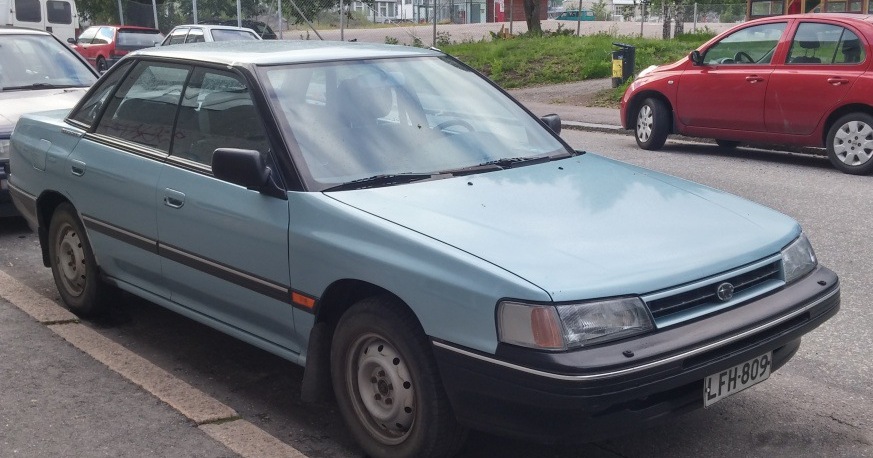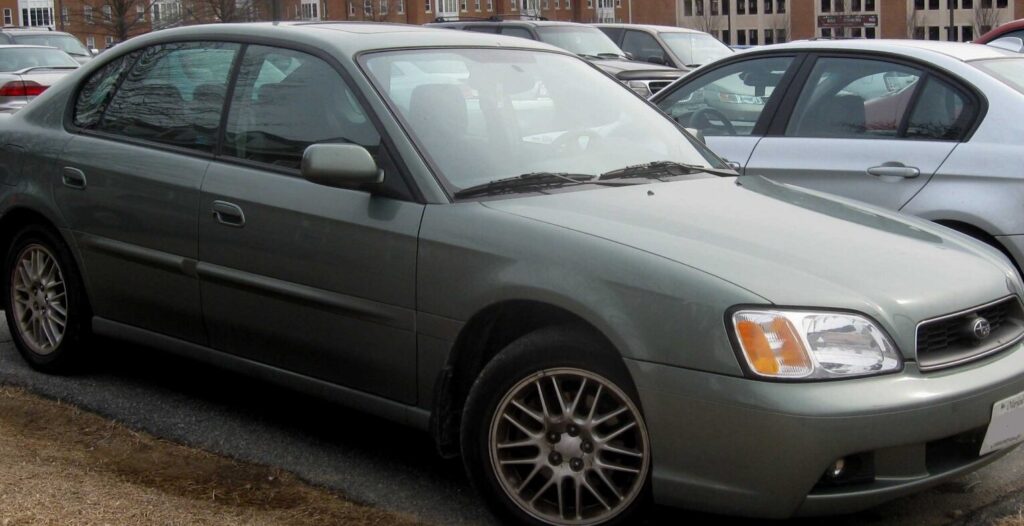
The Subaru Legacy III, specifically the BE/BH series produced from 2001 to 2003, represented a significant evolution for Subaru’s mid-size offering. This facelifted version of the third-generation Legacy built upon the foundation laid by the 1998 introduction of the BE/BH platform, refining both styling and mechanical components. The 2.0-liter (125 hp) AWD variant occupied a crucial position in the lineup, serving as a balance between affordability, practicality, and Subaru’s signature all-wheel-drive capability. It was aimed at buyers seeking a comfortable and reliable family sedan with enhanced all-weather performance, without the higher price tag of the more powerful options.
Technical Specifications
| Brand | Subaru |
| Model | Legacy |
| Generation | Legacy III (BE,BH, facelift 2001) |
| Type (Engine) | 2.0 (125 Hp) AWD |
| Start of production | 2001 |
| End of production | 2003 |
| Powertrain Architecture | Internal Combustion engine |
| Body type | Sedan |
| Seats | 5 |
| Doors | 4 |
| Fuel Type | Petrol (Gasoline) |
| Power | 125 Hp @ 5600 rpm |
| Power per litre | 62.7 Hp/l |
| Torque | 184 Nm @ 3600 rpm / 135.71 lb.-ft. @ 3600 rpm |
| Engine layout | Front, Longitudinal |
| Engine Model/Code | EJ201 |
| Engine displacement | 1994 cm3 / 121.68 cu. in. |
| Number of cylinders | 4 |
| Engine configuration | Boxer |
| Cylinder Bore | 92 mm / 3.62 in. |
| Piston Stroke | 75 mm / 2.95 in. |
| Compression ratio | 10:1 |
| Number of valves per cylinder | 4 |
| Fuel injection system | Multi-port manifold injection |
| Engine aspiration | Naturally aspirated engine |
| Engine oil capacity | 4 l / 4.23 US qt | 3.52 UK qt |
| Coolant | 7 l / 7.4 US qt | 6.16 UK qt |
| Max. weight | 1870 kg / 4122.64 lbs |
| Trunk (boot) space – minimum | 465 l / 16.42 cu. ft |
| Fuel tank capacity | 64 l / 16.91 US gal | 14.08 UK gal |
| Length | 4685 mm / 184.45 in |
| Width | 1745 mm / 68.7 in |
| Height | 1415 mm / 55.71 in |
| Wheelbase | 2650 mm / 104.33 in |
| Front track | 1460 mm / 57.48 in |
| Rear (Back) track | 1460 mm / 57.48 in |
| Ride height (ground clearance) | 155 mm / 6.1 in |
| Minimum turning circle (turning diameter) | 11.4 m / 37.4 ft |
| Drive wheel | All wheel drive (4×4) |
| Number of gears and type of gearbox | 5 gears, manual transmission |
| Front suspension | Independent type McPherson |
| Rear suspension | Independent multi-link suspension |
| Front brakes | Ventilated discs |
| Rear brakes | Disc |
| Assisting systems | ABS (Anti-lock braking system) |
| Steering type | Steering rack and pinion |
| Power steering | Hydraulic Steering |
| Tires size | 185/70 R14; 195/60 R15 |
| Wheel rims size | 5.5J x 14; 6.0J x 15 |
Powertrain & Engine Architecture
The heart of this Legacy variant was the EJ201 engine, a 1.994-liter naturally aspirated, horizontally-opposed (boxer) four-cylinder. This engine was a staple of Subaru’s lineup for many years, known for its relatively smooth operation and compact design. The EJ201 featured a single overhead camshaft (SOHC) design with four valves per cylinder. Fuel delivery was handled by a multi-point fuel injection system, providing adequate, though not exceptional, performance. The engine produced 125 horsepower at 5600 rpm and 184 Nm (135.71 lb-ft) of torque at 3600 rpm. This power was delivered to all four wheels through a standard five-speed manual transmission. The longitudinally mounted engine and symmetrical all-wheel-drive system were hallmarks of Subaru engineering, contributing to the car’s balanced handling and all-weather capability.
Driving Characteristics
The 2.0-liter Legacy with a manual transmission offered a reasonably engaging driving experience, though it wasn’t a performance standout. Acceleration was adequate for everyday driving, but it lacked the punch of the turbocharged models or even the larger 2.5-liter naturally aspirated engine. The five-speed manual transmission was well-matched to the engine’s characteristics, providing usable gear ratios for both city and highway driving. The all-wheel-drive system instilled confidence in slippery conditions, providing enhanced traction and stability. Compared to the automatic transmission option, the manual offered better fuel economy and a more direct connection to the engine. However, it didn’t deliver the same level of effortless cruising as the automatic.
Equipment & Trim Levels
The 2.0-liter AWD Legacy typically came with a respectable level of standard equipment. This included power windows, power locks, and air conditioning. Interior upholstery was typically cloth, with a straightforward and functional dashboard layout. Higher trim levels, such as the Limited, offered upgrades like leather upholstery, a sunroof, and upgraded audio systems. Optional extras included alloy wheels, a CD changer, and side airbags. The overall interior design prioritized practicality and comfort over luxury, reflecting the car’s positioning as a mainstream family sedan.
Chassis & Braking
The Legacy III utilized an independent McPherson strut suspension in the front and an independent multi-link suspension in the rear. This setup provided a comfortable ride quality while maintaining reasonable handling characteristics. The front brakes were ventilated discs, while the rear brakes were solid discs, providing adequate stopping power for the car’s weight and performance. Anti-lock brakes (ABS) were standard, enhancing safety in emergency braking situations. The steering was a rack-and-pinion system with hydraulic power assistance, offering a responsive and precise feel.
Market Reception & Comparison
The 2.0-liter Legacy AWD was generally well-received by automotive critics as a practical and reliable all-weather sedan. It was praised for its standard all-wheel drive, comfortable ride, and spacious interior. However, it was often criticized for its relatively modest performance compared to competitors and even other Legacy models. Fuel economy was considered average for its class. Compared to the turbocharged Legacy GT, the 2.0-liter model offered significantly lower performance but also a lower purchase price and potentially lower maintenance costs. The 2.5-liter naturally aspirated engine provided a middle ground, offering more power than the 2.0-liter but without the complexity of the turbocharger.
Legacy
The EJ201 engine, while not known for being a high-performance unit, proved to be remarkably durable and reliable when properly maintained. The Legacy III, in general, has a reputation for longevity, and well-maintained examples are still found on the road today. The 2.0-liter variant, due to its relative simplicity, tends to be less prone to major mechanical issues than the turbocharged models. In the used car market, these Legacies represent an affordable and practical option for buyers seeking a reliable all-wheel-drive sedan. However, potential buyers should be aware of the potential for rust, particularly in areas with harsh winters, and ensure that the car has received regular maintenance, including timing belt replacements.