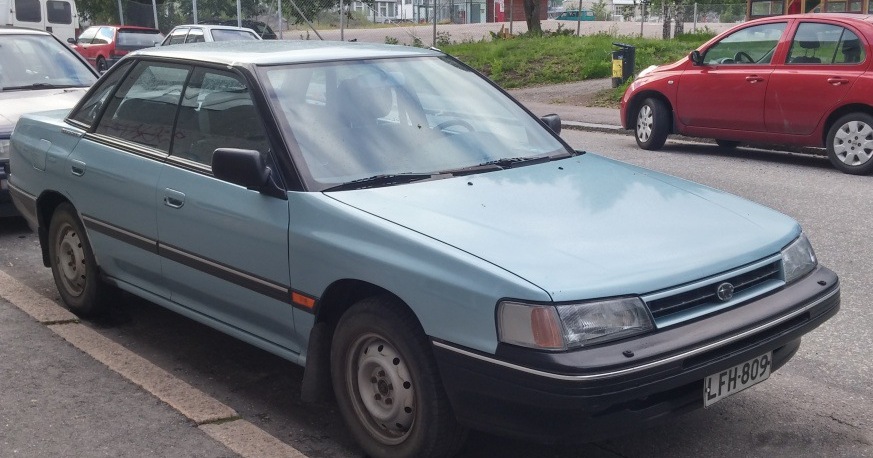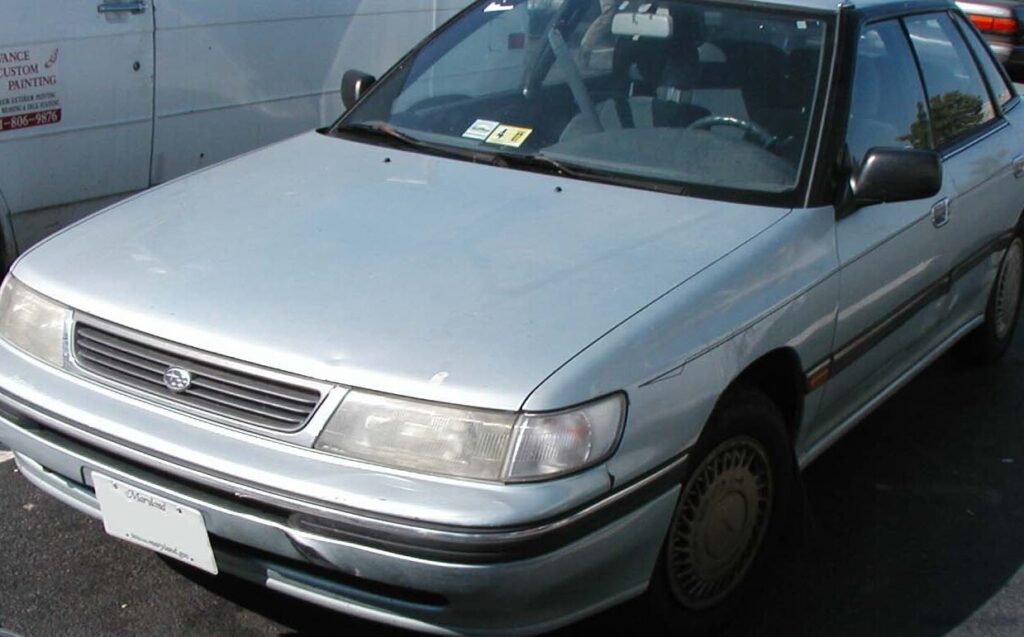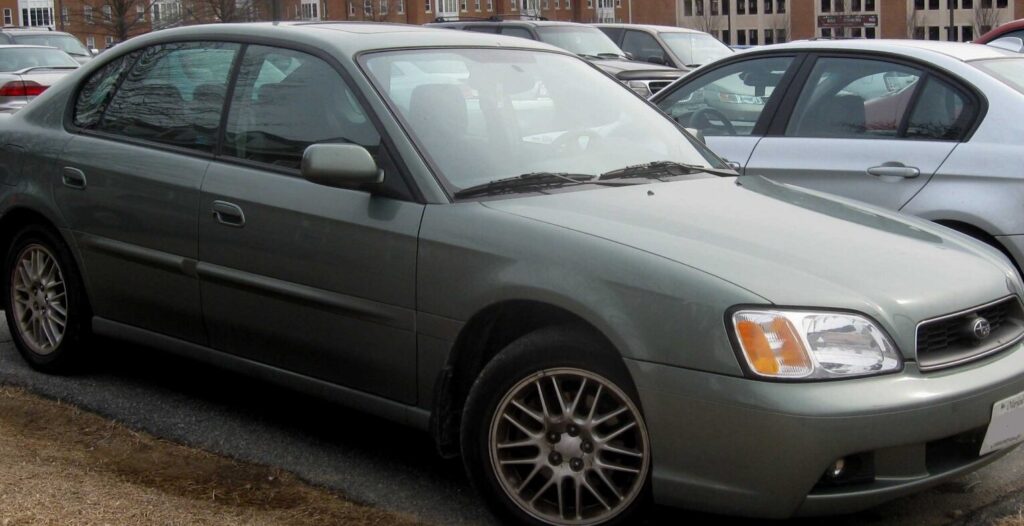
The Subaru Legacy III (BE/BH series), particularly the facelifted version introduced in 2001, represented a significant evolution for Subaru’s mid-size offering. Produced between 2001 and 2003, the 2.0-liter (125 hp) variant with all-wheel drive and an automatic transmission occupied a crucial position in the Legacy lineup, aiming for a balance between affordability, practicality, and Subaru’s signature symmetrical all-wheel drive capability. This model was primarily targeted at family buyers seeking a reliable and safe vehicle, particularly in markets where Subaru had established a strong foothold, such as North America and Australia. It served as a stepping stone between the base 1.8L models and the more performance-oriented 2.5L variants.
Technical Specifications
| Brand | Subaru |
| Model | Legacy |
| Generation | Legacy III (BE,BH, facelift 2001) |
| Type | 2.0 (125 Hp) AWD Automatic |
| Start of production | 2001 |
| End of production | 2003 |
| Powertrain Architecture | Internal Combustion engine |
| Body type | Sedan |
| Seats | 5 |
| Doors | 4 |
| Fuel Type | Petrol (Gasoline) |
| Power | 125 Hp @ 5600 rpm |
| Power per litre | 62.7 Hp/l |
| Torque | 184 Nm @ 3600 rpm / 135.71 lb.-ft. @ 3600 rpm |
| Engine layout | Front, Longitudinal |
| Engine Model/Code | EJ201 |
| Engine displacement | 1994 cm3 / 121.68 cu. in. |
| Number of cylinders | 4 |
| Engine configuration | Boxer |
| Cylinder Bore | 92 mm / 3.62 in. |
| Piston Stroke | 75 mm / 2.95 in. |
| Compression ratio | 10:1 |
| Number of valves per cylinder | 4 |
| Fuel injection system | Multi-port manifold injection |
| Engine aspiration | Naturally aspirated engine |
| Engine oil capacity | 4 l / 4.23 US qt | 3.52 UK qt |
| Coolant | 6.9 l / 7.29 US qt | 6.07 UK qt |
| Max. weight | 1870 kg / 4122.64 lbs |
| Trunk (boot) space – minimum | 465 l / 16.42 cu. ft |
| Fuel tank capacity | 64 l / 16.91 US gal | 14.08 UK gal |
| Length | 4685 mm / 184.45 in |
| Width | 1745 mm / 68.7 in |
| Height | 1415 mm / 55.71 in |
| Wheelbase | 2650 mm / 104.33 in |
| Front track | 1460 mm / 57.48 in |
| Rear (Back) track | 1460 mm / 57.48 in |
| Ride height (ground clearance) | 155 mm / 6.1 in |
| Minimum turning circle (turning diameter) | 11.4 m / 37.4 ft |
| Drive wheel | All wheel drive (4×4) |
| Number of gears and type of gearbox | 4 gears, automatic transmission |
| Front suspension | Independent type McPherson |
| Rear suspension | Independent multi-link suspension |
| Front brakes | Ventilated discs |
| Rear brakes | Disc |
| Assisting systems | ABS (Anti-lock braking system) |
| Steering type | Steering rack and pinion |
| Power steering | Hydraulic Steering |
| Tires size | 185/70 R14; 195/60 R15 |
| Wheel rims size | 5.5J x 14; 6.0J x 15 |
Powertrain & Engine Architecture
The heart of this Legacy variant is the EJ201 engine, a 1.994-liter (121.68 cubic inches) naturally aspirated, horizontally-opposed (boxer) four-cylinder. This engine design, a Subaru hallmark, contributes to a lower center of gravity, enhancing handling. The EJ201 utilizes a multi-port fuel injection system, delivering fuel directly into the intake ports. The engine features a single overhead camshaft (SOHC) design with four valves per cylinder. The 125 horsepower output at 5600 rpm and 184 Nm (135.71 lb-ft) of torque at 3600 rpm are respectable figures for its displacement, but not particularly high-performance. The engine is paired with a four-speed automatic transmission, designed for smooth and convenient operation. This transmission, while reliable, lacks the efficiency and responsiveness of more modern automatic gearboxes.
Driving Characteristics
The 2.0L automatic Legacy offers a comfortable and predictable driving experience. Acceleration is adequate for everyday driving, but it won’t provide exhilarating performance. The automatic transmission, while smooth, can feel somewhat sluggish, especially during quick overtaking maneuvers. Compared to the five-speed manual transmission available on other Legacy models, the automatic version sacrifices some responsiveness. The all-wheel drive system provides excellent traction in various weather conditions, a key selling point for Subaru. The boxer engine’s low center of gravity contributes to stable handling, but the overall driving experience is geared towards comfort and practicality rather than sporty dynamics.
Equipment & Trim Levels
The 2.0-liter automatic Legacy typically came with a reasonable level of standard equipment. This included power windows, power locks, air conditioning, and an AM/FM stereo. Higher trim levels, often denoted by “L” or “Limited” designations, added features such as alloy wheels, a sunroof, upgraded upholstery, and a more sophisticated audio system. Interior upholstery was typically cloth, with leather options available on higher trims. The dashboard layout was functional and straightforward, prioritizing ease of use over stylistic flair. Optional extras included a CD player, cruise control, and side airbags.
Chassis & Braking
The Legacy III utilizes an independent McPherson strut suspension in the front and an independent multi-link suspension in the rear, providing a comfortable ride and decent handling. The front brakes are ventilated discs, offering good stopping power, while the rear brakes are solid discs. Anti-lock braking system (ABS) was standard, enhancing safety. The chassis is relatively robust, providing a stable platform for the vehicle. Stabilizer bars are present on both the front and rear axles, helping to reduce body roll during cornering. The ride height of 155mm (6.1 inches) provides adequate ground clearance for most road conditions.
Market Reception & Comparison
The 2.0-liter automatic Legacy was generally well-received by critics as a practical and reliable family sedan. It was praised for its all-wheel drive system, comfortable ride, and spacious interior. However, some reviewers noted that the engine lacked power and the automatic transmission felt dated. Compared to the 2.5-liter models, the 2.0L offered lower running costs but sacrificed performance. The 1.8L models were even more affordable but offered even less power. Fuel economy was average for its class, typically around 22-26 mpg combined. Reliability was generally good, with the EJ201 engine being known for its durability.
Legacy
The EJ201 engine, while not without its quirks (such as potential for head gasket issues if not properly maintained), proved to be a relatively durable powertrain. The four-speed automatic transmission, while not the most advanced, is also generally reliable. Today, these Legacy models are often found as affordable used cars. They represent a good value for buyers seeking a reliable and safe all-wheel drive sedan. However, potential buyers should be aware of the need for regular maintenance, particularly regarding the cooling system and timing belt replacement. The 2.0L automatic Legacy remains a testament to Subaru’s commitment to practicality, safety, and all-weather capability.