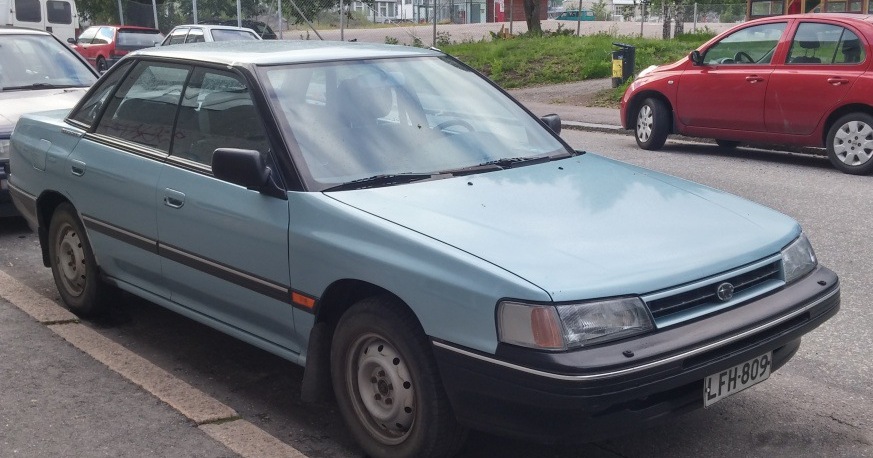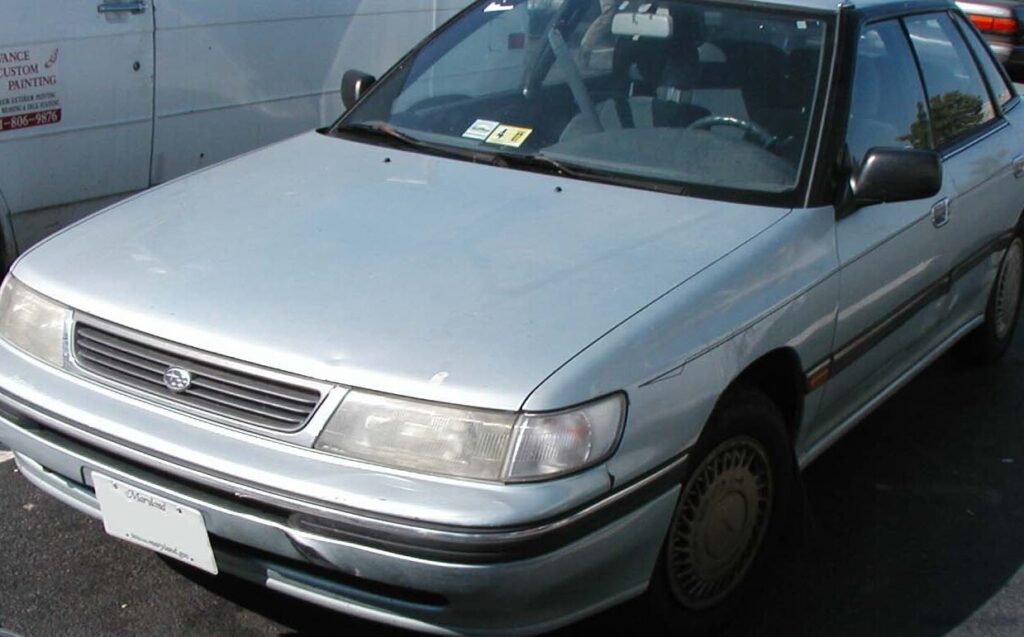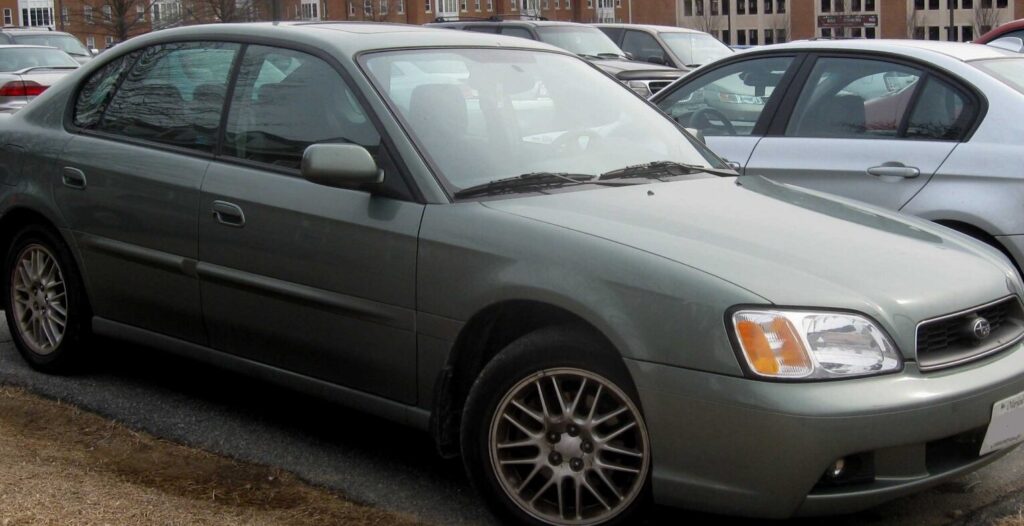
The Subaru Legacy III (BE/BH series), particularly the facelifted models produced from 2001-2003, represented a significant evolution for Subaru’s mid-size offering. The 3.0-liter variant, equipped with a 220 horsepower engine and automatic transmission, occupied the top echelon of the Legacy lineup during its brief production run. This model aimed to provide a blend of performance, all-weather capability through Subaru’s symmetrical all-wheel drive system, and a degree of luxury appealing to buyers seeking a more refined driving experience. It was primarily marketed in North America, Australia, and select European markets where Subaru had established a foothold.
Technical Specifications
| Brand | Subaru |
| Model | Legacy |
| Generation | Legacy III (BE,BH, facelift 2001) |
| Type (Engine) | 3.0 (220 Hp) AWD Automatic |
| Start of production | 2002 |
| End of production | 2003 |
| Powertrain Architecture | Internal Combustion engine |
| Body type | Sedan |
| Seats | 5 |
| Doors | 4 |
| Fuel consumption (combined) | 9.1 l/100 km (25.8 US mpg, 31 UK mpg, 11 km/l) |
| Fuel Type | Petrol (Gasoline) |
| Weight-to-power ratio | 6.8 kg/Hp, 147.7 Hp/tonne |
| Weight-to-torque ratio | 5.2 kg/Nm, 194 Nm/tonne |
| Power | 220 Hp @ 6000 rpm |
| Power per litre | 73.3 Hp/l |
| Torque | 289 Nm @ 4400 rpm (213.16 lb.-ft. @ 4400 rpm) |
| Engine layout | Front, Longitudinal |
| Engine Model/Code | EZ30 |
| Engine displacement | 3000 cm3 (183.07 cu. in.) |
| Number of cylinders | 6 |
| Engine configuration | Boxer |
| Cylinder Bore | 89.2 mm (3.51 in.) |
| Piston Stroke | 80 mm (3.15 in.) |
| Compression ratio | 10.7:1 |
| Number of valves per cylinder | 4 |
| Fuel injection system | Multi-port manifold injection |
| Engine aspiration | Naturally aspirated engine |
| Valvetrain | DOHC |
| Engine oil capacity | 5.5 l (5.81 US qt | 4.84 UK qt) |
| Coolant | 7.9 l (8.35 US qt | 6.95 UK qt) |
| Kerb Weight | 1490 kg (3284.89 lbs.) |
| Trunk (boot) space – minimum | 465 l (16.42 cu. ft.) |
| Fuel tank capacity | 64 l (16.91 US gal | 14.08 UK gal) |
| Length | 4685 mm (184.45 in.) |
| Width | 1745 mm (68.7 in.) |
| Height | 1415 mm (55.71 in.) |
| Wheelbase | 2650 mm (104.33 in.) |
| Front track | 1460 mm (57.48 in.) |
| Rear (Back) track | 1460 mm (57.48 in.) |
| Ride height (ground clearance) | 155 mm (6.1 in.) |
| Minimum turning circle (turning diameter) | 11.4 m (37.4 ft.) |
| Drive wheel | All wheel drive (4×4) |
| Number of gears and type of gearbox | 4 gears, automatic transmission |
| Front suspension | Independent type McPherson |
| Rear suspension | Independent multi-link suspension |
| Front brakes | Ventilated discs |
| Rear brakes | Disc |
| Assisting systems | ABS (Anti-lock braking system) |
| Steering type | Steering rack and pinion |
| Power steering | Hydraulic Steering |
| Tires size | 215/45 R17 |
| Wheel rims size | 17 |
Powertrain & Engine Architecture
The heart of the Legacy 3.0 was the EZ30 3.0-liter horizontally-opposed (boxer) six-cylinder engine. This engine was a key feature of Subaru’s engineering philosophy, providing a low center of gravity for improved handling. The EZ30 utilized multi-port fuel injection and a double overhead camshaft (DOHC) valvetrain. The engine’s design emphasized smooth power delivery rather than outright peak performance. The automatic transmission was a four-speed unit, chosen for its balance of responsiveness and comfort. While not as sporty as a manual transmission, it suited the intended market for this trim level – buyers prioritizing ease of use and a relaxed driving experience. The transmission was electronically controlled, adapting shift points based on throttle input and driving conditions.
Driving Characteristics
The 220 horsepower and 213 lb-ft of torque provided by the EZ30 engine, coupled with the all-wheel drive system, resulted in brisk acceleration. However, the automatic transmission did slightly diminish the engine’s potential compared to the available five-speed manual. The four-speed automatic, while smooth, lacked the close gear ratios of a more modern transmission. This meant that while highway cruising was comfortable, aggressive driving required more frequent downshifts. The symmetrical all-wheel drive system provided excellent traction in various conditions, making the Legacy 3.0 a capable vehicle in inclement weather. The boxer engine’s low center of gravity contributed to stable handling, though the Legacy wasn’t considered a particularly sporty sedan.
Equipment & Trim Levels
The 3.0-liter automatic variant typically came well-equipped, representing the top trim level. Standard features often included leather upholstery, power-adjustable front seats, a premium sound system, automatic climate control, and alloy wheels. Optional extras could include a sunroof, navigation system, and upgraded audio components. The interior design was generally conservative, focusing on functionality and comfort rather than cutting-edge styling. The overall ambiance aimed for a refined and upscale feel, appealing to buyers seeking a step up from more basic Legacy models.
Chassis & Braking
The Legacy 3.0 featured an independent McPherson strut front suspension and an independent multi-link rear suspension. This setup provided a comfortable ride while maintaining reasonable handling characteristics. The braking system consisted of ventilated discs at the front and solid discs at the rear. Anti-lock brakes (ABS) were standard, enhancing safety and control during emergency braking situations. The suspension was tuned to prioritize ride comfort, resulting in a slightly softer feel compared to sport-tuned suspensions found in some competitors.
Market Reception & Comparison
The Legacy 3.0 automatic received generally positive reviews, with critics praising its smooth engine, comfortable ride, and all-weather capability. However, some reviewers noted that the automatic transmission held the engine back from reaching its full potential. Compared to the base 2.5-liter models, the 3.0 offered a significant performance upgrade. Against competitors like the Honda Accord and Toyota Camry, the Legacy 3.0 distinguished itself with its standard all-wheel drive and unique boxer engine. Fuel economy was reasonable for a six-cylinder vehicle of its size, averaging around 25.8 US mpg in combined driving. Reliability was generally good, though preventative maintenance was crucial, particularly regarding oil changes due to the boxer engine’s design.
Legacy
The EZ30 engine, while robust, is known to require diligent maintenance, particularly regarding head gasket integrity. Regular oil changes and coolant flushes are essential to prevent premature failure. Today, well-maintained Legacy 3.0 models are sought after by enthusiasts who appreciate their unique engine and all-wheel drive system. The car’s relative rarity, due to its limited production run, has also contributed to its collectibility. While not a high-performance icon, the Legacy 3.0 represents a capable and comfortable mid-size sedan that offered a distinctive alternative to more mainstream competitors.