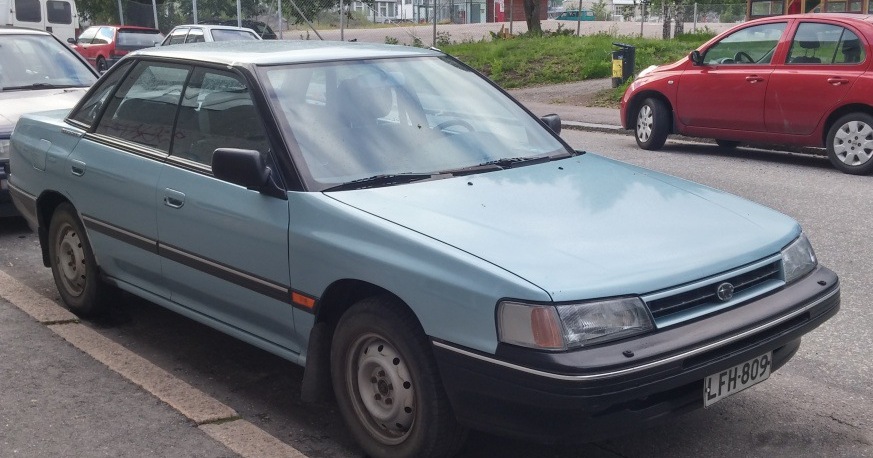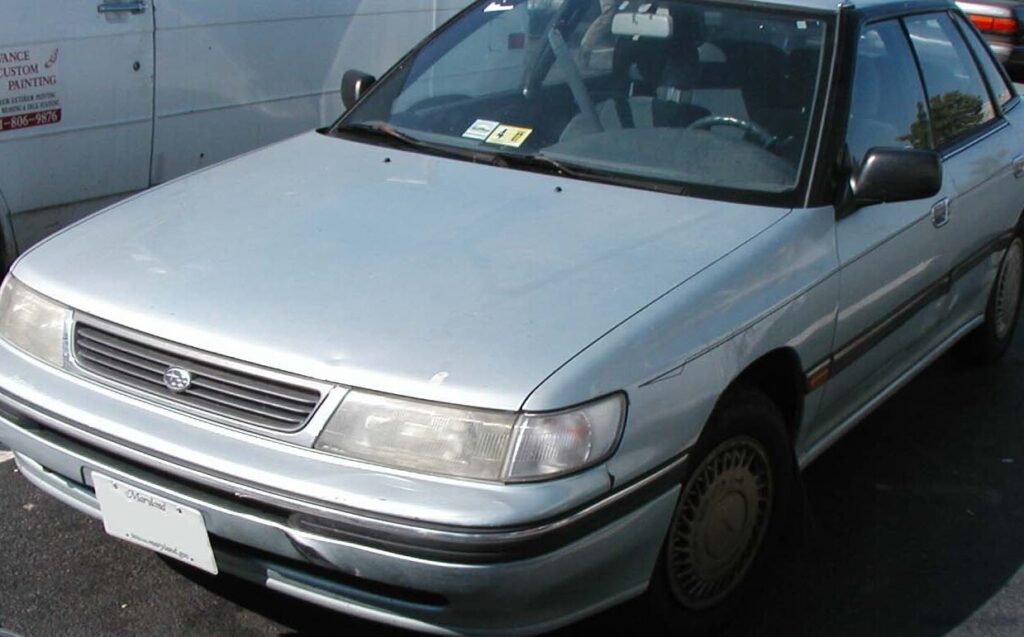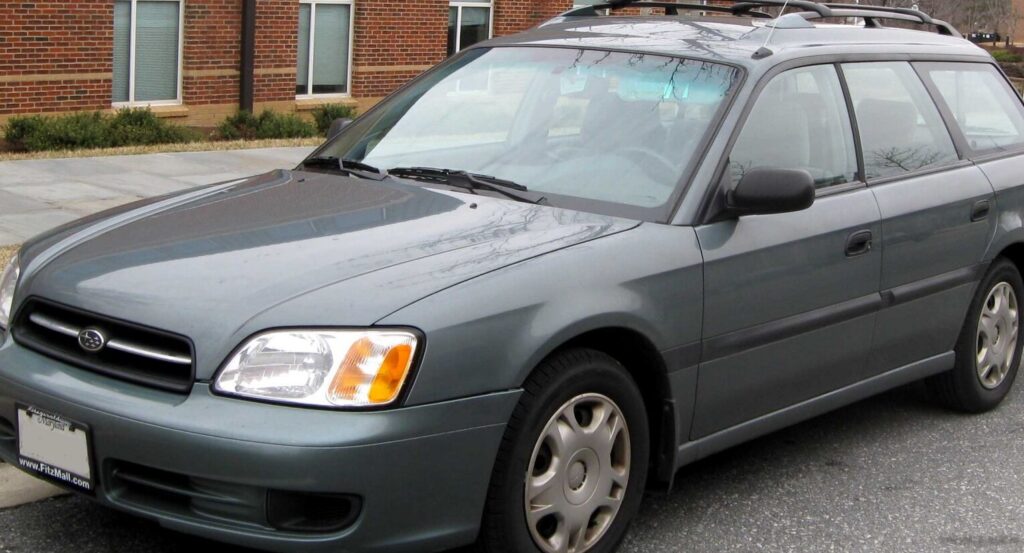
The Subaru Legacy III Station Wagon, internally designated as the BE/BH series, represented Subaru’s third-generation offering in the mid-size wagon segment. Produced between 1998 and 2001, this generation continued the Legacy’s reputation for standard all-wheel drive and practical, family-oriented design. The 2.0-liter (125 hp) AWD variant occupied a significant position in the lineup, offering a balance between affordability, fuel efficiency, and Subaru’s signature symmetrical all-wheel drive system. It served as a popular choice for buyers seeking a versatile vehicle capable of handling diverse weather conditions and light-duty hauling.
Technical Specifications
| Brand | Subaru |
| Model | Legacy |
| Generation | Legacy III Station Wagon (BE,BH) |
| Type (Engine) | 2.0 (125 Hp) AWD |
| Start of production | 1998 |
| End of production | 2001 |
| Powertrain Architecture | Internal Combustion engine |
| Body type | Station wagon (estate) |
| Seats | 5 |
| Doors | 5 |
| Fuel consumption (urban) | 12.3 l/100 km (19.1 US mpg, 23 UK mpg, 8.1 km/l) |
| Fuel consumption (extra urban) | 7.7 l/100 km (30.5 US mpg, 36.7 UK mpg, 13 km/l) |
| Fuel consumption (combined) | 9.4 l/100 km (25 US mpg, 30.1 UK mpg, 10.6 km/l) |
| CO2 emissions | 232 g/km |
| Fuel Type | Petrol (Gasoline) |
| Acceleration 0 – 100 km/h | 11.1 sec |
| Acceleration 0 – 62 mph | 11.1 sec |
| Acceleration 0 – 60 mph | 10.5 sec |
| Maximum speed | 188 km/h (116.82 mph) |
| Weight-to-power ratio | 11.3 kg/Hp, 88.7 Hp/tonne |
| Weight-to-torque ratio | 7.7 kg/Nm, 130.5 Nm/tonne |
| Power | 125 Hp @ 5600 rpm |
| Power per litre | 62.7 Hp/l |
| Torque | 184 Nm @ 3600 rpm (135.71 lb.-ft. @ 3600 rpm) |
| Engine layout | Front, Longitudinal |
| Engine Model/Code | EJ20 |
| Engine displacement | 1994 cm3 (121.68 cu. in.) |
| Number of cylinders | 4 |
| Engine configuration | Boxer |
| Cylinder Bore | 92 mm (3.62 in.) |
| Piston Stroke | 75 mm (2.95 in.) |
| Compression ratio | 10:1 |
| Number of valves per cylinder | 4 |
| Fuel injection system | Multi-port manifold injection |
| Engine aspiration | Naturally aspirated engine |
| Valvetrain | OHC |
| Engine oil capacity | 4 l (4.23 US qt | 3.52 UK qt) |
| Coolant | 7 l (7.4 US qt | 6.16 UK qt) |
| Kerb Weight | 1410-1440 kg (3108.52 – 3174.66 lbs.) |
| Max. weight | 1875 kg (4133.67 lbs.) |
| Max load | 435-465 kg (959.01 – 1025.15 lbs.) |
| Trunk (boot) space – minimum | 528 l (18.65 cu. ft.) |
| Trunk (boot) space – maximum | 1646 l (58.13 cu. ft.) |
| Fuel tank capacity | 64 l (16.91 US gal | 14.08 UK gal) |
| Length | 4680 mm (184.25 in.) |
| Width | 1695 mm (66.73 in.) |
| Height | 1515 mm (59.65 in.) |
| Wheelbase | 2650 mm (104.33 in.) |
| Front track | 1460 mm (57.48 in.) |
| Rear (Back) track | 1455 mm (57.28 in.) |
| Ride height (ground clearance) | 165-155 mm (6.5 – 6.1 in.) |
| Drive wheel | All wheel drive (4×4) |
| Number of gears and type of gearbox | 5 gears, manual transmission |
| Front suspension | Independent type McPherson |
| Rear suspension | Independent multi-link suspension |
| Front brakes | Ventilated discs |
| Rear brakes | Disc |
| Assisting systems | ABS (Anti-lock braking system) |
| Steering type | Steering rack and pinion |
| Power steering | Hydraulic Steering |
| Tires size | 185/70 R14; 195/60 R15 |
| Wheel rims size | 5.5J x 14; 6.0J x 15 |
Powertrain & Engine Architecture
The heart of this Legacy variant was the EJ20, a 1.994-liter naturally aspirated, horizontally-opposed (boxer) four-cylinder engine. This engine was a hallmark of Subaru engineering, known for its smooth operation and inherent balance. The EJ20 featured a single overhead camshaft (SOHC) design operating four valves per cylinder. Fuel delivery was managed by a multi-point fuel injection system, providing adequate, though not exceptional, performance. The engine produced 125 horsepower at 5600 rpm and 184 Nm (135.71 lb-ft) of torque at 3600 rpm. This power was transmitted to all four wheels through a five-speed manual transmission. The longitudinally mounted engine layout contributed to the car’s balanced handling characteristics.
Driving Characteristics
The 2.0-liter Legacy wagon with a manual transmission offered a reasonably engaging driving experience. Acceleration to 60 mph took around 10.5 seconds, and top speed was approximately 117 mph. While not a performance machine, the engine provided sufficient power for everyday driving and highway cruising. The all-wheel-drive system instilled confidence in various road conditions, particularly in inclement weather. Compared to the more powerful 2.5-liter engine options, this variant felt less responsive, especially when fully loaded. However, the lower engine displacement resulted in slightly better fuel economy. The five-speed manual transmission offered precise shifts, allowing drivers to make the most of the available power.
Equipment & Trim Levels
The 2.0-liter AWD Legacy wagon typically came with a respectable level of standard equipment. This included power windows, power locks, and air conditioning. Interior upholstery was generally cloth, with a functional, if somewhat basic, dashboard layout. Optional extras included a sunroof, upgraded audio systems, and alloy wheels. The trim level often dictated the availability of these features. This variant generally represented a mid-range offering, positioned above the base models but below the more luxurious trims equipped with larger engines and more extensive features.
Chassis & Braking
The Legacy III wagon utilized an independent McPherson strut suspension in the front and an independent multi-link suspension in the rear. This setup provided a comfortable ride and predictable handling. Front brakes were ventilated discs, while rear brakes were solid discs, offering adequate stopping power for the vehicle’s weight. Anti-lock braking system (ABS) was standard, enhancing safety. The suspension was tuned to prioritize comfort and stability over outright sportiness, making it well-suited for long journeys and family use.
Market Reception & Comparison
The 2.0-liter Legacy wagon was well-received in markets where all-wheel drive was highly valued, such as North America and parts of Europe. Critics praised its practicality, safety features, and all-weather capability. However, some reviewers noted that the engine lacked the punch of its larger counterparts. Compared to the 2.5-liter models, the 2.0-liter offered better fuel economy (around 25 mpg combined) but at the expense of performance. It also tended to be more affordable, making it an attractive option for budget-conscious buyers. Against competitors like the Toyota Camry Wagon and Honda Accord Wagon, the Legacy distinguished itself with its standard all-wheel drive.
Legacy
The EJ20 engine, while generally reliable, is known to require regular maintenance, particularly regarding oil changes. The timing belt requires periodic replacement to prevent catastrophic engine failure. The all-wheel-drive system, while robust, can require occasional servicing. Today, the BE/BH Legacy wagons, particularly well-maintained examples, have gained a following among enthusiasts who appreciate their practicality, durability, and unique Subaru character. They represent a relatively affordable entry point into the world of Subaru ownership and continue to provide reliable transportation for those seeking a versatile and capable wagon.