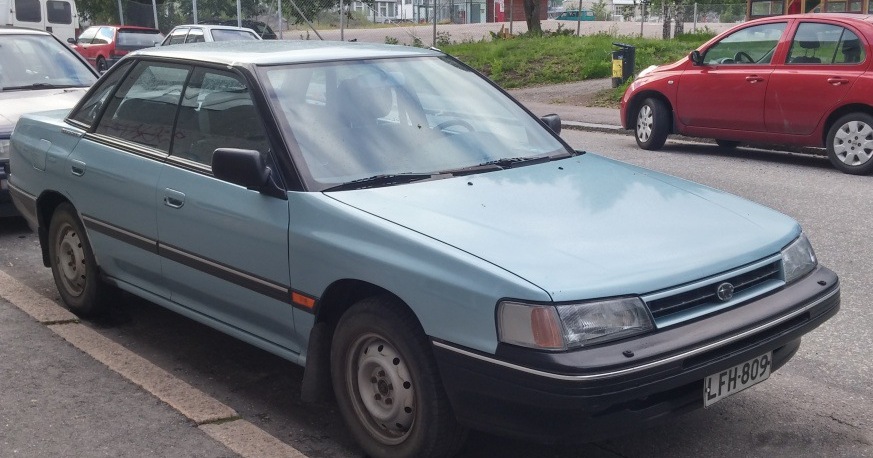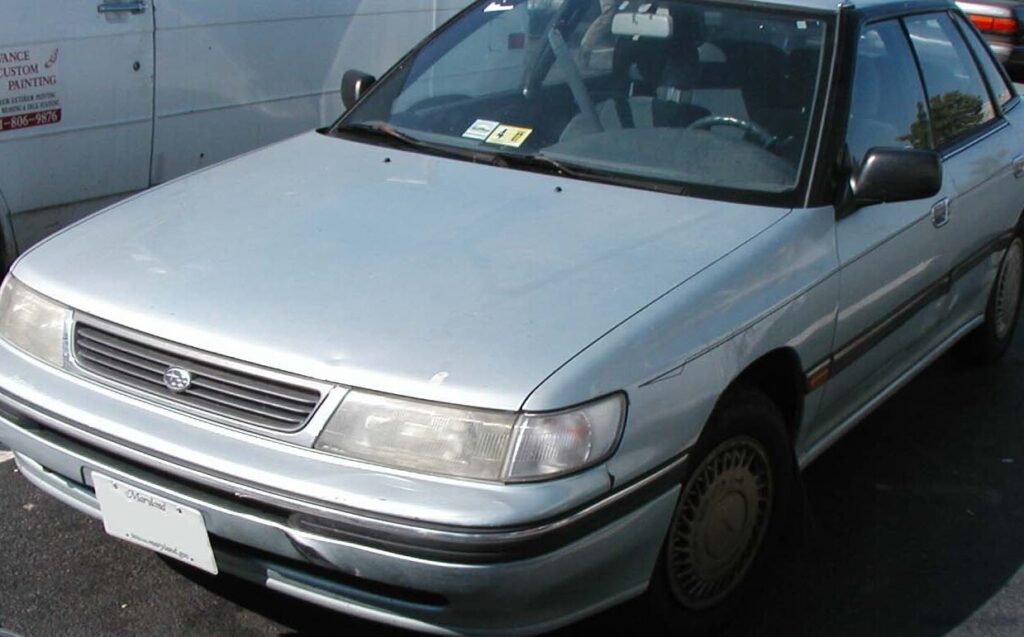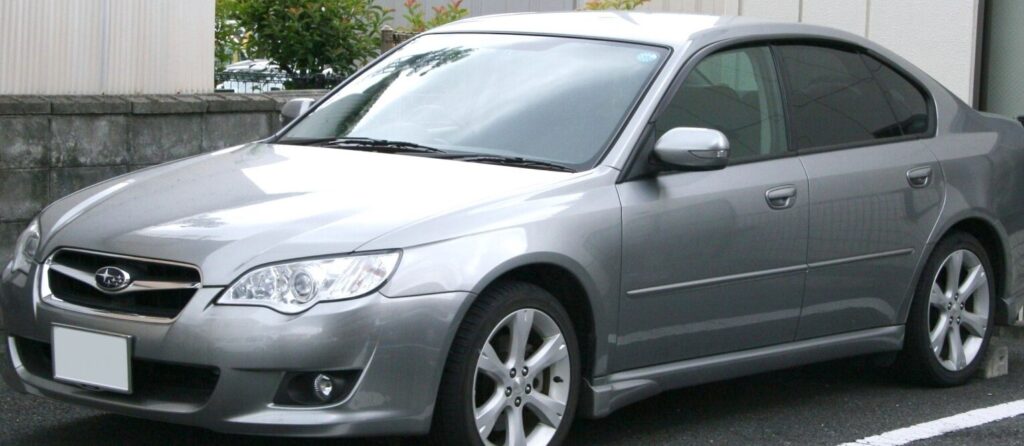
The Subaru Legacy IV (facelift, produced 2008-2009) 2.0d, equipped with a 150 horsepower turbocharged diesel engine and all-wheel drive, represented a significant offering in Subaru’s lineup during that period. This variant was primarily aimed at the European market, where diesel engines held a substantial share of the mid-size sedan segment. The facelifted fourth-generation Legacy, internally designated as the BP/BL series, built upon the foundation of the original BP platform introduced in 2003, offering refinements to styling, safety features, and powertrain options. The 2.0d model occupied a middle ground within the Legacy range, positioned between the more economical naturally aspirated petrol engines and the higher-performance turbocharged petrol variants.
Technical Specifications
| Brand | Subaru |
| Model | Legacy |
| Generation | Legacy IV (facelift 2006) |
| Type (Engine) | 2.0d (150 Hp) AWD |
| Start of production | 2008 |
| End of production | 2009 |
| Powertrain Architecture | Internal Combustion engine |
| Body type | Sedan |
| Seats | 5 |
| Doors | 4 |
| Fuel consumption (urban) | 7 l/100 km (33.6 US mpg, 40.4 UK mpg, 14.3 km/l) |
| Fuel consumption (extra urban) | 4.8 l/100 km (49 US mpg, 58.9 UK mpg, 20.8 km/l) |
| Fuel consumption (combined) | 5.6 l/100 km (42 US mpg, 50.4 UK mpg, 17.9 km/l) |
| CO2 emissions | 148 g/km |
| Fuel Type | Diesel |
| Acceleration 0 – 100 km/h | 8.7 sec |
| Acceleration 0 – 62 mph | 8.7 sec |
| Acceleration 0 – 60 mph | 8.3 sec |
| Maximum speed | 208 km/h (129.25 mph) |
| Emission standard | Euro 4 |
| Weight-to-power ratio | 9.7 kg/Hp, 102.7 Hp/tonne |
| Weight-to-torque ratio | 4.2 kg/Nm, 239.7 Nm/tonne |
| Power | 150 Hp @ 3600 rpm |
| Power per litre | 75.1 Hp/l |
| Torque | 350 Nm @ 1800 rpm (258.15 lb.-ft. @ 1800 rpm) |
| Engine layout | Front, Longitudinal |
| Engine Model/Code | EE20 |
| Engine displacement | 1998 cm3 (121.93 cu. in.) |
| Number of cylinders | 4 |
| Engine configuration | Boxer |
| Cylinder Bore | 86 mm (3.39 in.) |
| Piston Stroke | 86 mm (3.39 in.) |
| Number of valves per cylinder | 4 |
| Fuel injection system | Diesel Commonrail |
| Engine aspiration | Turbocharger, Intercooler |
| Valvetrain | DOHC |
| Engine oil capacity | 5.5 l (5.81 US qt | 4.84 UK qt) |
| Coolant | 6.9 l (7.29 US qt | 6.07 UK qt) |
| Kerb Weight | 1460 kg (3218.75 lbs.) |
| Max. weight | 2000 kg (4409.25 lbs.) |
| Max load | 540 kg (1190.5 lbs.) |
| Trunk (boot) space – minimum | 433 l (15.29 cu. ft.) |
| Fuel tank capacity | 64 l (16.91 US gal | 14.08 UK gal) |
| Max. roof load | 80 kg (176.37 lbs.) |
| Permitted trailer load with brakes (12%) | 1700 kg (3747.86 lbs.) |
| Permitted trailer load without brakes | 750 kg (1653.47 lbs.) |
| Permitted towbar download | 82 kg (180.78 lbs.) |
| Length | 4730 mm (186.22 in.) |
| Width | 1730 mm (68.11 in.) |
| Height | 1425 mm (56.1 in.) |
| Wheelbase | 2670 mm (105.12 in.) |
| Front track | 1495 mm (58.86 in.) |
| Rear (Back) track | 1485 mm (58.46 in.) |
| Ride height (ground clearance) | 150 mm (5.91 in.) |
| Minimum turning circle (turning diameter) | 11.6 m (38.06 ft.) |
| Drive wheel | All wheel drive (4×4) |
| Number of gears and type of gearbox | 5 gears, manual transmission |
| Front suspension | Spring Strut |
| Rear suspension | Coil spring |
| Front brakes | Ventilated discs |
| Rear brakes | Disc |
| Assisting systems | ABS (Anti-lock braking system) |
| Steering type | Steering rack and pinion |
| Power steering | Hydraulic Steering |
| Tires size | 215/45 R17 |
| Wheel rims size | 17 |
Powertrain & Engine Architecture
The heart of the 2.0d Legacy was the EE20 diesel engine, a 2.0-liter (1998cc) horizontally-opposed (boxer) four-cylinder unit. Subaru’s boxer configuration, known for its low center of gravity and inherent balance, contributed to the car’s handling characteristics. The EE20 featured a common rail direct injection system, delivering fuel at extremely high pressure for optimized combustion. A turbocharger with an intercooler was employed to boost power output to 150 horsepower at 3600 rpm and 350 Nm (258 lb-ft) of torque at a relatively low 1800 rpm. This torque curve provided strong pulling power across a wide range of engine speeds. The engine utilized a double overhead camshaft (DOHC) valvetrain with four valves per cylinder. The 2008-2009 models were equipped with a 5-speed manual transmission as standard, delivering power to all four wheels via Subaru’s symmetrical all-wheel drive system.
Driving Characteristics
The 2.0d AWD Legacy offered a blend of fuel efficiency and respectable performance. While not as quick as the petrol-powered turbocharged models, the diesel engine’s abundant torque made it a capable cruiser and provided effortless overtaking ability. The 5-speed manual transmission was well-matched to the engine’s characteristics, offering smooth shifts and allowing the driver to keep the engine within its optimal power band. The all-wheel drive system provided excellent traction in various weather conditions, enhancing stability and confidence. Compared to the petrol variants, the 2.0d prioritized fuel economy and lower running costs, making it an attractive option for drivers covering long distances.
Equipment & Trim Levels
The 2.0d trim level typically included standard features such as air conditioning, power windows, central locking, and an audio system. Safety features like ABS brakes and front airbags were also standard. Higher trim levels, available as options, could add features like alloy wheels, a sunroof, leather upholstery, and a more advanced audio system with navigation. The interior design was functional and well-built, reflecting Subaru’s reputation for practicality and durability.
Chassis & Braking
The Legacy IV utilized a MacPherson strut front suspension and a coil spring rear suspension. The suspension setup was tuned to provide a comfortable ride while maintaining good handling characteristics. The car featured ventilated disc brakes at the front and solid disc brakes at the rear. The hydraulic power steering provided precise and responsive steering feel. The all-wheel drive system employed a viscous coupling center differential, automatically distributing torque between the front and rear axles as needed.
Market Reception & Comparison
The Subaru Legacy 2.0d AWD was generally well-received by automotive critics, who praised its fuel efficiency, comfortable ride, and all-weather capability. It was often compared to other mid-size diesel sedans from European manufacturers like Volkswagen and Ford. While the Legacy’s diesel engine wasn’t as refined as some of its competitors, it offered a competitive level of performance and economy. The all-wheel drive system was a key differentiator, providing a significant advantage in slippery conditions.
Legacy
The EE20 diesel engine, while not without its complexities, proved to be a relatively reliable unit when properly maintained. Common issues included turbocharger wear and potential problems with the fuel injection system. However, with regular servicing and attention to detail, these engines could provide many years of reliable service. Today, the 2008-2009 Subaru Legacy 2.0d AWD represents a practical and affordable used car option, particularly for those seeking a vehicle with all-wheel drive and good fuel economy. Its boxer engine and robust construction continue to appeal to Subaru enthusiasts.