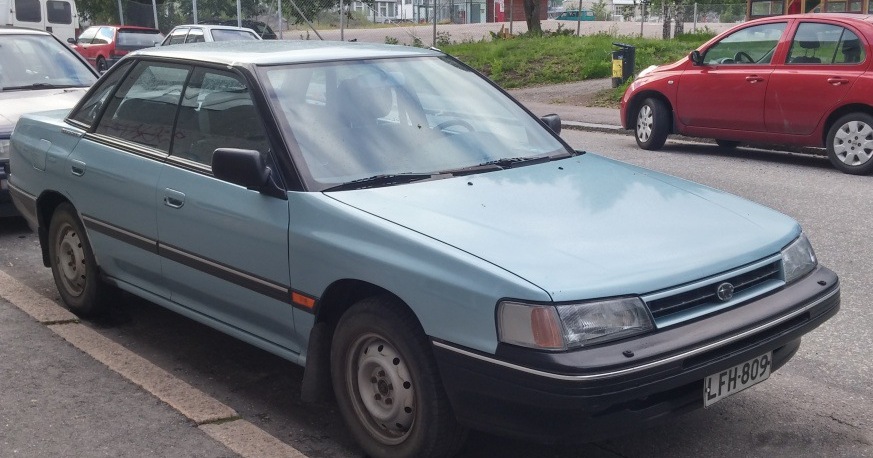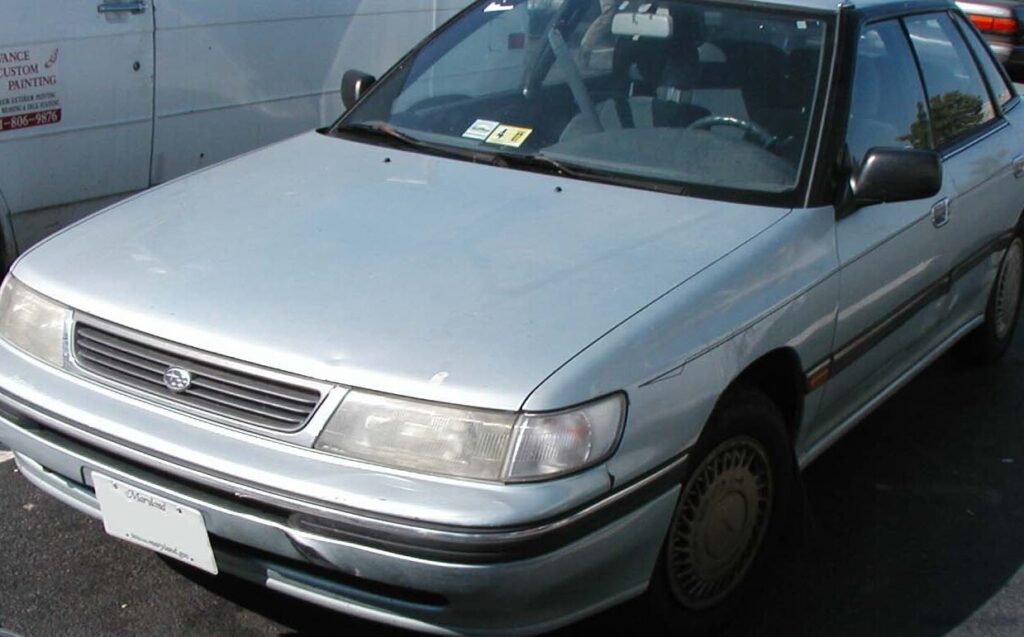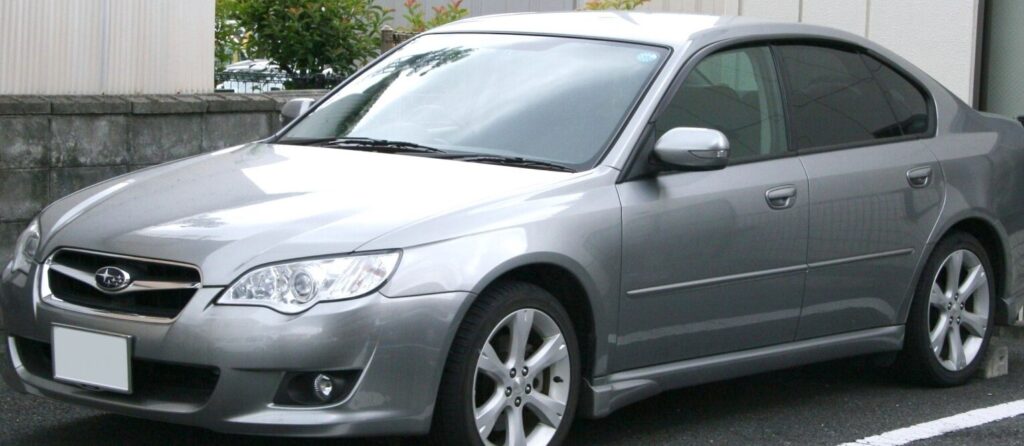
The Subaru Legacy IV (facelift, produced from 2007-2008) 2.0R, equipped with a 150 horsepower engine and all-wheel drive, represented a mid-range offering within the fourth generation Legacy lineup. This facelift, introduced in 2006 for the 2007 model year, brought subtle styling revisions and refinements to Subaru’s popular family sedan. Positioned between the base 2.5i models and the more performance-oriented 2.5GT, the 2.0R aimed to provide a balance of fuel efficiency, adequate power, and Subaru’s renowned symmetrical all-wheel drive system. It was primarily sold in markets outside of North America, where the Legacy was often offered with different engine options.
Technical Specifications
| Brand | Subaru |
| Model | Legacy |
| Generation | Legacy IV (facelift 2006) |
| Type (Engine) | 2.0R (150 Hp) AWD |
| Start of production | 2007 |
| End of production | 2008 |
| Powertrain Architecture | Internal Combustion engine |
| Body type | Sedan |
| Seats | 5 |
| Doors | 4 |
| Fuel consumption (urban) | 11.7 l/100 km (20.1 US mpg, 24.1 UK mpg, 8.5 km/l) |
| Fuel consumption (extra urban) | 6.7 l/100 km (35.1 US mpg, 42.2 UK mpg, 14.9 km/l) |
| Fuel consumption (combined) | 8.6 l/100 km (27.4 US mpg, 32.8 UK mpg, 11.6 km/l) |
| CO2 emissions | 202 g/km |
| Fuel Type | Petrol (Gasoline) |
| Acceleration 0 – 100 km/h | 9.5 sec |
| Acceleration 0 – 62 mph | 9.5 sec |
| Acceleration 0 – 60 mph | 9 sec |
| Maximum speed | 209 km/h (129.87 mph) |
| Emission standard | Euro 4 |
| Weight-to-power ratio | 9.6 kg/Hp, 104.5 Hp/tonne |
| Weight-to-torque ratio | 7.3 kg/Nm, 136.6 Nm/tonne |
| Power | 150 Hp @ 6000 rpm |
| Power per litre | 75.2 Hp/l |
| Torque | 196 Nm @ 3200 rpm (144.56 lb.-ft. @ 3200 rpm) |
| Engine layout | Front, Longitudinal |
| Engine Model/Code | EJ204 |
| Engine displacement | 1994 cm3 (121.68 cu. in.) |
| Number of cylinders | 4 |
| Engine configuration | Boxer |
| Cylinder Bore | 92 mm (3.62 in.) |
| Piston Stroke | 75 mm (2.95 in.) |
| Compression ratio | 11.1:1 |
| Number of valves per cylinder | 4 |
| Fuel injection system | Multi-port manifold injection |
| Engine aspiration | Naturally aspirated engine |
| Valvetrain | SOHC |
| Engine oil capacity | 4.2 l (4.44 US qt | 3.7 UK qt) |
| Coolant | 6.5 l (6.87 US qt | 5.72 UK qt) |
| Kerb Weight | 1435 kg (3163.63 lbs.) |
| Max. weight | 1910 kg (4210.83 lbs.) |
| Max load | 475 kg (1047.2 lbs.) |
| Trunk (boot) space – minimum | 433 l (15.29 cu. ft.) |
| Fuel tank capacity | 64 l (16.91 US gal | 14.08 UK gal) |
| Max. roof load | 80 kg (176.37 lbs.) |
| Permitted trailer load with brakes (12%) | 1300 kg (2866.01 lbs.) |
| Permitted trailer load without brakes | 715 kg (1576.31 lbs.) |
| Permitted towbar download | 82 kg (180.78 lbs.) |
| Length | 4730 mm (186.22 in.) |
| Width | 1730 mm (68.11 in.) |
| Height | 1425 mm (56.1 in.) |
| Wheelbase | 2670 mm (105.12 in.) |
| Front track | 1495 mm (58.86 in.) |
| Rear (Back) track | 1490 mm (58.66 in.) |
| Ride height (ground clearance) | 150 mm (5.91 in.) |
| Minimum turning circle (turning diameter) | 11.6 m (38.06 ft.) |
| Drive wheel | All wheel drive (4×4) |
| Number of gears and type of gearbox | 5 gears, manual transmission |
| Front suspension | Spring Strut |
| Rear suspension | Coil spring |
| Front brakes | Ventilated discs |
| Rear brakes | Disc |
| Assisting systems | ABS (Anti-lock braking system) |
| Steering type | Steering rack and pinion |
| Power steering | Hydraulic Steering |
| Tires size | 215/45 R17 |
| Wheel rims size | 17 |
Powertrain & Engine Architecture
The heart of the 2.0R was the EJ204 engine, a 1994cc naturally aspirated 2.0-liter boxer-four cylinder. Subaru’s horizontally opposed “boxer” configuration, where pistons move horizontally rather than vertically, provides inherent balance and a lower center of gravity, contributing to the Legacy’s handling characteristics. The EJ204 featured a single overhead camshaft (SOHC) design and multi-point fuel injection. This engine produced 150 horsepower at 6000 rpm and 196 Nm (144.56 lb-ft) of torque at 3200 rpm. The engine’s compression ratio was 11.1:1. The 2.0R was typically paired with a 5-speed manual transmission, although automatic options were available in some markets. The automatic transmission, while offering convenience, generally resulted in slightly reduced acceleration and fuel economy compared to the manual.
Driving Characteristics
The 2.0R offered a comfortable and predictable driving experience. While not a sports sedan, the 150 hp engine provided sufficient power for everyday driving and highway cruising. Acceleration from 0-100 km/h (0-62 mph) took approximately 9.5 seconds. The symmetrical all-wheel drive system provided excellent traction in various weather conditions, a hallmark of Subaru vehicles. Compared to the higher-output 2.5GT models, the 2.0R felt less eager to accelerate, but its lighter weight and more efficient engine contributed to better fuel economy. The manual transmission offered a more engaging driving experience, while the automatic prioritized ease of use.
Equipment & Trim Levels
The 2.0R trim typically included standard features such as air conditioning, power windows and locks, a CD player, and alloy wheels. Higher trim levels, often denoted with additional packages, could add features like a sunroof, upgraded audio systems, and leather upholstery. Safety features, such as ABS brakes and front airbags, were standard. The interior design was functional and relatively understated, focusing on practicality and durability rather than luxury.
Chassis & Braking
The Legacy IV utilized a MacPherson strut front suspension and a coil spring rear suspension. The all-wheel drive system employed a viscous limited-slip center differential, distributing power between the front and rear axles as needed. Braking duties were handled by ventilated discs at the front and solid discs at the rear. The suspension tuning prioritized ride comfort, making the 2.0R a pleasant vehicle for long journeys. The chassis was designed to provide a stable and predictable platform, complementing the all-wheel drive system’s traction capabilities.
Market Reception & Comparison
The 2.0R was generally well-received as a practical and reliable family sedan. Critics praised its all-wheel drive system and comfortable ride. However, some reviewers noted that the engine lacked the punch of the larger 2.5-liter engines offered in other Legacy trims. Compared to the 2.5i, the 2.0R offered a slightly more engaging driving experience due to its more responsive engine. Compared to the 2.5GT, it sacrificed performance for improved fuel economy and a lower price point. Fuel economy figures were respectable for its class, averaging around 8.6 l/100 km (27.4 US mpg) in combined driving.
Legacy
The EJ204 engine, while not known for being particularly groundbreaking, proved to be a durable and reliable powerplant when properly maintained. The 2.0R variant of the Legacy IV has maintained a reasonable reputation for longevity in the used car market. Common maintenance items include regular oil changes, timing belt replacement (typically around 100,000 miles), and inspection of the cooling system. Subaru’s all-wheel drive system remains a desirable feature, and well-maintained examples of the 2.0R can still provide years of reliable service. However, like all older vehicles, potential buyers should be aware of potential issues such as oil leaks and wear on suspension components.