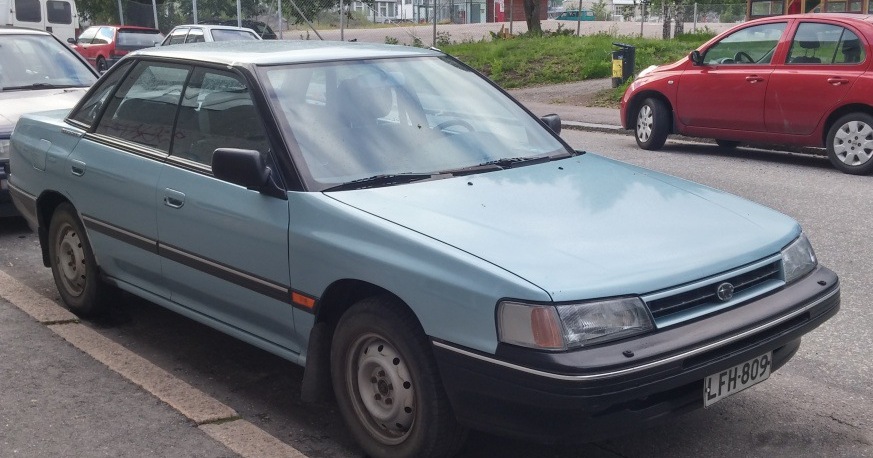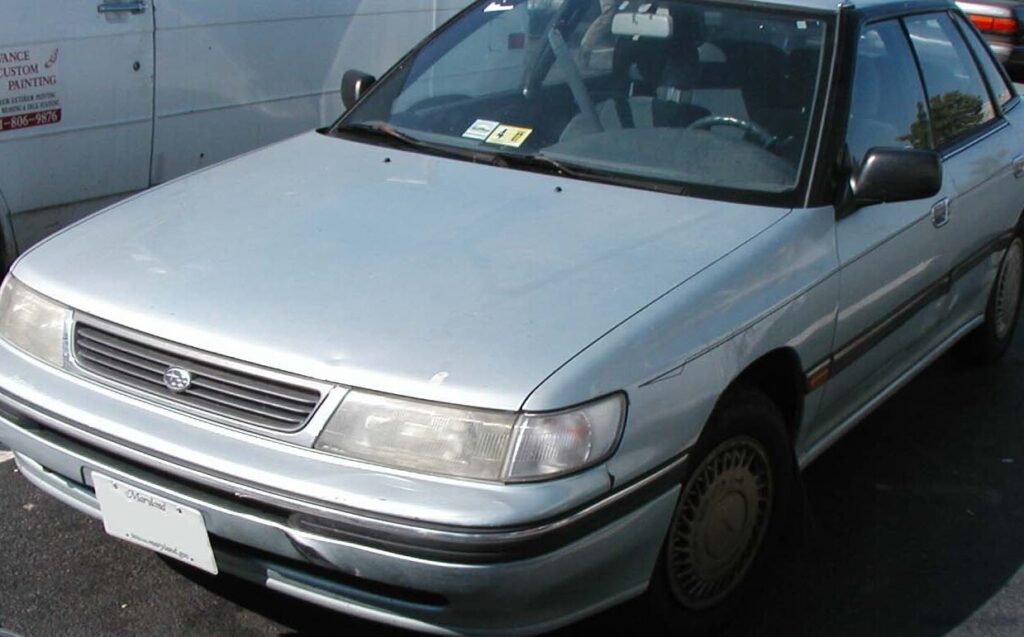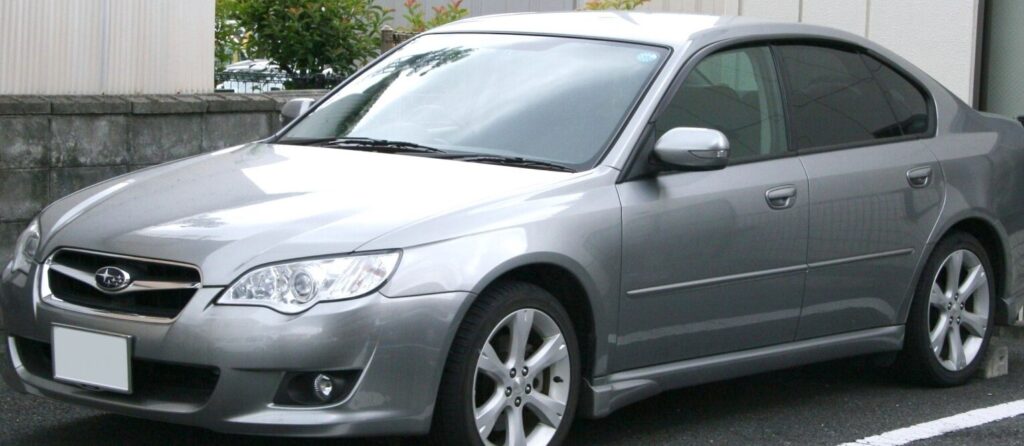
The Subaru Legacy IV (facelift, produced from 2007 to 2009) 2.5i, equipped with a 173 horsepower engine and an automatic transmission, represented a significant offering in Subaru’s lineup. This variant sat in the mid-range of the fourth-generation Legacy models, offering a balance between performance, comfort, and Subaru’s signature symmetrical all-wheel drive. It was primarily marketed towards families and individuals seeking a reliable, all-weather vehicle with a degree of refinement. The facelift brought styling updates and minor mechanical revisions to the existing BL/BP platform, enhancing its appeal in a competitive segment.
Technical Specifications
| Brand | Subaru |
| Model | Legacy |
| Generation | Legacy IV (facelift 2006) |
| Type (Engine) | 2.5i (173 Hp) AWD Automatic |
| Start of production | 2007 |
| End of production | 2009 |
| Powertrain Architecture | Internal Combustion engine |
| Body type | Sedan |
| Seats | 5 |
| Doors | 4 |
| Fuel consumption (urban) | 11.9 l/100 km (19.8 US mpg) |
| Fuel consumption (extra urban) | 6.5 l/100 km (36.2 US mpg) |
| Fuel consumption (combined) | 8.5 l/100 km (27.7 US mpg) |
| CO2 emissions | 200 g/km |
| Fuel Type | Petrol (Gasoline) |
| Acceleration 0 – 100 km/h | 11.4 sec |
| Acceleration 0 – 62 mph | 11.4 sec |
| Acceleration 0 – 60 mph | 10.8 sec |
| Maximum speed | 217 km/h (134.84 mph) |
| Emission standard | Euro 4 |
| Weight-to-power ratio | 8.5 kg/Hp |
| Weight-to-torque ratio | 6.5 kg/Nm |
| Power | 173 Hp @ 6000 rpm |
| Torque | 227 Nm @ 4400 rpm (167.43 lb.-ft. @ 4400 rpm) |
| Engine layout | Front, Longitudinal |
| Engine Model/Code | EJ253 |
| Engine displacement | 2457 cm3 (149.94 cu. in.) |
| Number of cylinders | 4 |
| Engine configuration | Boxer |
| Cylinder Bore | 99.5 mm (3.92 in.) |
| Piston Stroke | 79 mm (3.11 in.) |
| Compression ratio | 10:1 |
| Number of valves per cylinder | 4 |
| Fuel injection system | Multi-port manifold injection |
| Engine aspiration | Naturally aspirated engine |
| Valvetrain | SOHC |
| Engine oil capacity | 4.2 l (4.44 US qt | 3.7 UK qt) |
| Coolant capacity | 6.4 l (6.76 US qt | 5.63 UK qt) |
| Kerb Weight | 1475 kg (3251.82 lbs.) |
| Max. weight | 1930 kg (4254.92 lbs.) |
| Max load | 455 kg (1003.1 lbs.) |
| Trunk (boot) space – minimum | 433 l (15.29 cu. ft.) |
| Fuel tank capacity | 64 l (16.91 US gal | 14.08 UK gal) |
| Max. roof load | 80 kg (176.37 lbs.) |
| Permitted trailer load with brakes (12%) | 1800 kg (3968.32 lbs.) |
| Permitted trailer load without brakes | 720 kg (1587.33 lbs.) |
| Permitted towbar download | 82 kg (180.78 lbs.) |
| Length | 4730 mm (186.22 in.) |
| Width | 1730 mm (68.11 in.) |
| Height | 1425 mm (56.1 in.) |
| Wheelbase | 2670 mm (105.12 in.) |
| Front track | 1495 mm (58.86 in.) |
| Rear track | 1485 mm (58.46 in.) |
| Ride height (ground clearance) | 150 mm (5.91 in.) |
| Minimum turning circle | 11.6 m (38.06 ft.) |
| Drive wheel | All wheel drive (4×4) |
| Number of gears | 4 |
| Gearbox type | automatic transmission |
| Front suspension | Spring Strut |
| Rear suspension | Coil spring |
| Front brakes | Ventilated discs |
| Rear brakes | Disc |
| Assisting systems | ABS (Anti-lock braking system) |
| Steering type | Steering rack and pinion |
| Power steering | Hydraulic Steering |
| Tires size | 215/45 R17 |
| Wheel rims size | 7.0J x 17 |
INTRODUCTION
The 2007-2009 Subaru Legacy IV 2.5i Automatic was a key model in Subaru’s North American and European strategy. Building upon the BL/BP platform introduced in 2003, the facelift brought refreshed styling, including a revised front fascia, headlights, and taillights. The 2.5i designation indicated the engine displacement, and the “Automatic” denoted the four-speed automatic transmission. This combination aimed to provide a comfortable and accessible entry point into the Legacy range, appealing to buyers prioritizing ease of use and all-weather capability over outright performance. It was positioned above the base 2.0L models and below the more powerful 2.5 GT turbocharged variants.
Powertrain & Engine Architecture
At the heart of the 2.5i was the EJ253 engine, a 2.5-liter naturally aspirated horizontally-opposed (boxer) four-cylinder. This engine was a hallmark of Subaru’s engineering, known for its smooth operation and inherent balance. The EJ253 featured a single overhead camshaft (SOHC) design and multi-point fuel injection. The engine produced 173 horsepower at 6000 rpm and 227 Nm (167.43 lb-ft) of torque at 4400 rpm. The four-speed automatic transmission was designed for smooth shifts and reasonable efficiency, though it lacked the responsiveness of a manual gearbox. The transmission featured adaptive shift logic, attempting to learn the driver’s habits and adjust shift points accordingly. The engine’s longitudinal mounting and the symmetrical all-wheel-drive system contributed to the Legacy’s balanced handling characteristics.
Driving Characteristics
The 2.5i Automatic offered a comfortable and predictable driving experience. Acceleration from 0-60 mph took around 10.8 seconds, which was adequate for everyday driving but not particularly sporty. The automatic transmission, while smooth, could feel somewhat sluggish during quick acceleration or when attempting to pass on the highway. The gear ratios were optimized for fuel economy and cruising comfort rather than outright performance. Compared to the six-speed manual transmission available on some Legacy models, the automatic felt less engaging. The symmetrical all-wheel drive system provided excellent traction in all weather conditions, making the 2.5i a confident performer in rain, snow, and on gravel roads. The boxer engine’s low center of gravity contributed to stable handling, though body roll was noticeable during cornering.
Equipment & Trim Levels
The 2.5i Automatic typically came standard with features such as air conditioning, power windows and locks, a CD player with auxiliary input, and keyless entry. Higher trim levels, such as the Limited, added features like leather upholstery, a sunroof, heated front seats, and a premium audio system. Interior upholstery was typically cloth on the base models, with leather available as an option. The dashboard layout was functional and straightforward, with easy-to-read gauges and logically placed controls. Optional extras included a navigation system and a rear-view camera.
Chassis & Braking
The Legacy 2.5i utilized a MacPherson strut front suspension and a double-wishbone rear suspension. This setup provided a good balance between ride comfort and handling. The chassis was reinforced to improve rigidity and reduce noise, vibration, and harshness (NVH). Braking duties were handled by ventilated discs at the front and solid discs at the rear. Anti-lock brakes (ABS) were standard, enhancing safety and control during emergency braking situations. The steering was hydraulic power-assisted rack and pinion, providing a reasonably direct and responsive feel.
Market Reception & Comparison
The 2.5i Automatic was generally well-received by critics as a practical and reliable family sedan. It was praised for its all-wheel-drive system, comfortable ride, and spacious interior. However, some reviewers noted that the four-speed automatic transmission felt dated compared to the newer five- and six-speed automatics offered by competitors. Fuel economy was average for its class, with combined figures around 27.7 US mpg. Compared to the 2.0L models, the 2.5i offered a noticeable performance improvement. Compared to the turbocharged 2.5 GT, it lacked the same level of excitement but offered better fuel economy and lower maintenance costs.
Legacy
The EJ253 engine, when properly maintained, proved to be a durable and reliable powerplant. However, like all engines, it was susceptible to issues such as head gasket failures, particularly if maintenance was neglected. The four-speed automatic transmission, while generally reliable, could experience wear and tear over time. Today, the 2007-2009 Legacy 2.5i Automatic remains a relatively affordable and practical used car option. Its all-wheel-drive system and reputation for reliability continue to make it a popular choice for buyers seeking a dependable all-weather vehicle. Parts availability is generally good, and maintenance costs are reasonable, making it a viable option for budget-conscious buyers.