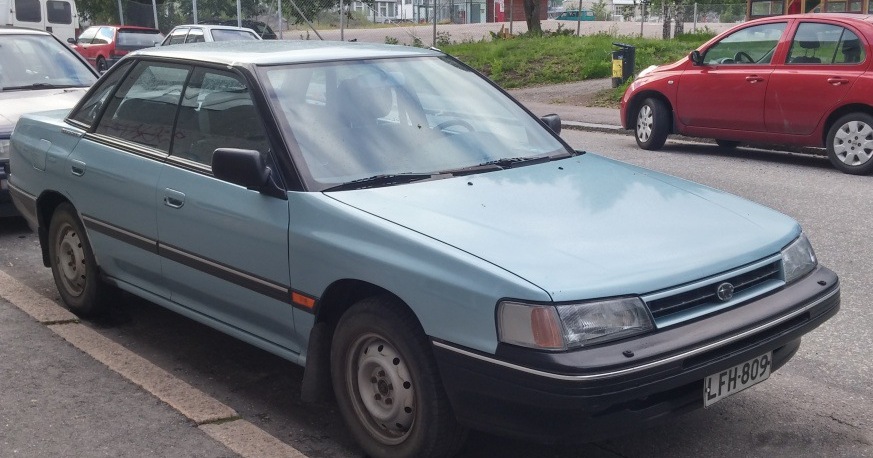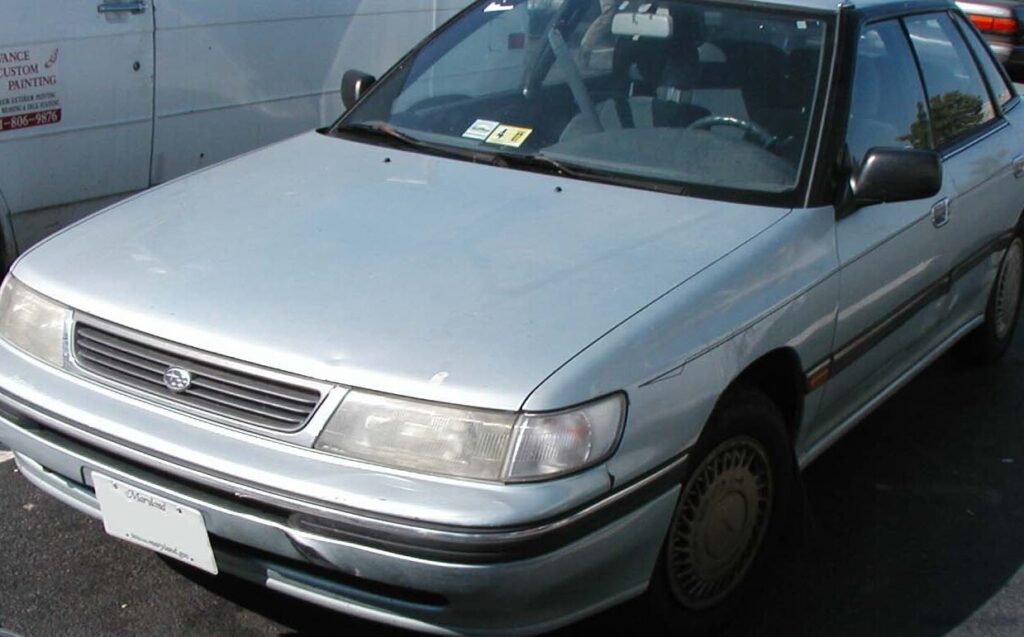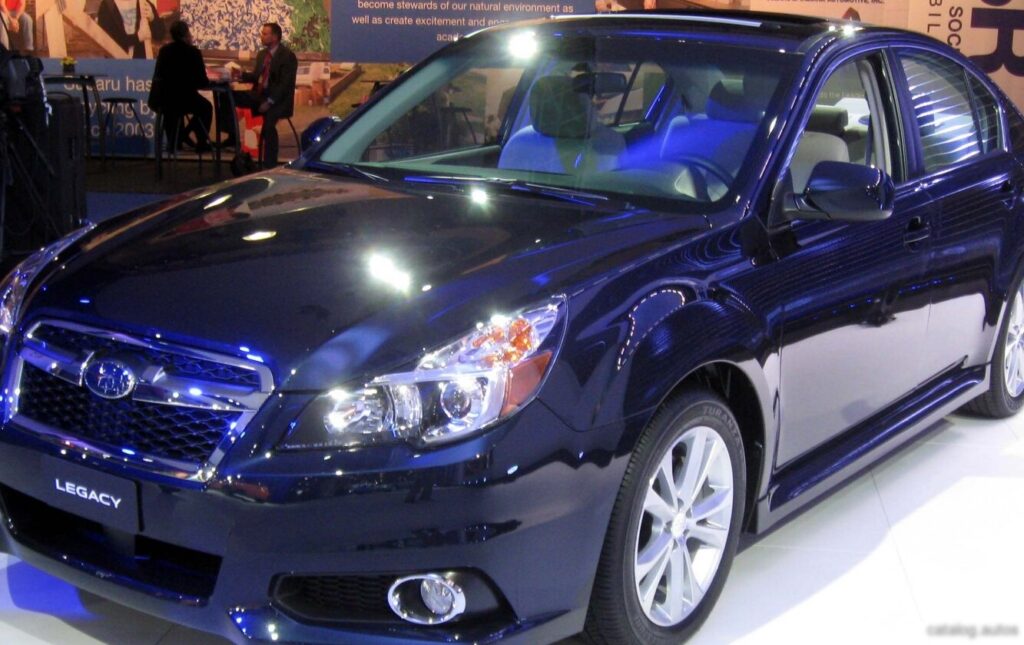
The Subaru Legacy V (facelift, 2012) 2.0d Sport, producing 150 horsepower, represents a significant iteration of Subaru’s mid-size sedan, primarily aimed at the European and Asian markets. Introduced as part of the fifth-generation Legacy (BM/BR chassis), the 2012 facelift brought styling revisions and refinements to the existing platform. This particular variant, powered by the EE20 diesel engine and equipped with Subaru’s symmetrical all-wheel drive system, occupied a middle ground in the Legacy lineup, offering a balance between fuel efficiency, performance, and practicality. Production of this specific configuration ran from 2012 to 2014.
Technical Specifications
| Brand | Subaru |
| Model | Legacy |
| Generation | Legacy V (facelift 2012) |
| Type | 2.0d Sport (150 Hp) AWD |
| Start of production | 2012 |
| End of production | 2014 |
| Powertrain Architecture | Internal Combustion engine |
| Body type | Sedan |
| Seats | 5 |
| Doors | 4 |
| Fuel consumption (urban) | 7.2 l/100 km (32.7 US mpg) |
| Fuel consumption (extra urban) | 5 l/100 km (47 US mpg) |
| Fuel consumption (combined) | 5.8 l/100 km (40.6 US mpg) |
| CO2 emissions | 153 g/km |
| Fuel Type | Diesel |
| Acceleration 0 – 100 km/h | 9.3 sec |
| Acceleration 0 – 62 mph | 9.3 sec |
| Acceleration 0 – 60 mph | 8.8 sec |
| Maximum speed | 206 km/h (128 mph) |
| Emission standard | Euro 5 |
| Weight-to-power ratio | 10.2 kg/Hp |
| Weight-to-torque ratio | 4.4 kg/Nm |
| Power | 150 Hp @ 3600 rpm |
| Torque | 350 Nm @ 1600-2400 rpm (258.15 lb.-ft.) |
| Engine layout | Front, Longitudinal |
| Engine Model/Code | EE20 |
| Engine displacement | 1998 cm3 (121.93 cu. in.) |
| Number of cylinders | 4 |
| Engine configuration | Boxer |
| Cylinder Bore | 86 mm (3.39 in.) |
| Piston Stroke | 86 mm (3.39 in.) |
| Compression ratio | 16.3:1 |
| Number of valves per cylinder | 4 |
| Fuel injection system | Diesel Commonrail |
| Engine aspiration | Turbocharger, Intercooler |
| Valvetrain | DOHC |
| Engine oil capacity | 5.9 l (6.23 US qt | 5.19 UK qt) |
| Coolant capacity | 9 l (9.51 US qt | 7.92 UK qt) |
| Kerb Weight | 1527 kg (3366.46 lbs.) |
| Trunk (boot) space (minimum) | 486 l (17.16 cu. ft.) |
| Fuel tank capacity | 65 l (17.17 US gal | 14.3 UK gal) |
| Permitted trailer load (12%) | 1700 kg (3747.86 lbs.) |
| Length | 4745 mm (186.81 in.) |
| Width | 1780 mm (70.08 in.) |
| Height | 1505 mm (59.25 in.) |
| Wheelbase | 2750 mm (108.27 in.) |
| Front track | 1530 mm (60.24 in.) |
| Rear track | 1535 mm (60.43 in.) |
| Ride height (ground clearance) | 150 mm (5.91 in.) |
| Minimum turning circle | 11 m (36.09 ft.) |
| Drive wheel | All wheel drive (4×4) |
| Number of gears | 6 |
| Gearbox type | Manual transmission |
| Front suspension | Independent type McPherson |
| Rear suspension | Double wishbone |
| Front brakes | Ventilated discs |
| Rear brakes | Disc |
| Assisting systems | ABS (Anti-lock braking system) |
| Steering type | Steering rack and pinion |
| Tires size | 225/45 R18 |
| Wheel rims size | 7.5J x 18 |
INTRODUCTION
The 2.0d Sport trim of the facelifted fifth-generation Subaru Legacy offered a compelling package for buyers seeking a practical, all-weather sedan with reasonable performance and fuel economy. Positioned within the Legacy V range, it sat above the base models and below the more powerful petrol variants. The facelift, introduced in 2012, brought subtle cosmetic changes to the exterior – revised headlights, grille, and bumpers – along with minor interior enhancements. The core of the vehicle remained the same: a spacious cabin, Subaru’s renowned symmetrical all-wheel drive, and a focus on safety and reliability. This model was primarily sold in Europe, Australia, and select Asian markets, where diesel engines were more popular than in North America.
Powertrain & Engine Architecture
At the heart of the 2.0d Sport lies the EE20 diesel engine, a 2.0-liter (1998cc) horizontally-opposed (boxer) four-cylinder unit. Subaru’s boxer engine design, with its pistons moving horizontally, contributes to a lower center of gravity, enhancing stability and handling. The EE20 features a single turbocharger with an intercooler, boosting power output to 150 horsepower at 3600 rpm and 350 Nm (258 lb-ft) of torque between 1600 and 2400 rpm. This engine utilizes a common rail direct injection system, delivering fuel directly into the combustion chamber at extremely high pressure for improved efficiency and reduced emissions. The valvetrain is a dual overhead camshaft (DOHC) configuration with four valves per cylinder. The 2.0d Sport was exclusively offered with a 6-speed manual transmission, providing drivers with full control over gear selection. The transmission was designed to handle the engine’s torque output effectively, contributing to responsive acceleration.
Driving Characteristics
The 2.0d Sport, with its 150 hp and 350 Nm of torque, offered a respectable driving experience. Acceleration from 0 to 100 km/h (0-62 mph) took approximately 9.3 seconds, making it competitive within its class. The engine’s peak torque, available from a relatively low 1600 rpm, provided good responsiveness for everyday driving and overtaking maneuvers. While not a sports sedan, the Legacy 2.0d Sport offered a smooth and refined ride, thanks to its well-tuned suspension and the inherent balance of the boxer engine. The symmetrical all-wheel drive system provided excellent traction in various weather conditions, making it a particularly appealing choice for regions with inclement weather. Compared to the petrol-powered Legacy variants, the 2.0d Sport prioritized fuel efficiency and torque over outright horsepower. The manual transmission allowed for precise gear changes, enhancing driver engagement.
Equipment & Trim Levels
The “Sport” designation indicated a slightly more focused trim level. Standard equipment typically included alloy wheels (usually 18-inch), sport seats with cloth upholstery, a leather-wrapped steering wheel, and air conditioning. Infotainment systems varied depending on the market, but generally included a radio with CD player and auxiliary input. Optional extras could include a sunroof, navigation system, premium audio system, and leather upholstery. Safety features were a strong point for the Legacy, with standard equipment including ABS, electronic brakeforce distribution, and multiple airbags. The interior design was functional and well-built, with a focus on ergonomics and practicality.
Chassis & Braking
The Legacy V utilized a McPherson strut front suspension and a double wishbone rear suspension, providing a comfortable and controlled ride. Stabilizer bars were fitted to both the front and rear axles to reduce body roll during cornering. The braking system consisted of ventilated discs at the front and solid discs at the rear. ABS (Anti-lock Braking System) was standard, enhancing braking performance and stability. The all-wheel drive system employed a viscous coupling center differential, distributing torque between the front and rear axles as needed to maintain optimal traction. The chassis was designed to provide a balance between ride comfort and handling precision.
Market Reception & Comparison
The Subaru Legacy 2.0d Sport was generally well-received by automotive critics, who praised its fuel efficiency, all-weather capability, and comfortable ride. However, some reviewers noted that the diesel engine could be somewhat noisy compared to petrol alternatives. Compared to other diesel-powered sedans in its class, the Legacy offered a unique combination of all-wheel drive and a boxer engine. Fuel economy was competitive, averaging around 5.8 l/100 km (40.6 US mpg) in combined driving. Reliability was generally good, although diesel engines can be more complex and potentially more expensive to maintain than petrol engines. The 2.0d Sport offered a compelling alternative to front-wheel drive diesel sedans, particularly for buyers who prioritized all-weather performance.
Legacy
The EE20 diesel engine, while robust, is known to require diligent maintenance, particularly regarding the diesel particulate filter (DPF). Regular oil changes and the use of high-quality diesel fuel are crucial for preventing DPF issues. The symmetrical all-wheel drive system remains a key selling point for used Legacy models, providing confidence in challenging driving conditions. Today, the 2012-2014 Legacy 2.0d Sport represents a relatively affordable and practical option in the used car market. Its combination of fuel efficiency, all-wheel drive, and spacious interior makes it a suitable choice for families and commuters alike. However, potential buyers should be aware of the potential maintenance costs associated with a diesel engine and ensure that the vehicle has been properly maintained throughout its life.