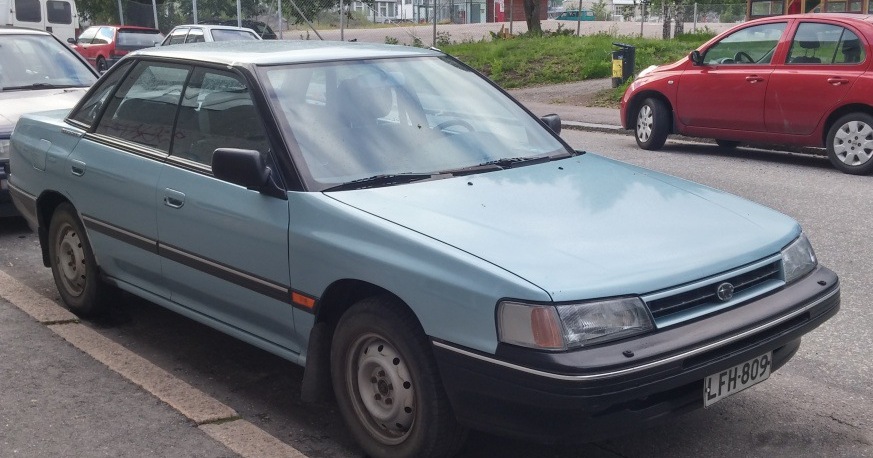
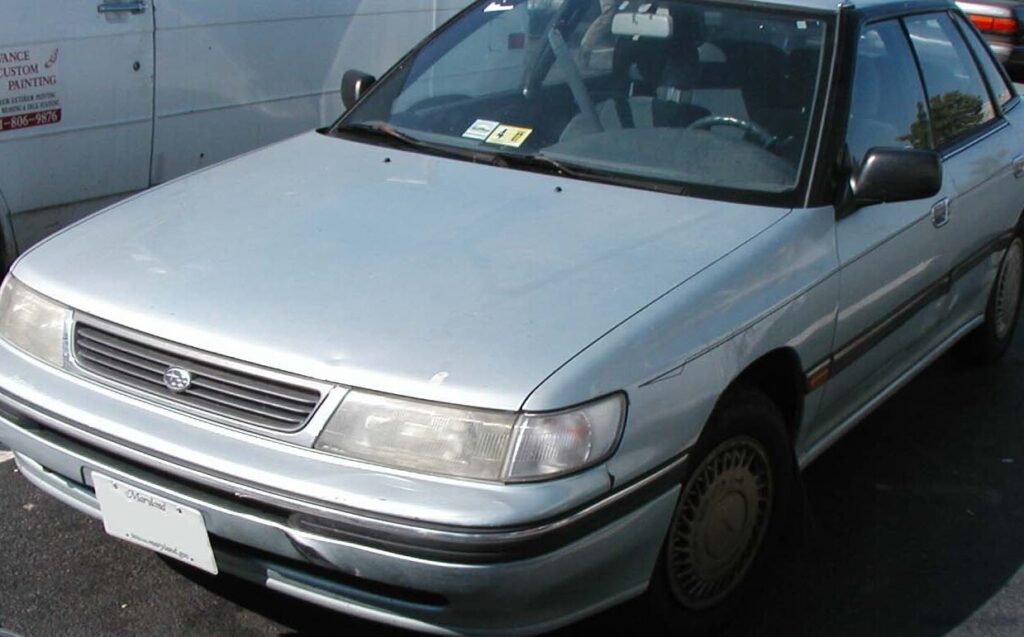
The Subaru Legacy V Station Wagon, specifically the facelifted version produced from 2012 to 2014, represented Subaru’s offering in the mid-size wagon segment. This generation, known internally as the fifth Legacy (V), aimed to balance practicality, safety, and Subaru’s signature symmetrical all-wheel drive system. The 2.0d variant, powered by a 150 horsepower turbocharged diesel engine and paired with a six-speed manual transmission, was a significant model within the European market, offering a blend of fuel efficiency and usable performance. It positioned itself as a sensible choice for families and individuals needing a versatile vehicle capable of handling varied conditions.
Technical Specifications
| Brand | Subaru |
| Model | Legacy |
| Generation | Legacy V Station Wagon (facelift 2012) |
| Type (Engine) | 2.0d (150 Hp) AWD |
| Start of production | 2012 |
| End of production | 2014 |
| Powertrain Architecture | Internal Combustion engine |
| Body type | Station wagon (estate) |
| Seats | 5 |
| Doors | 5 |
| Fuel consumption (urban) | 7 l/100 km (33.6 US mpg, 40.4 UK mpg, 14.3 km/l) |
| Fuel consumption (extra urban) | 4.9 l/100 km (48 US mpg, 57.6 UK mpg, 20.4 km/l) |
| Fuel consumption (combined) | 5.7 l/100 km (41.3 US mpg, 49.6 UK mpg, 17.5 km/l) |
| CO2 emissions | 149 g/km |
| Fuel Type | Diesel |
| Acceleration 0 – 100 km/h | 9.6 sec |
| Acceleration 0 – 62 mph | 9.6 sec |
| Acceleration 0 – 60 mph | 9.1 sec |
| Maximum speed | 203 km/h (126.14 mph) |
| Emission standard | Euro 5 |
| Weight-to-power ratio | 10.4 kg/Hp, 96.3 Hp/tonne |
| Weight-to-torque ratio | 4.4 kg/Nm, 224.8 Nm/tonne |
| Power | 150 Hp @ 3600 rpm |
| Power per litre | 75.1 Hp/l |
| Torque | 350 Nm @ 1600-2400 rpm (258.15 lb.-ft. @ 1600-2400 rpm) |
| Engine layout | Front, Longitudinal |
| Engine Model/Code | EE20 |
| Engine displacement | 1998 cm3 (121.93 cu. in.) |
| Number of cylinders | 4 |
| Engine configuration | Boxer |
| Cylinder Bore | 86 mm (3.39 in.) |
| Piston Stroke | 86 mm (3.39 in.) |
| Compression ratio | 16.3:1 |
| Number of valves per cylinder | 4 |
| Fuel injection system | Diesel Commonrail |
| Engine aspiration | Turbocharger, Intercooler |
| Valvetrain | DOHC |
| Engine oil capacity | 5.9 l (6.23 US qt | 5.19 UK qt) |
| Coolant | 9 l (9.51 US qt | 7.92 UK qt) |
| Kerb Weight | 1557 kg (3432.6 lbs.) |
| Max. weight | 2075 kg (4574.59 lbs.) |
| Max load | 518 kg (1141.99 lbs.) |
| Trunk (boot) space – minimum | 526 l (18.58 cu. ft.) |
| Trunk (boot) space – maximum | 1726 l (60.95 cu. ft.) |
| Fuel tank capacity | 65 l (17.17 US gal | 14.3 UK gal) |
| Max. roof load | 80 kg (176.37 lbs.) |
| Permitted trailer load with brakes (12%) | 1700 kg (3747.86 lbs.) |
| Permitted trailer load without brakes | 750 kg (1653.47 lbs.) |
| Length | 4790 mm (188.58 in.) |
| Width | 1780 mm (70.08 in.) |
| Height | 1535 mm (60.43 in.) |
| Wheelbase | 2750 mm (108.27 in.) |
| Front track | 1545 mm (60.83 in.) |
| Rear (Back) track | 1545 mm (60.83 in.) |
| Minimum turning circle | 11.4 m (37.4 ft.) |
| Drive wheel | All wheel drive (4×4) |
| Number of gears and type of gearbox | 6 gears, manual transmission |
| Front suspension | Independent type McPherson |
| Rear suspension | Double wishbone |
| Front brakes | Ventilated discs |
| Rear brakes | Disc |
| Assisting systems | ABS (Anti-lock braking system) |
| Steering type | Steering rack and pinion |
| Tires size | 205/60 R16 |
| Wheel rims size | 6.5J x 16 |
Powertrain & Engine Architecture
The heart of the 2.0d Legacy was the EE20 diesel engine, a 2.0-liter (1998cc) horizontally-opposed (boxer) four-cylinder. This engine was a key component of Subaru’s diesel strategy for the European market. The EE20 featured a common rail direct injection system, delivering fuel at extremely high pressure for optimized combustion. A turbocharger with an intercooler was employed to boost power output to 150 horsepower at 3600 rpm and a substantial 350 Nm (258 lb-ft) of torque between 1600 and 2400 rpm. The boxer configuration, a Subaru hallmark, contributed to a lower center of gravity, enhancing handling and stability. The six-speed manual transmission provided precise gear changes and allowed drivers to effectively utilize the engine’s torque band.
Driving Characteristics
The 2.0d with the manual transmission offered a balanced driving experience. While not overtly sporty, the engine provided ample torque for everyday driving and overtaking maneuvers. The six-speed gearbox was well-matched to the engine’s characteristics, allowing for comfortable cruising on the highway and responsive acceleration in lower gears. Compared to the gasoline-powered Legacy variants, the 2.0d prioritized fuel economy and low-end grunt over outright horsepower. The symmetrical all-wheel drive system provided excellent traction in various weather conditions, a significant advantage in regions prone to rain or snow. The manual transmission gave the driver more control compared to the optional Lineartronic CVT available on some trims.
Equipment & Trim Levels
The 2.0d trim typically included standard features such as air conditioning, power windows, power mirrors, a CD player with auxiliary input, and alloy wheels. Safety features were also comprehensive, including ABS, electronic brakeforce distribution, and multiple airbags. Higher trim levels offered upgrades like leather upholstery, a sunroof, a navigation system, and premium audio systems. The interior design was functional and well-built, prioritizing comfort and practicality over outright luxury. The facelifted model (2012 onwards) featured subtle styling updates to the front fascia and interior trim.
Chassis & Braking
The Legacy V Station Wagon utilized a McPherson strut front suspension and a double-wishbone rear suspension, providing a comfortable ride and predictable handling. The all-wheel drive system employed a viscous coupling center differential, distributing power between the front and rear axles as needed. The braking system consisted of ventilated discs at the front and solid discs at the rear, providing adequate stopping power for the vehicle’s weight. ABS (Anti-lock Braking System) was standard, enhancing safety during emergency braking situations.
Market Reception & Comparison
The 2.0d Legacy Station Wagon was generally well-received by automotive critics in Europe. It was praised for its fuel efficiency, spacious interior, and all-weather capability. However, some reviewers noted that the diesel engine was somewhat noisy compared to its competitors. Compared to other diesel wagons in its class, such as the Volkswagen Passat Variant and Ford Mondeo Wagon, the Legacy offered a unique combination of all-wheel drive and a boxer engine. The Passat often provided a more refined interior, while the Mondeo offered a more engaging driving experience. The Legacy carved a niche for itself as a practical and reliable choice for those prioritizing safety and all-weather performance.
Legacy
The EE20 diesel engine, while not without its complexities, proved to be a relatively reliable powertrain when properly maintained. Common issues included diesel particulate filter (DPF) clogging and occasional turbocharger problems, particularly if the vehicle was subjected to frequent short trips. Today, the 2012-2014 Legacy 2.0d Station Wagon represents a reasonably affordable and practical used car option. Its all-wheel drive system and spacious interior continue to appeal to buyers seeking a versatile vehicle for family use or outdoor activities. However, potential buyers should be aware of the potential maintenance costs associated with a diesel engine and the importance of regular servicing.