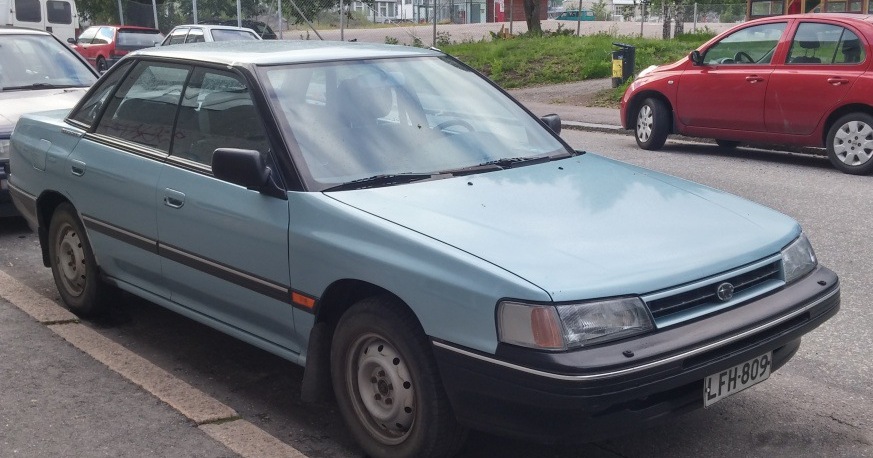
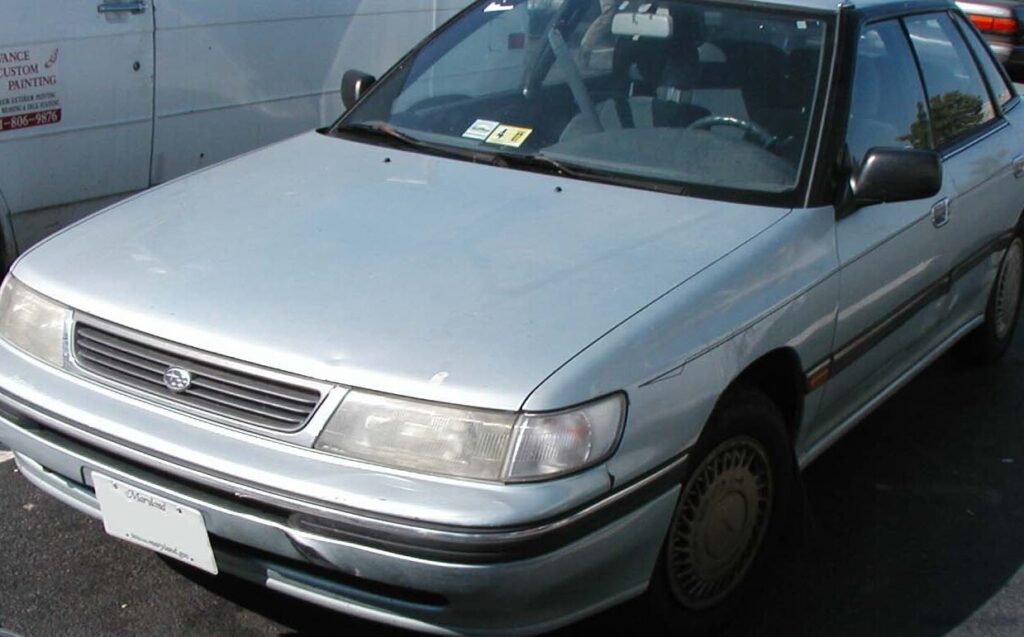
The Subaru Legacy V Station Wagon, specifically the 2.0d Sport variant produced from 2012 to 2014, represents a mid-cycle refresh of the fifth-generation Legacy (BP/BR chassis). This model year saw Subaru introduce styling updates and refine the already capable all-wheel-drive system that defined the Legacy line. Positioned as a mid-range offering within the Legacy V wagon lineup, the 2.0d Sport aimed to balance fuel efficiency with respectable performance, appealing to buyers seeking a practical and versatile family vehicle with all-weather capability. It was primarily sold in European and Asian markets, where the demand for wagons remained strong.
Technical Specifications
| Brand | Subaru |
| Model | Legacy |
| Generation | Legacy V Station Wagon (facelift 2012) |
| Type (Engine) | 2.0d Sport (150 Hp) AWD |
| Start of production | 2012 |
| End of production | 2014 |
| Powertrain Architecture | Internal Combustion engine |
| Body type | Station wagon (estate) |
| Seats | 5 |
| Doors | 5 |
| Fuel consumption (urban) | 7.3 l/100 km (32.2 US mpg, 38.7 UK mpg, 13.7 km/l) |
| Fuel consumption (extra urban) | 5.2 l/100 km (45.2 US mpg, 54.3 UK mpg, 19.2 km/l) |
| Fuel consumption (combined) | 5.9 l/100 km (39.9 US mpg, 47.9 UK mpg, 16.9 km/l) |
| CO2 emissions | 156 g/km |
| Fuel Type | Diesel |
| Acceleration 0 – 100 km/h | 9.6 sec |
| Acceleration 0 – 62 mph | 9.6 sec |
| Acceleration 0 – 60 mph | 9.1 sec |
| Maximum speed | 203 km/h (126.14 mph) |
| Emission standard | Euro 5 |
| Weight-to-power ratio | 10.7 kg/Hp, 93.8 Hp/tonne |
| Weight-to-torque ratio | 4.6 kg/Nm, 218.8 Nm/tonne |
| Power | 150 Hp @ 3600 rpm |
| Power per litre | 75.1 Hp/l |
| Torque | 350 Nm @ 1600-2400 rpm (258.15 lb.-ft. @ 1600-2400 rpm) |
| Engine layout | Front, Longitudinal |
| Engine Model/Code | EE20 |
| Engine displacement | 1998 cm3 (121.93 cu. in.) |
| Number of cylinders | 4 |
| Engine configuration | Boxer |
| Cylinder Bore | 86 mm (3.39 in.) |
| Piston Stroke | 86 mm (3.39 in.) |
| Compression ratio | 16.3:1 |
| Number of valves per cylinder | 4 |
| Fuel injection system | Diesel Commonrail |
| Engine aspiration | Turbocharger, Intercooler |
| Valvetrain | DOHC |
| Engine oil capacity | 5.9 l (6.23 US qt | 5.19 UK qt) |
| Coolant | 9 l (9.51 US qt | 7.92 UK qt) |
| Kerb Weight | 1600 kg (3527.4 lbs.) |
| Max. weight | 2075 kg (4574.59 lbs.) |
| Max load | 475 kg (1047.2 lbs.) |
| Trunk (boot) space – minimum | 526 l (18.58 cu. ft.) |
| Trunk (boot) space – maximum | 1677 l (59.22 cu. ft.) |
| Fuel tank capacity | 65 l (17.17 US gal | 14.3 UK gal) |
| Max. roof load | 80 kg (176.37 lbs.) |
| Permitted trailer load with brakes (12%) | 1700 kg (3747.86 lbs.) |
| Permitted trailer load without brakes | 750 kg (1653.47 lbs.) |
| Length | 4790 mm (188.58 in.) |
| Width | 1780 mm (70.08 in.) |
| Height | 1535 mm (60.43 in.) |
| Wheelbase | 2750 mm (108.27 in.) |
| Front track | 1530 mm (60.24 in.) |
| Rear (Back) track | 1535 mm (60.43 in.) |
| Minimum turning circle | 11.4 m (37.4 ft.) |
| Drive wheel | All wheel drive (4×4) |
| Number of gears and type of gearbox | 6 gears, manual transmission |
| Front suspension | Independent type McPherson |
| Rear suspension | Double wishbone |
| Front brakes | Ventilated discs |
| Rear brakes | Disc |
| Assisting systems | ABS (Anti-lock braking system) |
| Steering type | Steering rack and pinion |
| Power steering | Electric Steering |
| Tires size | 225/45 R18 |
| Wheel rims size | 7.5J x 18 |
Powertrain & Engine Architecture
The heart of the 2.0d Sport is the EE20 diesel engine, a 2.0-liter (1998cc) horizontally-opposed (boxer) four-cylinder. This engine is characterized by its compact design and inherently balanced operation, contributing to reduced vibration. The EE20 utilizes a common-rail direct injection system, delivering fuel at extremely high pressure for optimized combustion. A turbocharger with an intercooler is employed to boost power output to 150 horsepower at 3600 rpm and 350 Nm (258 lb-ft) of torque between 1600 and 2400 rpm. The engine features a double overhead camshaft (DOHC) valvetrain with four valves per cylinder. The 6-speed manual transmission was standard, providing precise gear changes and contributing to the car’s engaging driving experience.
Driving Characteristics
The 2.0d Sport offered a blend of fuel efficiency and adequate performance. While not a sports car, the 150 hp and 350 Nm of torque provided sufficient power for everyday driving and highway cruising. The boxer engine’s low center of gravity, combined with Subaru’s symmetrical all-wheel-drive system, resulted in predictable handling and excellent traction in various weather conditions. The manual transmission allowed for driver control, but the gear ratios were tuned more for economy than outright acceleration. Compared to higher-output Legacy variants, such as those with larger engines, the 2.0d Sport felt less eager to rev, but its strong low-end torque made it a capable and comfortable long-distance cruiser.
Equipment & Trim Levels
The “Sport” designation indicated a slightly more focused trim level. Standard features typically included alloy wheels, a sport-tuned suspension, and unique interior trim. Inside, the 2.0d Sport featured comfortable cloth seats, a multi-function steering wheel, and a basic audio system. Optional extras could include leather upholstery, a sunroof, navigation system, and upgraded audio equipment. The dashboard layout was functional and straightforward, prioritizing usability over flashy design.
Chassis & Braking
The Legacy V Station Wagon utilized a McPherson strut front suspension and a double-wishbone rear suspension, providing a comfortable ride and good handling characteristics. The all-wheel-drive system employed a viscous coupling center differential, distributing power between the front and rear axles as needed. Braking duties were handled by ventilated discs at the front and solid discs at the rear. Anti-lock braking system (ABS) was standard, enhancing safety and control during emergency braking situations.
Market Reception & Comparison
The 2.0d Sport was generally well-received by automotive critics as a practical and capable family wagon. Its fuel efficiency was a key selling point, particularly in Europe where diesel engines were popular. Compared to the petrol-powered Legacy variants, the 2.0d Sport offered significantly better fuel economy. However, some reviewers noted that the diesel engine was slightly noisier and less refined than the gasoline alternatives. Against competitors like the Volkswagen Passat Variant and Ford Mondeo Wagon, the Legacy offered a unique combination of all-wheel-drive capability and a spacious interior.
Legacy
The EE20 diesel engine, while generally reliable, is known to require regular maintenance, particularly regarding the diesel particulate filter (DPF). Proper servicing and the use of high-quality diesel fuel are crucial to prevent DPF issues. Today, well-maintained examples of the 2.0d Sport can still be found on the used car market, offering a practical and affordable option for buyers seeking a versatile and reliable wagon. Its all-wheel-drive system and robust build quality continue to appeal to those living in regions with challenging weather conditions. The Legacy V, and specifically the 2.0d Sport, remains a testament to Subaru’s commitment to building durable and capable vehicles.