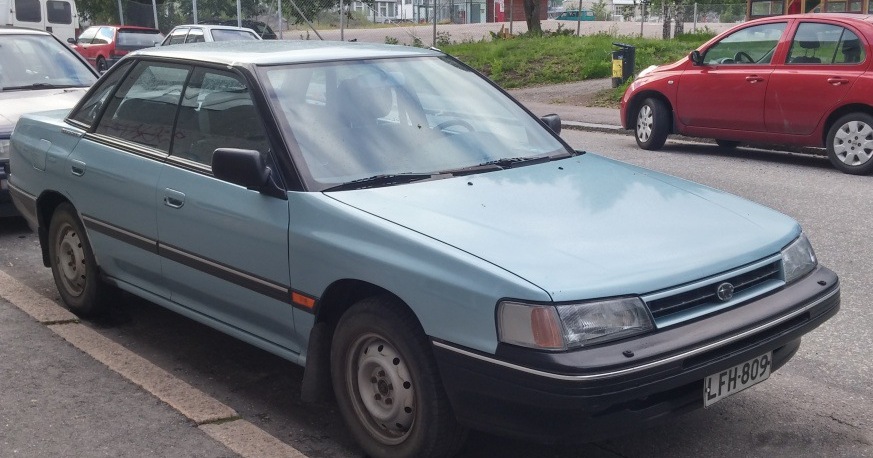
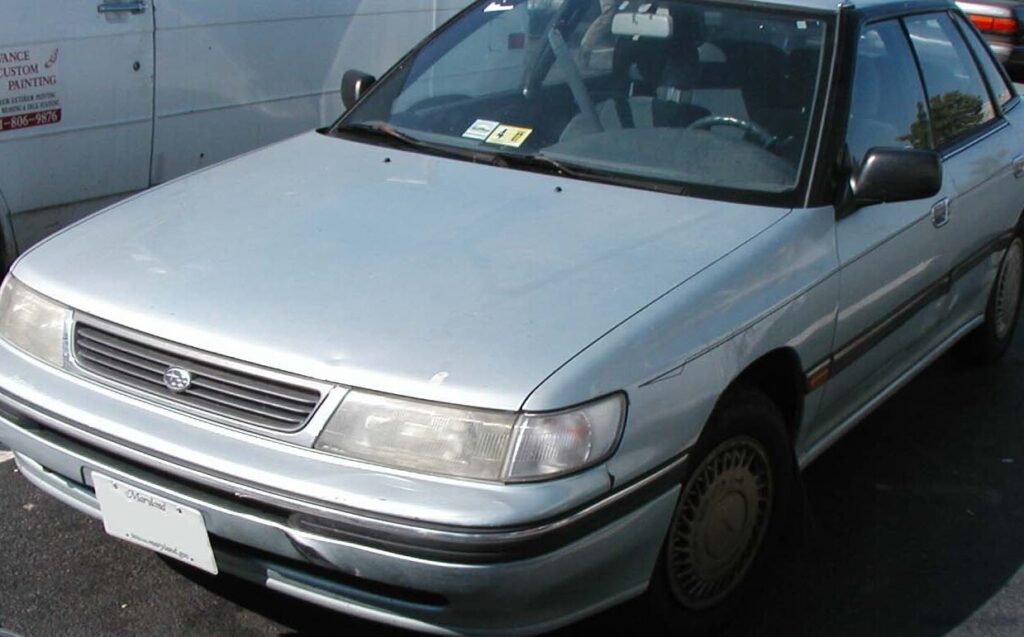
The Subaru Legacy V Station Wagon, specifically the 2.5i Sport model with the Lineartronic continuously variable transmission (CVT) and all-wheel drive, was a key offering in Subaru’s lineup from 2012 to 2014. This variant represented a mid-range trim level within the fifth-generation Legacy (BP/BR chassis) series, positioned above the base models and below the more luxurious Limited trims. The facelift in 2012 brought styling updates and refinements to the already well-regarded Legacy, solidifying its position as a practical and reliable family vehicle, particularly in markets where station wagons remained popular. This model aimed to balance fuel efficiency, performance, and Subaru’s signature symmetrical all-wheel drive system.
Technical Specifications
| Brand | Subaru |
| Model | Legacy |
| Generation | Legacy V Station Wagon (facelift 2012) |
| Type | 2.5i Sport (173 Hp) AWD Lineartronic |
| Start of production | 2012 |
| End of production | 2014 |
| Powertrain Architecture | Internal Combustion engine |
| Body type | Station wagon (estate) |
| Seats | 5 |
| Doors | 5 |
| Fuel consumption (urban) | 9.8 l/100 km (24 US mpg, 28.8 UK mpg, 10.2 km/l) |
| Fuel consumption (extra urban) | 6.2 l/100 km (37.9 US mpg, 45.6 UK mpg, 16.1 km/l) |
| Fuel consumption (combined) | 7.5 l/100 km (31.4 US mpg, 37.7 UK mpg, 13.3 km/l) |
| CO2 emissions | 174 g/km |
| Fuel Type | Petrol (Gasoline) |
| Acceleration 0 – 100 km/h | 9.8 sec |
| Acceleration 0 – 62 mph | 9.8 sec |
| Acceleration 0 – 60 mph | 9.3 sec |
| Maximum speed | 205 km/h (127.38 mph) |
| Emission standard | Euro 5 |
| Weight-to-power ratio | 8.9 kg/Hp, 112.7 Hp/tonne |
| Weight-to-torque ratio | 6.5 kg/Nm, 153.1 Nm/tonne |
| Power | 173 Hp @ 5600 rpm |
| Power per litre | 69.3 Hp/l |
| Torque | 235 Nm @ 4100 rpm (173.33 lb.-ft. @ 4100 rpm) |
| Engine layout | Front, Longitudinal |
| Engine Model/Code | FB25 |
| Engine displacement | 2498 cm3 (152.44 cu. in.) |
| Number of cylinders | 4 |
| Engine configuration | Boxer |
| Cylinder Bore | 94 mm (3.7 in.) |
| Piston Stroke | 90 mm (3.54 in.) |
| Compression ratio | 10:1 |
| Number of valves per cylinder | 4 |
| Fuel injection system | Multi-port manifold injection |
| Engine aspiration | Naturally aspirated engine |
| Valvetrain | DOHC |
| Engine oil capacity | 4.8 l (5.07 US qt | 4.22 UK qt) |
| Coolant | 7.6 l (8.03 US qt | 6.69 UK qt) |
| Kerb Weight | 1535 kg (3384.1 lbs.) |
| Max. weight | 2030 kg (4475.38 lbs.) |
| Max load | 495 kg (1091.29 lbs.) |
| Trunk (boot) space – minimum | 526 l (18.58 cu. ft.) |
| Trunk (boot) space – maximum | 1677 l (59.22 cu. ft.) |
| Fuel tank capacity | 65 l (17.17 US gal | 14.3 UK gal) |
| Max. roof load | 80 kg (176.37 lbs.) |
| Permitted trailer load with brakes (12%) | 1800 kg (3968.32 lbs.) |
| Permitted trailer load without brakes | 720 kg (1587.33 lbs.) |
| Length | 4790 mm (188.58 in.) |
| Width | 1780 mm (70.08 in.) |
| Height | 1535 mm (60.43 in.) |
| Wheelbase | 2750 mm (108.27 in.) |
| Front track | 1530 mm (60.24 in.) |
| Rear (Back) track | 1535 mm (60.43 in.) |
| Ride height (ground clearance) | 150 mm (5.91 in.) |
| Minimum turning circle (turning diameter) | 11.4 m (37.4 ft.) |
| Drive wheel | All wheel drive (4×4) |
| Number of gears and type of gearbox | automatic transmission Lineartronic |
| Front suspension | Independent type McPherson |
| Rear suspension | Double wishbone |
| Front brakes | Ventilated discs |
| Rear brakes | Disc |
| Assisting systems | ABS (Anti-lock braking system) |
| Steering type | Steering rack and pinion |
| Tires size | 225/45 R18 |
| Wheel rims size | 7.5J x 18 |
INTRODUCTION
The 2012-2014 Subaru Legacy V Station Wagon 2.5i Sport AWD Lineartronic represented a sweet spot in the Legacy lineup for buyers seeking a practical, safe, and reasonably efficient vehicle. Built on the B4 platform (also known as the 1HX0/A3 platform shared with other Subaru models), this variant offered the versatility of a wagon body style combined with Subaru’s renowned symmetrical all-wheel drive system. The facelift introduced in 2012 brought revised front and rear styling, interior enhancements, and improvements to the Lineartronic CVT for smoother operation and enhanced fuel economy. It was primarily marketed towards families and individuals needing ample cargo space and all-weather capability.
Powertrain & Engine Architecture
At the heart of the 2.5i Sport was the FB25 2.5-liter horizontally-opposed (Boxer) four-cylinder engine. This engine was a significant departure from previous Subaru engines, featuring a more compact design, reduced internal friction, and improved thermal efficiency. The FB25 utilized multi-point fuel injection and a double overhead camshaft (DOHC) valvetrain with four valves per cylinder. The Lineartronic CVT, a key feature of this trim, replaced traditional stepped automatic transmissions. This CVT utilized a chain-driven system to provide a virtually infinite number of gear ratios, optimizing engine speed for fuel efficiency and performance. The FB25 engine code is known for its reliability, but regular oil changes are crucial due to potential oil consumption issues in some units.
Driving Characteristics
The 2.5i Sport with the Lineartronic CVT offered a comfortable and predictable driving experience. While not particularly sporty, the 173 horsepower and 235 lb-ft of torque provided adequate acceleration for everyday driving. The CVT, while efficient, lacked the direct feel of a traditional automatic transmission. Subaru programmed the CVT to simulate stepped gear changes under hard acceleration, providing a more familiar driving experience. The all-wheel drive system delivered excellent traction in various weather conditions, enhancing stability and confidence. Compared to the manual transmission versions, the CVT prioritized fuel economy over outright performance. The higher-output 3.6R models offered significantly more power but came with a higher price tag and reduced fuel efficiency.
Equipment & Trim Levels
The 2.5i Sport trim included a number of standard features, such as alloy wheels, a rear roof spoiler, automatic climate control, a touchscreen infotainment system with Bluetooth connectivity, and a six-speaker audio system. Interior upholstery typically consisted of cloth seats with sporty accents. Optional extras included a power sunroof, leather upholstery, a premium audio system, and Subaru’s EyeSight driver-assist technology, which included adaptive cruise control, lane departure warning, and pre-collision braking. The Sport trim aimed to provide a balance of features and value, appealing to buyers who wanted a well-equipped vehicle without the expense of the higher-end Limited models.
Chassis & Braking
The Legacy V Station Wagon featured an independent McPherson strut front suspension and a double-wishbone rear suspension, providing a comfortable ride and predictable handling. The 2.5i Sport models typically came equipped with ventilated front disc brakes and solid rear disc brakes. Anti-lock braking system (ABS) was standard. The suspension tuning was geared towards comfort and stability rather than aggressive cornering. The all-wheel drive system contributed to the vehicle’s balanced handling characteristics. Stabilizer bars were fitted front and rear to reduce body roll during cornering.
Market Reception & Comparison
The 2012-2014 Subaru Legacy V Station Wagon 2.5i Sport received generally positive reviews from automotive critics. It was praised for its spacious interior, comfortable ride, standard all-wheel drive, and good fuel economy. Some critics noted that the CVT lacked the responsiveness of a traditional automatic transmission. Compared to other wagons in its class, such as the Volvo V60 and the Volkswagen Passat wagon, the Legacy offered a compelling combination of value, practicality, and all-weather capability. The 2.5i Sport’s fuel economy was competitive with other four-cylinder wagons, and its reliability was generally considered to be good.
Legacy
The FB25 engine and Lineartronic CVT combination proved to be relatively reliable, although some owners have reported issues with oil consumption in the FB25 engine. Regular maintenance, including oil changes and CVT fluid replacements, is crucial for long-term reliability. On the used car market, these Legacy wagons hold their value reasonably well, particularly those in good condition with a well-documented maintenance history. The 2012-2014 facelift models are generally preferred due to the styling updates and improvements to the CVT. The Legacy V Station Wagon 2.5i Sport remains a practical and affordable option for buyers seeking a versatile and reliable family vehicle.