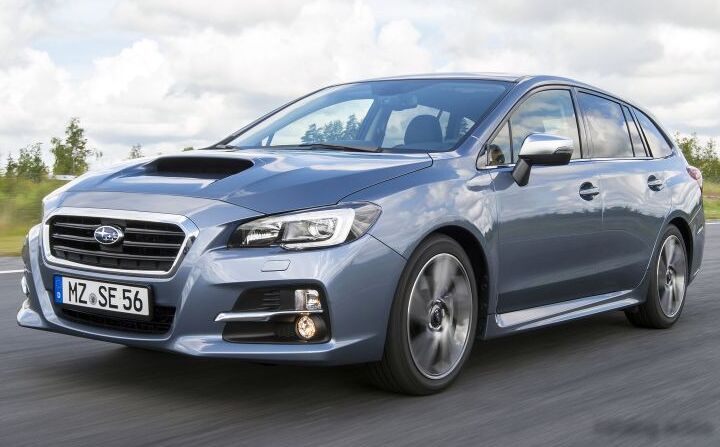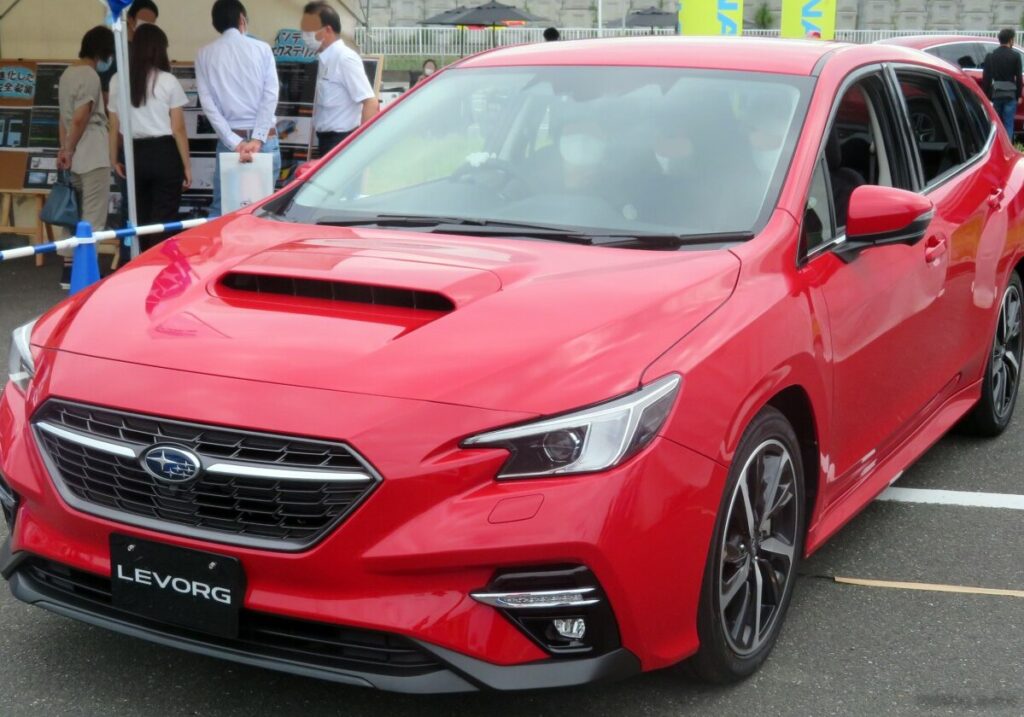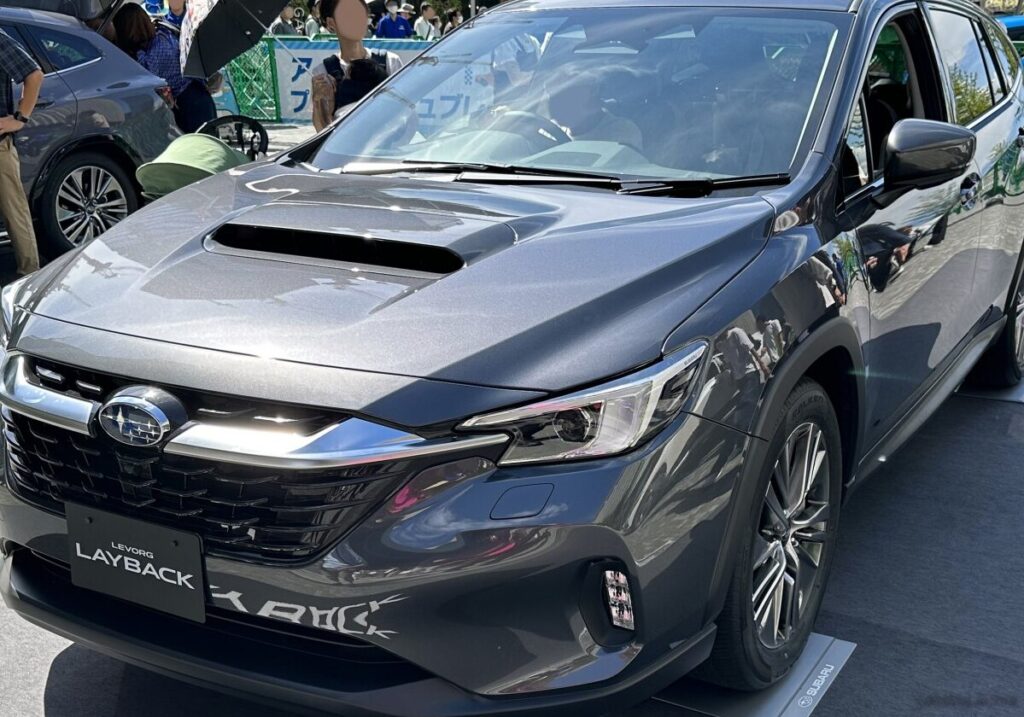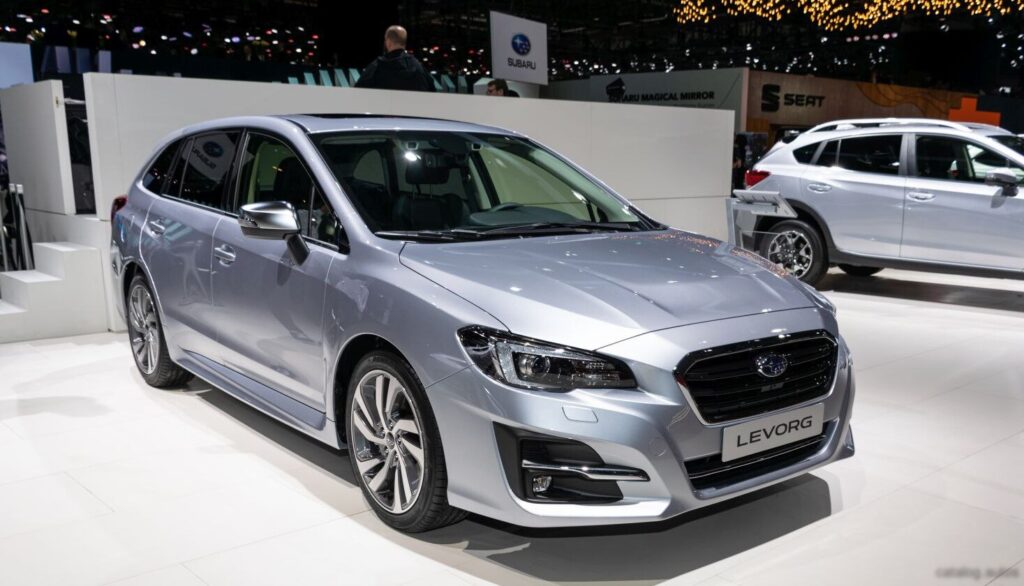
The Subaru Levorg, a name derived from “Leverage” and “Touring,” was introduced as a replacement for the Legacy wagon in many markets, particularly in Europe and Australia, in 2014. The facelifted model, launched in 2019, brought significant styling updates and refinements to the original design. This article focuses on the 1.6-liter (170 hp) variant equipped with Subaru’s Lineartronic continuously variable transmission (CVT) and symmetrical all-wheel drive, a configuration offered from 2019 through August 2020. This trim level represented a balance between performance and fuel efficiency within the Levorg lineup, targeting buyers seeking a practical and capable family vehicle.
Technical Specifications
| Brand | Subaru |
| Model | Levorg |
| Generation | Levorg (facelift 2019) |
| Type (Engine) | 1.6 (170 Hp) AWD Lineartronic |
| Start of production | 2019 |
| End of production | August, 2020 |
| Powertrain Architecture | Internal Combustion engine |
| Body type | Station wagon (estate) |
| Seats | 5 |
| Doors | 5 |
| Fuel consumption (urban) | 8.5-8.8 l/100 km (27.7 – 26.7 US mpg) |
| Fuel consumption (extra urban) | 6.2-6.3 l/100 km (37.9 – 37.3 US mpg) |
| Fuel consumption (combined) | 7.0-7.2 l/100 km (33.6 – 32.7 US mpg) |
| CO2 emissions | 159-164 g/km |
| Fuel Type | Petrol (Gasoline) |
| Acceleration 0 – 100 km/h | 8.9 sec |
| Acceleration 0 – 62 mph | 8.9 sec |
| Acceleration 0 – 60 mph | 8.5 sec |
| Maximum speed | 210 km/h (130.49 mph) |
| Emission standard | Euro 6 |
| Weight-to-power ratio | 9.2 kg/Hp, 109.3 Hp/tonne |
| Weight-to-torque ratio | 6.2 kg/Nm, 160.7 Nm/tonne |
| Power | 170 Hp @ 4800-5600 rpm |
| Torque | 250 Nm @ 1800-4800 rpm (184.39 lb.-ft. @ 1800-4800 rpm) |
| Engine layout | Front, Longitudinal |
| Engine Model/Code | FB16 |
| Engine displacement | 1600 cm3 (97.64 cu. in.) |
| Number of cylinders | 4 |
| Engine configuration | Boxer |
| Cylinder Bore | 78.8 mm (3.1 in.) |
| Piston Stroke | 82 mm (3.23 in.) |
| Compression ratio | 11:1 |
| Number of valves per cylinder | 4 |
| Fuel injection system | Direct injection |
| Engine aspiration | Turbocharger, Intercooler |
| Engine oil capacity | 5.1 l (5.39 US qt | 4.49 UK qt) |
| Coolant | 8.9 l (9.4 US qt | 7.83 UK qt) |
| Kerb Weight | 1556-1596 kg (3430.39 – 3518.58 lbs.) |
| Max. weight | 2040 kg (4497.43 lbs.) |
| Max load | 444-484 kg (978.85 – 1067.04 lbs.) |
| Trunk (boot) space – minimum | 522 l (18.43 cu. ft.) |
| Trunk (boot) space – maximum | 1446 l (51.07 cu. ft.) |
| Fuel tank capacity | 60 l (15.85 US gal | 13.2 UK gal) |
| Max. roof load | 80 kg (176.37 lbs.) |
| Permitted trailer load with brakes (12%) | 1500 kg (3306.93 lbs.) |
| Permitted trailer load without brakes | 750 kg (1653.47 lbs.) |
| Length | 4690 mm (184.65 in.) |
| Width | 1780 mm (70.08 in.) |
| Height | 1485 mm (58.46 in.) |
| Wheelbase | 2650 mm (104.33 in.) |
| Front track | 1530 mm (60.24 in.) |
| Rear (Back) track | 1540 mm (60.63 in.) |
| Ride height (ground clearance) | 130 mm (5.12 in.) |
| Minimum turning circle (turning diameter) | 11.8 m (38.71 ft.) |
| Front brakes | Ventilated discs |
| Rear brakes | Disc |
| Steering type | Steering rack and pinion |
| Power steering | Electric Steering |
| Tires size | 215/50 R17 91V; 225/45 R18 91W |
| Wheel rims size | 7J x 17; 7.5J x 18 |
INTRODUCTION
The 2019 facelift of the Subaru Levorg brought a refreshed exterior design, enhanced safety features, and improvements to the interior. The 1.6-liter turbocharged engine paired with the Lineartronic CVT and symmetrical all-wheel drive system was a key offering in many European and Australian markets. This configuration aimed to provide a balance of reasonable performance, good fuel economy, and the all-weather capability Subaru is known for. Positioned as a mid-range option, it sat below the more powerful 2.0-liter variants and offered a more accessible price point than the top-spec models.
Powertrain & Engine Architecture
The heart of this Levorg variant is the FB16 1.6-liter horizontally-opposed (Boxer) four-cylinder engine. Subaru’s Boxer engine design, with its pistons moving horizontally, contributes to a lower center of gravity, enhancing stability and handling. The FB16 utilizes direct fuel injection, maximizing combustion efficiency and power output. A single twin-scroll turbocharger with an intercooler further boosts performance, delivering 170 horsepower at 4800-5600 rpm and 250 Nm (184 lb-ft) of torque between 1800 and 4800 rpm. The Lineartronic CVT, Subaru’s implementation of a continuously variable transmission, is designed to provide smooth, seamless acceleration and optimized fuel efficiency. Unlike traditional stepped automatic transmissions, the Lineartronic uses a belt and pulley system to offer an infinite number of gear ratios within its operating range. The engine is longitudinally mounted, driving all four wheels through Subaru’s symmetrical all-wheel drive system.
Driving Characteristics
The 1.6-liter Levorg with the Lineartronic CVT offers a comfortable and refined driving experience. While not as overtly sporty as the higher-powered 2.0-liter models, it provides adequate acceleration for everyday driving situations. The CVT, while smooth, can sometimes feel less responsive than a traditional automatic, particularly during quick overtaking maneuvers. Subaru addressed this with programmed “shift points” within the CVT’s operation to mimic the feel of a conventional gearbox. The symmetrical all-wheel drive system provides excellent traction and stability in various weather conditions, making it a confident handler on both dry and wet roads. The relatively low curb weight (1556-1596 kg) helps to mitigate the performance deficit compared to the larger-engined variants. The CVT’s programming prioritizes fuel efficiency, resulting in a noticeable difference in consumption compared to the manual or higher-output versions.
Equipment & Trim Levels
The 1.6 Lineartronic trim typically included standard features such as automatic headlights, rain-sensing wipers, a touchscreen infotainment system with Apple CarPlay and Android Auto compatibility, and a suite of safety technologies including Subaru’s EyeSight driver assist system. EyeSight incorporates features like adaptive cruise control, lane departure warning, and automatic emergency braking. Interior upholstery was generally cloth, with options for leather available as an upgrade. Common optional extras included a sunroof, heated front seats, and a premium audio system. The dashboard layout was functional and well-designed, with a focus on ergonomics and ease of use.
Chassis & Braking
The Levorg utilizes a MacPherson strut suspension setup at the front and a double-wishbone suspension at the rear, providing a good balance of ride comfort and handling precision. Stabilizer bars are fitted to both axles to reduce body roll during cornering. Braking duties are handled by ventilated discs at the front and solid discs at the rear. Anti-lock Braking System (ABS) is standard, along with Electronic Brakeforce Distribution (EBD) and Brake Assist. The suspension tuning is geared towards providing a comfortable ride, but it also offers a reasonable level of control and responsiveness.
Market Reception & Comparison
Critics generally praised the Levorg 1.6 Lineartronic for its comfortable ride, spacious interior, and standard safety features. However, some reviewers noted that the engine could feel strained when fully loaded or during aggressive driving. Compared to the 2.0-liter models, the 1.6 offered a more affordable entry point into the Levorg range, but at the expense of outright performance. Fuel economy was a strong point, with combined figures ranging from 7.0 to 7.2 l/100 km, making it a competitive option in its class. The 1.9 TDI versions of competitor wagons (like the Volkswagen Passat Estate) offered comparable fuel economy but with a different driving experience focused on low-end torque.
Legacy
The Subaru Levorg, including the 1.6 Lineartronic variant, has proven to be a reliable and durable vehicle. The FB16 engine, while not without its quirks, is generally considered to be a robust unit when properly maintained. The Lineartronic CVT, while requiring regular fluid changes, has also demonstrated good long-term reliability. In the used car market, these Levorgs represent a good value proposition for buyers seeking a practical, safe, and capable estate car. Common maintenance items include regular oil changes, coolant flushes, and CVT fluid replacements. The symmetrical all-wheel drive system continues to be a major selling point, particularly in regions with inclement weather.