
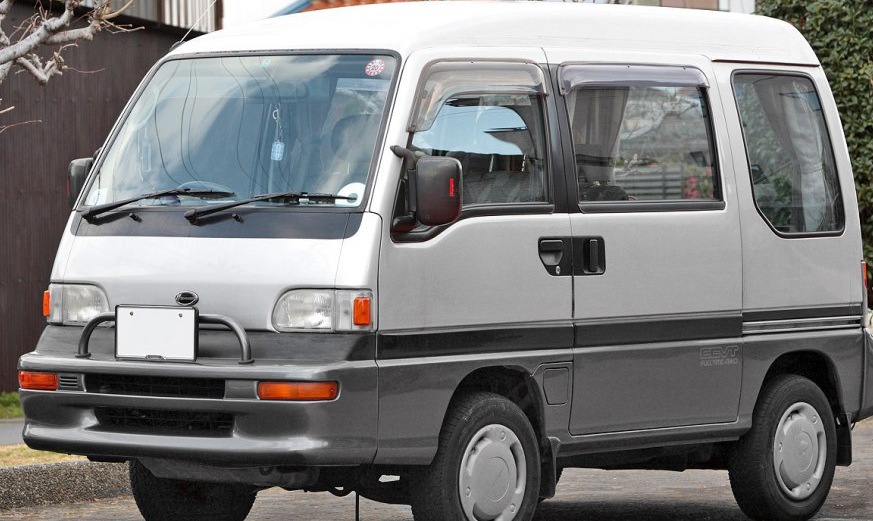
The Subaru Libero Bus (E10, E12) 1.2i, produced between 1993 and 1998, represents a unique offering from Subaru, primarily aimed at the Japanese domestic market (JDM) and select export regions. This compact, six-seat minivan, based on the Subaru Leone platform, distinguished itself with its combination of all-wheel drive, a small displacement engine, and a practical, boxy design. The 1.2i variant served as the entry point to the Libero Bus range, prioritizing affordability and fuel efficiency over outright performance. It occupied a niche position, appealing to buyers needing a versatile, compact people carrier with Subaru’s renowned all-weather capability.
Technical Specifications
| Brand | Subaru |
| Model | Libero |
| Generation | Libero Bus (E10, E12) |
| Type (Engine) | 1.2i (54 Hp) |
| Start of production | 1993 |
| End of production | 1998 |
| Powertrain Architecture | Internal Combustion engine |
| Body type | Minivan |
| Seats | 6 |
| Doors | 5 |
| Fuel consumption (urban) | 9.3 l/100 km (25.3 US mpg) |
| Fuel consumption (extra urban) | 6.1 l/100 km (38.6 US mpg) |
| Fuel consumption (combined) | 7.3 l/100 km (32.2 US mpg) |
| Fuel Type | Petrol (Gasoline) |
| Acceleration 0 – 100 km/h | 18 sec |
| Acceleration 0 – 62 mph | 18 sec |
| Acceleration 0 – 60 mph | 17.1 sec |
| Maximum speed | 128 km/h (79.54 mph) |
| Weight-to-power ratio | 19.3 kg/Hp |
| Weight-to-torque ratio | 10.7 kg/Nm |
| Power | 54 Hp @ 4600 rpm |
| Power per litre | 45.4 Hp/l |
| Torque | 97 Nm @ 3000 rpm (71.54 lb.-ft. @ 3000 rpm) |
| Engine layout | Rear, Transverse |
| Engine Model/Code | E12 |
| Engine displacement | 1190 cm3 (72.62 cu. in.) |
| Number of cylinders | 3 |
| Engine configuration | Inline |
| Cylinder Bore | 78 mm (3.07 in.) |
| Piston Stroke | 83 mm (3.27 in.) |
| Compression ratio | 9.1:1 |
| Number of valves per cylinder | 2 |
| Fuel injection system | Multi-port manifold injection |
| Engine aspiration | Naturally aspirated engine |
| Valvetrain | OHC |
| Kerb Weight | 1040 kg (2292.81 lbs.) |
| Max. weight | 1600 kg (3527.4 lbs.) |
| Max load | 560 kg (1234.59 lbs.) |
| Trunk (boot) space – maximum | 2500 l (88.29 cu. ft.) |
| Fuel tank capacity | 40 l (10.57 US gal | 8.8 UK gal) |
| Length | 3525 mm (138.78 in.) |
| Width | 1415 mm (55.71 in.) |
| Height | 1925 mm (75.79 in.) |
| Wheelbase | 1885 mm (74.21 in.) |
| Front track | 1205 mm (47.44 in.) |
| Rear (Back) track | 1210 mm (47.64 in.) |
| Drive wheel | All wheel drive (4×4) |
| Number of gears and type of gearbox | 5 gears, manual transmission |
| Front brakes | Ventilated discs |
| Rear brakes | Drum |
| Assisting systems | ABS (Anti-lock braking system) |
| Steering type | Steering rack and pinion |
| Tires size | 155/82 R13 |
Powertrain & Engine Architecture
The heart of the Libero Bus 1.2i is the Subaru E12 engine, a 1.2-liter (1190 cc) inline-three cylinder gasoline engine. This engine, while modest in output at 54 horsepower and 97 Nm (71.54 lb-ft) of torque, was designed for efficiency and reliability. It features a single overhead camshaft (OHC) valvetrain with two valves per cylinder and utilizes a multi-port fuel injection system. The engine’s transverse rear-engine layout, a characteristic of many Kei cars and compact vans, contributes to its unique driving dynamics. The five-speed manual transmission was the standard offering for this variant, providing reasonable control over the limited power available. The E12 engine, while not known for its performance, was relatively durable and straightforward to maintain.
Driving Characteristics
The 1.2i Libero Bus’s driving experience is best described as utilitarian. Acceleration is slow, taking approximately 18 seconds to reach 60 mph. The rear-engine, all-wheel-drive configuration provides decent traction in slippery conditions, a key selling point for Subaru. The five-speed manual transmission allows the driver to keep the engine in its relatively narrow power band. Compared to potential higher-spec Libero models with larger engines, the 1.2i feels significantly underpowered, especially when fully loaded with passengers and cargo. The gear ratios are optimized for fuel economy rather than spirited driving. The all-wheel drive system, however, provides a sense of stability and confidence, particularly on unpaved roads or in inclement weather.
Equipment & Trim Levels
The 1.2i Libero Bus was typically equipped with basic amenities. Standard features generally included cloth upholstery, a simple dashboard layout, and manual windows and door locks. Air conditioning was often an optional extra. The interior prioritized practicality and durability over luxury. Trim levels were relatively limited, with the focus being on providing a functional and affordable people carrier. Optional extras could include upgraded audio systems and different wheel covers. The overall interior design was functional and aimed at maximizing space within the compact dimensions of the vehicle.
Chassis & Braking
The Libero Bus utilizes a relatively simple chassis design. The front suspension consists of MacPherson struts, while the rear employs a semi-trailing arm setup. Braking duties are handled by ventilated discs at the front and drum brakes at the rear. Anti-lock braking system (ABS) was included as a standard safety feature. The suspension is tuned for comfort rather than sporty handling, prioritizing a smooth ride over precise cornering. The relatively lightweight construction of the vehicle helps to mitigate the effects of the modest engine power.
Market Reception & Comparison
The Subaru Libero Bus 1.2i was generally well-received as an affordable and practical people carrier, particularly in Japan. Critics noted its compact size, all-wheel-drive capability, and fuel efficiency. However, the limited engine power was a common point of criticism. Compared to other trims in the Libero lineup, such as those equipped with larger engines, the 1.2i offered a more economical option but at the expense of performance. Its fuel economy of around 32.2 US mpg combined was a significant advantage, making it an attractive option for budget-conscious buyers. Reliability was generally good, typical of Subaru’s engineering standards.
Legacy
The Subaru Libero Bus 1.2i, while not a high-performance vehicle, holds a place as a practical and versatile compact minivan. Its combination of all-wheel drive and a small engine made it a unique offering in its segment. In the used car market, these vehicles are relatively rare outside of Japan, and well-maintained examples are sought after by enthusiasts and collectors. The E12 engine, while simple, is known for its durability, and parts availability is generally good. The Libero Bus 1.2i represents a distinctive chapter in Subaru’s history, showcasing the company’s commitment to all-wheel-drive technology and practical vehicle design.
