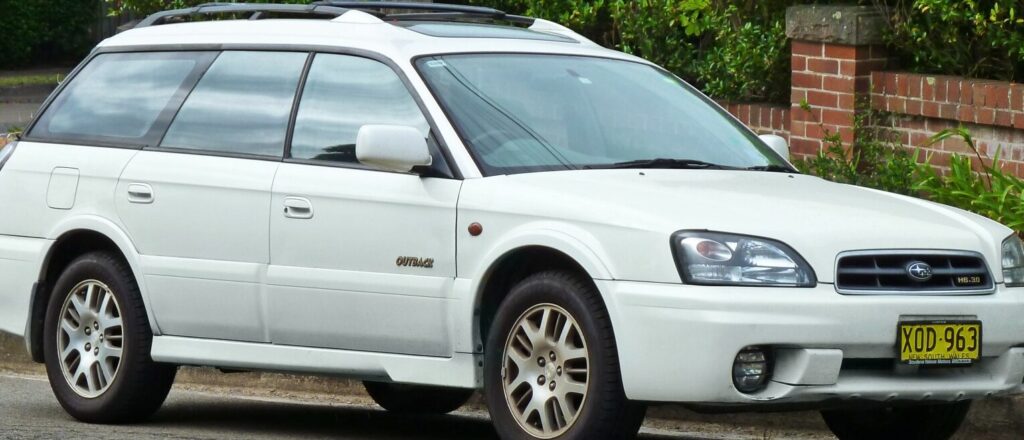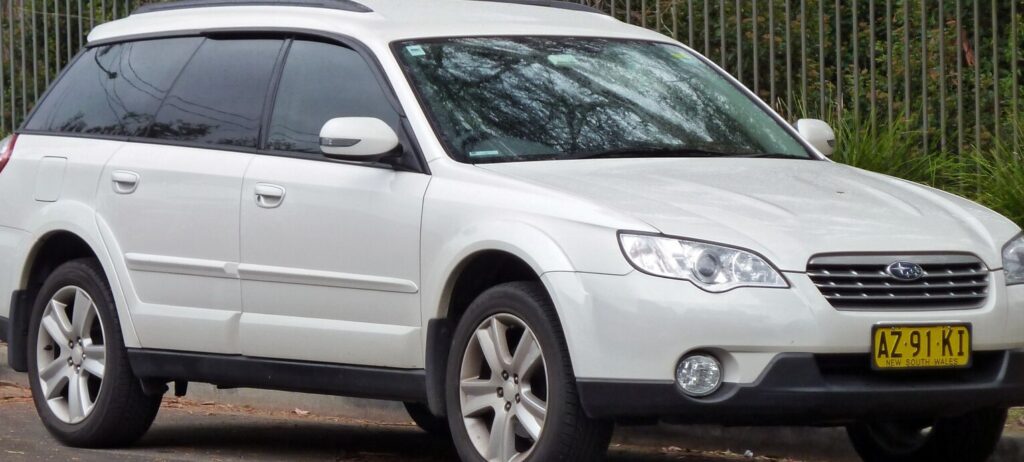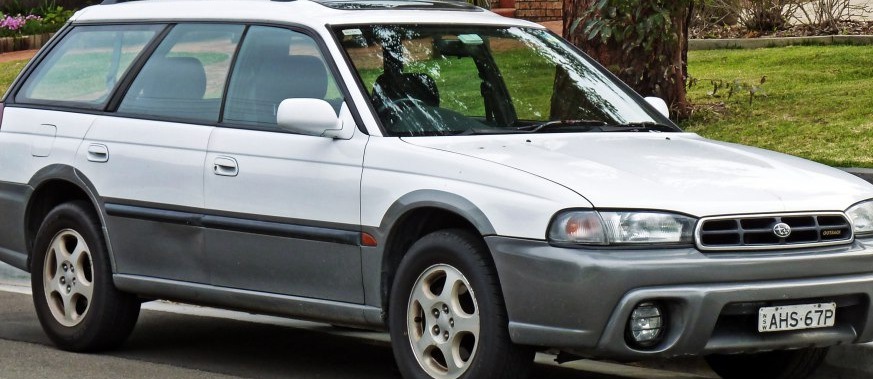
The Subaru Outback I, internally designated as the BD, BG, and BK series, represented Subaru’s foray into the burgeoning sport utility wagon market in the early to mid-1990s. Introduced in 1994 and continuing through 1999, the Outback was essentially a lifted and ruggedized version of the Subaru Legacy wagon, offering standard all-wheel drive and a more adventurous aesthetic. The 2.2i 4WD variant, producing 135 horsepower, served as a key entry point into the Outback lineup, appealing to buyers seeking practicality, all-weather capability, and Subaru’s renowned symmetrical all-wheel drive system. This model played a significant role in establishing the Outback as a distinct vehicle separate from the Legacy wagon, and helped define the crossover segment as it began to emerge.
Technical Specifications
| Brand | Subaru |
| Model | Outback |
| Generation | Outback I (BD, BG, BK) |
| Type | 2.2i 4WD (135 Hp) |
| Start of production | 1994 |
| End of production | 1999 |
| Powertrain Architecture | Internal Combustion engine |
| Body type | Station wagon (estate) |
| Seats | 5 |
| Doors | 5 |
| Fuel Type | Petrol (Gasoline) |
| Power | 135 Hp @ 5400 rpm |
| Power per litre | 61 Hp/l |
| Torque | 190 Nm @ 4400 rpm / 140.14 lb.-ft. @ 4400 rpm |
| Engine layout | Front, Longitudinal |
| Engine Model/Code | EJ22E |
| Engine displacement | 2212 cm3 / 134.98 cu. in. |
| Number of cylinders | 4 |
| Engine configuration | Boxer |
| Cylinder Bore | 96.9 mm / 3.81 in. |
| Piston Stroke | 75 mm / 2.95 in. |
| Compression ratio | 9.5:1 |
| Number of valves per cylinder | 4 |
| Fuel injection system | Multi-port manifold injection |
| Engine aspiration | Naturally aspirated engine |
| Valvetrain | OHC |
| Engine oil capacity | 4 l / 4.23 US qt | 3.52 UK qt |
| Coolant | 5.8 l / 6.13 US qt | 5.1 UK qt |
| Fuel tank capacity | 60 l / 15.85 US gal | 13.2 UK gal |
| Length | 4719 mm / 185.79 in. |
| Width | 1715 mm / 67.52 in. |
| Height | 1600 mm / 62.99 in. |
| Wheelbase | 2629 mm / 103.5 in. |
| Drive wheel | All wheel drive (4×4) |
| Number of gears and type of gearbox | 5 gears, manual transmission |
Powertrain & Engine Architecture
The heart of the 2.2i Outback was the EJ22E 2.2-liter horizontally-opposed (boxer) four-cylinder engine. This engine was a staple of Subaru’s lineup during this period, known for its relatively smooth operation and compact design. The boxer configuration, with pistons moving horizontally towards each other, contributed to a lower center of gravity, enhancing handling. The EJ22E utilized a multi-port fuel injection system, delivering fuel directly into the intake ports, and an overhead camshaft (OHC) design. While not a powerhouse, the EJ22E provided adequate performance for everyday driving and light off-road excursions. The engine’s 9.5:1 compression ratio was a compromise between efficiency and power. The 5-speed manual transmission was the standard offering for this trim, providing drivers with direct control over the engine’s power delivery. The transmission was designed to work in conjunction with Subaru’s symmetrical all-wheel drive system, distributing power to all four wheels for enhanced traction.
Driving Characteristics
The 135 horsepower and 190 Nm (140 lb-ft) of torque delivered by the 2.2i Outback were sufficient for comfortable highway cruising and city driving. However, it wasn’t a particularly quick vehicle. Acceleration was adequate, but passing maneuvers required planning. Compared to the later, more powerful 2.5-liter engine options available in the Outback, the 2.2i felt noticeably less responsive. The 5-speed manual transmission allowed drivers to keep the engine in its optimal power band, but the relatively wide gear ratios meant frequent shifting was necessary. The all-wheel drive system provided excellent traction in various conditions, making the Outback a capable vehicle in snow, gravel, and light off-road situations. The suspension, tuned for comfort, absorbed bumps and irregularities in the road well, but it wasn’t particularly sporty. Overall, the driving experience was characterized by practicality and surefootedness rather than outright performance.
Equipment & Trim Levels
The 2.2i 4WD Outback typically came with a reasonable level of standard equipment. This included power windows, power locks, and an AM/FM stereo. Air conditioning was often standard, but could be optional depending on the specific package. Interior upholstery was typically cloth, with a durable and practical design. The dashboard layout was functional and straightforward, prioritizing ease of use. Optional extras included a sunroof, upgraded stereo systems, and alloy wheels. The 2.2i trim generally represented the entry-level Outback, focusing on providing essential features and all-wheel drive capability at a more affordable price point. It was positioned below the higher-spec models that offered more luxurious amenities and more powerful engine options.
Chassis & Braking
The Outback I utilized a MacPherson strut front suspension and a double-wishbone rear suspension. This setup provided a good balance of ride comfort and handling. The chassis was reinforced compared to the standard Legacy wagon to accommodate the increased ride height and off-road capability. Braking duties were handled by disc brakes on the front wheels and drum brakes on the rear wheels. While adequate for most driving situations, the rear drum brakes were a cost-saving measure and didn’t offer the same stopping power as disc brakes. A stabilizer bar was fitted to both the front and rear suspension to reduce body roll during cornering. The Outback’s all-wheel drive system contributed to its stability and handling, particularly in adverse weather conditions.
Market Reception & Comparison
The Subaru Outback I 2.2i 4WD was generally well-received by critics and consumers alike. It was praised for its practicality, all-weather capability, and standard all-wheel drive. However, some reviewers noted that the 2.2-liter engine was underpowered, especially when compared to competitors offering larger displacement engines. Fuel economy was considered average for its class. Compared to the higher-trim Outback models with the 2.5-liter engine, the 2.2i offered a more affordable entry point but sacrificed some performance. It also differed from the turbocharged models, which provided significantly more power but came with a higher price tag and potentially higher maintenance costs. The 2.2i appealed to buyers who prioritized practicality and all-weather capability over outright performance.
Legacy
The Subaru Outback I 2.2i 4WD established the Outback as a popular and influential vehicle in the crossover segment. While the EJ22E engine is generally considered reliable, age and mileage can lead to issues such as oil leaks and head gasket failures. The symmetrical all-wheel drive system remains a hallmark of Subaru vehicles and continues to be highly regarded for its performance and durability. Today, well-maintained examples of the Outback I 2.2i are sought after by enthusiasts and collectors who appreciate their simplicity, reliability, and unique character. The 2.2i variant, while not the most powerful, represents a significant piece of Subaru’s history and helped pave the way for the modern Outback that continues to be a popular choice for drivers seeking a versatile and capable vehicle.