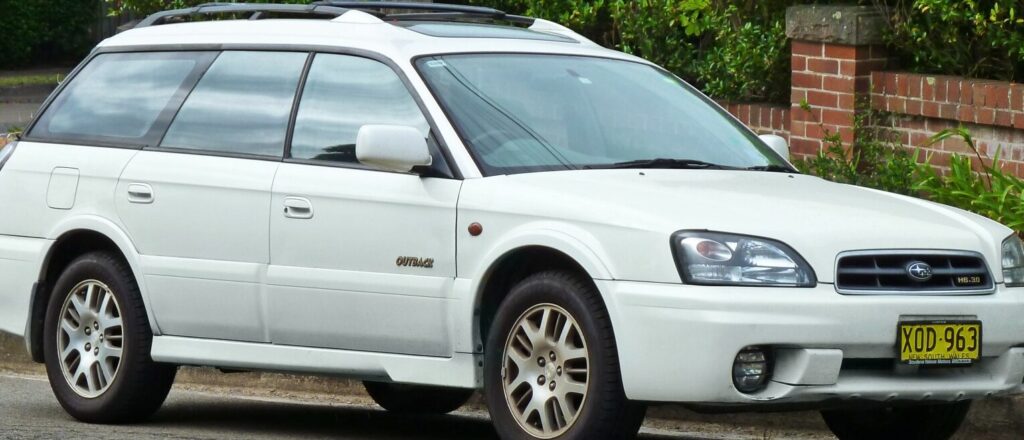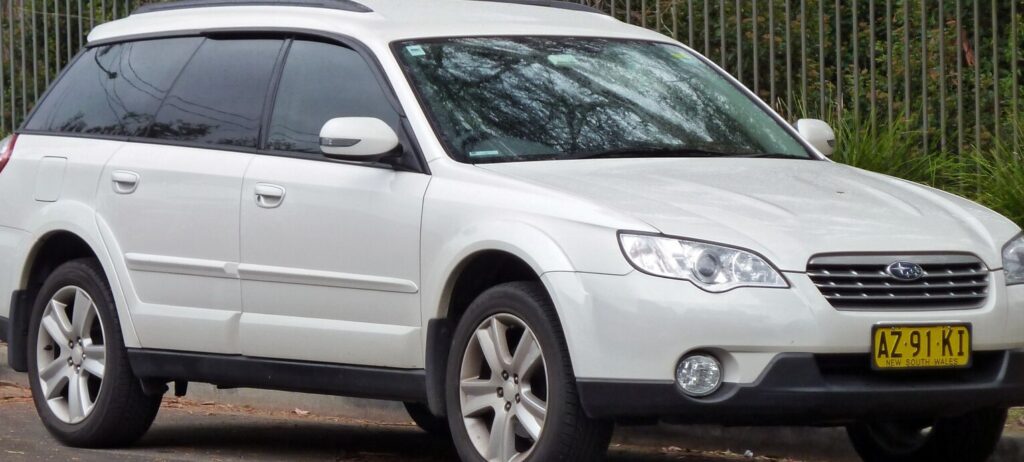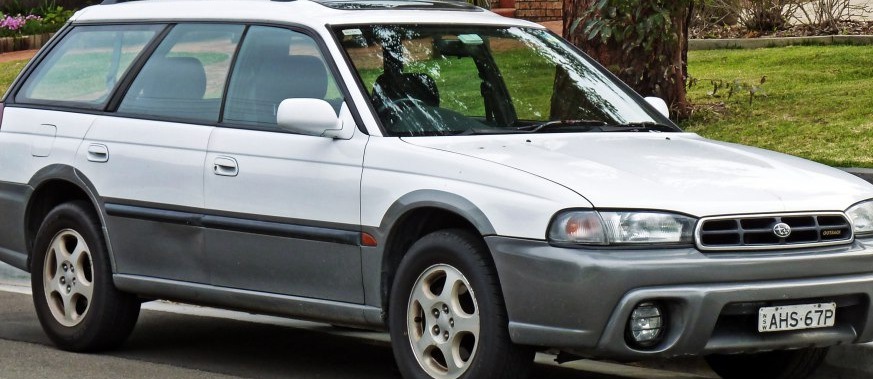
The Subaru Outback I, specifically the 2.5i 4WD variant produced between 1994 and 1999 (chassis codes BD, BG, and BK), represented Subaru’s foray into the burgeoning sport-utility wagon segment. Building upon the Legacy wagon platform, the Outback aimed to offer the practicality of an SUV with the handling and fuel efficiency of a car. This particular 2.5i trim, equipped with a 2.5-liter naturally aspirated boxer engine and a five-speed manual transmission, served as a core offering within the Outback lineup, positioned as a balance between affordability and capability. It was a key model for Subaru in establishing its brand identity in North America, where the Outback quickly gained popularity for its standard all-wheel drive and rugged appeal.
Technical Specifications
| Brand | Subaru |
| Model | Outback |
| Generation | Outback I (BD, BG, BK) |
| Type (Engine) | 2.5i 4WD (165 Hp) |
| Start of production | 1994 |
| End of production | 1999 |
| Powertrain Architecture | Internal Combustion engine |
| Body type | Station wagon (estate) |
| Seats | 5 |
| Doors | 5 |
| Fuel consumption (urban) | 14 l/100 km (16.8 US mpg, 20.2 UK mpg, 7.1 km/l) |
| Fuel consumption (extra urban) | 9 l/100 km (26.1 US mpg, 31.4 UK mpg, 11.1 km/l) |
| Fuel consumption (combined) | 11 l/100 km (21.4 US mpg, 25.7 UK mpg, 9.1 km/l) |
| Fuel Type | Petrol (Gasoline) |
| Emission standard | EURO 1 |
| Weight-to-power ratio | 9 kg/Hp, 111.5 Hp/tonne |
| Weight-to-torque ratio | 6.5 kg/Nm, 152.7 Nm/tonne |
| Power | 165 Hp @ 5600 rpm |
| Power per litre | 67.2 Hp/l |
| Torque | 226 Nm @ 4400 rpm (166.69 lb.-ft. @ 4400 rpm) |
| Engine layout | Front, Longitudinal |
| Engine Model/Code | EJ25 |
| Engine displacement | 2457 cm3 (149.94 cu. in.) |
| Number of cylinders | 4 |
| Engine configuration | Boxer |
| Cylinder Bore | 99.5 mm (3.92 in.) |
| Piston Stroke | 79 mm (3.11 in.) |
| Compression ratio | 10:1 |
| Number of valves per cylinder | 4 |
| Fuel injection system | Multi-port manifold injection |
| Engine aspiration | Naturally aspirated engine |
| Valvetrain | OHC |
| Engine oil capacity | 4.5 l (4.76 US qt | 3.96 UK qt) |
| Kerb Weight | 1480 kg (3262.84 lbs.) |
| Fuel tank capacity | 60 l (15.85 US gal | 13.2 UK gal) |
| Length | 4719 mm (185.79 in.) |
| Width | 1715 mm (67.52 in.) |
| Height | 1600 mm (62.99 in.) |
| Wheelbase | 2629 mm (103.5 in.) |
| Drive wheel | All wheel drive (4×4) |
| Number of gears and type of gearbox | 5 gears, manual transmission |
Powertrain & Engine Architecture
The heart of the 2.5i Outback is the EJ25 engine, a 2.5-liter (2457 cc) naturally aspirated, horizontally-opposed (boxer) four-cylinder. This engine design, a Subaru hallmark, provides a low center of gravity, contributing to the vehicle’s balanced handling. The EJ25 utilizes a single overhead camshaft (OHC) design with four valves per cylinder. Fuel delivery is managed by a multi-port fuel injection system. The engine produces 165 horsepower at 5600 rpm and 226 Nm (166.69 lb-ft) of torque at 4400 rpm. The five-speed manual transmission was a standard feature, offering drivers direct control over the engine’s power. The transmission’s gear ratios were tuned for a balance of acceleration and fuel economy, prioritizing usability over outright performance.
Driving Characteristics
The 2.5i Outback with the five-speed manual transmission offered a reasonably engaging driving experience. While not a sports car, the engine provided adequate power for everyday driving and highway cruising. Acceleration was respectable, though not particularly brisk. The all-wheel-drive system provided excellent traction in various conditions, making it a capable vehicle in inclement weather. Compared to the later, more powerful 2.5-liter turbocharged models, the 2.5i felt less urgent, but its simplicity and predictable power delivery were appreciated by many drivers. The manual transmission allowed for greater driver involvement and control compared to the optional four-speed automatic.
Equipment & Trim Levels
The 2.5i Outback typically came standard with features such as air conditioning, power windows and locks, and an AM/FM stereo. Interior upholstery was typically cloth, with options for upgraded materials. The dashboard layout was functional and straightforward, prioritizing ease of use. Available options included a sunroof, cruise control, and upgraded audio systems. The Outback’s interior was designed with practicality in mind, offering ample cargo space and comfortable seating for five passengers. The 2.5i trim represented a mid-range offering, providing a good balance of features and affordability.
Chassis & Braking
The Outback I utilized a MacPherson strut front suspension and a double-wishbone rear suspension. This setup provided a comfortable ride and predictable handling. The all-wheel-drive system employed a viscous coupling center differential, automatically distributing torque between the front and rear axles as needed. Braking duties were handled by disc brakes on all four wheels, providing adequate stopping power. The chassis was reinforced compared to the standard Legacy wagon to accommodate the Outback’s increased ride height and off-road capability. Stabilizer bars were fitted to both the front and rear axles to reduce body roll during cornering.
Market Reception & Comparison
The Subaru Outback I 2.5i 4WD was generally well-received by automotive critics. It was praised for its standard all-wheel drive, spacious interior, and comfortable ride. However, some critics noted that the engine lacked the power of some competitors, and the fuel economy was not class-leading. Compared to other trims in the Outback lineup, the 2.5i offered a more affordable entry point, appealing to buyers who prioritized practicality and reliability over outright performance. The automatic transmission versions of the 2.5i were often criticized for feeling sluggish and detracting from the driving experience.
Legacy
The Subaru Outback I 2.5i 4WD established the Outback as a popular and influential vehicle in the sport-utility wagon segment. The EJ25 engine, while not without its quirks (such as potential head gasket issues in some early models), proved to be a relatively durable and reliable powerplant when properly maintained. Today, well-maintained examples of the Outback I are sought after by enthusiasts and collectors. The 2.5i variant, with its manual transmission, is particularly prized for its engaging driving experience and simplicity. The Outback’s success paved the way for subsequent generations, solidifying Subaru’s reputation as a manufacturer of capable and reliable all-wheel-drive vehicles.