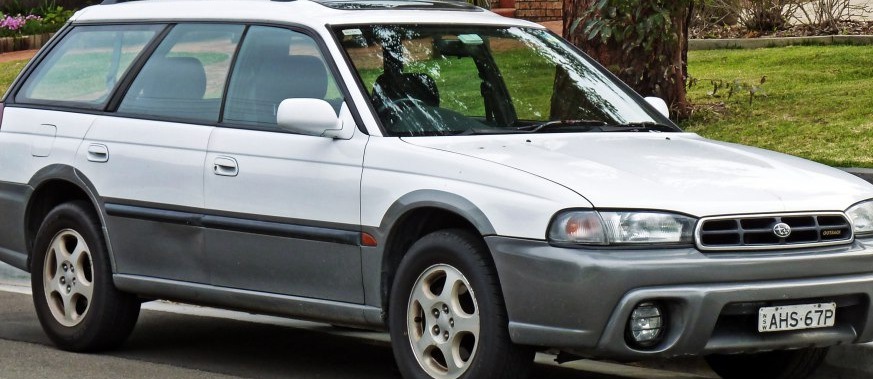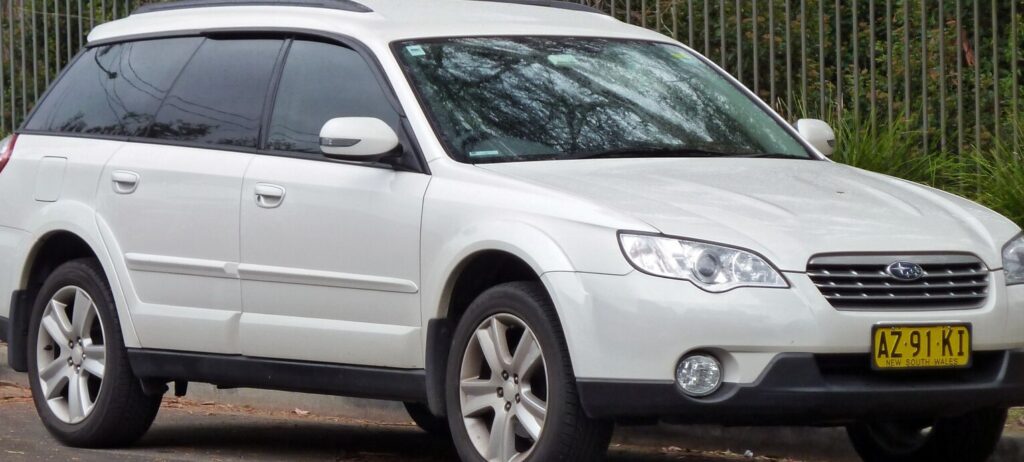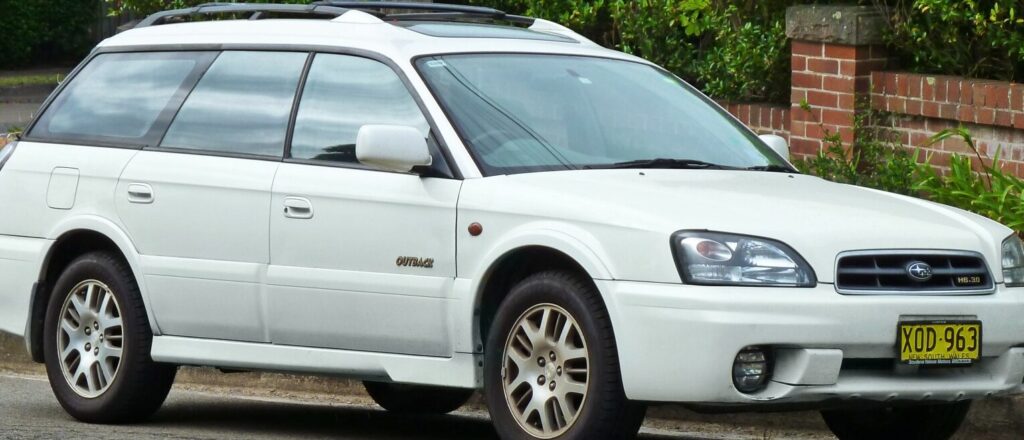
The Subaru Outback II (BE/BH) 2.5i 4WD Automatic, produced between 1999 and 2003, represented a significant evolution of Subaru’s popular all-wheel-drive wagon. Positioned as a mid-range offering within the second-generation Outback lineup, it bridged the gap between the base 2.5S models and the more performance-oriented turbocharged variants. This model was primarily aimed at the North American market, where the Outback had quickly gained a reputation for its practicality, safety, and all-weather capability. It built upon the foundation of the first-generation Outback, offering increased refinement and a more spacious interior, solidifying Subaru’s presence in the growing sport utility wagon segment.
Technical Specifications
| Brand | Subaru |
| Model | Outback |
| Generation | Outback II (BE, BH) |
| Type | 2.5 i 4WD (156 Hp) Automatic |
| Start of production | 1999 |
| End of production | 2003 |
| Powertrain Architecture | Internal Combustion engine |
| Body type | Station wagon (estate) |
| Seats | 5 |
| Doors | 5 |
| Fuel consumption (urban) | 12.3 l/100 km (19.1 US mpg, 23 UK mpg, 8.1 km/l) |
| Fuel consumption (extra urban) | 7.2 l/100 km (32.7 US mpg, 39.2 UK mpg, 13.9 km/l) |
| Fuel consumption (combined) | 9 l/100 km (26.1 US mpg, 31.4 UK mpg, 11.1 km/l) |
| Fuel Type | Petrol (Gasoline) |
| Acceleration 0 – 100 km/h | 9.5 sec |
| Acceleration 0 – 62 mph | 9.5 sec |
| Acceleration 0 – 60 mph | 9 sec |
| Maximum speed | 197 km/h (122.41 mph) |
| Emission standard | Euro 3 |
| Weight-to-power ratio | 9.5 kg/Hp, 105.4 Hp/tonne |
| Weight-to-torque ratio | 6.6 kg/Nm, 150.7 Nm/tonne |
| Power | 156 Hp @ 5600 rpm |
| Power per litre | 63.5 Hp/l |
| Torque | 223 Nm @ 3600 rpm (164.48 lb.-ft. @ 3600 rpm) |
| Engine layout | Front, Longitudinal |
| Engine Model/Code | EJ25 |
| Engine displacement | 2457 cm3 (149.94 cu. in.) |
| Number of cylinders | 4 |
| Engine configuration | Boxer |
| Cylinder Bore | 99.5 mm (3.92 in.) |
| Piston Stroke | 79 mm (3.11 in.) |
| Compression ratio | 10:1 |
| Number of valves per cylinder | 4 |
| Fuel injection system | Multi-port manifold injection |
| Engine aspiration | Naturally aspirated engine |
| Valvetrain | DOHC |
| Engine oil capacity | 4.5 l (4.76 US qt | 3.96 UK qt) |
| Coolant capacity | 5.9 l (6.23 US qt | 5.19 UK qt) |
| Kerb Weight | 1480 kg (3262.84 lbs.) |
| Max. weight | 2015 kg (4442.31 lbs.) |
| Max load | 535 kg (1179.47 lbs.) |
| Trunk (boot) space – minimum | 459 l (16.21 cu. ft.) |
| Trunk (boot) space – maximum | 1649 l (58.23 cu. ft.) |
| Fuel tank capacity | 64 l (16.91 US gal | 14.08 UK gal) |
| Length | 4730 mm (186.22 in.) |
| Width | 1770 mm (69.69 in.) |
| Height | 1545 mm (60.83 in.) |
| Wheelbase | 2670 mm (105.12 in.) |
| Front track | 1495 mm (58.86 in.) |
| Rear track | 1485 mm (58.46 in.) |
| Drive wheel | All wheel drive (4×4) |
| Number of gears | 4 |
| Gearbox type | Automatic transmission |
| Front suspension | Spring Strut |
| Rear suspension | Coil spring |
| Front brakes | Ventilated discs |
| Rear brakes | Disc |
| Assisting systems | ABS (Anti-lock braking system) |
| Steering type | Steering rack and pinion |
| Power steering | Hydraulic Steering |
| Tires size | 215/60 R16 |
Powertrain & Engine Architecture
The heart of the 2.5i Outback was the EJ25 2.5-liter naturally aspirated boxer-four engine. This engine, a hallmark of Subaru engineering, featured horizontally opposed pistons, which contributed to a lower center of gravity and reduced engine vibration. The EJ25 utilized a single overhead camshaft (SOHC) design per cylinder bank, operating 16 valves in total. Fuel delivery was managed by a multi-point fuel injection system, providing precise fuel metering for optimal combustion. The engine produced 156 horsepower at 5600 rpm and 164 lb-ft of torque at 3600 rpm. Paired with this engine was a four-speed automatic transmission, designed to provide smooth and convenient shifting. This transmission was not known for its sportiness, prioritizing comfort and ease of use over aggressive gear changes.
Driving Characteristics
The 2.5i Automatic Outback offered a comfortable and predictable driving experience. Acceleration from 0-60 mph took around 9 seconds, which was adequate for everyday driving but noticeably slower than the turbocharged models. The automatic transmission, while smooth, lacked the responsiveness of a manual gearbox, resulting in a slightly less engaging driving experience. The all-wheel-drive system provided excellent traction in various weather conditions, making it a capable vehicle for those living in areas with snow or rain. The gear ratios were tuned for fuel efficiency and relaxed cruising, rather than spirited performance. The engine delivered its peak torque at a relatively low rpm, providing sufficient power for merging onto highways and passing other vehicles, but it did require the transmission to downshift on inclines or when carrying a full load.
Equipment & Trim Levels
The 2.5i trim level typically included standard features such as air conditioning, power windows and locks, a CD player, and cloth upholstery. Optional extras included a sunroof, leather upholstery, heated front seats, and a premium sound system. Safety features were a strong point for the Outback, with standard ABS brakes and dual front airbags. Higher trim levels, such as the Limited, added more luxurious features and upgraded interior materials. The dashboard layout was functional and straightforward, with easy-to-read gauges and logically placed controls.
Chassis & Braking
The Outback II utilized a MacPherson strut front suspension and a double-wishbone rear suspension, providing a comfortable ride and predictable handling. The suspension was tuned for a balance between comfort and stability, absorbing bumps and irregularities in the road surface effectively. Braking duties were handled by ventilated disc brakes at the front and solid disc brakes at the rear. The ABS system helped to prevent wheel lockup during hard braking, enhancing safety and control. The Outback’s relatively high ground clearance, a defining characteristic of the model, allowed it to navigate rough terrain and unpaved roads with ease.
Market Reception & Comparison
The 2.5i Automatic Outback was generally well-received by critics and consumers alike. It was praised for its practicality, safety, and all-weather capability. However, some reviewers noted that the automatic transmission could feel sluggish and that the engine lacked the punch of the turbocharged variants. Compared to the 2.5RS (manual transmission) and the turbocharged models, the 2.5i Automatic offered a more comfortable and fuel-efficient driving experience, but at the expense of performance. Fuel economy was respectable for its class, averaging around 26 mpg in combined driving. Reliability was generally good, although some owners reported issues with the automatic transmission over the long term.
Legacy
The Subaru Outback II 2.5i 4WD Automatic remains a popular choice in the used car market today, particularly for those seeking a reliable and versatile all-wheel-drive wagon. The EJ25 engine, while not without its quirks (such as potential head gasket issues), is generally considered to be a durable and long-lasting powerplant when properly maintained. The Outback’s reputation for safety and practicality has ensured its continued appeal, and well-maintained examples can still provide years of reliable service. It represents a pivotal moment in Subaru’s history, solidifying the brand’s identity as a maker of capable and dependable all-weather vehicles.