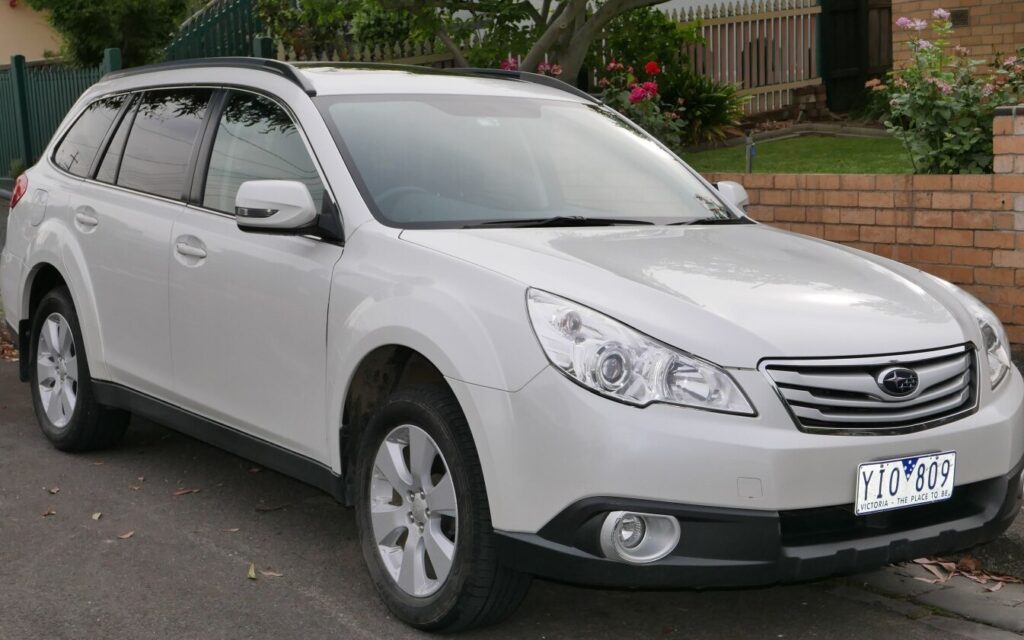
The Subaru Outback IV (BR, BM) 2.5i, produced between 2009 and 2013, represented a significant evolution of Subaru’s popular crossover wagon. Positioned as the mainstream offering within the fourth-generation Outback lineup, the 2.5i model aimed to balance affordability, practicality, and Subaru’s renowned symmetrical all-wheel drive system. It served as the volume seller, bridging the gap between the base 2.5X model and the more powerful 3.6R variants. The BR chassis code designates models produced from 2009-2010, while the BM code applies to those from 2011-2013, with minor cosmetic and equipment updates differentiating the two. This generation of Outback was based on the Subaru Legacy platform, offering a comfortable ride and ample cargo space, appealing to families and outdoor enthusiasts alike.
Technical Specifications
| Brand | Subaru |
| Model | Outback |
| Generation | Outback IV (BR, BM) |
| Type | 2.5i (167 Hp) AWD Automatic |
| Start of production | 2009 |
| End of production | 2013 |
| Powertrain Architecture | Internal Combustion engine |
| Body type | Station wagon (estate) |
| Seats | 5 |
| Doors | 5 |
| Fuel Type | Petrol (Gasoline) |
| Power | 167 Hp @ 5160 rpm |
| Power per litre | 68 Hp/l |
| Torque | 229 Nm @ 4000 rpm / 168.9 lb.-ft. @ 4000 rpm |
| Engine layout | Front, Longitudinal |
| Engine Model/Code | EJ253 |
| Engine displacement | 2457 cm3 / 149.94 cu. in. |
| Number of cylinders | 4 |
| Engine configuration | Boxer |
| Number of valves per cylinder | 4 |
| Fuel injection system | Multi-port manifold injection |
| Engine aspiration | Naturally aspirated engine |
| Valvetrain | SOHC |
| Engine oil capacity | 4.2 l / 4.44 US qt | 3.7 UK qt |
| Coolant | 6.4 l / 6.76 US qt | 5.63 UK qt |
| Length | 4775 mm / 187.99 in. |
| Width | 1820 mm / 71.65 in. |
| Height | 1605 mm / 63.19 in. |
| Wheelbase | 2745 mm / 108.07 in. |
| Front track | 1540 mm / 60.63 in. |
| Rear track | 1540 mm / 60.63 in. |
| Drive wheel | All wheel drive (4×4) |
| Number of gears and type of gearbox | 5 gears, automatic transmission |
| Front suspension | Independent type McPherson |
| Rear suspension | Double wishbone |
| Front brakes | Ventilated discs |
| Rear brakes | Disc |
| Assisting systems | ABS (Anti-lock braking system) |
| Power steering | Hydraulic Steering |
Powertrain & Engine Architecture
The heart of the 2009-2013 Subaru Outback 2.5i is the EJ253 2.5-liter naturally aspirated boxer-four engine. This engine is a hallmark of Subaru engineering, known for its horizontally opposed pistons which contribute to a low center of gravity and reduced vibration. The EJ253 utilizes a single overhead camshaft (SOHC) design, operating 16 valves (four per cylinder). Fuel delivery is managed by a multi-point fuel injection system, providing adequate, though not exceptional, performance. The engine’s 167 horsepower at 5160 rpm and 168.9 lb-ft of torque at 4000 rpm were considered sufficient for everyday driving and light towing. Paired with the EJ253 is a 5-speed automatic transmission. This transmission, while reliable, isn’t known for its sportiness, prioritizing smooth shifts and fuel efficiency over rapid acceleration. The transmission is electronically controlled, adapting shift points based on throttle input and driving conditions.
Driving Characteristics
The Outback 2.5i Automatic delivers a comfortable and predictable driving experience. Acceleration is adequate for merging onto highways and passing slower traffic, but it’s not particularly brisk. The automatic transmission contributes to a relaxed driving style, with smooth gear changes. Compared to the 6-speed manual transmission option available on some Outback models, the automatic feels less engaging. The symmetrical all-wheel drive system provides excellent traction in various weather conditions, a key selling point for Subaru. The 5-speed automatic’s gear ratios are tuned for fuel economy and cruising comfort, rather than maximizing performance. The Outback’s suspension, featuring McPherson struts in the front and a double-wishbone setup in the rear, provides a compliant ride, absorbing bumps and imperfections in the road effectively. However, the relatively soft suspension can result in some body roll during cornering.
Equipment & Trim Levels
The 2.5i trim level typically included standard features such as air conditioning, power windows and locks, a CD player with auxiliary input, and keyless entry. Higher trim levels, such as the Premium, added features like a power driver’s seat, a sunroof, alloy wheels, and an upgraded audio system. Optional extras available for the 2.5i included a navigation system, leather upholstery, and a rear-view camera. Interior upholstery was typically cloth, with higher trims offering leather options. The dashboard layout was functional and straightforward, prioritizing ease of use over stylistic flair. Safety features were a strong point, with standard inclusion of anti-lock brakes (ABS) and multiple airbags.
Chassis & Braking
The Outback 2.5i utilizes a unibody construction, providing a good balance of strength and weight. The suspension system is tuned for comfort and stability, with stabilizer bars helping to reduce body roll. The front brakes are ventilated discs, providing ample stopping power, while the rear brakes are solid discs. The hydraulic power steering offers a light and responsive feel. The all-wheel drive system is a symmetrical design, distributing power evenly to all four wheels for optimal traction. The vehicle’s relatively high ground clearance (8.7 inches) allows for moderate off-road capability, making it suitable for gravel roads and snow-covered surfaces.
Market Reception & Comparison
The Subaru Outback 2.5i Automatic was generally well-received by automotive critics. It was praised for its practicality, safety, and all-weather capability. However, some reviewers noted that the engine and transmission combination lacked the refinement and performance of competitors like the Honda CR-V or Toyota RAV4. Fuel economy was average for the class, with EPA estimates around 22 mpg city and 29 mpg highway. Compared to the 3.6R model, the 2.5i offered significantly better fuel economy but lacked the 3.6R’s more powerful engine. The 2.5i also offered a more affordable price point, making it accessible to a wider range of buyers. Compared to manual transmission versions of the 2.5i, the automatic offered greater convenience but slightly reduced fuel efficiency and a less engaging driving experience.
Legacy
The Subaru Outback IV 2.5i Automatic has proven to be a reliable and durable vehicle. The EJ253 engine, while not without its potential issues (such as head gasket leaks, particularly in earlier models), is generally considered robust when properly maintained. The automatic transmission is also known for its longevity. In the used car market, these Outbacks represent a good value, offering a practical and capable vehicle at an affordable price. However, potential buyers should be aware of the potential for head gasket issues and ensure that the vehicle has been properly maintained. The Outback’s reputation for safety and reliability continues to make it a popular choice among used car buyers seeking a versatile and dependable crossover wagon.