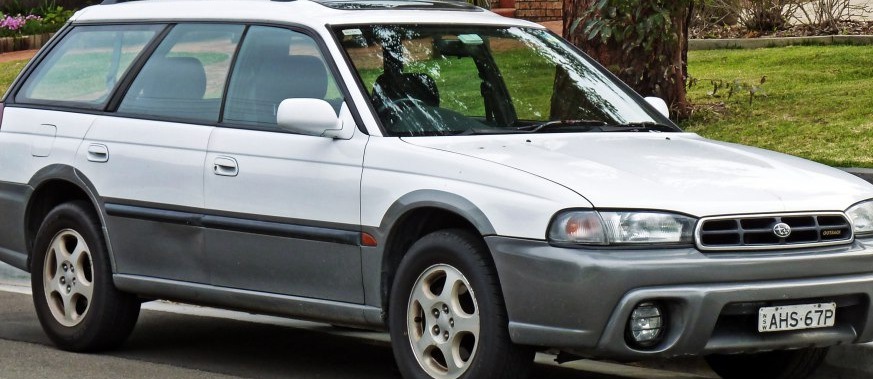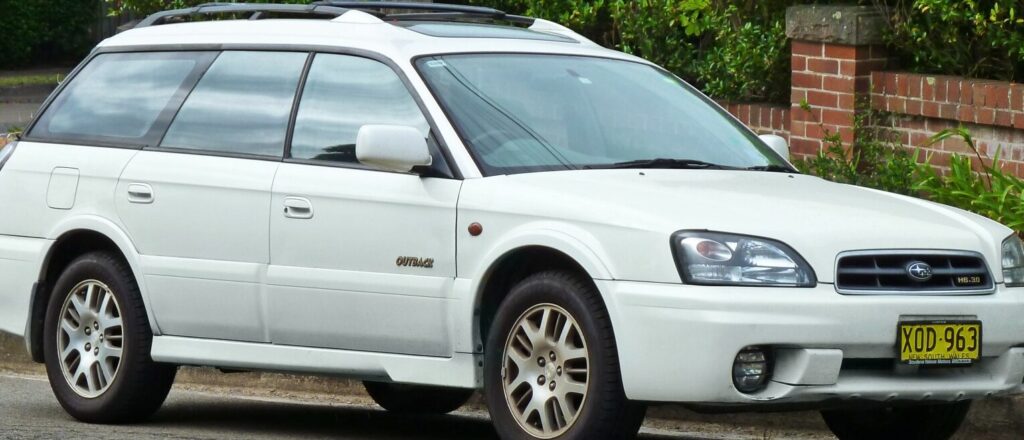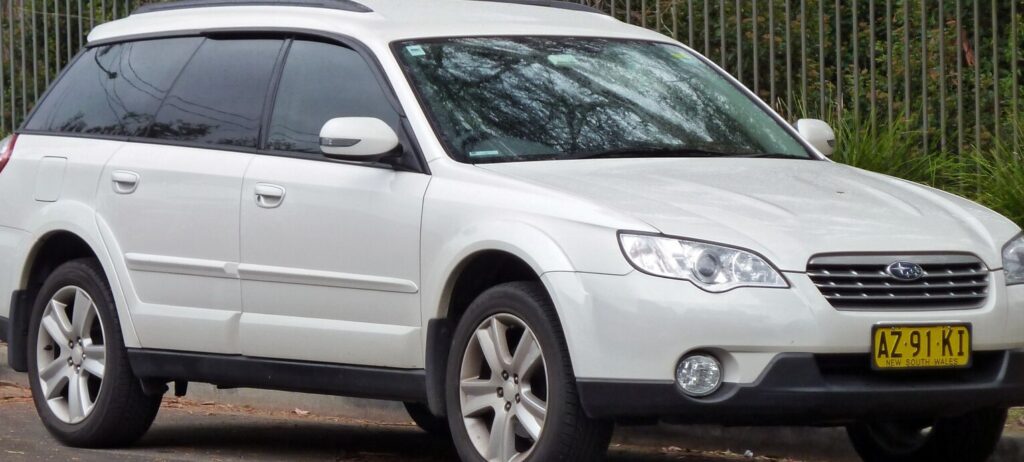
The Subaru Outback VI (BT) Wilderness 2.4, produced from September 2021 to April 2022, represents a significant iteration of Subaru’s popular all-wheel-drive wagon. Positioned as the top-tier trim level within the sixth-generation Outback lineup, the Wilderness aimed to deliver enhanced off-road capability and a more rugged aesthetic while maintaining the Outback’s reputation for practicality and safety. It was primarily marketed towards North American consumers seeking an adventure-oriented vehicle capable of handling diverse terrains. This variant distinguished itself from other Outback trims – such as the base 2.5i and the Limited – through its unique suspension tuning, increased ground clearance, and more aggressive styling cues.
Technical Specifications
| Brand | Subaru |
| Model | Outback |
| Generation | Outback VI (BT) |
| Type | Wilderness 2.4 (260 Hp) AWD Lineartronic |
| Start of production | September, 2021 |
| End of production | April, 2022 |
| Powertrain Architecture | Internal Combustion engine |
| Body type | Station wagon (estate) |
| Seats | 5 |
| Doors | 5 |
| Fuel consumption (urban) | 10.7 l/100 km (22 US mpg, 26.4 UK mpg, 9.3 km/l) |
| Fuel consumption (extra urban) | 9 l/100 km (26.1 US mpg, 31.4 UK mpg, 11.1 km/l) |
| Fuel consumption (combined) | 9.8 l/100 km (24 US mpg, 28.8 UK mpg, 10.2 km/l) |
| Fuel Type | Petrol (Gasoline) |
| Weight-to-power ratio | 6.8 kg/Hp, 147.1 Hp/tonne |
| Weight-to-torque ratio | 4.7 kg/Nm, 212.8 Nm/tonne |
| Power | 260 Hp @ 5600 rpm |
| Power per litre | 108.7 Hp/l |
| Torque | 376 Nm @ 2000-4800 rpm (277.32 lb.-ft. @ 2000-4800 rpm) |
| Engine layout | Front, Longitudinal |
| Engine Model/Code | FA24 |
| Engine displacement | 2393 cm3 (146.03 cu. in.) |
| Number of cylinders | 4 |
| Engine configuration | Boxer |
| Cylinder Bore | 94 mm (3.7 in.) |
| Piston Stroke | 86 mm (3.39 in.) |
| Compression ratio | 10.6:1 |
| Number of valves per cylinder | 4 |
| Fuel injection system | Direct injection |
| Engine aspiration | Turbocharger, Intercooler |
| Valvetrain | DAVCS |
| Engine oil capacity | 4.5 l (4.76 US qt | 3.96 UK qt) |
| Coolant | 8.7 l (9.19 US qt | 7.65 UK qt) |
| Kerb Weight | 1767-1782 kg (3895.57 – 3928.64 lbs.) |
| Trunk (boot) space – minimum | 920 l (32.49 cu. ft.) |
| Trunk (boot) space – maximum | 2144 l (75.71 cu. ft.) |
| Fuel tank capacity | 70 l (18.49 US gal | 15.4 UK gal) |
| Permitted trailer load with brakes (12%) | 1588 kg (3500.94 lbs.) |
| Length | 4859 mm (191.3 in.) |
| Width | 1895 mm (74.61 in.) |
| Width including mirrors | 2083 mm (82.01 in.) |
| Height | 1699 mm (66.89 in.) |
| Wheelbase | 2746 mm (108.11 in.) |
| Front track | 1575 mm (62.01 in.) |
| Rear (Back) track | 1600 mm (62.99 in.) |
| Front overhang | 1006 mm (39.61 in.) |
| Rear overhang | 1110 mm (43.7 in.) |
| Ride height (ground clearance) | 241 mm (9.49 in.) |
| Minimum turning circle (turning diameter) | 11 m (36.09 ft.) |
| Approach angle | 20° |
| Departure angle | 23.6° |
| Ramp-over (brakeover) angle | 21.2° |
| Drivetrain Architecture | The Internal combustion engine (ICE) drives permanently the four wheels of the vehicle. |
| Drive wheel | All wheel drive (4×4) |
| Number of gears and type of gearbox | automatic transmission Lineartronic CVT |
| Front suspension | Independent, type McPherson with coil spring and anti-roll bar |
| Rear suspension | Double wishbone |
| Front brakes | Ventilated discs, 314.96 mm |
| Rear brakes | Ventilated discs, 299.72 mm |
| Assisting systems | ABS (Anti-lock braking system) |
| Steering type | Steering rack and pinion |
| Power steering | Electric Steering |
| Tires size | 225/65 R17 102T |
| Wheel rims size | 7J x 17 |
INTRODUCTION
The Subaru Outback VI (BT) Wilderness 2.4, launched in 2021, built upon the foundation of the sixth-generation Outback (introduced in 2019). The BT designation refers to the model code for this generation. This trim level was specifically engineered to appeal to buyers seeking a more capable and visually distinct Outback. Subaru achieved this through a combination of mechanical upgrades – including a revised suspension, increased ground clearance, and enhanced all-wheel-drive system – and aesthetic modifications, such as unique exterior trim and interior accents. The Wilderness aimed to bridge the gap between the standard Outback and more dedicated off-road vehicles, offering a compelling blend of on-road comfort and off-road prowess.
Powertrain & Engine Architecture
At the heart of the Outback Wilderness 2.4 lies the FA24 2.4-liter turbocharged four-cylinder boxer engine. This engine, a hallmark of Subaru’s engineering, utilizes direct fuel injection and a single twin-scroll turbocharger to produce 260 horsepower at 5600 rpm and 277 lb-ft of torque between 2000 and 4800 rpm. The boxer configuration, with its horizontally opposed pistons, contributes to a low center of gravity, enhancing stability and handling. The engine also incorporates Subaru’s Dynamic Active Valve Control System (DAVCS) for optimized valve timing. Power is transmitted to all four wheels via a continuously variable transmission (CVT) marketed as Lineartronic. This CVT is specifically tuned for the Wilderness trim to provide more responsive acceleration and simulate gear changes for a more engaging driving experience. The Lineartronic CVT features simulated eight-speed shifts and is designed to handle the increased torque output of the turbocharged engine.
Driving Characteristics
The Outback Wilderness 2.4 delivers a noticeably more spirited driving experience compared to the base 2.5i model. The turbocharged engine provides ample power for both highway passing and off-road climbing. The Lineartronic CVT, while not offering the traditional feel of a geared transmission, is well-programmed and provides smooth, linear acceleration. The increased ground clearance (9.5 inches) and revised suspension tuning significantly improve the vehicle’s off-road capability, allowing it to tackle more challenging terrain with confidence. Compared to the standard Outback, the Wilderness exhibits a firmer ride quality, a trade-off for the enhanced off-road performance. While the standard Outback prioritizes comfort, the Wilderness leans towards a more balanced approach, offering a blend of on-road refinement and off-road capability.
Equipment & Trim Levels
The Wilderness trim came standard with a comprehensive suite of features, including StarTex water-repellent upholstery, all-weather floor liners, and unique copper-colored accents throughout the interior. Standard technology included an 11.6-inch touchscreen infotainment system with Apple CarPlay and Android Auto compatibility, a premium Harman Kardon audio system, and Subaru’s EyeSight driver-assist technology suite. Optional extras included a power moonroof, heated rear seats, and a hands-free power rear gate. The interior design emphasized durability and practicality, reflecting the Wilderness’s adventurous spirit.
Chassis & Braking
The Wilderness features a reinforced chassis and a retuned suspension system designed to withstand the rigors of off-road driving. The front suspension utilizes McPherson struts with a thicker stabilizer bar, while the rear suspension employs a double-wishbone setup. The increased ground clearance is achieved through longer coil springs and revised dampers. Braking duties are handled by ventilated disc brakes on all four wheels, measuring 314.96 mm at the front and 299.72 mm at the rear. The anti-lock braking system (ABS) is standard, providing enhanced stopping power and control in various conditions.
Market Reception & Comparison
The Outback Wilderness 2.4 was generally well-received by automotive critics, who praised its enhanced off-road capability, comfortable interior, and standard features. It was often compared favorably to other adventure-oriented crossovers, such as the Jeep Cherokee Trailhawk. Fuel economy, however, was a common point of criticism, with the turbocharged engine returning approximately 24 mpg combined. Compared to the standard 2.5i Outback, the Wilderness offered significantly more performance and off-road capability but at a higher price point. The 2.5i prioritized fuel efficiency and affordability, while the Wilderness catered to buyers willing to pay a premium for enhanced capability and a more rugged image.
Legacy
The Subaru Outback VI Wilderness 2.4 has established itself as a desirable and capable used vehicle. The FA24 engine has proven to be relatively reliable, although regular maintenance – including oil changes and timing belt replacements – is crucial. The Lineartronic CVT, while generally dependable, requires proper fluid maintenance to ensure longevity. The Wilderness trim’s unique styling and enhanced off-road capability continue to attract buyers seeking a versatile and adventurous vehicle. Its blend of practicality, safety, and capability has solidified its position as a popular choice in the used car market.