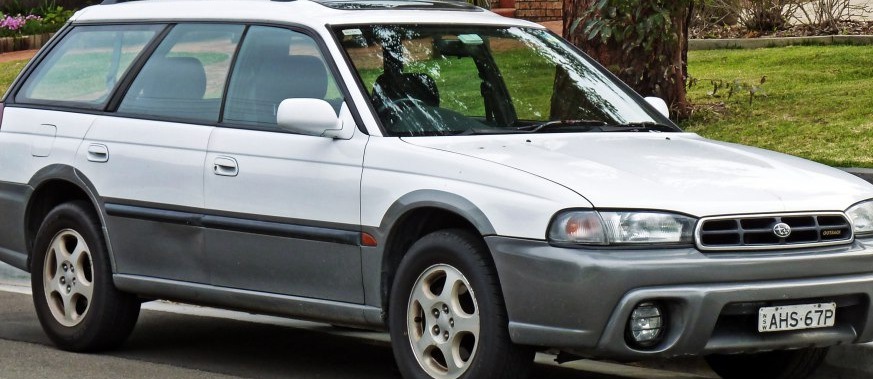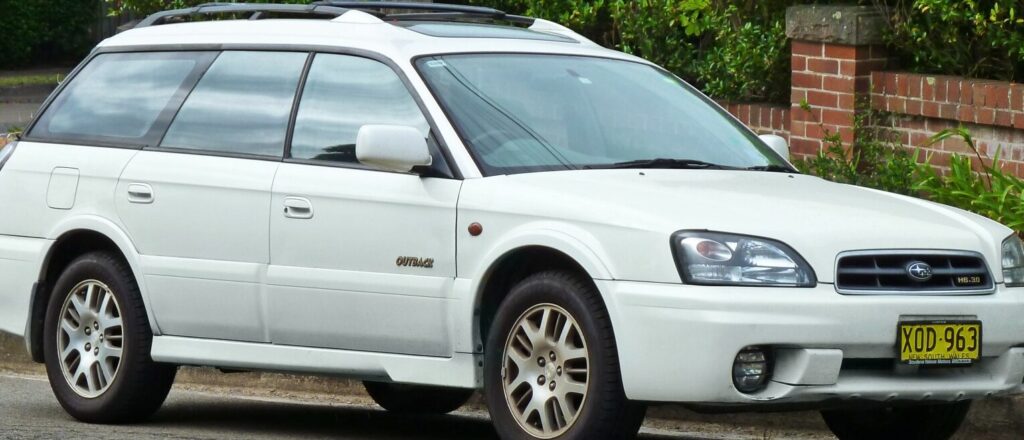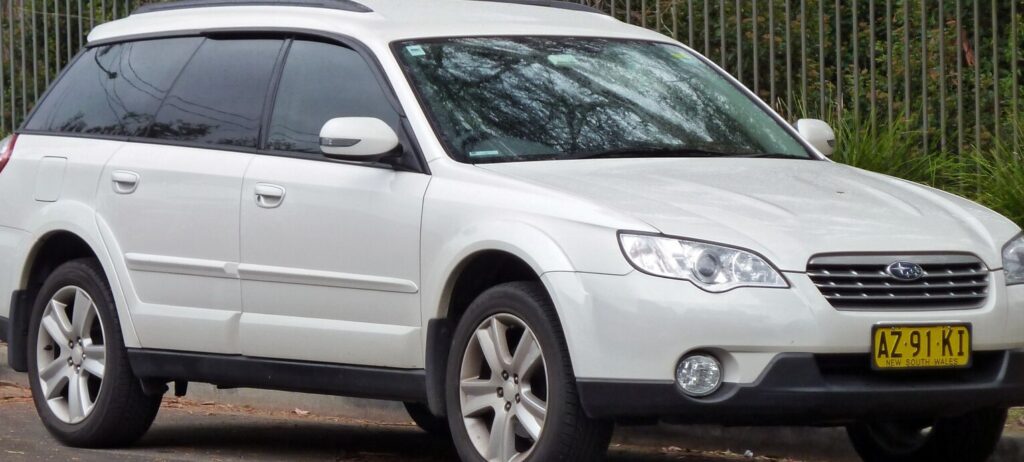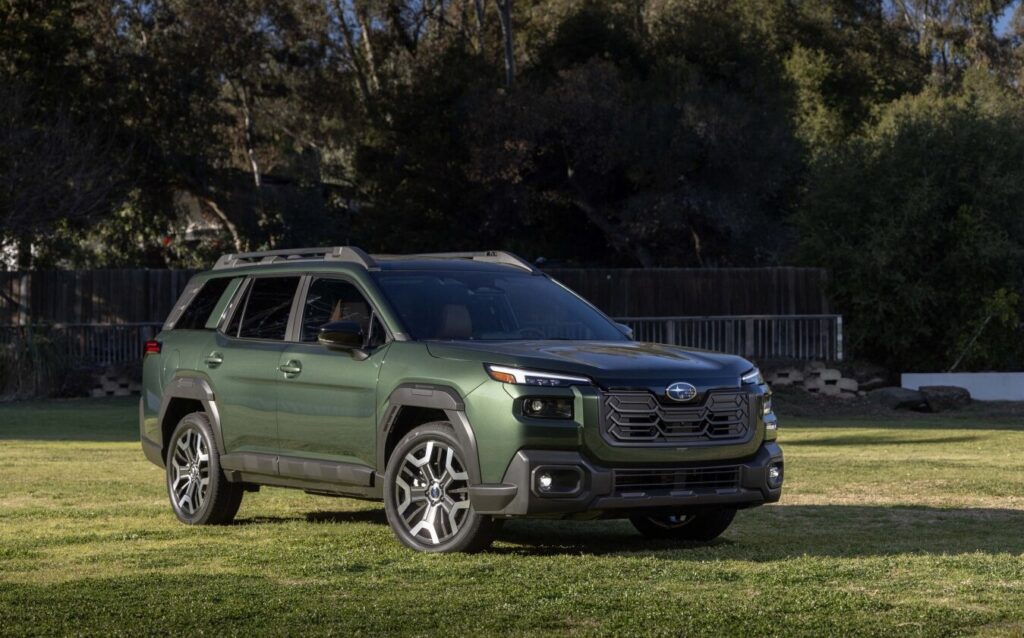
The Subaru Outback VII (BU) 2.4 Turbo, introduced in August 2025, represents the latest iteration of Subaru’s popular crossover SUV. Positioned as a premium offering within the seventh-generation Outback lineup, this variant combines a turbocharged four-cylinder Boxer engine with Subaru’s Lineartronic continuously variable transmission (CVT) and standard symmetrical all-wheel drive. It builds upon the foundation of the 1HX0/A3 platform, offering a blend of performance, practicality, and advanced technology aimed at the North American market, where the Outback has consistently been a strong seller. This model year marks a significant shift with the introduction of the FA24D engine, replacing the previous generation’s powerplant.
Technical Specifications
| Brand | Subaru |
| Model | Outback |
| Generation | Outback VII (BU) |
| Type (Engine) | 2.4 Turbo (260 Hp) AWD Lineartronic CVT |
| Start of production | August, 2025 |
| Powertrain Architecture | Internal Combustion engine |
| Body type | SUV |
| Seats | 5 |
| Doors | 5 |
| Fuel Type | Petrol (Gasoline) |
| Weight-to-power ratio | 6.9 kg/Hp, 144.4 Hp/tonne |
| Weight-to-torque ratio | 4.8 kg/Nm, 208.9 Nm/tonne |
| Power | 260 Hp @ 5600 rpm |
| Power per litre | 108.9 Hp/l |
| Torque | 376 Nm @ 2000-4800 rpm |
| Torque (lb-ft) | 277.32 lb.-ft. @ 2000-4800 rpm |
| Engine layout | Front, Longitudinal |
| Engine displacement | 2387 cm3 |
| Engine displacement (cu. in.) | 145.66 cu. in. |
| Number of cylinders | 4 |
| Engine configuration | Boxer |
| Cylinder Bore | 94 mm |
| Cylinder Bore (in.) | 3.7 in. |
| Piston Stroke | 86 mm |
| Piston Stroke (in.) | 3.39 in. |
| Compression ratio | 10.6:1 |
| Number of valves per cylinder | 4 |
| Fuel injection system | Direct injection |
| Engine aspiration | Twin-scroll turbo, Intercooler |
| Valvetrain | DOHC, DAVCS |
| Engine systems | Start & Stop System |
| Kerb Weight | 1800-1806 kg |
| Kerb Weight (lbs.) | 3968.32 – 3981.55 lbs. |
| Trunk (boot) space – minimum | 980 l |
| Trunk (boot) space – minimum (cu. ft.) | 34.61 cu. ft. |
| Trunk (boot) space – maximum | 2280 l |
| Trunk (boot) space – maximum (cu. ft.) | 80.52 cu. ft. |
| Fuel tank capacity | 68 l |
| Fuel tank capacity (US gal) | 17.96 US gal |
| Fuel tank capacity (UK gal) | 14.96 UK gal |
| Length | 4869 mm |
| Length (in.) | 191.69 in. |
| Width | 1880 mm |
| Width (in.) | 74.02 in. |
| Width including mirrors | 2106 mm |
| Width including mirrors (in.) | 82.91 in. |
| Height | 1715 mm |
| Height (in.) | 67.52 in. |
| Wheelbase | 2746 mm |
| Wheelbase (in.) | 108.11 in. |
| Front track | 1585 mm |
| Front track (in.) | 62.4 in. |
| Rear (Back) track | 1610 mm |
| Rear (Back) track (in.) | 63.39 in. |
| Ride height (ground clearance) | 221 mm |
| Ride height (ground clearance) (in.) | 8.7 in. |
| Minimum turning circle (turning diameter) | 11.1 m |
| Minimum turning circle (turning diameter) (ft.) | 36.42 ft. |
| Approach angle | 18° |
| Departure angle | 22.5° |
| Ramp-over (brakeover) angle | 19.4° |
| Drivetrain Architecture | The Internal combustion engine (ICE) drives permanently the four wheels of the vehicle. |
| Drive wheel | All wheel drive (4×4) |
| Number of gears and type of gearbox | automatic transmission Lineartronic CVT |
| Front suspension | Independent, type McPherson with coil spring and anti-roll bar |
| Rear suspension | Double wishbone, Transverse stabilizer, Coil spring |
| Front brakes | Ventilated discs, 315 mm |
| Rear brakes | Ventilated discs, 300 mm |
| Assisting systems | ABS (Anti-lock braking system) |
| Steering type | Steering rack and pinion |
| Power steering | Electric Steering |
| Tires size | 225/60 R18; 225/55 R19 |
| Wheel rims size | 7J x 18; 7.5J x 18; 7J x 19 |
Powertrain & Engine Architecture
At the heart of the Outback 2.4 Turbo lies the FA24D 2.4-liter turbocharged four-cylinder Boxer engine. This engine represents a departure from previous Outback powertrains, offering increased power and torque. The engine utilizes direct fuel injection and a twin-scroll turbocharger with an intercooler to maximize efficiency and responsiveness. The Boxer configuration, a Subaru hallmark, contributes to a low center of gravity, enhancing handling characteristics. The Lineartronic CVT, while sometimes criticized for its lack of traditional gear changes, is programmed to simulate shifts and offers smooth, efficient power delivery. Subaru’s symmetrical all-wheel-drive system is standard, utilizing a multi-plate transfer clutch to distribute power between the front and rear axles as needed. The engine also incorporates Subaru’s Start & Stop system for improved fuel economy in city driving.
Driving Characteristics
The 260 horsepower and 376 lb-ft of torque delivered by the FA24D engine provide a noticeable performance upgrade compared to naturally aspirated Outback models. Acceleration is brisk, and the engine feels responsive throughout the rev range. The Lineartronic CVT, while not offering the direct feel of a traditional automatic transmission, is well-tuned to the engine’s characteristics, providing smooth and predictable power delivery. The CVT’s continuously variable ratios allow the engine to operate in its optimal power band more frequently. Compared to earlier Outback models with four-cylinder engines, the 2.4 Turbo offers significantly improved passing power and towing capacity. The symmetrical all-wheel-drive system provides excellent traction in various weather conditions, enhancing stability and confidence.
Equipment & Trim Levels
The 2.4 Turbo trim typically represents the highest level of equipment offered in the Outback lineup. Standard features generally include leather upholstery, heated front and rear seats, a premium audio system, a large touchscreen infotainment system with Apple CarPlay and Android Auto compatibility, and a suite of advanced safety features known as EyeSight. These features include adaptive cruise control, lane departure warning, automatic emergency braking, and blind-spot monitoring. Optional extras often include a power moonroof, navigation system, and upgraded interior trim packages.
Chassis & Braking
The Outback 2.4 Turbo utilizes an independent McPherson strut front suspension and a double-wishbone rear suspension, both incorporating coil springs and stabilizer bars. This suspension setup provides a comfortable ride while maintaining good handling characteristics. All four wheels are equipped with ventilated disc brakes, providing ample stopping power. The electronic parking brake with auto hold is standard. The Outback’s relatively high ground clearance of 8.7 inches allows for moderate off-road capability.
Market Reception & Comparison
The 2025 Subaru Outback 2.4 Turbo has been generally well-received by automotive critics. The increased power and torque of the turbocharged engine have been praised, as has the comfortable ride and spacious interior. Some reviewers have noted that the CVT can feel somewhat disconnected, but the overall driving experience is positive. Compared to other trims in the Outback lineup, the 2.4 Turbo offers a significant performance advantage but comes at a higher price point. Fuel economy is slightly lower than the naturally aspirated models, but the added power is often considered a worthwhile trade-off. Compared to competitors like the Honda Passport and Toyota Venza, the Outback 2.4 Turbo offers a unique combination of standard all-wheel drive, a spacious interior, and a comfortable ride.
Legacy
The FA24D engine and Lineartronic CVT combination are relatively new to the Outback lineup, so long-term reliability data is still emerging. However, Subaru has a generally good reputation for reliability, and the FA24 engine has proven to be durable in other applications. The Outback’s reputation for longevity and practicality should ensure that the 2.4 Turbo models hold their value well in the used car market. The introduction of the turbocharged engine represents a significant step forward for the Outback, broadening its appeal to buyers who prioritize performance and capability.