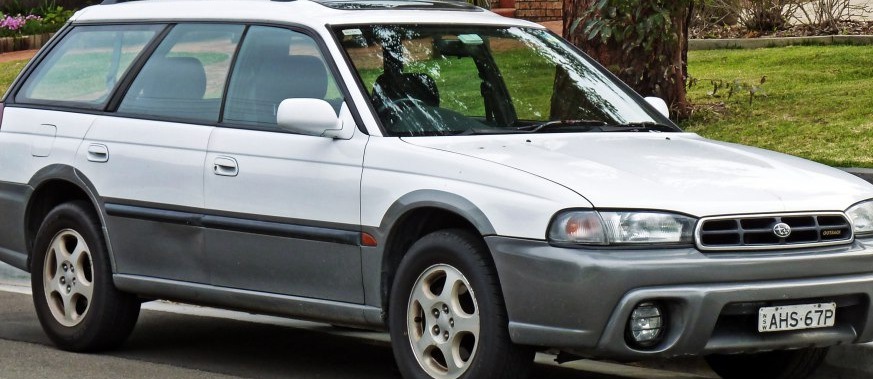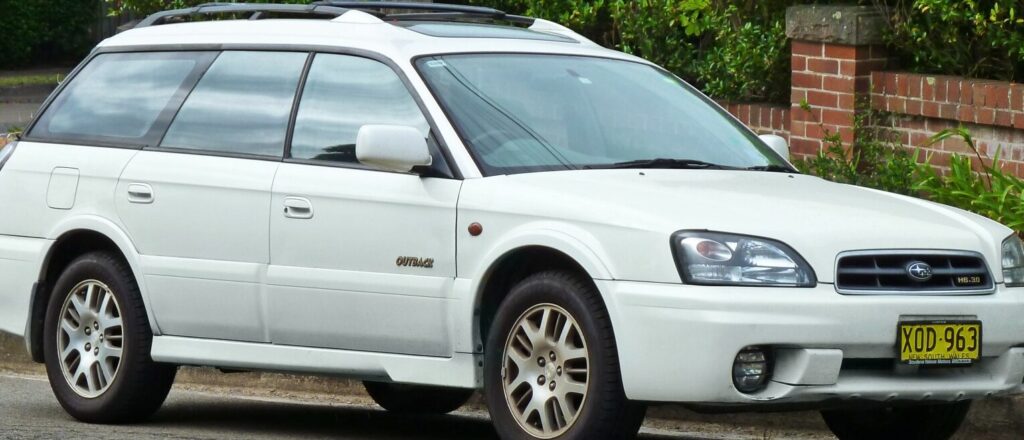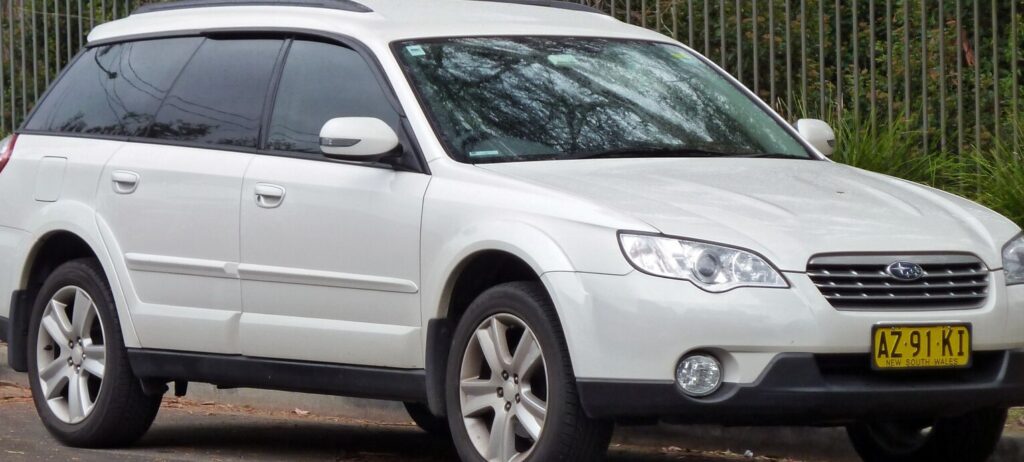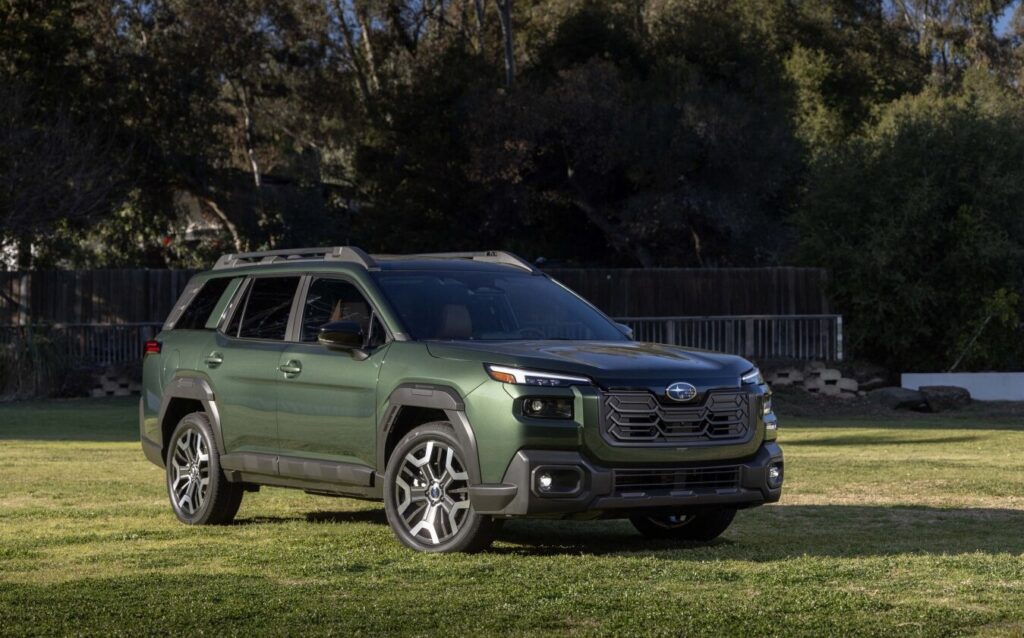
The Subaru Outback VII (BU) 2.5, equipped with a 180 horsepower engine and a Lineartronic CVT transmission, represents a significant iteration in Subaru’s long-running Outback series. Introduced in August 2025, this variant occupies a central position within the seventh-generation Outback lineup, offering a balance between performance, fuel efficiency, and Subaru’s renowned symmetrical all-wheel drive capability. It builds upon the foundation of the 1HX0/A3 platform, shared with other Subaru models, but distinguishes itself through its powertrain and targeted market segment.
Technical Specifications
| Brand | Subaru |
| Model | Outback |
| Generation | Outback VII (BU) |
| Type (Engine) | 2.5 (180 Hp) AWD Lineartronic CVT |
| Start of production | August, 2025 |
| Powertrain Architecture | Internal Combustion engine |
| Body type | SUV |
| Seats | 5 |
| Doors | 5 |
| Fuel Type | Petrol (Gasoline) |
| Weight-to-power ratio | 9.4 kg/Hp, 106.1 Hp/tonne |
| Weight-to-torque ratio | 7 kg/Nm, 142 Nm/tonne |
| Power | 180 Hp @ 5800 rpm |
| Power per litre | 72.1 Hp/l |
| Torque | 241 Nm @ 4800 rpm, 177.75 lb.-ft. @ 4800 rpm |
| Engine layout | Front, Longitudinal |
| Engine displacement | 2498 cm3, 152.44 cu. in. |
| Number of cylinders | 4 |
| Engine configuration | Boxer |
| Cylinder Bore | 94 mm, 3.7 in. |
| Piston Stroke | 90 mm, 3.54 in. |
| Compression ratio | 12:1 |
| Number of valves per cylinder | 4 |
| Fuel injection system | Direct injection |
| Engine aspiration | Naturally aspirated engine |
| Valvetrain | DOHC, DAVCS |
| Engine systems | Start & Stop System |
| Kerb Weight | 1697-1729 kg, 3741.24 – 3811.79 lbs. |
| Trunk (boot) space – minimum | 980 l, 34.61 cu. ft. |
| Trunk (boot) space – maximum | 2280 l, 80.52 cu. ft. |
| Fuel tank capacity | 68 l, 17.96 US gal | 14.96 UK gal |
| Length | 4869 mm, 191.69 in. |
| Width | 1880 mm, 74.02 in. |
| Width including mirrors | 2106 mm, 82.91 in. |
| Height | 1715 mm, 67.52 in. |
| Wheelbase | 2746 mm, 108.11 in. |
| Front track | 1585 mm, 62.4 in. |
| Rear (Back) track | 1610 mm, 63.39 in. |
| Ride height (ground clearance) | 221 mm, 8.7 in. |
| Minimum turning circle (turning diameter) | 11.1 m, 36.42 ft. |
| Approach angle | 18° |
| Departure angle | 21.4° |
| Ramp-over (brakeover) angle | 19.4° |
| Drivetrain Architecture | The Internal combustion engine (ICE) drives permanently the four wheels of the vehicle. |
| Drive wheel | All wheel drive (4×4) |
| Number of gears and type of gearbox | automatic transmission Lineartronic CVT |
| Front suspension | Independent, type McPherson with coil spring and anti-roll bar |
| Rear suspension | Double wishbone, Transverse stabilizer, Coil spring |
| Front brakes | Ventilated discs, 315 mm |
| Rear brakes | Ventilated discs, 300 mm |
| Assisting systems | ABS (Anti-lock braking system) |
| Steering type | Steering rack and pinion |
| Power steering | Electric Steering |
| Tires size | 225/60 R18; 225/55 R19 |
| Wheel rims size | 7J x 18; 7.5J x 18; 7J x 19 |
Powertrain & Engine Architecture
At the heart of the Outback 2.5 lies the FB25D engine, a 2.5-liter naturally aspirated boxer-four. This engine is a hallmark of Subaru engineering, known for its smooth operation and inherent balance due to the horizontally opposed piston arrangement. The FB25D utilizes direct fuel injection, enhancing combustion efficiency and contributing to improved fuel economy. The engine also incorporates Subaru’s Dynamic Active Valve Control System (DAVCS) on both intake and exhaust camshafts, optimizing valve timing for enhanced performance across the rev range. The Lineartronic CVT (Continuously Variable Transmission) is paired with the engine. This transmission is designed to provide seamless acceleration and optimized fuel efficiency by continuously adjusting the gear ratio. It differs from traditional automatic transmissions with fixed gear ratios, offering a more fluid driving experience. The CVT is programmed with simulated shift points to mimic the feel of a conventional automatic for drivers accustomed to that sensation.
Driving Characteristics
The 180 hp and 241 Nm (177.75 lb-ft) of torque delivered by the 2.5-liter engine and Lineartronic CVT provide adequate performance for everyday driving. Acceleration is smooth and linear, though not particularly brisk. Compared to higher-output turbocharged Outback variants, this version prioritizes fuel efficiency and a more relaxed driving experience. The CVT’s programming allows for a reasonable response to throttle inputs, but it lacks the immediate punch of a traditional automatic or manual transmission. The symmetrical all-wheel drive system provides excellent traction in various conditions, a key selling point for Subaru vehicles. The gear ratios are optimized for fuel economy, meaning the engine often operates at lower RPMs during cruising, contributing to quieter operation.
Equipment & Trim Levels
The Outback 2.5 with the Lineartronic CVT typically comes standard with a comprehensive suite of features. These generally include automatic climate control, a touchscreen infotainment system with Apple CarPlay and Android Auto compatibility, Subaru’s EyeSight driver-assist technology (including adaptive cruise control, lane departure warning, and automatic emergency braking), and a rearview camera. Interior upholstery is typically cloth, with options for leather upgrades on higher trim levels. Available optional extras often include a premium sound system, a power sunroof, and heated front seats. The specific trim levels and available options vary depending on the market.
Chassis & Braking
The Outback VII utilizes a McPherson strut front suspension and a double-wishbone rear suspension, providing a comfortable and controlled ride. Stabilizer bars are fitted to both axles to reduce body roll during cornering. The braking system consists of ventilated discs on all four wheels, with the front discs measuring 315mm and the rear discs measuring 300mm. Anti-lock braking system (ABS) is standard. The suspension tuning is geared towards comfort and all-weather capability, rather than sporty handling. The relatively high ground clearance (221mm / 8.7 inches) enhances off-road capability and provides a commanding driving position.
Market Reception & Comparison
The Outback 2.5 with the Lineartronic CVT was generally well-received by critics as a practical and efficient option within the Outback lineup. It was praised for its comfortable ride, spacious interior, and standard safety features. However, some reviewers noted that the engine and CVT combination lacked the excitement of the turbocharged variants. Fuel economy is a strong point, typically achieving around 26 mpg city and 33 mpg highway. Compared to the turbocharged 2.4-liter engine option, the 2.5-liter offers lower initial cost and potentially lower maintenance expenses, but at the expense of performance. The 2.5L is often favored by buyers prioritizing value and fuel efficiency over outright speed.
Legacy
The FB25D engine, in various iterations, has proven to be a reliable and durable powerplant. The Lineartronic CVT, while sometimes criticized for its driving feel, has also demonstrated good long-term reliability with proper maintenance. In the used car market, the Outback 2.5 with the CVT represents a solid value proposition, offering a well-equipped and capable SUV at a reasonable price. Regular maintenance, including CVT fluid changes, is crucial to ensure the longevity of the powertrain. The combination of Subaru’s all-wheel drive system and the FB25D engine continues to make this variant a popular choice for buyers seeking a dependable and versatile vehicle.