
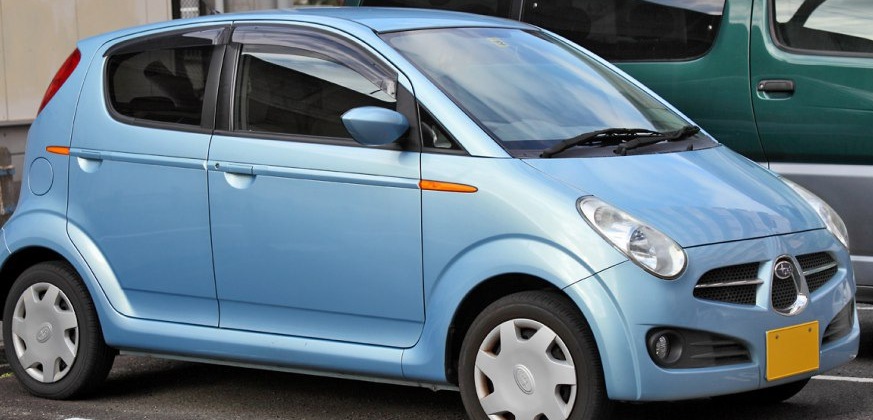
The Subaru R2, introduced in December 2003 and continuing production through March 2010, was a kei car designed for the Japanese domestic market. Representing Subaru’s entry into the ultra-compact vehicle segment, the R2 aimed to provide affordable and efficient transportation within the strict regulations governing kei cars in Japan. The 0.7i 2WD variant, powered by a 658cc engine producing 64 horsepower, served as the base model, offering a balance of practicality and economy. It was positioned as an entry-level option within the R2 lineup, appealing to first-time car buyers and those seeking a nimble city vehicle. While Subaru is well-known for its rally-bred performance models, the R2 showcased the company’s ability to adapt to the unique demands of the Japanese urban landscape.
Technical Specifications
| Brand | Subaru |
| Model | R2 |
| Generation | R2 |
| Type (Engine) | 0.7i (64 Hp) 2WD |
| Start of production | December, 2003 |
| End of production | March, 2010 |
| Powertrain Architecture | Internal Combustion engine |
| Body type | Hatchback |
| Seats | 5 |
| Doors | 5 |
| Fuel Type | Petrol (Gasoline) |
| Weight-to-power ratio | 12 kg/Hp, 83.1 Hp/tonne |
| Weight-to-torque ratio | 9.2 kg/Nm, 109.1 Nm/tonne |
| Power | 64 Hp @ 6400 rpm |
| Power per litre | 97.3 Hp/l |
| Torque | 84 Nm @ 4400 rpm, 61.96 lb.-ft. @ 4400 rpm |
| Engine layout | Front, Longitudinal |
| Engine Model/Code | EN07X |
| Engine displacement | 658 cm3, 40.15 cu. in. |
| Number of cylinders | 4 |
| Engine configuration | Inline |
| Cylinder Bore | 56 mm, 2.2 in. |
| Piston Stroke | 66.8 mm, 2.63 in. |
| Compression ratio | 10:1 |
| Fuel injection system | Multi-port manifold injection |
| Engine aspiration | Supercharger, Intercooler |
| Valvetrain | OHC |
| Engine oil capacity | 2.4 l, 2.54 US qt | 2.11 UK qt |
| Kerb Weight | 770 kg, 1697.56 lbs |
| Fuel tank capacity | 30 l, 7.93 US gal | 6.6 UK gal |
| Length | 3395 mm, 133.66 in. |
| Width | 1475 mm, 58.07 in. |
| Height | 1520 mm, 59.84 in. |
| Wheelbase | 2360 mm, 92.91 in. |
| Front track | 1295 mm, 50.98 in. |
| Rear (Back) track | 1285 mm, 50.59 in. |
| Drive wheel | All wheel drive (4×4) |
| Number of gears and type of gearbox | 5 gears, manual transmission |
| Front brakes | Ventilated discs |
| Rear brakes | Drum |
| Tires size | 155/65 R14 |
Powertrain & Engine Architecture
The heart of the R2 0.7i 2WD is the EN07X engine, a 658cc inline-four cylinder petrol engine. This engine is notable for its use of a supercharger and intercooler, a relatively uncommon feature in kei cars of this era. The supercharger, driven by the crankshaft, provides a boost in low-end torque, compensating for the engine’s small displacement. Multi-port fuel injection delivers fuel to the cylinders, optimizing combustion efficiency. The engine utilizes an overhead camshaft (OHC) valvetrain, a simple and reliable design. The 2WD variant featured a five-speed manual transmission, delivering power to the front wheels. The longitudinal engine layout, while less common in front-wheel-drive cars, allowed for a more compact drivetrain configuration, maximizing interior space within the kei car dimensions.
Driving Characteristics
The R2 0.7i 2WD, with its 64 horsepower and 84 Nm (62 lb-ft) of torque, offered modest but adequate performance for city driving. Acceleration was not its strong suit, but the supercharger helped to provide a responsive feel at lower speeds. The five-speed manual transmission allowed drivers to keep the engine in its optimal power band. Compared to higher-spec R2 models with more powerful engines, the 0.7i felt noticeably slower, particularly when fully loaded or tackling inclines. However, its lightweight construction and nimble handling made it enjoyable to drive in urban environments. The gear ratios were tuned for fuel efficiency and ease of use, rather than outright performance.
Equipment & Trim Levels
As the base model, the R2 0.7i 2WD came equipped with a relatively basic set of features. Standard equipment typically included air conditioning, power steering, and a basic audio system. Interior upholstery was typically cloth, and the dashboard featured a simple, functional design. Optional extras included alloy wheels, upgraded audio systems, and various cosmetic enhancements. The focus was on providing essential features at an affordable price point. The interior, while compact, was designed to maximize space and practicality.
Chassis & Braking
The R2 0.7i 2WD utilized a relatively simple chassis design. The front suspension consisted of MacPherson struts, while the rear suspension employed a torsion beam setup. This configuration provided a comfortable ride and predictable handling. The braking system featured ventilated discs on the front wheels and drum brakes on the rear. This combination was adequate for the vehicle’s weight and performance capabilities. The relatively narrow tires (155/65 R14) contributed to fuel efficiency and reduced rolling resistance.
Market Reception & Comparison
The Subaru R2 0.7i 2WD was generally well-received in the Japanese market as an affordable and practical kei car. Critics praised its fuel efficiency, nimble handling, and the inclusion of a supercharger in the base model. However, some reviewers noted its limited power and basic interior. Compared to other kei cars in its class, such as the Honda Beat or the Suzuki Cappuccino, the R2 offered a more practical and less sporty driving experience. It competed directly with models like the Daihatsu Mira and the Nissan Otti, offering a similar blend of affordability and functionality. Fuel economy was a key selling point, with the R2 achieving impressive mileage figures for its time.
Legacy
The Subaru R2, while not a high-performance model, represents an important chapter in Subaru’s history. It demonstrated the company’s ability to compete in the kei car segment, a crucial market in Japan. The EN07X engine, with its supercharger, was a notable engineering achievement. Today, the R2 0.7i 2WD is a relatively affordable and reliable used car option in Japan. Its simple mechanical design and readily available parts make it relatively easy to maintain. While not particularly collectible, it remains a popular choice for those seeking a practical and economical city car. The R2’s legacy lies in its contribution to Subaru’s broader product portfolio and its role in providing affordable transportation to Japanese consumers.
