
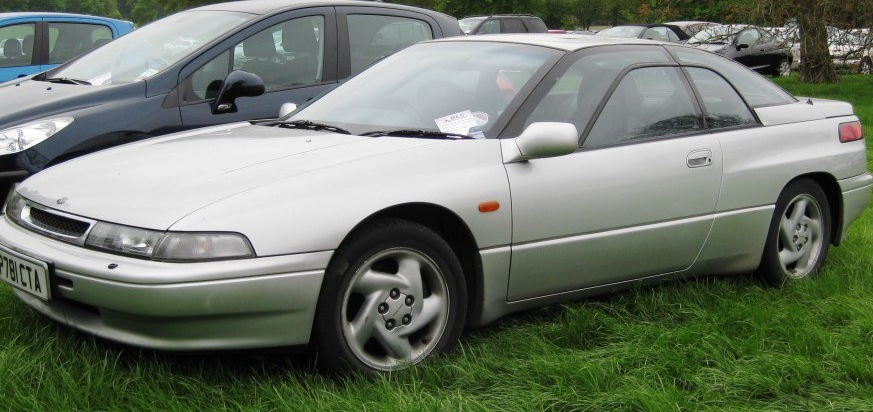
The Subaru SVX, internally designated as the CX, represented a bold departure for the Japanese automaker when it debuted in 1991. Produced through 1994, this coupe aimed to establish Subaru as a purveyor of sophisticated, grand touring vehicles, moving beyond its established reputation for rugged, all-wheel-drive practicality. The 3.3i 24V 4WD (CXW) variant, powered by a 230 horsepower engine and equipped with a four-speed automatic transmission, was the sole configuration offered throughout its production run in North America. It was positioned as the premium offering, showcasing Subaru’s engineering prowess and design ambitions. The SVX was a unique vehicle for its time, featuring distinctive window-within-a-window styling and a technologically advanced all-wheel-drive system.
Technical Specifications
| Brand | Subaru |
| Model | SVX |
| Generation | SVX (CX) |
| Type (Engine) | 3.3 i 24V 4WD (CXW) (230 Hp) |
| Start of production | 1991 |
| End of production | 1994 |
| Powertrain Architecture | Internal Combustion engine |
| Body type | Coupe |
| Seats | 4 |
| Doors | 2 |
| Fuel consumption (urban) | 14.6 l/100 km (16.1 US mpg, 19.3 UK mpg, 6.8 km/l) |
| Fuel consumption (extra urban) | 7.4 l/100 km (31.8 US mpg, 38.2 UK mpg, 13.5 km/l) |
| Fuel consumption (combined) | 9 l/100 km (26.1 US mpg, 31.4 UK mpg, 11.1 km/l) |
| Fuel Type | Petrol (Gasoline) |
| Acceleration 0 – 100 km/h | 8.6 sec |
| Acceleration 0 – 62 mph | 8.6 sec |
| Acceleration 0 – 60 mph | 8.2 sec |
| Maximum speed | 235 km/h (146.02 mph) |
| Weight-to-power ratio | 6.9 kg/Hp, 145.6 Hp/tonne |
| Weight-to-torque ratio | 5.1 kg/Nm, 195.6 Nm/tonne |
| Power | 230 Hp @ 5600 rpm |
| Power per litre | 69.3 Hp/l |
| Torque | 309 Nm @ 4800 rpm (227.91 lb.-ft. @ 4800 rpm) |
| Engine layout | Front, Longitudinal |
| Engine Model/Code | EG33 |
| Engine displacement | 3319 cm3 (202.54 cu. in.) |
| Number of cylinders | 6 |
| Engine configuration | Boxer |
| Cylinder Bore | 96.9 mm (3.81 in.) |
| Piston Stroke | 75 mm (2.95 in.) |
| Compression ratio | 10:1 |
| Number of valves per cylinder | 4 |
| Fuel injection system | Multi-port manifold injection |
| Engine aspiration | Naturally aspirated engine |
| Valvetrain | DOHC |
| Engine oil capacity | 6 l (6.34 US qt | 5.28 UK qt) |
| Coolant capacity | 7.8 l (8.24 US qt | 6.86 UK qt) |
| Kerb Weight | 1580 kg (3483.3 lbs.) |
| Max. weight | 2045 kg (4508.45 lbs.) |
| Max load | 465 kg (1025.15 lbs.) |
| Trunk (boot) space – minimum | 240 l (8.48 cu. ft.) |
| Trunk (boot) space – maximum | 465 l (16.42 cu. ft.) |
| Fuel tank capacity | 70 l (18.49 US gal | 15.4 UK gal) |
| Length | 4625 mm (182.09 in.) |
| Width | 1777 mm (69.96 in.) |
| Height | 1300 mm (51.18 in.) |
| Wheelbase | 2610 mm (102.76 in.) |
| Front track | 1500 mm (59.06 in.) |
| Rear (Back) track | 1480 mm (58.27 in.) |
| Drive wheel | All wheel drive (4×4) |
| Number of gears and type of gearbox | 4 gears, automatic transmission |
| Front suspension | Coil spring |
| Rear suspension | Coil spring |
| Front brakes | Ventilated discs |
| Rear brakes | Ventilated discs |
| Assisting systems | ABS (Anti-lock braking system) |
| Steering type | Steering rack and pinion |
| Power steering | Hydraulic Steering |
| Tires size | 225/50 R16 |
| Wheel rims size | 7.5J |
Powertrain & Engine Architecture
The heart of the SVX CXW is the EG33 3.3-liter flat-six “boxer” engine. This engine, a hallmark of Subaru engineering, features horizontally opposed cylinders, contributing to a low center of gravity and reduced vibration. The EG33 utilizes multi-port fuel injection and a dual overhead camshaft (DOHC) valvetrain, allowing for precise control of airflow and efficient combustion. The 10:1 compression ratio was a compromise between performance and reliability. The four-speed automatic transmission, sourced from Japan’s Jatco, was the only transmission option available. It was designed to handle the engine’s 309 Nm (227.91 lb-ft) of torque and deliver smooth, albeit not particularly quick, shifts. The transmission’s gear ratios were tuned for comfortable cruising rather than aggressive acceleration.
Driving Characteristics
The SVX 3.3i Automatic offered a refined driving experience, prioritizing comfort and stability over outright sportiness. The all-wheel-drive system provided excellent traction in various weather conditions, making it a capable grand tourer. However, the combination of the relatively heavy chassis (1580 kg / 3483.3 lbs) and the four-speed automatic transmission meant that acceleration was not its strong suit. While the 0-60 mph time of around 8.2 seconds was respectable for the early 1990s, it lagged behind some of its European competitors. The automatic transmission, while smooth, lacked the responsiveness of a manual gearbox, and the relatively tall gear ratios meant that the engine often felt strained during quick overtaking maneuvers. The steering was precise, but lacked significant feedback.
Equipment & Trim Levels
The SVX CXW came standard with a generous array of features for its time. These included leather upholstery, power-adjustable front seats, air conditioning, a premium sound system, and power windows and locks. The distinctive “window-within-a-window” design, featuring a small fixed window within the main side window, was a standard feature. Optional extras included a sunroof, upgraded audio systems, and a limited-edition pearl white paint finish. The interior design was focused on providing a comfortable and luxurious environment for both driver and passengers.
Chassis & Braking
The SVX’s chassis was designed to provide a comfortable ride and stable handling. It utilized coil springs and independent suspension on all four wheels. The front suspension featured MacPherson struts, while the rear employed a double-wishbone setup. Braking duties were handled by ventilated discs on all four wheels, supplemented by an anti-lock braking system (ABS). The braking system provided adequate stopping power, but lacked the bite and feel of more modern systems. The SVX did not feature any advanced suspension technologies, such as adjustable dampers or active suspension.
Market Reception & Comparison
The Subaru SVX received mixed reviews from automotive critics. While praised for its unique styling, comfortable ride, and all-wheel-drive system, it was often criticized for its lackluster performance and relatively high price. Compared to its competitors, such as the Mazda RX-7 and Toyota Supra, the SVX offered a more refined and comfortable experience, but lacked the same level of performance and handling prowess. Fuel economy was also a concern, with combined fuel consumption averaging around 26.1 US mpg. The SVX’s reliability was generally good, but some owners reported issues with the automatic transmission and the complex window mechanism.
Legacy
The Subaru SVX, despite its relatively short production run, remains a fondly remembered vehicle among enthusiasts. Its distinctive styling and unique engineering have earned it a cult following. While the EG33 engine is generally considered reliable, the automatic transmission can be prone to issues if not properly maintained. Today, well-maintained SVX models are becoming increasingly collectible, and parts availability can be a challenge. The SVX represents a bold and ambitious attempt by Subaru to break into the luxury coupe market, and its legacy continues to inspire automotive designers and engineers.
