
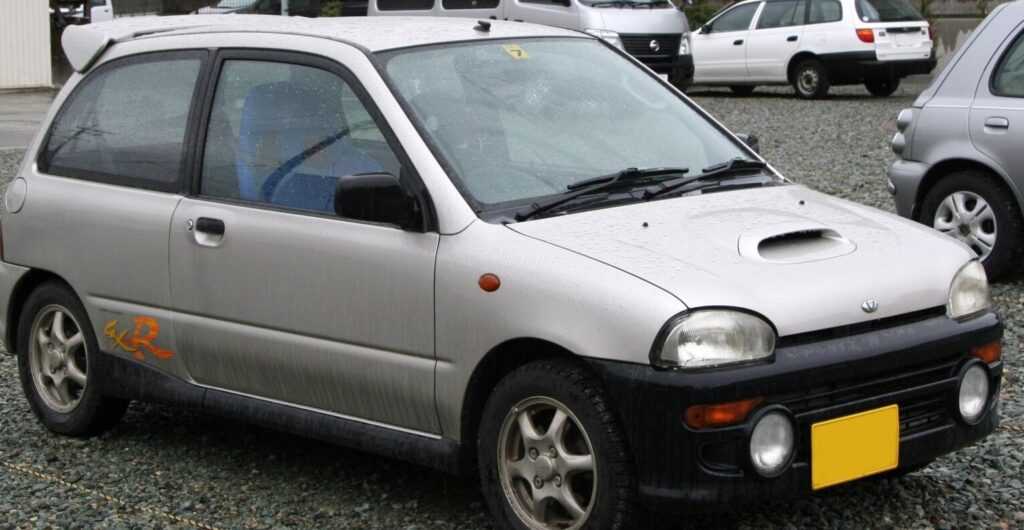
The Subaru Vivio, introduced in 1992 and continuing through 1998, was a kei car produced by Subaru, primarily for the Japanese domestic market (JDM). The 660 4WD variant, equipped with a 658cc engine producing 42 horsepower, represented an entry-level offering within the Vivio range. It was designed to capitalize on the favorable tax and insurance benefits associated with kei cars in Japan, offering affordable transportation with all-wheel drive capability. This particular model, often overlooked by international enthusiasts, played a significant role in Subaru’s domestic sales and demonstrated their engineering prowess within the constraints of the kei car regulations. The Vivio was built on a dedicated platform, offering a surprisingly spacious interior for its diminutive size.
Technical Specifications
| Brand | Subaru |
| Model | Vivio |
| Generation | Vivio |
| Type (Engine) | 660 4WD (42 Hp) |
| Start of production | 1992 |
| End of production | 1998 |
| Powertrain Architecture | Internal Combustion engine |
| Body type | Hatchback |
| Seats | 5 |
| Doors | 3-5 |
| Fuel consumption (urban) | 8 l/100 km (29.4 US mpg, 35.3 UK mpg, 12.5 km/l) |
| Fuel consumption (extra urban) | 5.2 l/100 km (45.2 US mpg, 54.3 UK mpg, 19.2 km/l) |
| Fuel consumption (combined) | 6.2 l/100 km (37.9 US mpg, 45.6 UK mpg, 16.1 km/l) |
| Fuel Type | Petrol (Gasoline) |
| Maximum speed | 133 km/h (82.64 mph) |
| Weight-to-power ratio | 16.7 kg/Hp, 60 Hp/tonne |
| Weight-to-torque ratio | 13.5 kg/Nm, 74.3 Nm/tonne |
| Power | 42 Hp @ 7000 rpm |
| Power per litre | 63.8 Hp/l |
| Torque | 52 Nm @ 4500 rpm (38.35 lb.-ft. @ 4500 rpm) |
| Engine layout | Front, Longitudinal |
| Engine Model/Code | EN07 |
| Engine displacement | 658 cm3 (40.15 cu. in.) |
| Number of cylinders | 4 |
| Engine configuration | Inline |
| Cylinder Bore | 56 mm (2.2 in.) |
| Piston Stroke | 66.8 mm (2.63 in.) |
| Compression ratio | 10:1 |
| Number of valves per cylinder | 2 |
| Fuel injection system | Carburettor |
| Engine aspiration | Naturally aspirated engine |
| Valvetrain | OHC |
| Engine oil capacity | 2.7 l (2.85 US qt | 2.38 UK qt) |
| Coolant | 3.1 l (3.28 US qt | 2.73 UK qt) |
| Kerb Weight | 700 kg (1543.24 lbs.) |
| Trunk (boot) space – minimum | 95 l (3.35 cu. ft.) |
| Trunk (boot) space – maximum | 835 l (29.49 cu. ft.) |
| Fuel tank capacity | 32 l (8.45 US gal | 7.04 UK gal) |
| Length | 3295 mm (129.72 in.) |
| Width | 1395 mm (54.92 in.) |
| Height | 1385 mm (54.53 in.) |
| Wheelbase | 2310 mm (90.94 in.) |
| Front track | 1215 mm (47.83 in.) |
| Rear (Back) track | 1195 mm (47.05 in.) |
| Minimum turning circle | 9.8 m (32.15 ft.) |
| Drive wheel | All wheel drive (4×4) |
| Number of gears | 5 gears, manual transmission |
| Front suspension | Coil spring |
| Rear suspension | Coil spring |
| Front brakes | Disc |
| Rear brakes | Drum |
| Steering type | Steering rack and pinion |
| Tires size | 145/70 R12 |
| Wheel rims size | 4J x 12 |
Powertrain & Engine Architecture
The Subaru Vivio 660 4WD utilized the EN07 engine, a 658cc inline-four cylinder engine. This engine was designed specifically to meet the stringent regulations governing kei cars in Japan, which limit engine displacement and output. The EN07 featured a relatively simple carbureted fuel system, a two-valve per cylinder SOHC (Single Overhead Cam) valvetrain, and a compression ratio of 10:1. The engine’s modest 42 horsepower output at 7000 rpm and 52 Nm (38.35 lb-ft) of torque at 4500 rpm were typical for kei cars of the era. The transmission was a standard five-speed manual, providing reasonable control over the limited power available. The longitudinal engine placement, coupled with a front engine, rear-wheel drive layout (modified for all-wheel drive in this variant), was a common configuration for Subaru vehicles, contributing to balanced handling.
Driving Characteristics
The 660 4WD Vivio offered a surprisingly capable driving experience, particularly considering its small engine and modest power output. The all-wheel drive system provided enhanced traction, especially on slippery surfaces, making it a practical choice for Japanese winters. However, acceleration was leisurely, and overtaking required careful planning. The five-speed manual transmission allowed drivers to keep the engine in its optimal power band, but the engine lacked the torque of larger displacement vehicles. Compared to higher-spec Vivio models with more powerful engines, the 660 4WD felt significantly slower. The gear ratios were tuned for economy and usability rather than outright performance. The lightweight construction (700 kg) helped mitigate the lack of power, making the car feel nimble and responsive in city driving.
Equipment & Trim Levels
The 660 4WD Vivio was typically equipped with basic amenities, reflecting its position as an entry-level model. Standard features generally included cloth upholstery, a simple dashboard layout, and manual windows and door locks. Air conditioning was often an optional extra. The interior was designed for practicality and durability rather than luxury. Higher trim levels of the Vivio offered features such as power windows, upgraded upholstery, and more sophisticated audio systems. The 660 4WD model prioritized affordability and functionality over creature comforts.
Chassis & Braking
The Vivio’s chassis was a monocoque construction, designed to be lightweight and rigid. The suspension consisted of coil springs all around, providing a comfortable ride quality. The front brakes were discs, offering adequate stopping power, while the rear brakes were drums, a cost-saving measure common in kei cars. The steering was a rack and pinion system, providing precise and responsive handling. The relatively narrow tires (145/70 R12) contributed to fuel efficiency but limited grip in cornering. Stabilizer bars were typically absent on the base 660 4WD model.
Market Reception & Comparison
The Subaru Vivio 660 4WD was well-received in Japan as an affordable and practical kei car. Critics praised its all-wheel drive capability and spacious interior for its size. However, the engine’s limited power was a common criticism. Compared to other kei car rivals, such as the Honda Beat or Suzuki Cappuccino, the Vivio prioritized practicality and affordability over sporty performance. Within the Vivio lineup, the 660 4WD was positioned as the most accessible model, appealing to budget-conscious buyers who valued all-weather capability. Fuel economy was a strong point, with combined figures around 37.9 US mpg.
Legacy
The Subaru Vivio, particularly the 660 4WD variant, has gained a cult following among kei car enthusiasts. While not known for blistering performance, its reliability and all-wheel drive system have made it a popular choice for those seeking a unique and affordable vehicle. The EN07 engine is generally considered to be durable and relatively easy to maintain. Today, well-maintained examples of the Vivio 660 4WD are becoming increasingly collectible, particularly those with low mileage and original features. The car represents a fascinating example of Japanese automotive engineering, demonstrating how Subaru maximized performance and practicality within the constraints of the kei car regulations.
