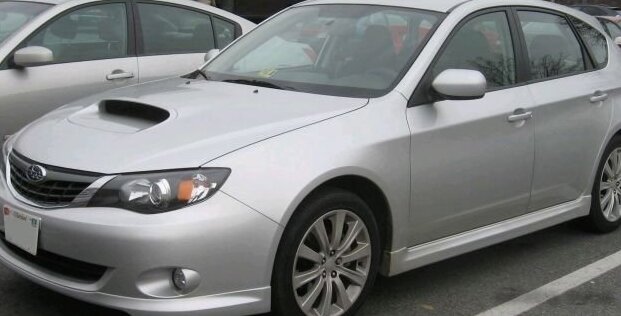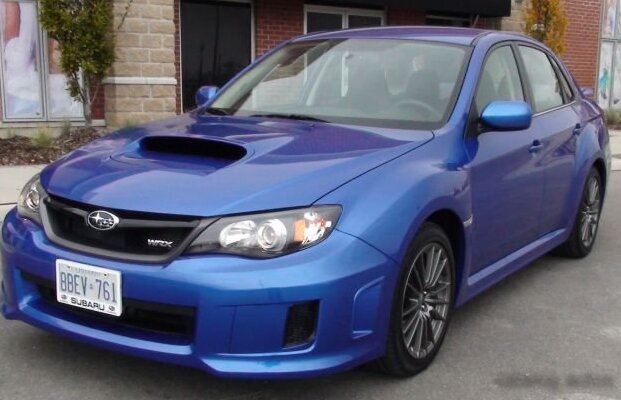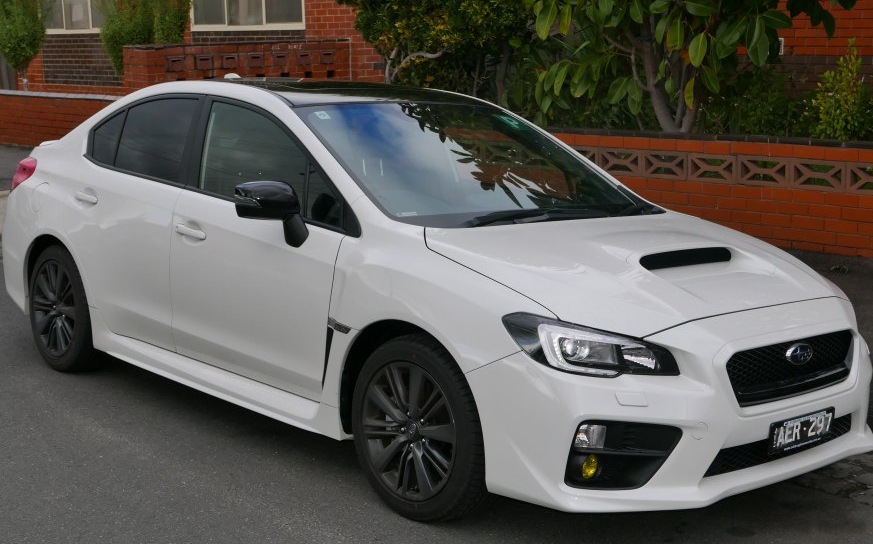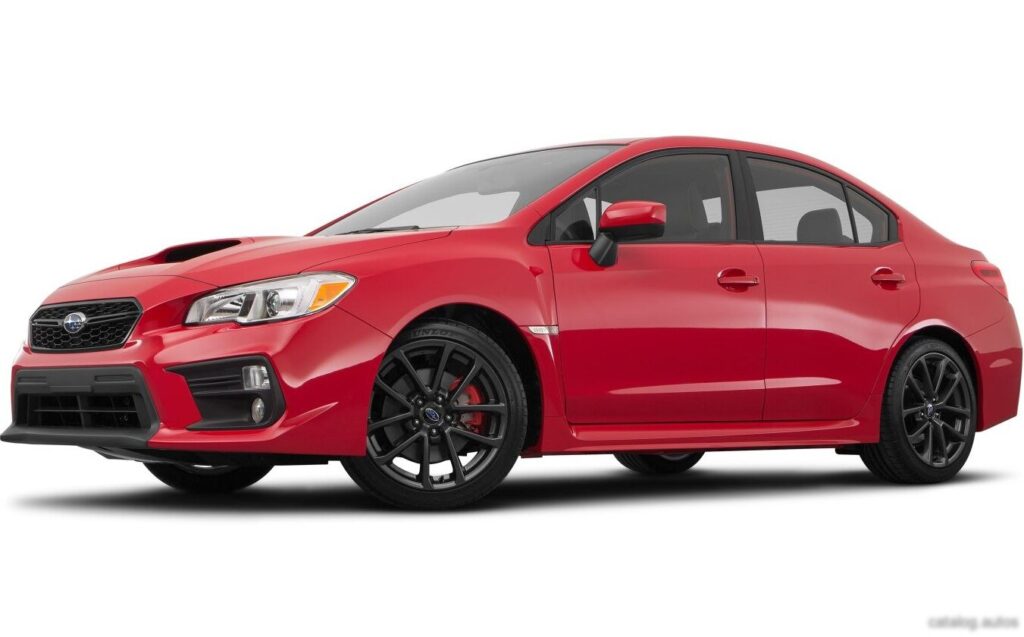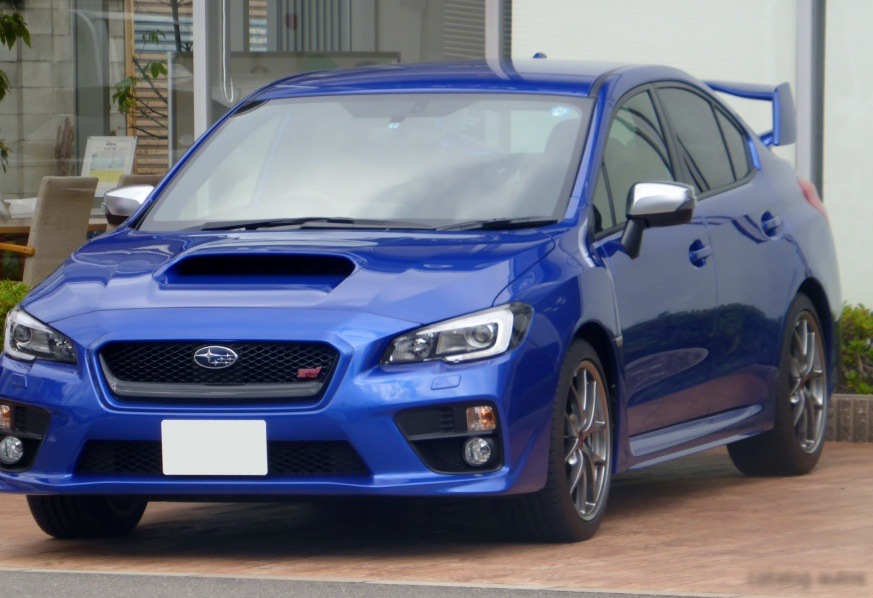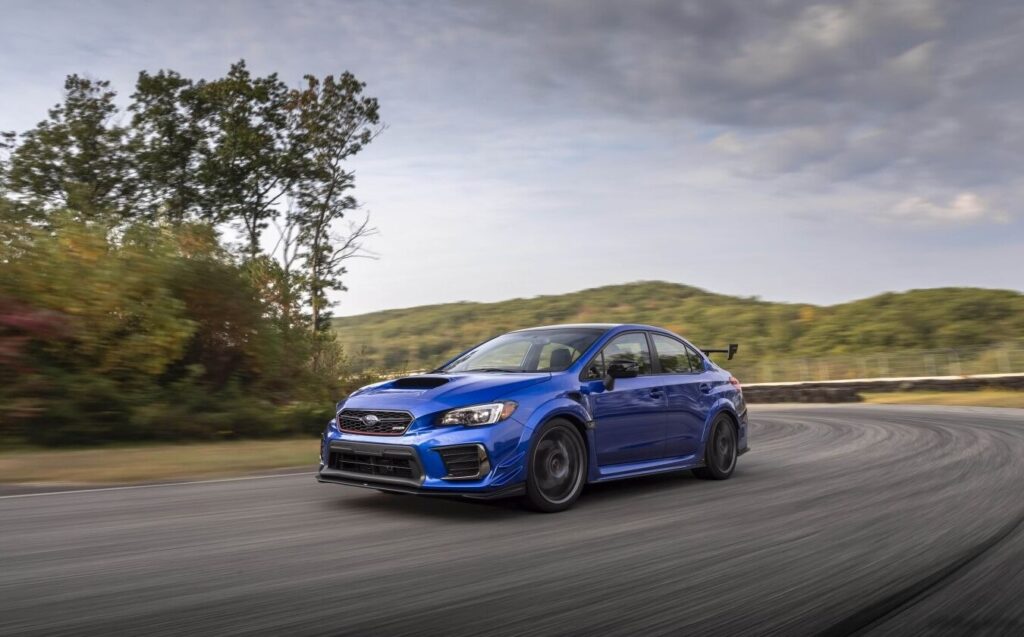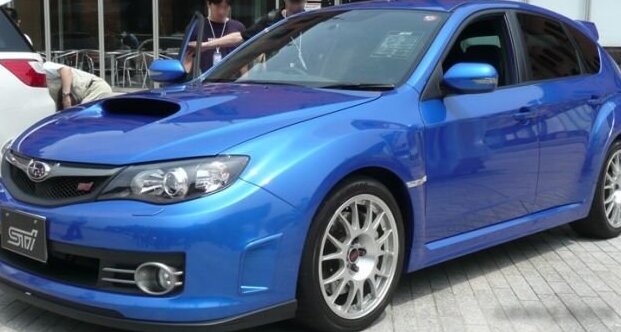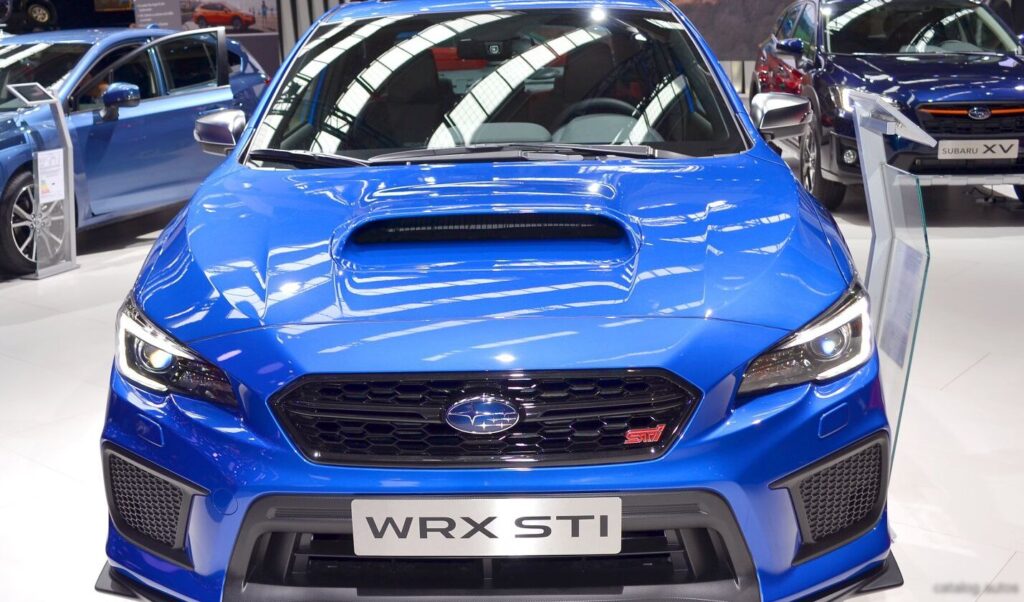
The Subaru WRX STI (facelift, introduced for the 2018 model year and continuing into 2019) represents the pinnacle of Subaru’s performance sedan offerings in the North American market. Building upon the already capable WRX, the STI variant delivers significantly enhanced performance through a more powerful engine, upgraded chassis components, and a driver-focused experience. This particular iteration, equipped with the 2.5-liter turbocharged boxer engine producing 310 horsepower and paired exclusively with a six-speed manual transmission, solidified the STI’s reputation as a serious contender in the high-performance compact segment. The facelift brought subtle but noticeable styling updates, further refining the aggressive aesthetic of the previous generation.
Technical Specifications
| Brand | Subaru |
| Model | WRX STI |
| Generation | WRX STI (facelift 2018) |
| Type (Engine) | 2.5 (310 Hp) AWD |
| Start of production | 2019 |
| Powertrain Architecture | Internal Combustion engine |
| Body type | Sedan |
| Seats | 5 |
| Doors | 4 |
| Fuel consumption (economy) – urban | 13.8 l/100 km (17 US mpg, 20.5 UK mpg, 7.2 km/l) |
| Fuel consumption (economy) – extra urban | 10.6 l/100 km (22.2 US mpg, 26.6 UK mpg, 9.4 km/l) |
| Fuel consumption (economy) – combined | 12.3 l/100 km (19.1 US mpg, 23 UK mpg, 8.1 km/l) |
| Fuel Type | Petrol (Gasoline) |
| Weight-to-power ratio | 5 kg/Hp, 198.2 Hp/tonne |
| Weight-to-torque ratio | 4 kg/Nm, 251.3 Nm/tonne |
| Power | 310 Hp @ 6000 rpm |
| Power per litre | 126.2 Hp/l |
| Torque | 393 Nm @ 4000-5200 rpm (289.86 lb.-ft. @ 4000-5200 rpm) |
| Engine layout | Front, Longitudinal |
| Engine Model/Code | EJ257 |
| Engine displacement | 2457 cm3 (149.94 cu. in.) |
| Number of cylinders | 4 |
| Engine configuration | Boxer |
| Cylinder Bore | 99.6 mm (3.92 in.) |
| Piston Stroke | 79 mm (3.11 in.) |
| Compression ratio | 8.1:1 |
| Number of valves per cylinder | 4 |
| Fuel injection system | Multi-port manifold injection |
| Engine aspiration | Turbocharger, Intercooler |
| Valvetrain | DOHC |
| Engine oil capacity | 4.3 l (4.54 US qt | 3.78 UK qt) |
| Coolant | 7.7 l (8.14 US qt | 6.78 UK qt) |
| Kerb Weight | 1564-1594 kg (3448.03 – 3514.17 lbs.) |
| Trunk (boot) space – minimum | 340 l (12.01 cu. ft.) |
| Fuel tank capacity | 60 l (15.85 US gal | 13.2 UK gal) |
| Length | 4595 mm (180.91 in.) |
| Width | 1795 mm (70.67 in.) |
| Height | 1475 mm (58.07 in.) |
| Wheelbase | 2650 mm (104.33 in.) |
| Front track | 1530 mm (60.24 in.) |
| Rear (Back) track | 1540 mm (60.63 in.) |
| Ride height (ground clearance) | 124 mm (4.88 in.) |
| Minimum turning circle (turning diameter) | 10.9 m (35.76 ft.) |
| Drive wheel | All wheel drive (4×4) |
| Number of gears and type of gearbox | 6 gears, manual transmission |
| Front suspension | Independent type McPherson |
| Rear suspension | Double wishbone |
| Front brakes | Ventilated discs, 340 mm |
| Rear brakes | Ventilated discs, 325 mm |
| Assisting systems | ABS (Anti-lock braking system) |
| Steering type | Steering rack and pinion |
| Tires size | 245/35 R19 89W |
| Wheel rims size | 8.5J x 19 |
Powertrain & Engine Architecture
The heart of the 2018-2019 Subaru WRX STI is the 2.5-liter EJ257 boxer-four engine. This engine, a hallmark of Subaru performance for many years, features a closed-deck block for increased rigidity, forged pistons, and a high-flow turbocharger. The multi-point fuel injection system delivers fuel directly into each intake port, while the dual overhead camshafts (DOHC) control the 16 valves. The turbocharger, coupled with an intercooler, provides significant boost, contributing to the engine’s 310 horsepower output. The EJ257 is known for its robust construction, but also for its potential oil consumption, a characteristic owners should be aware of. The sole transmission option is a six-speed manual, chosen for its direct connection to the driver and suitability for spirited driving. The symmetrical all-wheel-drive system, a Subaru signature, distributes power to all four wheels, providing exceptional grip and stability.
Driving Characteristics
The 2018-2019 WRX STI delivers a raw and engaging driving experience. The 310 horsepower and 289 lb-ft of torque provide strong acceleration, although the engine’s peak torque is delivered in a relatively narrow band between 4,000 and 5,200 rpm. This requires more frequent gear changes to stay within the powerband compared to some turbocharged rivals. The six-speed manual transmission is precise and offers a satisfying mechanical feel. The all-wheel-drive system inspires confidence in all weather conditions, and the STI’s chassis is well-tuned for both on-road performance and occasional track use. Compared to the standard WRX, the STI offers a firmer ride and more direct steering feel. While not as refined as some European performance sedans, the STI prioritizes driver involvement and performance above all else.
Equipment & Trim Levels
The WRX STI (facelift) came relatively well-equipped, focusing on performance-oriented features. Standard equipment included automatic climate control, a touchscreen infotainment system with Apple CarPlay and Android Auto compatibility, and a suite of safety features including ABS, traction control, and stability control. Recaro sport seats were often included, providing excellent support during aggressive driving. Optional extras included a premium audio system, a power moonroof, and keyless access with push-button start. Interior upholstery typically consisted of a combination of cloth and leather, with higher trims offering full leather options. The STI trim level represented the highest specification within the WRX lineup, offering a more comprehensive set of features than the base WRX.
Chassis & Braking
The STI’s chassis is significantly upgraded compared to the standard WRX. It features stiffer springs, more robust dampers, and a thicker rear stabilizer bar. The front suspension utilizes inverted MacPherson struts, while the rear employs a double-wishbone setup. This combination provides excellent handling and minimizes body roll. The braking system consists of ventilated discs at all four corners, with larger rotors and Brembo calipers at the front. This provides ample stopping power for both street and track use. The all-wheel-drive system utilizes a driver-controlled center differential, allowing the driver to adjust the front/rear torque bias for optimal traction in various conditions.
Market Reception & Comparison
The 2018-2019 Subaru WRX STI was generally well-received by automotive critics, praised for its performance, handling, and all-wheel-drive system. However, it was also criticized for its relatively dated interior, fuel economy (around 19 mpg combined), and potential oil consumption issues. Compared to rivals like the Volkswagen Golf R and the Ford Focus RS, the STI offered a more raw and visceral driving experience, but lacked some of the refinement and fuel efficiency of those competitors. The STI’s focus on performance and driver engagement appealed to enthusiasts, while its practicality and all-weather capability made it a viable daily driver.
Legacy
The Subaru WRX STI, particularly the 2018-2019 facelift model, has become a sought-after vehicle in the used car market. Its reputation for performance, reliability (despite the potential oil consumption issue), and iconic status among enthusiasts has helped maintain its value. The EJ257 engine, while aging, remains a capable and tunable powerplant. The STI’s symmetrical all-wheel-drive system continues to be a benchmark for performance in inclement weather. As Subaru moves towards a new generation of performance vehicles, the 2018-2019 WRX STI represents a high point in the brand’s rally-inspired heritage, and a testament to the enduring appeal of a well-engineered, driver-focused performance sedan.