Technical Specifications
| Brand | Subaru |
| Model | WRX |
| Generation | WRX STI Hatchback |
| Type (Engine) | 2.5 (300 Hp) Turbo Automatic |
| Start of production | 2007 |
| End of production | 2011 |
| Powertrain Architecture | Internal Combustion engine |
| Body type | Hatchback |
| Seats | 5 |
| Doors | 5 |
| Fuel consumption (urban) | 14.8 l/100 km (15.9 US mpg, 19.1 UK mpg, 6.8 km/l) |
| Fuel consumption (extra urban) | 8.1 l/100 km (29 US mpg, 34.9 UK mpg, 12.3 km/l) |
| Fuel consumption (combined) | 10.6 l/100 km (22.2 US mpg, 26.6 UK mpg, 9.4 km/l) |
| Fuel Type | Petrol (Gasoline) |
| Acceleration 0 – 100 km/h | 6 sec |
| Acceleration 0 – 62 mph | 6 sec |
| Acceleration 0 – 60 mph | 5.7 sec |
| Maximum speed | 245 km/h (152.24 mph) |
| Weight-to-power ratio | 5.1 kg/Hp, 196.7 Hp/tonne |
| Weight-to-torque ratio | 4.4 kg/Nm, 229.5 Nm/tonne |
| Power | 300 Hp @ 6200 rpm |
| Power per litre | 122.1 Hp/l |
| Torque | 350 Nm @ 3000-6000 rpm (258.15 lb.-ft. @ 3000-6000 rpm) |
| Engine layout | Front, Longitudinal |
| Engine Model/Code | EJ257 |
| Engine displacement | 2457 cm3 (149.94 cu. in.) |
| Number of cylinders | 4 |
| Engine configuration | Boxer |
| Cylinder Bore | 99.5 mm (3.92 in.) |
| Piston Stroke | 79 mm (3.11 in.) |
| Compression ratio | 8.2:1 |
| Number of valves per cylinder | 4 |
| Fuel injection system | Multi-port manifold injection |
| Engine aspiration | Turbocharger, Intercooler |
| Valvetrain | DOHC |
| Engine oil capacity | 4.3 l (4.54 US qt | 3.78 UK qt) |
| Coolant | 7.7 l (8.14 US qt | 6.78 UK qt) |
| Kerb Weight | 1525 kg (3362.05 lbs.) |
| Trunk (boot) space – minimum | 1130 l (39.91 cu. ft.) |
| Fuel tank capacity | 60 l (15.85 US gal | 13.2 UK gal) |
| Length | 4415 mm (173.82 in.) |
| Width | 1795 mm (70.67 in.) |
| Height | 1470 mm (57.87 in.) |
| Wheelbase | 2625 mm (103.35 in.) |
| Front track | 1530 mm (60.24 in.) |
| Rear (Back) track | 1540 mm (60.63 in.) |
| Minimum turning circle | 11 m (36.09 ft.) |
| Drive wheel | All wheel drive (4×4) |
| Number of gears and type of gearbox | 5 gears, automatic transmission |
| Front suspension | Independent type McPherson |
| Rear suspension | Double wishbone |
| Front brakes | Ventilated discs |
| Rear brakes | Ventilated discs |
| Assisting systems | ABS (Anti-lock braking system) |
| Steering type | Steering rack and pinion |
| Tires size | 245/40 R18 |
| Wheel rims size | 8.5J x 18 |
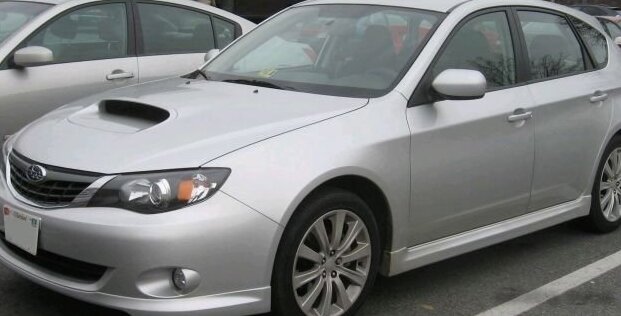
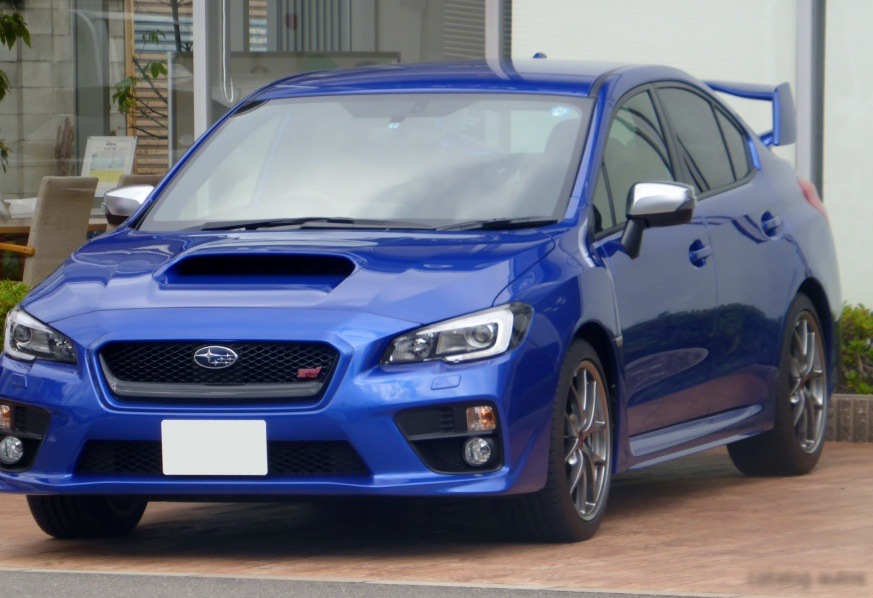
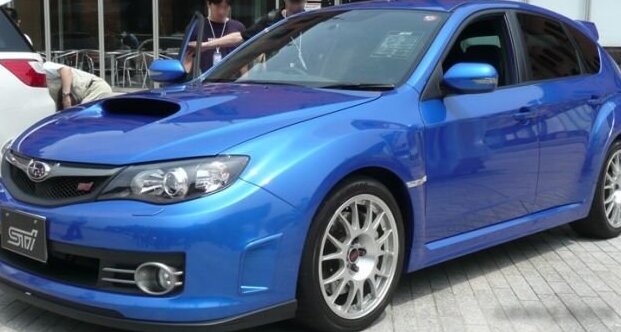
The 2007-2011 Subaru WRX STI Hatchback 2.5 (300 Hp) Turbo Automatic represented a unique offering within the broader WRX STI lineage. Built on the GD/GG platform (often referred to as the “blobeye” and subsequent revisions), this variant catered to a specific segment of the market seeking the performance of the STI with the convenience of an automatic transmission and the practicality of a hatchback body style. While the STI was primarily known for its focus on rally-bred performance and driver engagement, the automatic option aimed to broaden its appeal, particularly in regions where manual transmissions were less common. This model sat in the upper echelon of the WRX STI range, offering the most powerful engine option available with the automatic gearbox.
Powertrain & Engine Architecture
At the heart of the STI Hatchback Automatic lies the EJ257 2.5-liter horizontally-opposed (Boxer) four-cylinder engine. This engine, a hallmark of the STI, featured a closed-deck block for increased rigidity, forged pistons, and a high-flow cylinder head. The 300 horsepower output was achieved through a Mitsubishi TD04L turbocharger with an intercooler, delivering significant boost pressure. Fuel delivery was managed by a multi-point fuel injection system. The engine’s DOHC (Dual Overhead Camshaft) valvetrain, with four valves per cylinder, contributed to its high-revving nature. The automatic transmission was a five-speed unit, specifically tuned to handle the engine’s substantial torque. While robust, this transmission wasn’t always praised for its responsiveness compared to the six-speed manual found in other STI models.
Driving Characteristics
The driving experience in the STI Hatchback Automatic differed noticeably from its manual counterpart. While the 300 hp engine provided ample power, the automatic transmission introduced a degree of torque converter slip, slightly diminishing the immediacy of throttle response. Gear ratios were optimized for a balance between acceleration and fuel efficiency, but the automatic’s shift logic sometimes felt hesitant during aggressive driving. 0-60 mph times were quoted around 5.7 seconds, respectable for the era, but typically slower than the manual version. The all-wheel-drive system, a defining characteristic of the STI, provided excellent traction and stability, particularly in adverse weather conditions. However, the added weight of the automatic transmission and its components did impact handling agility compared to the lighter manual models.
Equipment & Trim Levels
The STI Hatchback Automatic typically came well-equipped, reflecting its position as the premium trim level. Standard features included sport seats with bolstered support, a leather-wrapped steering wheel, automatic climate control, and a premium audio system. Exterior features often included alloy wheels, a rear spoiler, and unique STI badging. Optional extras could include a sunroof, navigation system, and upgraded audio components. Interior upholstery was generally a combination of cloth and leather, with a focus on providing a sporty yet comfortable environment.
Chassis & Braking
The STI Hatchback featured a robust chassis designed to handle the engine’s power and the demands of spirited driving. The suspension utilized an independent McPherson strut setup at the front and a double-wishbone configuration at the rear. Stabilizer bars were fitted front and rear to reduce body roll. Braking duties were handled by ventilated disc brakes on all four wheels, providing ample stopping power. The inclusion of ABS (Anti-lock Braking System) further enhanced safety and control. The suspension tuning was firmer than that of the standard WRX, prioritizing handling performance over ride comfort.
Market Reception & Comparison
The STI Hatchback Automatic received mixed reviews. While praised for its power and all-wheel-drive capability, the automatic transmission was often criticized for detracting from the overall driving experience. Critics noted that the automatic didn’t fully exploit the engine’s potential, and the shift quality wasn’t as crisp as that of a dual-clutch transmission. Compared to the manual STI, the automatic version typically commanded a slightly lower price on the used car market. Fuel economy, at around 22.2 US mpg combined, was relatively poor, reflecting the engine’s high output and the all-wheel-drive system. The 1.8L WRX models offered significantly better fuel economy but lacked the STI’s performance credentials.
Legacy
The Subaru WRX STI Hatchback 2.5 (300 Hp) Turbo Automatic remains a sought-after vehicle among Subaru enthusiasts, particularly those seeking a unique and capable performance car. The EJ257 engine, while known for its potential maintenance needs (particularly head gasket issues), is generally considered robust when properly maintained. The automatic transmission, while not as engaging as a manual, has proven to be relatively reliable. Today, these STI Hatchbacks command a premium on the used car market, especially well-maintained examples with low mileage. They represent a distinctive chapter in the STI’s history, offering a blend of performance, practicality, and exclusivity.