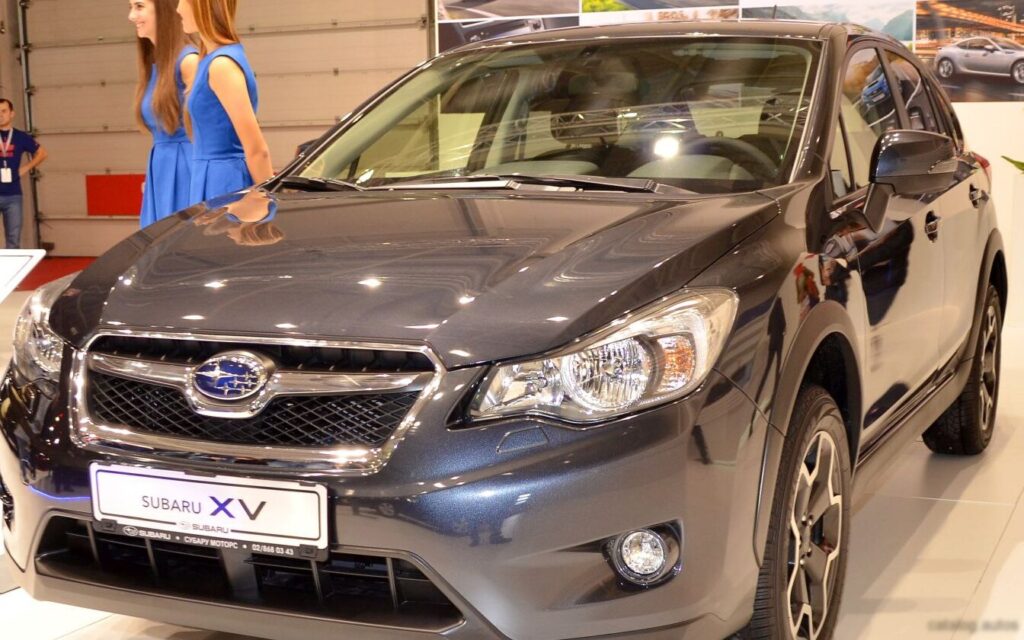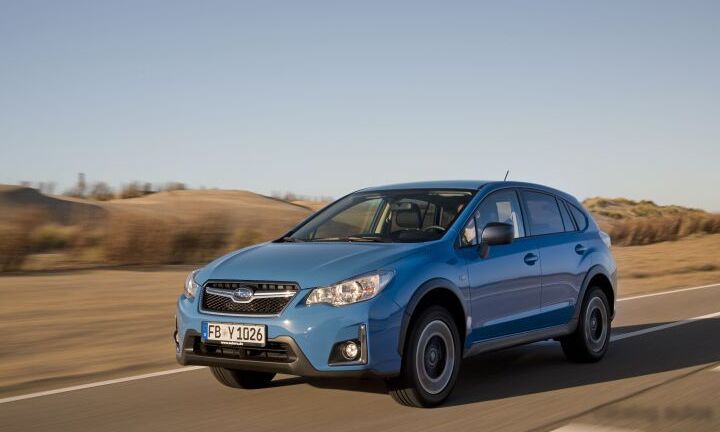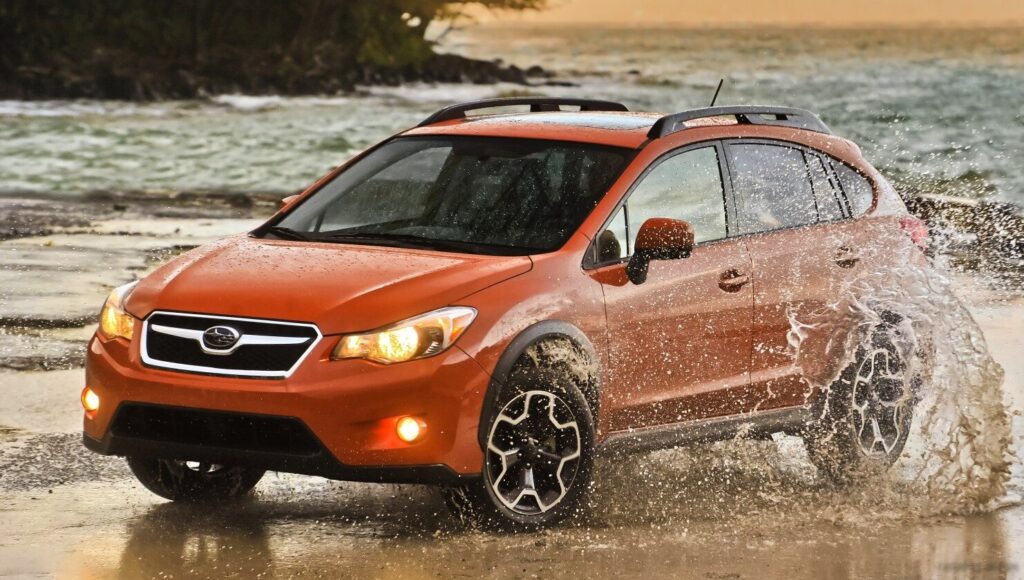
The Subaru XV Crosstrek, known as the Crosstrek in North America, represents Subaru’s entry into the burgeoning subcompact crossover SUV segment. Introduced for the 2013 model year (and continuing through 2015 for the first generation, designated XV Crosstrek I), this vehicle aimed to blend Subaru’s renowned symmetrical all-wheel drive system with improved fuel efficiency and a more accessible price point. The 2.0-liter, 148 horsepower variant paired with the Lineartronic continuously variable transmission (CVT) was a key offering, positioned as the mainstream choice within the Crosstrek lineup. It provided a balance between affordability and capability, appealing to buyers seeking a versatile and practical vehicle for everyday use.
Technical Specifications
| Brand | Subaru |
| Model | Crosstrek |
| Generation | XV Crosstrek I |
| Type (Engine) | 2.0 (148 Hp) AWD Lineartronic |
| Start of production | 2013 |
| End of production | 2015 |
| Powertrain Architecture | Internal Combustion engine |
| Body type | SUV, Crossover |
| Seats | 5 |
| Doors | 5 |
| Fuel consumption (urban) | 9.4 l/100 km (25 US mpg) |
| Fuel consumption (extra urban) | 7.1 l/100 km (33.1 US mpg) |
| Fuel consumption (combined) | 8.4 l/100 km (28 US mpg) |
| Fuel Type | Petrol (Gasoline) |
| Weight-to-power ratio | 9.6 kg/Hp |
| Weight-to-torque ratio | 7.2 kg/Nm |
| Power | 148 Hp @ 6200 rpm |
| Power per litre | 74.2 Hp/l |
| Torque | 197 Nm @ 4200 rpm (145.3 lb.-ft. @ 4200 rpm) |
| Engine layout | Front, Longitudinal |
| Engine Model/Code | FB20 |
| Engine displacement | 1995 cm3 (121.74 cu. in.) |
| Number of cylinders | 4 |
| Engine configuration | Boxer |
| Cylinder Bore | 84 mm (3.31 in.) |
| Piston Stroke | 90 mm (3.54 in.) |
| Compression ratio | 10.5:1 |
| Number of valves per cylinder | 4 |
| Fuel injection system | Multi-port manifold injection |
| Engine aspiration | Naturally aspirated engine |
| Valvetrain | DOHC |
| Engine oil capacity | 4.8 l (5.07 US qt | 4.22 UK qt) |
| Coolant | 7.5 l (7.93 US qt | 6.6 UK qt) |
| Kerb Weight | 1425-1440 kg (3141.59 – 3174.66 lbs.) |
| Trunk (boot) space – minimum | 631 l (22.28 cu. ft.) |
| Trunk (boot) space – maximum | 1470 l (51.91 cu. ft.) |
| Fuel tank capacity | 60 l (15.85 US gal | 13.2 UK gal) |
| Length | 4450 mm (175.2 in.) |
| Width | 1781 mm (70.12 in.) |
| Width including mirrors | 1986 mm (78.19 in.) |
| Height | 1615 mm (63.58 in.) |
| Wheelbase | 2634 mm (103.7 in.) |
| Front track | 1524 mm (60 in.) |
| Rear (Back) track | 1524 mm (60 in.) |
| Ride height (ground clearance) | 221 mm (8.7 in.) |
| Minimum turning circle | 10.6 m (34.78 ft.) |
| Front brakes | Ventilated discs, 11.6 mm |
| Rear brakes | Disc, 10.8 mm |
| Gearbox | automatic transmission Lineartronic CVT |
Powertrain & Engine Architecture
The heart of this Crosstrek variant is the FB20 2.0-liter horizontally-opposed (Boxer) four-cylinder engine. This engine, a staple in Subaru’s lineup, is known for its compact design and inherent balance, contributing to reduced vibration. The FB20 utilizes multi-point fuel injection and a double overhead camshaft (DOHC) valvetrain with four valves per cylinder. The Lineartronic CVT, Subaru’s implementation of a continuously variable transmission, is paired with the engine. This CVT is designed to mimic traditional gear changes while offering seamless acceleration and improved fuel economy. Unlike some CVTs, Subaru’s Lineartronic incorporates a simulated “step-shift” mode to provide a more familiar driving experience. The engine’s longitudinal mounting and the all-wheel-drive system necessitate a more complex drivetrain layout compared to front-wheel-drive vehicles.
Driving Characteristics
The 2.0-liter engine and Lineartronic CVT combination delivers adequate, though not exhilarating, performance. With 148 horsepower, acceleration is best described as steady rather than quick. The CVT effectively keeps the engine in its optimal power band, but the lack of distinct gear changes can feel somewhat disconnected to drivers accustomed to traditional automatic transmissions. The Lineartronic CVT’s ratios are continuously adjusted to provide optimal efficiency and responsiveness. Compared to the manual transmission option, the CVT prioritizes fuel economy and ease of use over outright performance. The all-wheel-drive system provides confident traction in various conditions, making the Crosstrek a capable vehicle for inclement weather and light off-road adventures.
Equipment & Trim Levels
The 2.0L AWD Lineartronic Crosstrek typically came standard with features like air conditioning, power windows and locks, a rearview camera, and a basic audio system with USB connectivity. Higher trim levels, such as the Premium, added features like alloy wheels, a power driver’s seat, a larger touchscreen infotainment system, and heated front seats. Optional extras included a sunroof, leather upholstery, and a premium audio system. Interior upholstery was typically cloth, with higher trims offering leather options. The dashboard layout was functional and straightforward, prioritizing usability over luxury.
Chassis & Braking
The Crosstrek utilizes a MacPherson strut front suspension and a double-wishbone rear suspension, providing a comfortable ride and predictable handling. Stabilizer bars are included at both ends to reduce body roll during cornering. Braking duties are handled by ventilated discs at the front and solid discs at the rear. Anti-lock braking system (ABS) is standard. The relatively high ground clearance (8.7 inches) contributes to the Crosstrek’s off-road capability. The suspension tuning is geared towards comfort and everyday usability, rather than sporty handling.
Market Reception & Comparison
The 2.0L AWD Lineartronic Crosstrek was generally well-received by critics as a practical and versatile vehicle. Reviewers praised its standard all-wheel drive, fuel efficiency, and spacious interior. However, some criticized the engine’s lack of power and the CVT’s sometimes-unconventional driving feel. Compared to other subcompact crossovers, the Crosstrek stood out with its standard AWD and rugged styling. Fuel economy was competitive within its class, and reliability proved to be generally good, though CVT maintenance (fluid changes) was crucial for long-term durability. The manual transmission version offered a more engaging driving experience, while higher trim levels with more powerful engines provided increased performance.
Legacy
The first-generation Subaru XV Crosstrek, particularly the 2.0L AWD Lineartronic variant, established a strong foundation for the model’s continued success. The FB20 engine and Lineartronic CVT proved to be relatively reliable powertrains, though regular maintenance, especially CVT fluid changes, is essential. On the used car market, these Crosstreks are often sought after for their affordability, practicality, and all-weather capability. They represent a good value for buyers seeking a compact SUV with a proven track record and Subaru’s renowned safety and durability. The model helped Subaru expand its reach into a new segment and solidified its reputation for building capable and reliable vehicles.