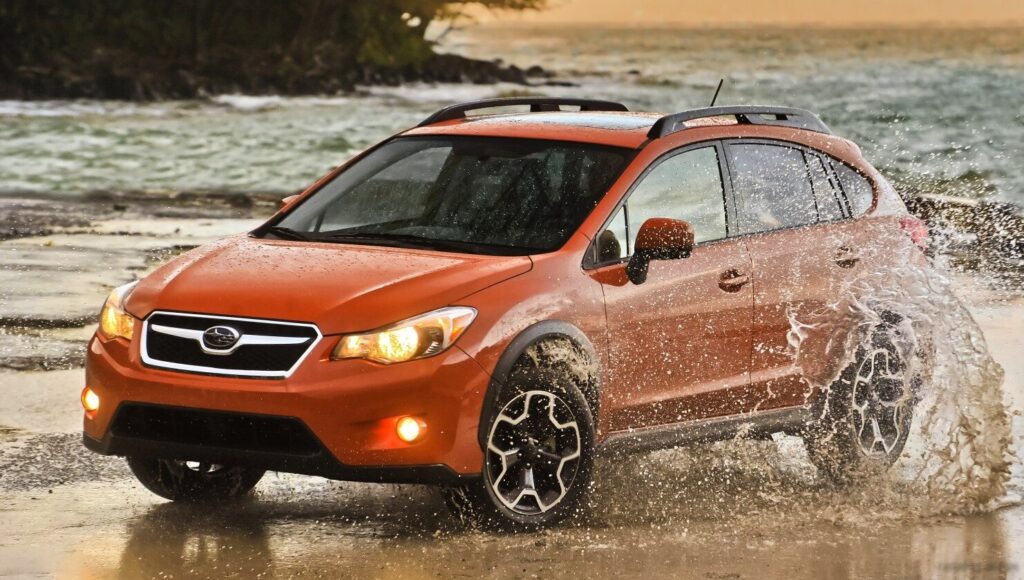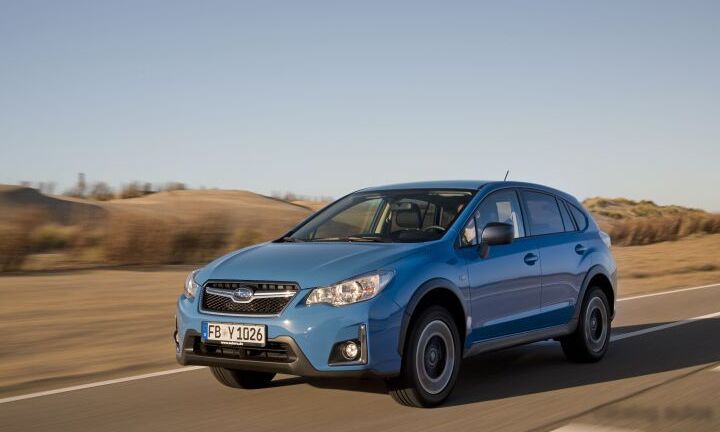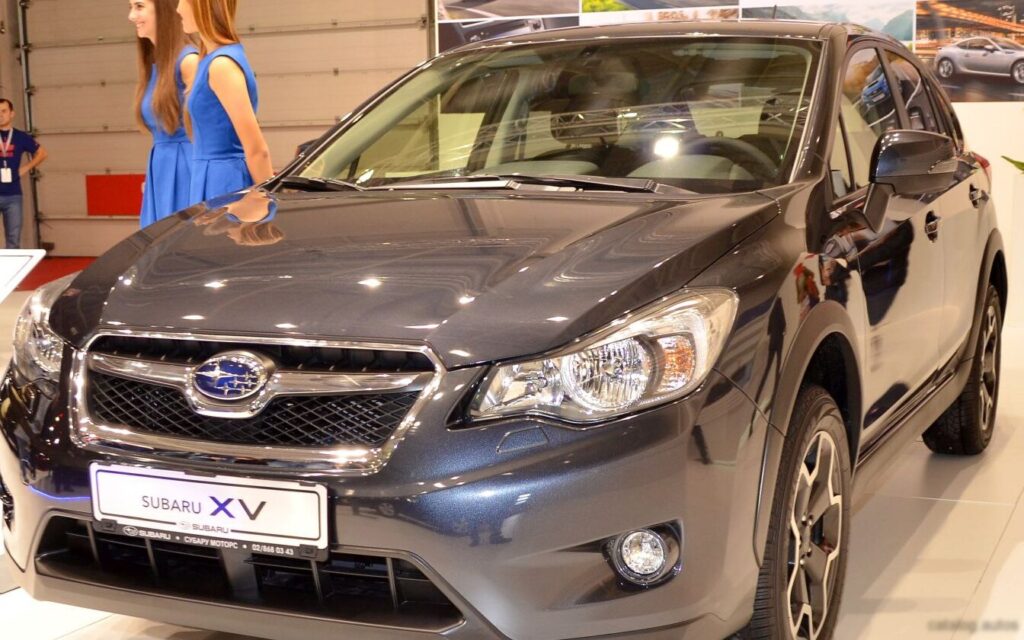
The Subaru XV (known as the Subaru Crosstrek in North America from 2013 onwards) is a compact crossover SUV introduced by Subaru in 2011. The first generation, designated XV I, was produced from 2011 to 2016 and represented Subaru’s entry into the burgeoning subcompact crossover market. The 1.6i Lineartronic variant, powered by the FB16 engine and paired with a continuously variable transmission (CVT), was positioned as the entry-level model in many markets, offering a balance of affordability and Subaru’s signature all-wheel-drive capability. This model aimed to attract buyers seeking a practical, fuel-efficient, and versatile vehicle for urban and light off-road use.
Technical Specifications
| Brand | Subaru |
| Model | XV |
| Generation | XV I |
| Type (Engine) | 1.6i (114 Hp) Lineartronic |
| Start of production | 2011 |
| End of production | 2016 |
| Powertrain Architecture | Internal Combustion engine |
| Body type | SUV |
| Seats | 5 |
| Doors | 5 |
| Fuel consumption (urban) | 7.9 l/100 km (29.8 US mpg) |
| Fuel consumption (extra urban) | 5.5 l/100 km (42.8 US mpg) |
| Fuel consumption (combined) | 6.3 l/100 km (37.3 US mpg) |
| Fuel Type | Petrol (Gasoline) |
| Acceleration 0 – 100 km/h | 13.8 sec |
| Acceleration 0 – 62 mph | 13.8 sec |
| Acceleration 0 – 60 mph | 13.1 sec |
| Maximum speed | 175 km/h (108.74 mph) |
| Weight-to-power ratio | 12.3 kg/Hp |
| Weight-to-torque ratio | 9.4 kg/Nm |
| Power | 114 Hp @ 5600 rpm |
| Torque | 150 Nm @ 4000 rpm (110.63 lb.-ft. @ 4000 rpm) |
| Engine layout | Front, Longitudinal |
| Engine Model/Code | FB16 |
| Engine displacement | 1600 cm3 (97.64 cu. in.) |
| Number of cylinders | 4 |
| Engine configuration | Boxer |
| Cylinder Bore | 78.8 mm (3.1 in.) |
| Piston Stroke | 82 mm (3.23 in.) |
| Compression ratio | 10.5:1 |
| Number of valves per cylinder | 4 |
| Fuel injection system | Multi-port manifold injection |
| Engine aspiration | Naturally aspirated engine |
| Valvetrain | DOHC |
| Engine oil capacity | 4.8 l (5.07 US qt | 4.22 UK qt) |
| Coolant | 8.1 l (8.56 US qt | 7.13 UK qt) |
| Kerb Weight | 1405 kg (3097.49 lbs.) |
| Trunk (boot) space – minimum | 1270 l (44.85 cu. ft.) |
| Fuel tank capacity | 60 l (15.85 US gal | 13.2 UK gal) |
| Length | 4450 mm (175.2 in.) |
| Width | 1780 mm (70.08 in.) |
| Height | 1570 mm (61.81 in.) |
| Wheelbase | 2635 mm (103.74 in.) |
| Front track | 1525 mm (60.04 in.) |
| Rear (Back) track | 1525 mm (60.04 in.) |
| Minimum turning circle | 10.6 m (34.78 ft.) |
| Drive wheel | All wheel drive (4×4) |
| Front suspension | Independent type McPherson |
| Rear suspension | Double wishbone |
| Front brakes | Ventilated discs |
| Rear brakes | Disc |
| Assisting systems | ABS (Anti-lock braking system) |
| Steering type | Steering rack and pinion |
| Tires size | 225/55 R17 |
| Wheel rims size | 7J x 17 |
INTRODUCTION
The Subaru XV I 1.6i Lineartronic, launched in 2011, was a key component of Subaru’s strategy to broaden its appeal beyond traditional rally-inspired models. Built on the Subaru Impreza platform (XV I – 1HX0/A3), it offered a more accessible and fuel-efficient option within the compact SUV segment. The XV aimed to capitalize on the growing demand for crossovers that combined the practicality of a hatchback with the elevated driving position and all-weather capability associated with SUVs. The Lineartronic CVT was offered as an alternative to the standard six-speed manual transmission, targeting buyers prioritizing comfort and ease of use.
Powertrain & Engine Architecture
At the heart of the 1.6i Lineartronic is the FB16 1.6-liter horizontally-opposed (Boxer) four-cylinder engine. This engine is notable for its compact design and relatively lightweight construction, contributing to the XV’s balanced handling. The FB16 utilizes multi-point fuel injection and a double overhead camshaft (DOHC) valvetrain with four valves per cylinder. The engine produces 114 horsepower at 5600 rpm and 150 Nm (110.63 lb-ft) of torque at 4000 rpm. The Lineartronic CVT, a key feature of this variant, is a chain-driven continuously variable transmission designed to provide smooth, stepless acceleration and improved fuel efficiency. Unlike traditional automatic transmissions with fixed gear ratios, the CVT allows the engine to operate at its most efficient rpm for any given speed.
Driving Characteristics
The 1.6i Lineartronic’s driving experience is characterized by its smooth and refined operation. The CVT eliminates the shift shock associated with conventional automatics, resulting in a seamless power delivery. However, the 114 hp output and the CVT’s programming mean that acceleration is not particularly brisk. The 0-60 mph time of around 13.1 seconds reflects this. Compared to the more powerful 2.0i variants, the 1.6i feels noticeably slower, especially when accelerating for overtaking or climbing hills. The CVT is programmed to mimic stepped gear changes under hard acceleration, providing a more familiar feel for drivers accustomed to traditional automatics. Subaru’s symmetrical all-wheel-drive system provides excellent traction in various conditions, enhancing stability and confidence, particularly on slippery surfaces. The relatively soft suspension setup prioritizes ride comfort over sporty handling.
Equipment & Trim Levels
The 1.6i Lineartronic typically came equipped with a reasonable level of standard features. These generally included air conditioning, power windows and locks, a basic audio system with CD player and auxiliary input, and alloy wheels. Safety features such as ABS, electronic brakeforce distribution, and multiple airbags were standard. Higher trim levels offered options such as a sunroof, upgraded audio system, navigation system, and leather upholstery. Interior materials were generally durable and functional, reflecting the vehicle’s price point. The dashboard layout was straightforward and user-friendly, with logically placed controls.
Chassis & Braking
The Subaru XV I utilized a MacPherson strut front suspension and a double-wishbone rear suspension, providing a comfortable ride and predictable handling. The suspension was tuned to prioritize comfort and stability over outright sportiness. Braking duties were handled by ventilated discs at the front and solid discs at the rear. ABS (Anti-lock Braking System) was standard, enhancing braking performance and control, especially on slippery surfaces. The XV I’s chassis was designed to provide a good balance between rigidity and weight, contributing to its overall handling characteristics.
Market Reception & Comparison
The Subaru XV I 1.6i Lineartronic received mixed reviews. Critics praised its fuel efficiency, all-wheel-drive capability, and comfortable ride. However, the engine’s lack of power and the CVT’s sometimes-sluggish response were common criticisms. Compared to the 2.0i variants, the 1.6i offered a more affordable entry point into the XV range, but at the expense of performance. Fuel economy was a strong point, with combined figures around 37.3 US mpg, making it competitive with other compact crossovers. Reliability was generally good, although some owners reported minor issues with the CVT over the long term.
Legacy
The Subaru XV I 1.6i Lineartronic remains a relatively common sight on used car markets. The FB16 engine and Lineartronic CVT have proven to be reasonably durable, although regular maintenance, including CVT fluid changes, is crucial for long-term reliability. The XV I established Subaru’s presence in the compact crossover segment and paved the way for the subsequent generations of the Crosstrek. While not the most powerful or sporty option, the 1.6i Lineartronic offers a practical, fuel-efficient, and capable vehicle for buyers seeking a versatile and reliable crossover SUV.