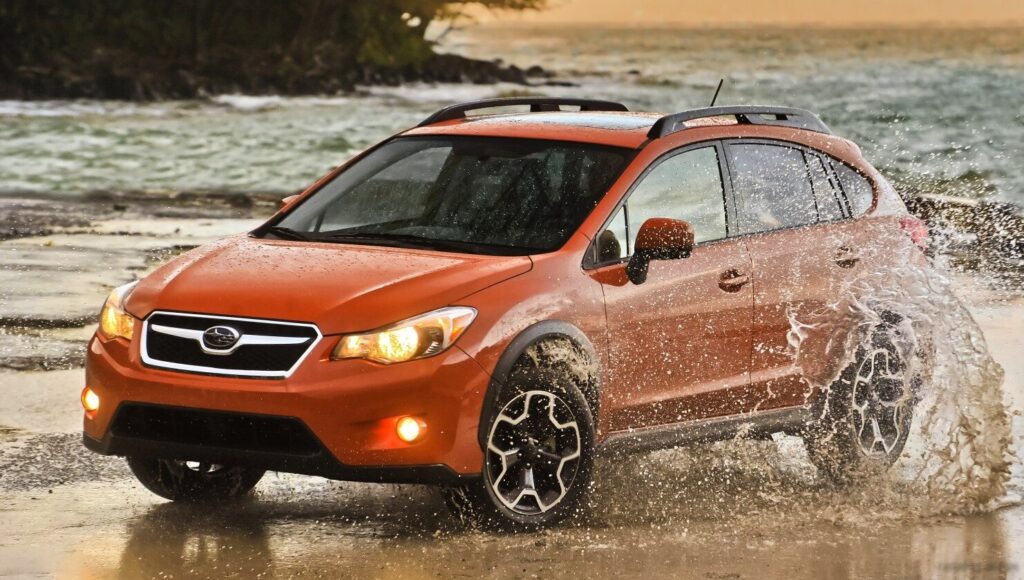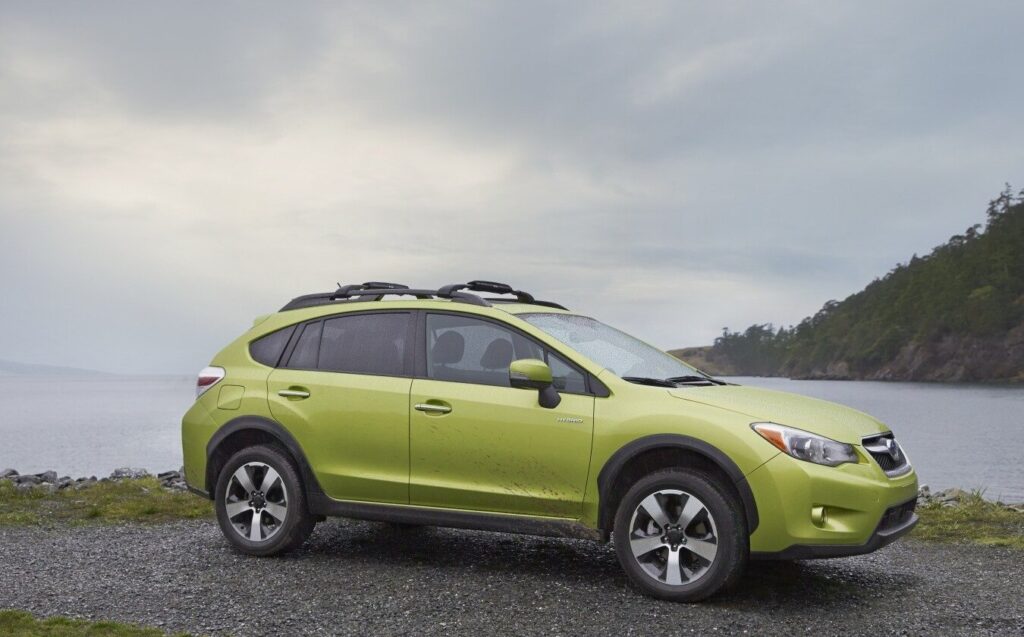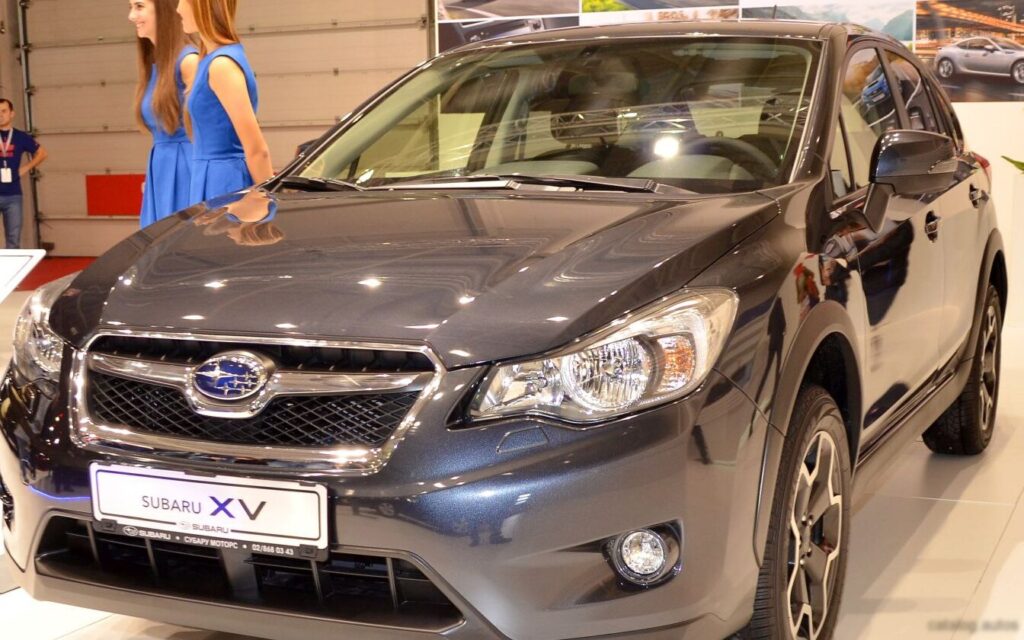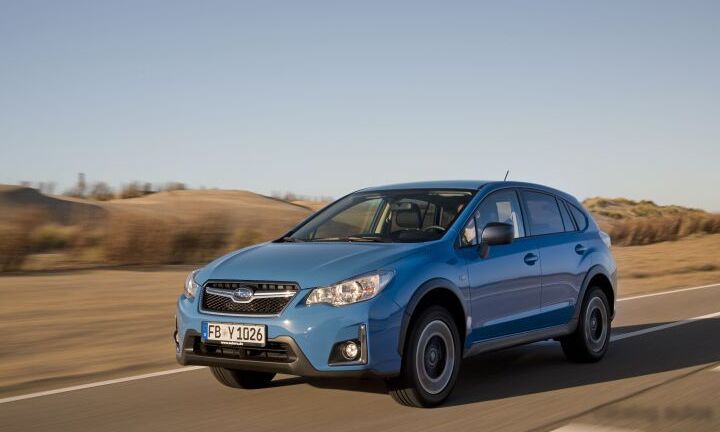
The Subaru XV (known as the Subaru Crosstrek in North America) is a compact crossover SUV introduced by Subaru in 2012. The first generation, designated XV I, underwent a significant facelift in January 2016, bringing updated styling and minor mechanical revisions. This article focuses specifically on the 2.0i Lineartronic variant of the facelifted XV I, produced between 2016 and 2018. This model occupied a mid-range position within the XV lineup, offering a balance between affordability and comfort, appealing to buyers seeking a practical and capable all-wheel-drive vehicle.
Technical Specifications
| Brand | Subaru |
| Model | XV |
| Generation | XV I (facelift 2016) |
| Type (Engine) | 2.0i (150 Hp) Lineartronic |
| Start of production | January, 2016 |
| End of production | January, 2018 |
| Powertrain Architecture | Internal Combustion engine |
| Body type | SUV |
| Seats | 5 |
| Doors | 5 |
| Fuel consumption (urban) | 8.5 l/100 km (27.7 US mpg, 33.2 UK mpg, 11.8 km/l) |
| Fuel consumption (extra urban) | 5.5 l/100 km (42.8 US mpg, 51.4 UK mpg, 18.2 km/l) |
| Fuel consumption (combined) | 6.5 l/100 km (36.2 US mpg, 43.5 UK mpg, 15.4 km/l) |
| CO2 emissions | 151 g/km |
| Fuel Type | Petrol (Gasoline) |
| Acceleration 0 – 100 km/h | 10.7 sec |
| Acceleration 0 – 62 mph | 10.7 sec |
| Acceleration 0 – 60 mph | 10.2 sec |
| Maximum speed | 187 km/h (116.2 mph) |
| Emission standard | Euro 6 |
| Weight-to-power ratio | 9.3 kg/Hp, 107.1 Hp/tonne |
| Weight-to-torque ratio | 7.1 kg/Nm, 140 Nm/tonne |
| Power | 150 Hp @ 6200 rpm |
| Power per litre | 75.2 Hp/l |
| Torque | 196 Nm @ 4200 rpm (144.56 lb.-ft. @ 4200 rpm) |
| Engine layout | Front, Longitudinal |
| Engine Model/Code | FB20 |
| Engine displacement | 1995 cm3 (121.74 cu. in.) |
| Number of cylinders | 4 |
| Engine configuration | Boxer |
| Cylinder Bore | 84 mm (3.31 in.) |
| Piston Stroke | 90 mm (3.54 in.) |
| Compression ratio | 10.5:1 |
| Number of valves per cylinder | 4 |
| Fuel injection system | Multi-port manifold injection |
| Engine aspiration | Naturally aspirated engine |
| Engine oil capacity | 4.8 l (5.07 US qt | 4.22 UK qt) |
| Coolant | 7.7 l (8.14 US qt | 6.78 UK qt) |
| Kerb Weight | 1400-1445 kg (3086.47 – 3185.68 lbs.) |
| Max. weight | 1940 kg (4276.97 lbs.) |
| Max load | 495-540 kg (1091.29 – 1190.5 lbs.) |
| Trunk (boot) space – minimum | 380 l (13.42 cu. ft.) |
| Trunk (boot) space – maximum | 1270 l (44.85 cu. ft.) |
| Fuel tank capacity | 60 l (15.85 US gal | 13.2 UK gal) |
| Max. roof load | 80 kg (176.37 lbs.) |
| Permitted trailer load with brakes (8%) | 1500 kg (3306.93 lbs.) |
| Permitted trailer load with brakes (12%) | 1200 kg (2645.55 lbs.) |
| Permitted trailer load without brakes | 650 kg (1433 lbs.) |
| Length | 4450 mm (175.2 in.) |
| Width | 1780 mm (70.08 in.) |
| Height | 1570 mm (61.81 in.) |
| Wheelbase | 2635 mm (103.74 in.) |
| Front track | 1525 mm (60.04 in.) |
| Rear (Back) track | 1525 mm (60.04 in.) |
| Ride height (ground clearance) | 220 mm (8.66 in.) |
| Minimum turning circle (turning diameter) | 11.4 m (37.4 ft.) |
| Approach angle | 19.6° |
| Departure angle | 29.3° |
| Drive wheel | All wheel drive (4×4) |
| Front brakes | Ventilated discs |
| Rear brakes | Ventilated discs |
| Assisting systems | ABS (Anti-lock braking system) |
| Steering type | Steering rack and pinion |
| Power steering | Electric Steering |
| Tires size | 225/55 R17 |
| Wheel rims size | 7J x 17 |
INTRODUCTION
The 2016 facelift of the Subaru XV I brought a refreshed look and subtle improvements to Subaru’s popular compact crossover. The 2.0i Lineartronic variant, powered by the naturally aspirated 2.0-liter FB20 boxer engine paired with a continuously variable transmission (CVT), represented a sweet spot in the range. It offered a more refined driving experience than the base manual transmission model, while remaining more affordable than the higher-spec trims. Positioned as a practical and versatile vehicle, the XV aimed to appeal to buyers seeking all-weather capability and fuel efficiency in a stylish package. It was primarily sold in European and Asian markets, with the North American market receiving a similar, but distinct, model known as the Crosstrek.
Powertrain & Engine Architecture
The heart of the XV 2.0i Lineartronic is the FB20 2.0-liter horizontally-opposed (boxer) four-cylinder engine. This engine is known for its relatively compact size and smooth operation. The FB20 utilizes multi-point fuel injection and features a chain-driven dual overhead camshaft (DOHC) valvetrain with four valves per cylinder. The engine produces 150 horsepower at 6,200 rpm and 196 Nm (144.56 lb-ft) of torque at 4,200 rpm. The Lineartronic CVT, Subaru’s branded version of a toroidal CVT, is a key component of this variant. Unlike traditional automatic transmissions with fixed gear ratios, the CVT provides a virtually infinite number of ratios within its operating range, optimizing engine efficiency and responsiveness. The CVT features simulated “shift points” to mimic the feel of a conventional automatic, enhancing the driving experience for those unfamiliar with CVT technology.
Driving Characteristics
The 2.0i Lineartronic offers a comfortable and predictable driving experience. While not particularly sporty, the engine provides adequate power for everyday driving situations. Acceleration from 0-60 mph takes around 10.2 seconds, and the top speed is 116.2 mph. The CVT contributes to smooth acceleration, but can sometimes feel less engaging than a traditional automatic or manual transmission. The all-wheel-drive system provides excellent traction in various weather conditions, making the XV a confident performer on slippery surfaces. The CVT’s programming prioritizes fuel efficiency, resulting in a noticeable improvement in gas mileage compared to the manual transmission version. However, under hard acceleration, the CVT can cause the engine to “drone” at a constant rpm, which some drivers may find undesirable.
Equipment & Trim Levels
The 2.0i Lineartronic trim typically included standard features such as air conditioning, power windows and locks, a touchscreen infotainment system with Bluetooth connectivity, and a rearview camera. Safety features included ABS, electronic stability control, and multiple airbags. Higher trim levels offered additional features like leather upholstery, heated front seats, a sunroof, and advanced driver-assistance systems such as adaptive cruise control and lane departure warning. Interior upholstery was generally cloth, with optional leather available. Dashboard configuration was relatively straightforward, prioritizing functionality and ease of use.
Chassis & Braking
The XV I utilizes a MacPherson strut front suspension and a double-wishbone rear suspension, providing a comfortable ride and predictable handling. The facelifted model featured minor revisions to the suspension tuning for improved ride quality. Braking duties are handled by ventilated disc brakes on all four wheels, providing ample stopping power. The ABS system helps to prevent wheel lockup during hard braking, enhancing safety. Stabilizer bars are fitted to both the front and rear axles to reduce body roll during cornering. The XV’s relatively high ground clearance (220 mm / 8.66 inches) contributes to its off-road capability.
Market Reception & Comparison
The Subaru XV 2.0i Lineartronic was generally well-received by automotive critics. It was praised for its all-wheel-drive capability, fuel efficiency, and comfortable ride. However, some reviewers criticized the engine’s lack of outright power and the CVT’s sometimes uninspiring driving experience. Compared to other trims in the XV lineup, the 2.0i Lineartronic offered a good balance between price and features. The manual transmission version was more affordable but less refined, while the higher-spec trims were more expensive but offered additional luxury and technology. Compared to competitors like the Nissan Qashqai and Kia Sportage, the XV stood out with its standard all-wheel drive and unique boxer engine.
Legacy
The FB20 engine and Lineartronic CVT pairing proved to be relatively reliable in the XV I. While some owners have reported minor issues with the CVT, such as occasional hesitation or shuddering, these problems are generally not widespread. Regular maintenance, including fluid changes, is crucial for ensuring the longevity of the CVT. Today, the facelifted XV I 2.0i Lineartronic remains a popular choice in the used car market, particularly for buyers seeking a practical and dependable all-wheel-drive crossover. Its combination of fuel efficiency, capability, and affordability makes it a compelling option for those looking for a versatile and reliable vehicle.