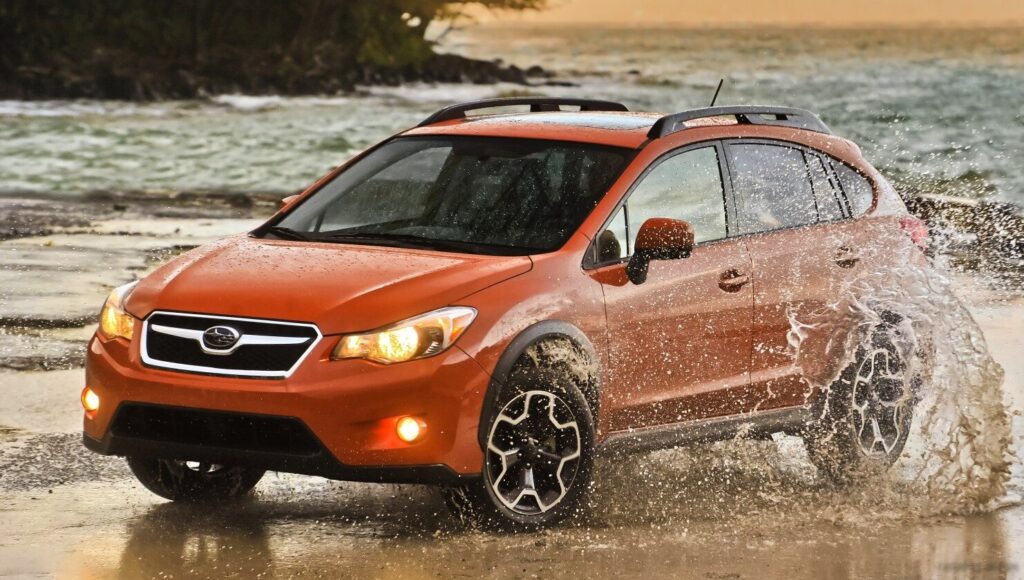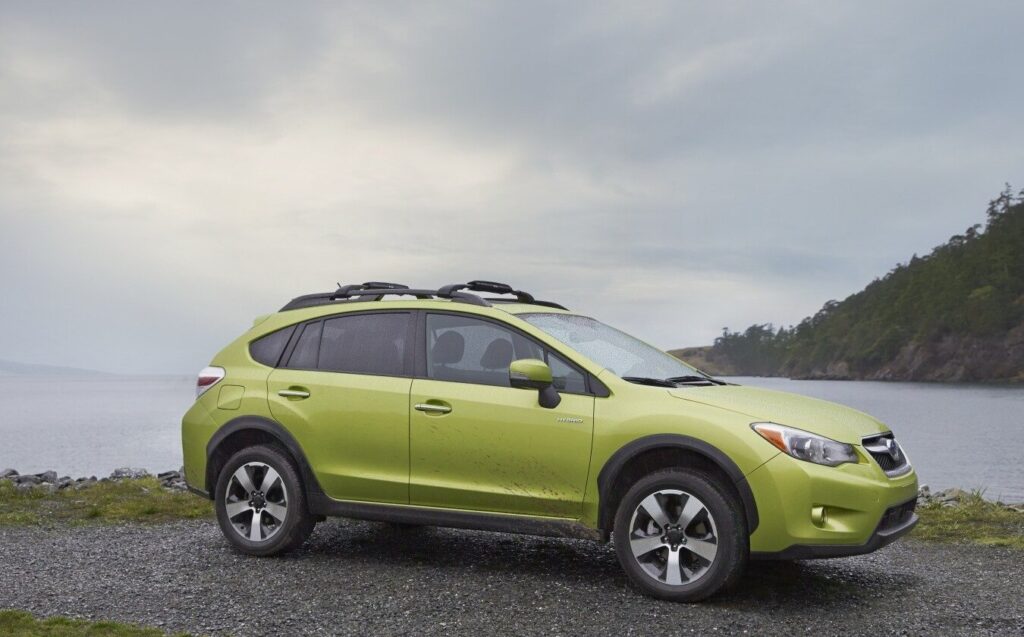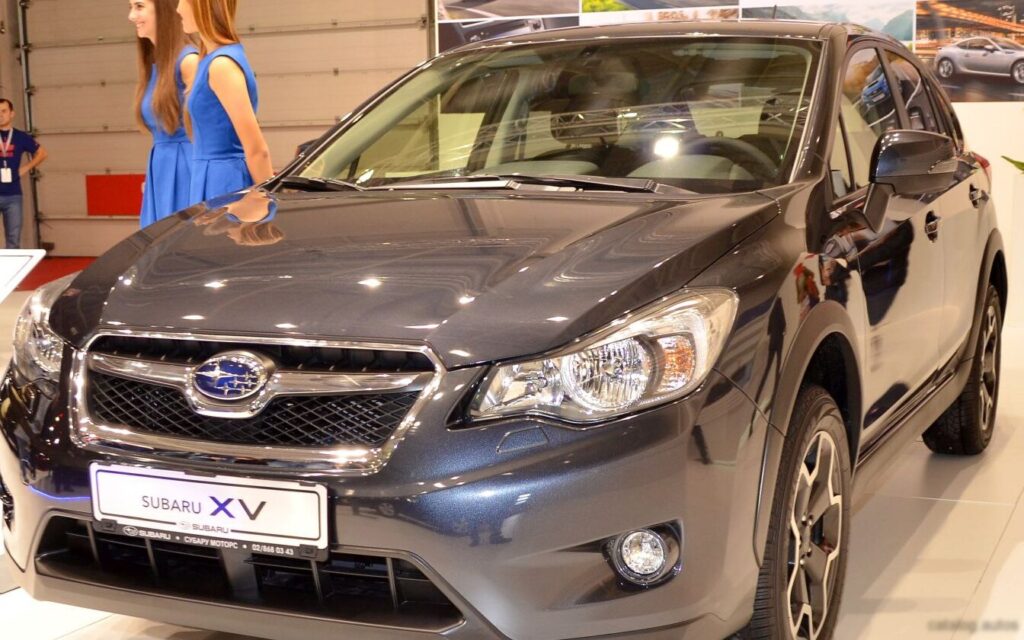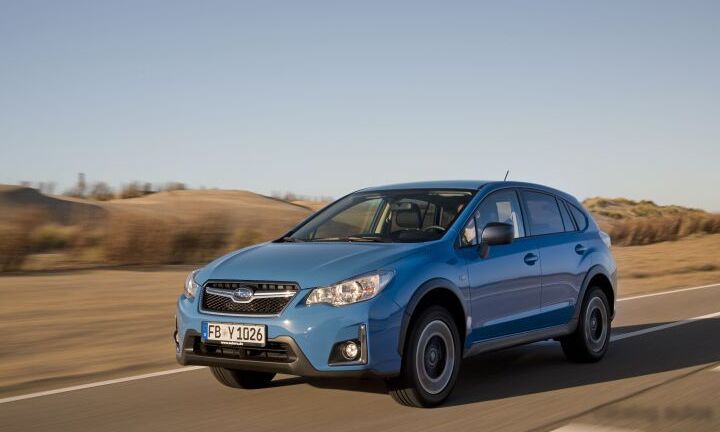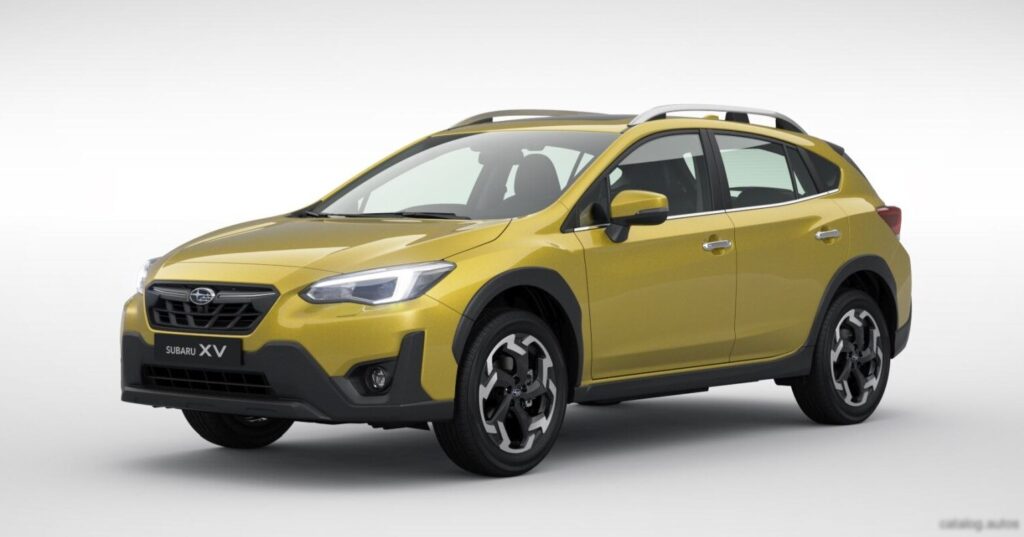
The Subaru XV II (facelift, released in January 2021) 1.6i AWD Lineartronic represents an entry-level offering within the second generation of Subaru’s compact crossover SUV, the XV. Positioned as a more accessible option in the XV lineup, this variant aimed to provide Subaru’s renowned symmetrical all-wheel drive capability and safety features at a competitive price point. It slots below the more powerful 2.0i models, targeting buyers prioritizing fuel efficiency and everyday usability over outright performance. The XV II, known as the Crosstrek in North American markets, is built on the Subaru Global Platform, offering improved rigidity and crash safety over its predecessor.
Technical Specifications
| Brand | Subaru |
| Model | XV |
| Generation | XV II (facelift 2021) |
| Type (Engine) | 1.6i (114 Hp) AWD Lineartronic |
| Start of production | January, 2021 |
| Powertrain Architecture | Internal Combustion engine |
| Body type | SUV |
| Seats | 5 |
| Doors | 5 |
| Fuel consumption (urban) | 8.2 l/100 km (28.7 US mpg, 34.4 UK mpg, 12.2 km/l) |
| Fuel consumption (extra urban) | 6.1 l/100 km (38.6 US mpg, 46.3 UK mpg, 16.4 km/l) |
| Fuel consumption (combined) | 6.9 l/100 km (34.1 US mpg, 40.9 UK mpg, 14.5 km/l) |
| CO2 emissions | 157 g/km |
| Fuel Type | Petrol (Gasoline) |
| Acceleration 0 – 100 km/h | 13.9 sec |
| Acceleration 0 – 62 mph | 13.9 sec |
| Acceleration 0 – 60 mph | 13.2 sec |
| Maximum speed | 175 km/h (108.74 mph) |
| Emission standard | Euro 6d-ISC-FCM |
| Weight-to-power ratio | 12.4 kg/Hp, 81 Hp/tonne |
| Weight-to-torque ratio | 9.4 kg/Nm, 106.5 Nm/tonne |
| Power | 114 Hp @ 6200 rpm |
| Torque | 150 Nm @ 3600 rpm (110.63 lb.-ft. @ 3600 rpm) |
| Engine layout | Front, Longitudinal |
| Engine Model/Code | FB16 |
| Engine displacement | 1600 cm3 (97.64 cu. in.) |
| Number of cylinders | 4 |
| Engine configuration | Boxer |
| Cylinder Bore | 78.8 mm (3.1 in.) |
| Piston Stroke | 82 mm (3.23 in.) |
| Compression ratio | 11:1 |
| Number of valves per cylinder | 4 |
| Fuel injection system | Multi-port manifold injection |
| Engine aspiration | Naturally aspirated engine |
| Engine oil capacity | 4.4 l (4.65 US qt | 3.87 UK qt) |
| Kerb Weight | 1408-1429 kg (3104.11 – 3150.41 lbs.) |
| Max. weight | 1940 kg (4276.97 lbs.) |
| Max load | 511-532 kg (1126.56 – 1172.86 lbs.) |
| Trunk (boot) space (minimum) | 385 l (13.6 cu. ft.) |
| Fuel tank capacity | 63 l (16.64 US gal | 13.86 UK gal) |
| Max. roof load | 80 kg (176.37 lbs.) |
| Permitted trailer load (with brakes) | 1400 kg (3086.47 lbs.) |
| Permitted trailer load (without brakes) | 750 kg (1653.47 lbs.) |
| Permitted towbar download | 80 kg (176.37 lbs.) |
| Length | 4485 mm (176.57 in.) |
| Width | 1800 mm (70.87 in.) |
| Width including mirrors | 2008-2019 mm (79.06 – 79.49 in.) |
| Height | 1595-1615 mm (62.8 – 63.58 in.) |
| Wheelbase | 2665 mm (104.92 in.) |
| Front track | 1550 mm (61.02 in.) |
| Rear track | 1555 mm (61.22 in.) |
| Ride height (ground clearance) | 220 mm (8.66 in.) |
| Minimum turning circle | 11.6 m (38.06 ft.) |
| Approach angle | 19.5° |
| Departure angle | 30.3° |
| Ramp-over angle | 21.7° |
| Drivetrain Architecture | All wheel drive (4×4). ICE drives all four wheels permanently. |
| Number of gears and type of gearbox | automatic transmission Lineartronic |
| Front brakes | Ventilated discs |
| Rear brakes | Ventilated discs |
| Assisting systems | ABS (Anti-lock braking system) |
| Steering type | Steering rack and pinion |
| Power steering | Electric Steering |
| Tires size | 225/60 R17 |
| Wheel rims size | 7J x 17 |
INTRODUCTION
The Subaru XV II 1.6i Lineartronic, introduced with the 2021 facelift, is a five-door compact SUV designed to appeal to buyers seeking a practical, safe, and fuel-efficient vehicle. It builds upon the foundation of the first-generation XV, offering a more refined driving experience and updated styling. This variant utilizes a naturally aspirated 1.6-liter boxer engine paired with a continuously variable transmission (CVT), marketed as Lineartronic by Subaru. The XV II is a key model for Subaru in markets outside of North America, where it competes with vehicles like the Nissan Qashqai, Kia Sportage, and Hyundai Tucson.
Powertrain & Engine Architecture
At the heart of the XV II 1.6i is the FB16 1.6-liter horizontally-opposed (boxer) four-cylinder engine. This engine is known for its smooth operation and relatively compact size. The FB16 utilizes multi-point fuel injection and features dual overhead camshafts with four valves per cylinder. The engine produces 114 horsepower at 6,200 rpm and 150 Nm (110.63 lb-ft) of torque at 3,600 rpm. The Lineartronic CVT is a key component of this variant, offering stepless gear ratios for optimized fuel efficiency and smooth acceleration. Unlike traditional automatic transmissions, CVTs don’t have fixed gears, instead using a belt and pulley system to provide a continuous range of ratios. The Lineartronic transmission in the XV II is programmed with simulated shift points to mimic the feel of a conventional automatic, enhancing the driving experience for those unfamiliar with CVT technology. The engine code FB16 is a common Subaru engine, known for its reliability when properly maintained.
Driving Characteristics
The 1.6i Lineartronic variant of the XV II delivers a comfortable and predictable driving experience. Acceleration is adequate for everyday driving, but it’s not particularly brisk. The 0-60 mph time of around 13.2 seconds reflects this. The Lineartronic CVT prioritizes fuel efficiency, and while it can simulate gear changes, it lacks the responsiveness of a traditional automatic or manual transmission. Under hard acceleration, the CVT can exhibit a “rubber band” effect, where engine revs climb without a corresponding increase in speed. However, in normal driving conditions, the CVT operates smoothly and efficiently. The symmetrical all-wheel drive system provides excellent traction in various weather conditions, making the XV II a capable vehicle for all-season use. The relatively soft suspension setup prioritizes ride comfort over sporty handling.
Equipment & Trim Levels
The 1.6i Lineartronic trim typically includes standard features such as automatic climate control, a touchscreen infotainment system with Apple CarPlay and Android Auto compatibility, and Subaru’s EyeSight driver-assist technology. EyeSight includes features like adaptive cruise control, lane departure warning, and automatic emergency braking. Interior upholstery is typically cloth, with options for leather upgrades on higher trims. Available optional extras included a sunroof, premium audio system, and power-adjustable driver’s seat. The dashboard layout is functional and straightforward, with a focus on ease of use. The XV II prioritizes practicality and functionality over luxurious appointments.
Chassis & Braking
The Subaru XV II utilizes a MacPherson strut front suspension and a double-wishbone rear suspension. This setup provides a good balance of ride comfort and handling. The XV II 1.6i is equipped with ventilated disc brakes on all four wheels, providing adequate stopping power. Anti-lock braking system (ABS) is standard, along with electronic brakeforce distribution (EBD). The vehicle’s relatively lightweight construction (1408-1429 kg) contributes to its manageable handling characteristics. Stabilizer bars are fitted to both the front and rear axles to reduce body roll during cornering.
Market Reception & Comparison
The Subaru XV II 1.6i Lineartronic was generally well-received by automotive critics as a practical and fuel-efficient crossover. However, some reviewers noted its lack of outright performance compared to the 2.0i models. Fuel economy figures of around 34.1 US mpg combined were considered competitive for its class. Compared to the 2.0i variants, the 1.6i offered a lower price point but sacrificed some performance. The 2.0i models provided a more engaging driving experience, but at the cost of increased fuel consumption. Reliability reports generally indicate that the FB16 engine and Lineartronic CVT are relatively reliable when properly maintained, although CVT fluid changes are crucial for longevity.
Legacy
The Subaru XV II 1.6i Lineartronic represents a solid entry point into the Subaru lineup, offering a blend of practicality, safety, and fuel efficiency. While not the most exciting vehicle to drive, it provides a comfortable and capable all-weather driving experience. On the used car market, these models are generally considered a good value, offering Subaru’s renowned reliability and all-wheel drive capability at an affordable price. Regular maintenance, particularly CVT fluid changes, is essential to ensure the long-term health of the powertrain. The XV II continues to be a popular choice for buyers seeking a compact crossover that can handle a variety of driving conditions.