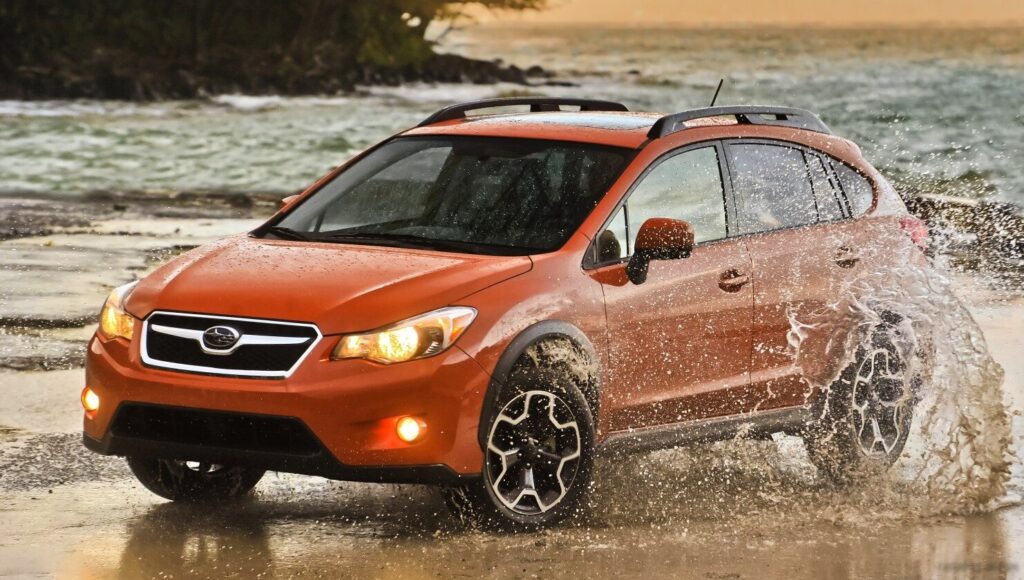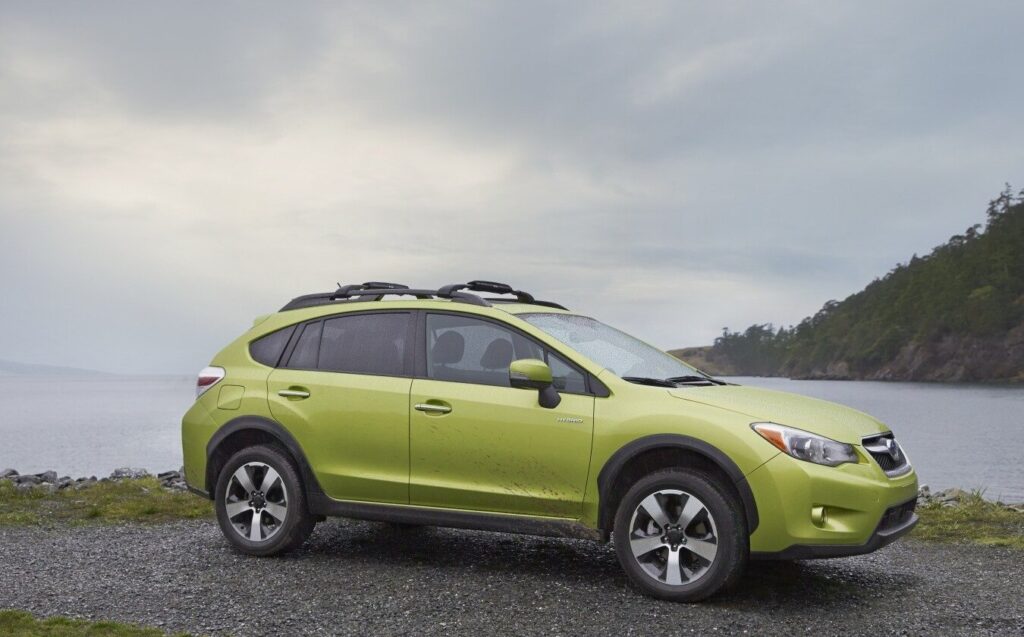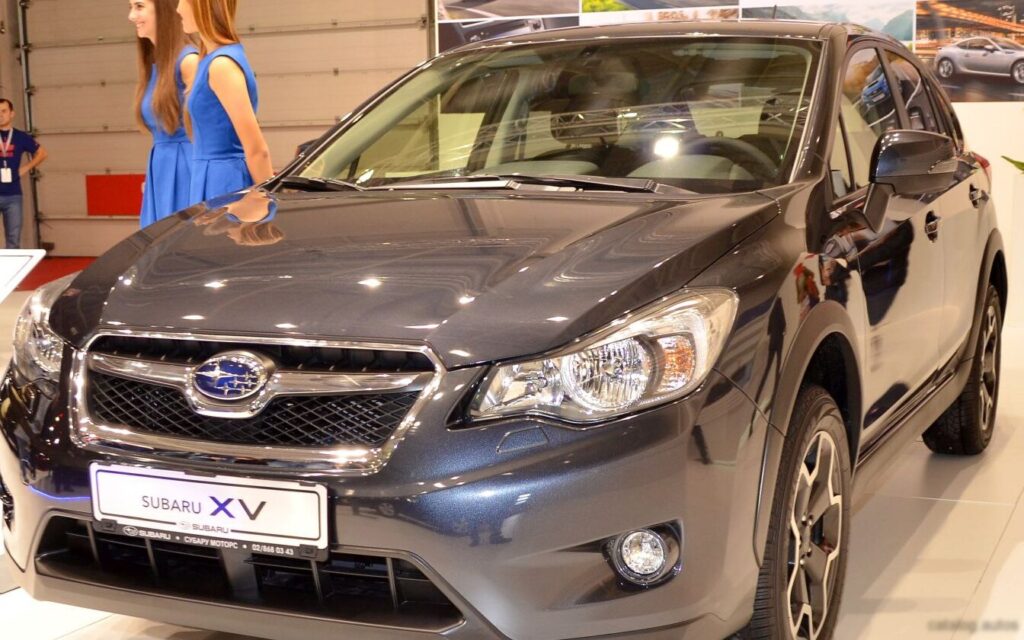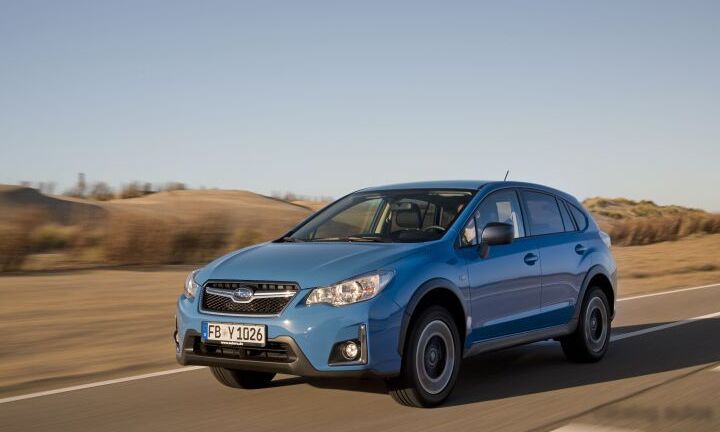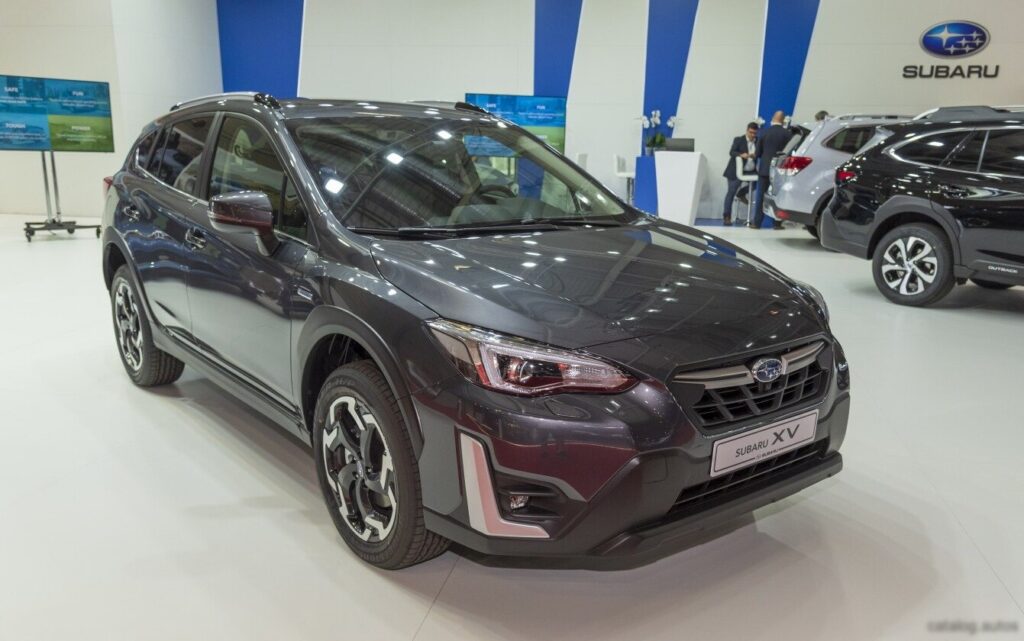
The Subaru XV II (facelift 2021) 2.0ie e-Boxer, producing 150 horsepower, represents a significant iteration of Subaru’s compact SUV, positioned as a key model in the brand’s lineup, particularly in markets outside of North America where it was sold as the Subaru Crosstrek. Introduced in January 2021, this facelift built upon the second-generation XV (introduced in 2017), incorporating Subaru’s EyeSight driver-assist technology as standard and refining the vehicle’s aesthetics and mild-hybrid powertrain. The “e-Boxer” designation signifies Subaru’s mild hybrid electric vehicle system, designed to enhance fuel efficiency and provide a small boost to performance. This variant, equipped with the Lineartronic continuously variable transmission (CVT) and symmetrical all-wheel drive, aimed to balance practicality, fuel economy, and Subaru’s renowned all-weather capability.
Technical Specifications
| Brand | Subaru |
| Model | XV |
| Generation | XV II (facelift 2021) |
| Type (Engine) | 2.0ie e-Boxer (150 Hp) AWD Lineartronic |
| Start of production | January, 2021 |
| Powertrain Architecture | MHEV (Mild Hybrid Electric Vehicle) |
| Body type | SUV |
| Seats | 5 |
| Doors | 5 |
| Fuel consumption (urban) | 7.3 l/100 km (32.2 US mpg) |
| Fuel consumption (extra urban) | 6.1 l/100 km (38.6 US mpg) |
| Fuel consumption (combined) | 6.5 l/100 km (36.2 US mpg) |
| CO2 emissions | 149 g/km |
| Fuel Type | Petrol (Gasoline) |
| Acceleration 0 – 100 km/h | 10.7 sec |
| Acceleration 0 – 62 mph | 10.7 sec |
| Acceleration 0 – 60 mph | 10.2 sec |
| Maximum speed | 193 km/h (119.92 mph) |
| Emission standard | Euro 6d-ISC-FCM |
| Weight-to-power ratio | 10.4 kg/Hp |
| Weight-to-torque ratio | 8 kg/Nm |
| Electric motor power | 17 Hp |
| Electric motor Torque | 66 Nm (48.68 lb.-ft.) |
| Engine Power | 150 Hp @ 5600-6000 rpm |
| Engine Torque | 194 Nm @ 4000 rpm (143.09 lb.-ft. @ 4000 rpm) |
| Engine layout | Front, Longitudinal |
| Engine Model/Code | FB20 |
| Engine displacement | 1995 cm3 (121.74 cu. in.) |
| Number of cylinders | 4 |
| Engine configuration | Boxer |
| Cylinder Bore | 84 mm (3.31 in.) |
| Piston Stroke | 90 mm (3.54 in.) |
| Compression ratio | 12.5:1 |
| Number of valves per cylinder | 4 |
| Fuel injection system | Direct injection |
| Engine oil capacity | 4.2 l (4.44 US qt | 3.7 UK qt) |
| Kerb Weight | 1554-1575 kg (3425.98 – 3472.28 lbs.) |
| Max. weight | 2070 kg (4563.57 lbs.) |
| Max load | 495-516 kg (1091.29 – 1137.59 lbs.) |
| Trunk (boot) space (minimum) | 340 l (12.01 cu. ft.) |
| Fuel tank capacity | 48 l (12.68 US gal | 10.56 UK gal) |
| Max. roof load | 80 kg (176.37 lbs.) |
| Permitted trailer load (brakes 8%) | 1400 kg (3086.47 lbs.) |
| Permitted trailer load (brakes 12%) | 1270 kg (2799.87 lbs.) |
| Permitted trailer load (no brakes) | 750 kg (1653.47 lbs.) |
| Permitted towbar download | 80 kg (176.37 lbs.) |
| Length | 4485 mm (176.57 in.) |
| Width | 1800 mm (70.87 in.) |
| Width including mirrors | 2019 mm (79.49 in.) |
| Height | 1595 mm (62.8 in.) |
| Wheelbase | 2665 mm (104.92 in.) |
| Front track | 1550 mm (61.02 in.) |
| Rear track | 1555 mm (61.22 in.) |
| Ride height (ground clearance) | 220 mm (8.66 in.) |
| Minimum turning circle | 11.6 m (38.06 ft.) |
| Front brakes | Ventilated discs |
| Rear brakes | Ventilated discs |
| Gearbox | automatic transmission Lineartronic |
INTRODUCTION
The 2021 Subaru XV II 2.0ie e-Boxer represents a mid-cycle refresh of the second-generation XV, a model initially launched in 2017. Positioned as a subcompact crossover SUV, the XV (marketed as the Crosstrek in North America) aimed to bridge the gap between traditional hatchbacks and larger SUVs, offering a blend of practicality, fuel efficiency, and Subaru’s signature symmetrical all-wheel drive. The facelift introduced in 2021 focused on refining the existing formula, with updates to the exterior styling, interior technology, and the powertrain. The 2.0ie e-Boxer variant, with its 150 horsepower output and Lineartronic CVT, served as a mainstream offering within the XV range, appealing to buyers seeking a balance between performance and economy. It sat in the middle of the lineup, offering more power than the base 1.6i models but less than potential higher-spec turbocharged options available in some markets.
Powertrain & Engine Architecture
At the heart of the XV II 2.0ie e-Boxer lies the FB20 2.0-liter horizontally-opposed (Boxer) four-cylinder engine. This engine is a key component of Subaru’s powertrain strategy, known for its compact design and inherent balance, reducing vibrations. The “e-Boxer” designation indicates the integration of a mild-hybrid system. This system utilizes a 17 horsepower electric motor integrated into the Lineartronic CVT, providing assistance during acceleration and enabling a start-stop system for improved fuel economy. The FB20 engine employs direct fuel injection, optimizing combustion efficiency and power delivery. The Lineartronic CVT, while offering smooth and stepless gear changes, is programmed to simulate traditional gear shifts to provide a more familiar driving experience. The engine’s valvetrain features dual overhead camshafts (DOHC) and four valves per cylinder, contributing to its responsive nature. The mild-hybrid system doesn’t allow for pure electric driving, but it does recapture energy during braking, storing it in a small battery to assist the engine when needed.
Driving Characteristics
The 150 hp 2.0ie e-Boxer with the Lineartronic CVT delivers adequate, though not exhilarating, performance. Acceleration from 0-60 mph takes around 10.2 seconds, making it competitive within its class but noticeably slower than versions equipped with more powerful engines or manual transmissions. The CVT prioritizes fuel efficiency, and while it offers smooth acceleration, it can sometimes feel less engaging than a traditional automatic or manual gearbox. The symmetrical all-wheel drive system provides excellent traction in various conditions, making the XV a capable vehicle on slippery surfaces. The electric motor assist provides a subtle boost during initial acceleration, helping to mitigate some of the CVT’s inherent lag. The gear ratios are optimized for fuel economy, resulting in a comfortable cruising experience but potentially requiring more aggressive throttle inputs for overtaking maneuvers. Compared to manual transmission versions, the CVT prioritizes smoothness and ease of use over outright performance.
Equipment & Trim Levels
The XV II 2.0ie e-Boxer typically came well-equipped, reflecting its position as a mainstream trim level. Standard features generally included Subaru’s EyeSight driver-assist system (including adaptive cruise control, lane departure warning, and automatic emergency braking), a touchscreen infotainment system with Apple CarPlay and Android Auto compatibility, automatic climate control, and power windows and locks. Interior upholstery was typically cloth, with options for leather upgrades available. Higher trim levels added features such as a sunroof, premium audio system, and heated front seats. The exterior styling featured distinctive cladding, roof rails, and alloy wheels. Optional extras often included a rear-view camera, parking sensors, and various accessory packages.
Chassis & Braking
The XV II utilizes a MacPherson strut front suspension and a double-wishbone rear suspension, providing a comfortable ride and predictable handling. The suspension is tuned to prioritize comfort over sporty handling, making it well-suited for everyday driving. Braking duties are handled by ventilated discs on all four wheels, providing ample stopping power. The ABS (Anti-lock Braking System) and electronic brake-force distribution (EBD) enhance safety and stability during braking. The vehicle’s relatively lightweight construction (around 1554-1575 kg) contributes to its nimble handling. Stabilizer bars are fitted to both the front and rear axles to reduce body roll during cornering.
Market Reception & Comparison
The Subaru XV II 2.0ie e-Boxer was generally well-received by automotive critics, who praised its fuel efficiency, standard safety features, and all-weather capability. However, some reviewers noted the CVT’s lack of engagement and the engine’s modest power output. Compared to other trims in the XV lineup, the 2.0ie e-Boxer offered a good balance between price, performance, and fuel economy. It was a popular choice for buyers who prioritized practicality and efficiency over outright performance. Compared to competitors like the Honda HR-V and Mazda CX-3, the XV stood out with its standard all-wheel drive and robust safety features.
Legacy
The FB20 engine, in its various iterations, has proven to be a reliable and durable powerplant. The Lineartronic CVT, while sometimes criticized for its driving feel, has also demonstrated good long-term reliability. The XV II 2.0ie e-Boxer, as a whole, has maintained a solid reputation in the used car market, appealing to buyers seeking a practical, fuel-efficient, and safe compact SUV. Its symmetrical all-wheel drive system continues to be a major selling point, particularly in regions with inclement weather. While not a performance standout, the XV II 2.0ie e-Boxer represents a well-rounded and dependable vehicle that has earned a loyal following.