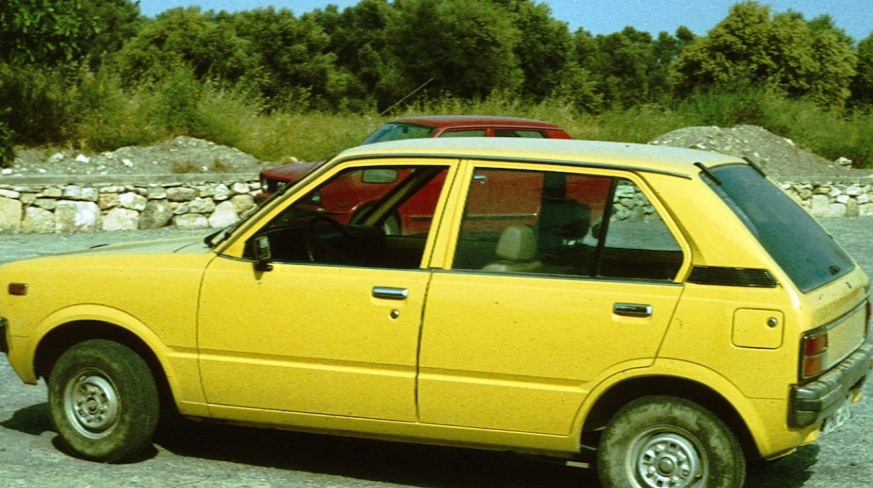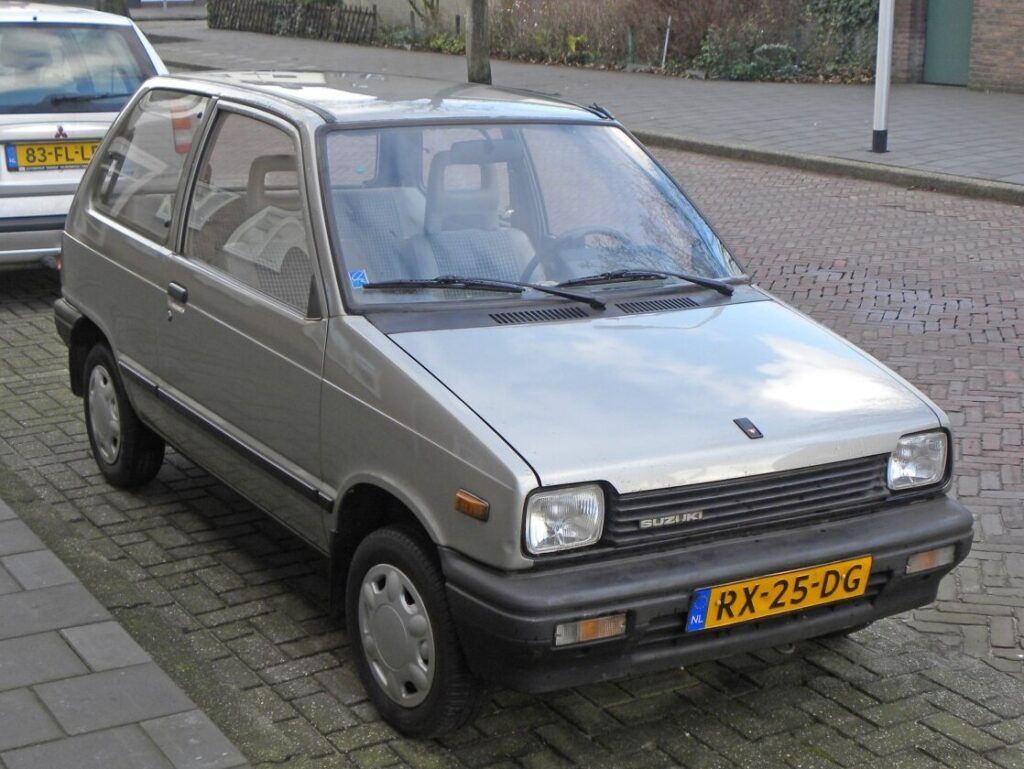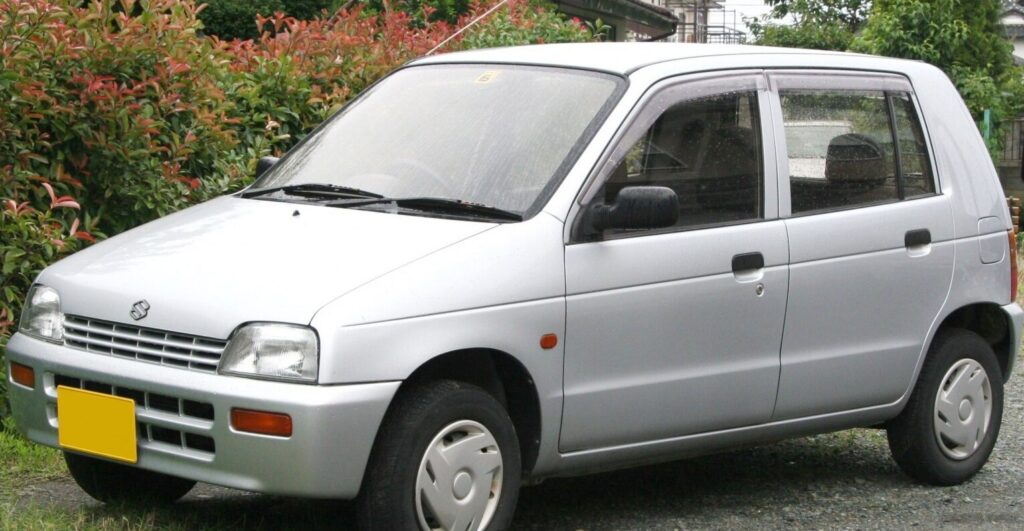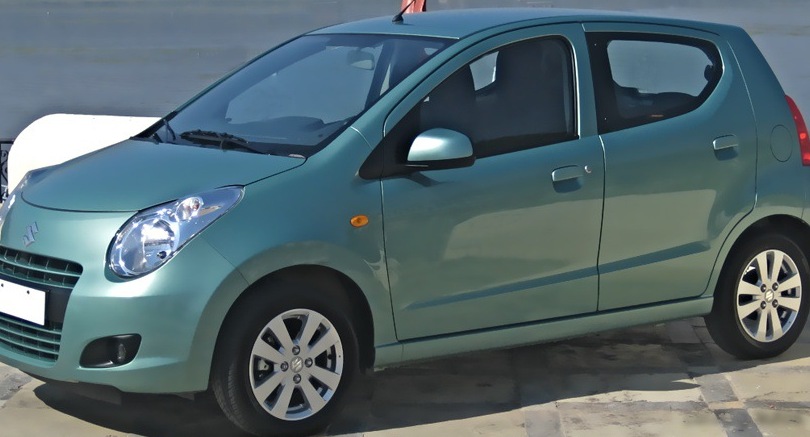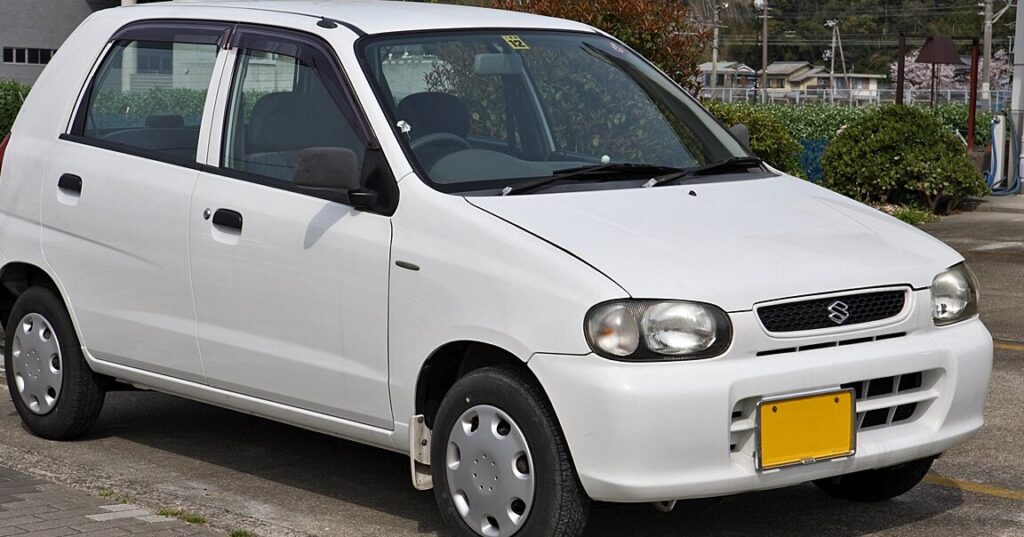
The Suzuki Alto V 1.1 i 16V D, producing 62 horsepower, was a popular subcompact hatchback manufactured between 2001 and 2004. Part of the sixth generation of the Alto (internally designated as the HA23 series), this variant was primarily aimed at the European and Asian markets, offering an affordable and economical mode of transportation. It occupied the entry-level position within the Alto V range, positioned below higher-specification models with larger engines or additional features. The “D” designation typically indicated a specific trim level focused on practicality and value.
Technical Specifications
| Brand | Suzuki |
| Model | Alto |
| Generation | Alto V |
| Type (Engine) | 1.1 i 16V D (62 Hp) |
| Start of production | 2001 |
| End of production | 2004 |
| Powertrain Architecture | Internal Combustion engine |
| Body type | Hatchback |
| Seats | 4 |
| Doors | 5 |
| Fuel consumption (urban) | 6.5 l/100 km (36.2 US mpg, 43.5 UK mpg, 15.4 km/l) |
| Fuel consumption (extra urban) | 4 l/100 km (58.8 US mpg, 70.6 UK mpg, 25 km/l) |
| Fuel consumption (combined) | 4.9 l/100 km (48 US mpg, 57.6 UK mpg, 20.4 km/l) |
| CO2 emissions | 119 g/km |
| Fuel Type | Petrol (Gasoline) |
| Maximum speed | 155 km/h (96.31 mph) |
| Weight-to-power ratio | 13 kg/Hp, 77 Hp/tonne |
| Weight-to-torque ratio | 9.5 kg/Nm, 105.6 Nm/tonne |
| Power | 62 Hp @ 6000 rpm |
| Power per litre | 58.4 Hp/l |
| Torque | 85 Nm @ 3200 rpm (62.69 lb.-ft. @ 3200 rpm) |
| Engine layout | Front, Transverse |
| Engine Model/Code | F10D |
| Engine displacement | 1061 cm3 (64.75 cu. in.) |
| Number of cylinders | 4 |
| Engine configuration | Inline |
| Cylinder Bore | 68.5 mm (2.7 in.) |
| Piston Stroke | 72 mm (2.83 in.) |
| Compression ratio | 10:1 |
| Number of valves per cylinder | 4 |
| Fuel injection system | Multi-port manifold injection |
| Engine aspiration | Naturally aspirated engine |
| Valvetrain | SOHC |
| Engine oil capacity | 4 l (4.23 US qt | 3.52 UK qt) |
| Coolant | 3.5 l (3.7 US qt | 3.08 UK qt) |
| Kerb Weight | 805 kg (1774.72 lbs.) |
| Max. weight | 1165 kg (2568.39 lbs.) |
| Max load | 360 kg (793.66 lbs.) |
| Trunk (boot) space – minimum | 177 l (6.25 cu. ft.) |
| Trunk (boot) space – maximum | 725 l (25.6 cu. ft.) |
| Fuel tank capacity | 35 l (9.25 US gal | 7.7 UK gal) |
| Length | 3495 mm (137.6 in.) |
| Width | 1475 mm (58.07 in.) |
| Height | 1455 mm (57.28 in.) |
| Wheelbase | 2360 mm (92.91 in.) |
| Front track | 1295 mm (50.98 in.) |
| Rear (Back) track | 1290 mm (50.79 in.) |
| Minimum turning circle | 9.2 m (30.18 ft.) |
| Drivetrain Architecture | The Internal combustion engine (ICE) drives the front wheels of the vehicle. |
| Drive wheel | Front wheel drive |
| Number of gears and type of gearbox | 5 gears, manual transmission |
| Front suspension | Coil spring, Independent type McPherson |
| Rear suspension | Trailing arm, Coil spring |
| Front brakes | Ventilated discs |
| Rear brakes | Drum |
| Assisting systems | ABS (Anti-lock braking system) |
| Steering type | Steering rack and pinion |
| Power steering | Hydraulic Steering |
| Tires size | 155/65 R13 |
| Wheel rims size | 13 |
INTRODUCTION
The Suzuki Alto V 1.1 i 16V D, produced from 2001 to 2004, represented a key offering in Suzuki’s popular Alto range. This generation, known internally as the HA23 series, was designed to meet the demands of the European and Asian city car market. The Alto V, in general, was a facelift of the earlier HA22 series, bringing with it updated styling and minor mechanical improvements. The 1.1-liter engine and “D” trim level signified a focus on fuel efficiency and affordability, making it a practical choice for first-time car buyers, commuters, and those seeking a low-cost vehicle.
Powertrain & Engine Architecture
At the heart of the Alto V 1.1 i 16V D lies the F10D engine, a 1.1-liter (1061cc) inline-four cylinder petrol engine. This engine featured a single overhead camshaft (SOHC) valvetrain and utilized a multi-point fuel injection system. The 16-valve configuration, while not delivering substantial power, contributed to improved breathing and a slightly broader powerband compared to earlier 8-valve versions. The engine produced 62 horsepower at 6000 rpm and 85 Nm (62.69 lb-ft) of torque at 3200 rpm. The engine was transversely mounted, driving the front wheels. The transmission was a standard five-speed manual gearbox, chosen for its simplicity and contribution to fuel economy. The F10D engine, while relatively simple in design, was known for its reliability and ease of maintenance.
Driving Characteristics
The 1.1-liter engine, paired with the five-speed manual transmission, provided adequate, though not exhilarating, performance. Acceleration was modest, particularly when fully loaded, and overtaking required careful planning. The gear ratios were tuned for economy, with a relatively tall final drive. This meant that the engine didn’t feel strained at highway speeds, but it also meant that extracting maximum performance required frequent gear changes. Compared to potential higher-output variants (which weren’t commonly available in this generation Alto in many markets), the 1.1-liter engine offered a smoother, more relaxed driving experience, prioritizing fuel efficiency over outright speed. The light weight of the vehicle (around 805 kg) helped to mitigate the lack of power, making it feel nimble in urban environments.
Equipment & Trim Levels
The “D” trim level of the Alto V 1.1 i 16V D was characterized by its focus on essential features. Standard equipment typically included power steering, central locking, and a basic audio system. Interior upholstery was typically a durable cloth material. Optional extras, depending on the market, could include air conditioning, electric front windows, and alloy wheels. The dashboard layout was functional and straightforward, prioritizing ease of use over aesthetic flair. Safety features were relatively basic for the time, typically including a driver’s airbag and ABS (Anti-lock Braking System).
Chassis & Braking
The Alto V 1.1 i 16V D utilized a simple yet effective chassis design. Front suspension consisted of coil springs and an independent McPherson strut setup, providing a reasonable level of ride comfort. The rear suspension employed a trailing arm configuration with coil springs. Braking was handled by ventilated discs on the front wheels and drum brakes on the rear. The ABS system, standard on many models, enhanced braking performance and stability, particularly on slippery surfaces. The relatively light weight of the vehicle contributed to its manageable handling characteristics.
Market Reception & Comparison
The Suzuki Alto V 1.1 i 16V D was generally well-received by critics as an affordable and economical city car. Its fuel efficiency was a major selling point, and its compact size made it easy to maneuver in congested urban areas. Compared to other small hatchbacks of the time, such as the Fiat Panda or the Renault Twingo, the Alto offered a competitive price point and a reputation for reliability. However, it lacked the refinement and features of some of its rivals. The 1.1-liter engine was often criticized for its lack of power, particularly when compared to larger-engined versions of the Alto (though these were less common in many markets). Its simplicity and low running costs made it a popular choice for budget-conscious buyers.
Legacy
The Suzuki Alto V 1.1 i 16V D, and the HA23 generation Alto as a whole, established a strong reputation for reliability and affordability. The F10D engine, while not a powerhouse, proved to be durable and relatively easy to maintain. Today, these vehicles are often found as affordable used cars, particularly in markets where they were originally sold. While not highly sought after by collectors, well-maintained examples are appreciated for their simplicity and low running costs. The Alto V 1.1 i 16V D represents a practical and economical solution to urban transportation, and its legacy continues to endure as a dependable and affordable vehicle.