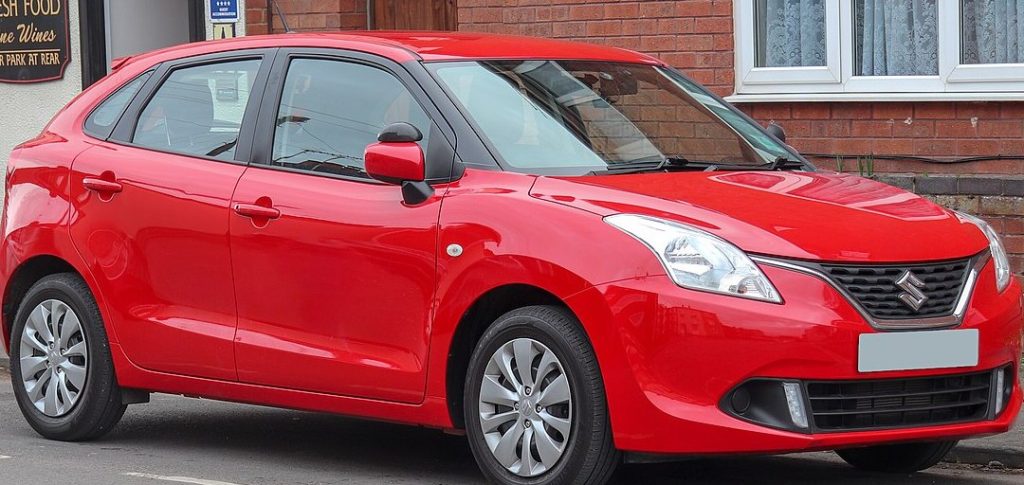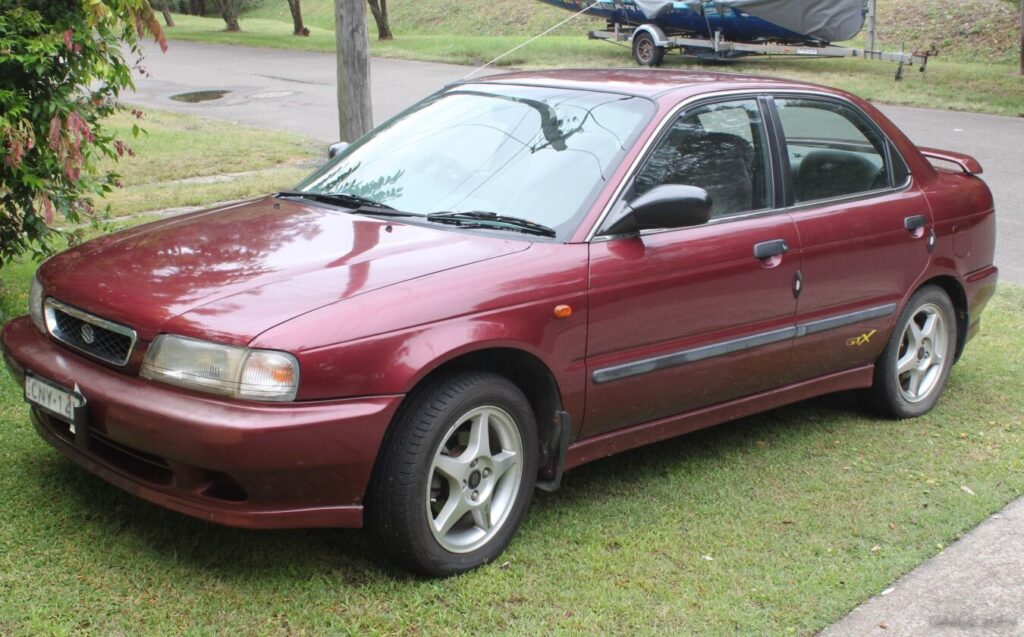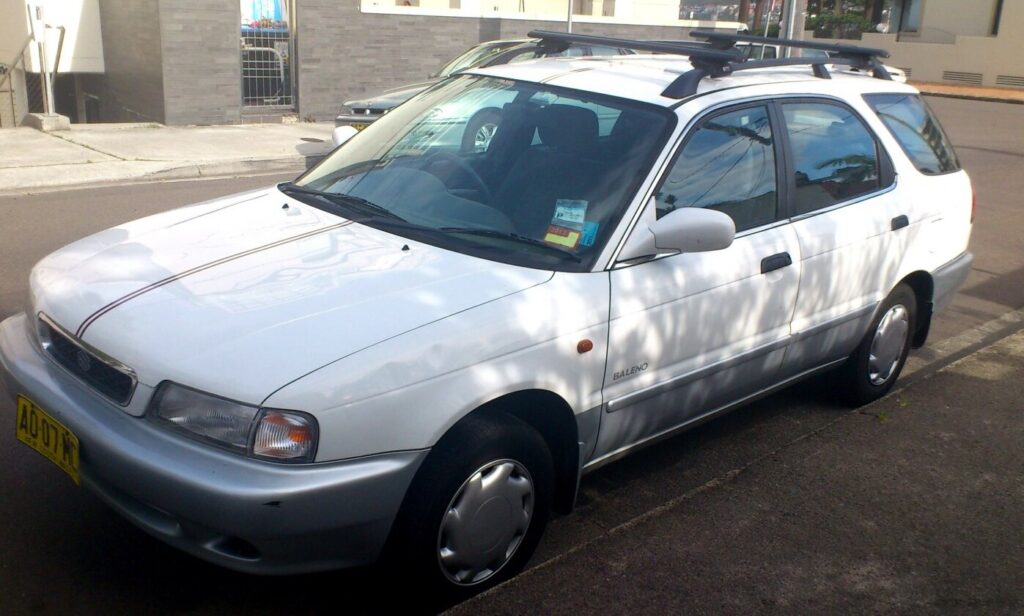
The Suzuki Baleno Combi (EG), produced between 1996 and 2000, represented Suzuki’s entry into the compact estate car market. This variant, specifically the 1.8 i 16V (121 hp) with an automatic transmission, occupied a mid-range position within the Baleno lineup, offering a balance between practicality, comfort, and reasonable performance. The EG series Baleno Combi was based on the 1HX0/A3 platform, shared with other models like the Opel/Vauxhall Astra and Isuzu Gemini, reflecting a collaborative engineering approach during its development. This station wagon body style aimed to provide increased cargo capacity and versatility compared to the standard Baleno hatchback.
The 1.8L 16V Automatic: Positioning and Market Role
The 1.8L 16V automatic variant of the Baleno Combi was designed to appeal to buyers seeking a practical family vehicle with the convenience of an automatic gearbox. It sat above the base 1.6L models in terms of performance and equipment, but below the more sporting (and often unavailable in the Combi body style) higher-output versions. This trim level targeted customers who prioritized ease of driving and comfort over outright performance, making it a popular choice for families and those who frequently encountered stop-and-go traffic. The automatic transmission was a key selling point for this segment, offering a smoother and less demanding driving experience.
Powertrain & Engine Architecture
At the heart of the Baleno Combi 1.8 i 16V was the J18A engine, a 1.8-liter (1840 cc) inline-four cylinder gasoline engine. This engine featured a double overhead camshaft (DOHC) valvetrain with four valves per cylinder, contributing to its relatively high power output for its displacement. The J18A utilized a multi-port fuel injection system, delivering fuel directly into the intake ports for improved combustion efficiency. The engine produced 121 horsepower at 6200 rpm and 152 Nm (112.11 lb-ft) of torque at 3400 rpm. The compression ratio was set at 9.8:1. Engine oil capacity was 4.7 liters (4.97 US quarts / 4.14 UK quarts) and coolant capacity was also 4.7 liters.
The engine was mated to a four-speed automatic transmission. While not the most modern transmission by today’s standards, it provided smooth shifts and contributed to the vehicle’s ease of use. The transmission was electronically controlled, optimizing shift points based on throttle position and vehicle speed. The front-wheel-drive configuration was standard for this model.
Driving Characteristics
The 1.8L automatic Baleno Combi offered a comfortable and predictable driving experience. Acceleration from 0 to 100 km/h (0-62 mph) took approximately 10.5 seconds, and 0-60 mph was achieved in around 10 seconds. The top speed was rated at 185 km/h (114.95 mph). While not particularly sporty, the engine provided sufficient power for everyday driving and highway cruising. The automatic transmission, while convenient, did result in some power loss compared to the available manual transmission options. Gear ratios were tuned for fuel efficiency and smooth operation rather than aggressive acceleration. The power delivery was linear, with a noticeable increase in torque at higher engine speeds. Compared to the 1.6L models, the 1.8L offered a more relaxed driving experience, particularly when fully loaded with passengers and cargo.
Equipment & Trim Levels
The standard equipment level for the 1.8L automatic Baleno Combi varied depending on the specific market. However, typical features included power steering, central locking, electric front windows, and an adjustable steering column. Interior upholstery was generally cloth, with options for upgraded materials available. The dashboard layout was functional and straightforward, prioritizing usability over stylistic flair. Optional extras could include air conditioning, a radio/cassette player, alloy wheels, and a sunroof. Safety features typically included ABS (Anti-lock Braking System) as standard, enhancing braking performance and stability.
Chassis & Braking
The Baleno Combi utilized a front independent suspension with wishbone configuration, providing a comfortable ride and decent handling. The rear suspension also employed a wishbone setup. The front brakes were ventilated discs, offering good stopping power, while the rear brakes were solid discs. The steering system was a rack and pinion type with hydraulic power assistance, providing precise and responsive steering feel. The vehicle rode on 185/60 R14 H tires, offering a good balance between grip and ride comfort. The kerb weight of the vehicle was 1135 kg (2502.25 lbs), contributing to its manageable handling characteristics.
Market Reception & Comparison
The Suzuki Baleno Combi 1.8L automatic received generally positive reviews from automotive critics. It was praised for its practicality, comfortable ride, and reasonable fuel economy. Fuel consumption was rated at 10.4 l/100 km (22.6 US mpg / 27.2 UK mpg) in urban conditions and 6.4 l/100 km (36.8 US mpg / 44.1 UK mpg) on the extra-urban cycle. Compared to the 1.6L models, the 1.8L offered a noticeable improvement in performance, making it a more suitable choice for long journeys and carrying heavy loads. However, some critics noted that the automatic transmission could feel somewhat sluggish at times. Compared to rivals like the Ford Focus Estate or Vauxhall Astra Estate, the Baleno Combi offered a competitive package in terms of price, equipment, and fuel efficiency.
Technical Specifications
| Engine Model/Code | J18A |
| Engine Displacement | 1840 cm3 (112.28 cu. in.) |
| Number of Cylinders | 4, Inline |
| Cylinder Bore | 84 mm (3.31 in.) |
| Piston Stroke | 83 mm (3.27 in.) |
| Compression Ratio | 9.8:1 |
| Valves per Cylinder | 4 |
| Fuel Injection System | Multi-port manifold injection |
| Engine Aspiration | Naturally aspirated |
| Maximum Power | 121 Hp @ 6200 rpm |
| Maximum Torque | 152 Nm @ 3400 rpm (112.11 lb.-ft. @ 3400 rpm) |
| Fuel Consumption (Urban) | 10.4 l/100 km (22.6 US mpg / 27.2 UK mpg) |
| Fuel Consumption (Extra Urban) | 6.4 l/100 km (36.8 US mpg / 44.1 UK mpg) |
| Acceleration 0-100 km/h | 10.5 sec |
| Acceleration 0-62 mph | 10.5 sec |
| Maximum Speed | 185 km/h (114.95 mph) |
| Kerb Weight | 1135 kg (2502.25 lbs.) |
| Max. Weight | 1590 kg (3505.35 lbs.) |
| Trunk Space (Minimum) | 375 l (13.24 cu. ft.) |
| Trunk Space (Maximum) | 1377 l (48.63 cu. ft.) |
| Fuel Tank Capacity | 51 l (13.47 US gal / 11.22 UK gal) |
| Transmission | 4-speed Automatic |
| Drive Type | Front Wheel Drive |
Legacy
The Suzuki Baleno Combi 1.8L automatic, while not a particularly rare or collectible vehicle, has proven to be relatively reliable over the long term. The J18A engine is known for its durability, and the automatic transmission, while not cutting-edge, is generally robust. In the used car market, these vehicles are often sought after as affordable and practical family cars. Maintenance costs are generally reasonable, and parts availability is still good. However, potential buyers should be aware of the age-related issues common to vehicles of this era, such as corrosion and wear and tear on suspension components. The Baleno Combi 1.8L automatic remains a testament to Suzuki’s commitment to building practical, reliable, and affordable vehicles.