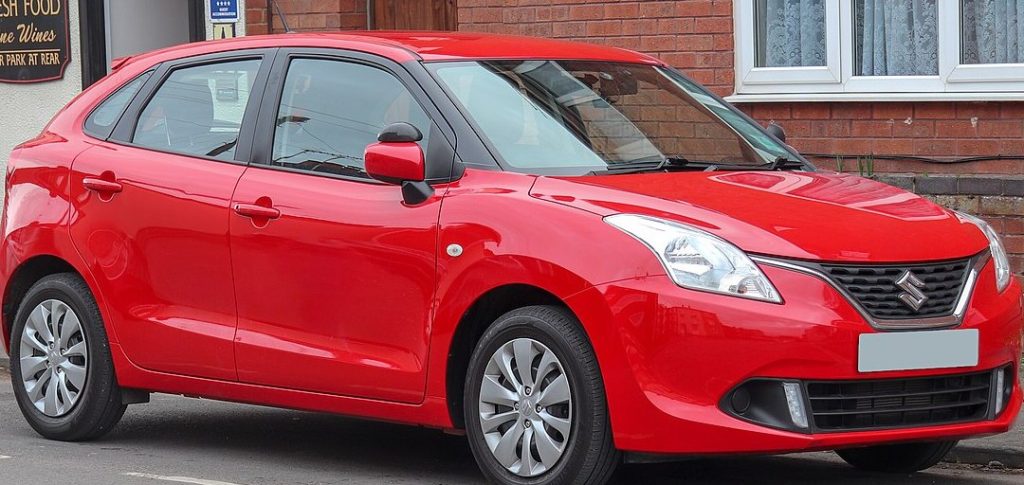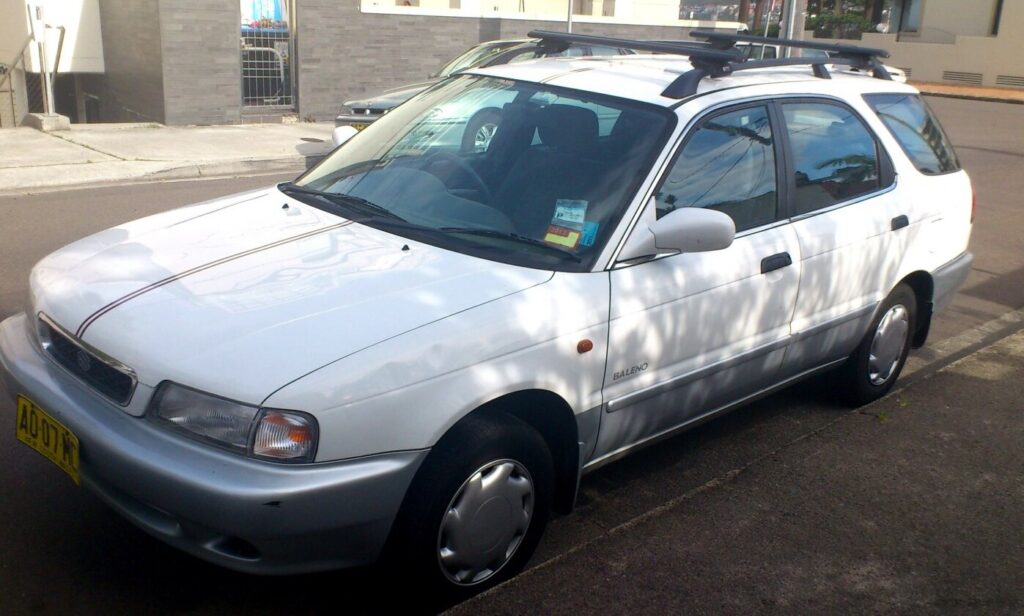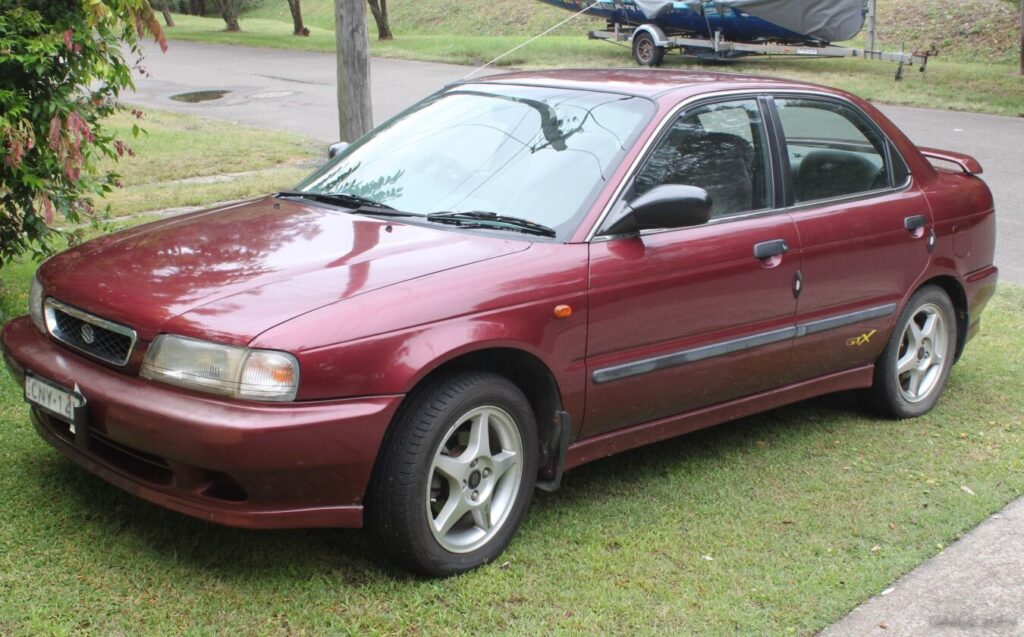
The Suzuki Baleno (EG series), launched in 1995, represented a significant step forward for Suzuki in the compact car segment. Produced from 1998 to 2002 in many markets, the 1.6 i 16V variant, boasting 101 horsepower, occupied a mid-range position within the Baleno lineup. It aimed to provide a balance between performance, fuel efficiency, and affordability, appealing to buyers seeking a practical and reliable sedan. The EG Baleno was built on Suzuki’s ‘XW’ platform, a collaborative effort with General Motors, and shared components with several other vehicles of the era.
The 1.6L 16V Baleno: A Mid-Range Offering
The 1.6 i 16V trim level was positioned as a step up from the base 1.3L models, offering increased power and a more refined driving experience. While not as sporty as potential future performance variants, it provided a noticeable improvement in acceleration and highway cruising ability. It was targeted towards families and individuals who needed a dependable vehicle for daily commuting and occasional longer trips. Compared to the more basic trims, the 1.6L version often included features like power windows, central locking, and upgraded interior trim.
Powertrain & Engine Architecture
At the heart of the 1.6 i 16V Baleno lay the G16B engine, a 1.6-liter (1590 cc) inline-four cylinder gasoline engine. This engine featured a single overhead camshaft (SOHC) valvetrain with four valves per cylinder (16V), contributing to its relatively high output for its displacement. The G16B utilized multi-port fuel injection, ensuring efficient fuel delivery and smooth operation. The engine produced 101 hp at 6000 rpm and 134 Nm (98.83 lb-ft) of torque at 3000 rpm. The compression ratio was set at 9.5:1. Engine oil capacity was 3.3 liters (3.49 US quarts), and the cooling system required 4.7 liters (4.97 US quarts) of coolant.
The Baleno 1.6 i 16V was primarily offered with a 5-speed manual transmission. While an automatic transmission was available in some markets, it was less common and often resulted in a slight performance decrease. The manual transmission provided a direct and engaging driving experience, allowing drivers to fully utilize the engine’s power band. The transmission was front-wheel drive, typical for vehicles in this class.
Driving Characteristics
The 1.6L engine provided a noticeable improvement in performance over the smaller 1.3L engine options. Acceleration was adequate for everyday driving, with the car reaching 100 km/h (62 mph) in approximately 11-12 seconds. Top speed was rated at 175 km/h (108.74 mph). The engine felt responsive in the mid-range, making overtaking maneuvers relatively easy. The 5-speed manual transmission allowed for precise gear selection, and the gear ratios were well-suited for both city and highway driving. The automatic transmission, when equipped, offered convenience but at the expense of some responsiveness and fuel economy. The car’s weight of around 920 kg (2028.25 lbs) contributed to its relatively nimble handling.
Equipment & Trim Levels
The 1.6 i 16V Baleno typically came equipped with features such as power steering, power windows, central locking, and an AM/FM radio. Higher trim levels offered options like air conditioning, alloy wheels, and a more premium interior upholstery. Interior materials were generally durable and practical, reflecting the car’s focus on value and reliability. The dashboard layout was functional and straightforward, with easy-to-read gauges. Safety features included an Anti-lock Braking System (ABS) as standard equipment on many models.
Chassis & Braking
The Baleno utilized a front independent suspension with wishbone configuration, providing a comfortable ride and decent handling characteristics. The rear suspension also employed a wishbone setup. The front brakes were ventilated discs, offering good stopping power, while the rear brakes were typically solid discs. The steering system was a rack and pinion type with hydraulic power assistance, providing precise and responsive steering feel. The car rode on 175/70 R13 tires mounted on 13-inch steel or alloy wheels. The curb weight of 920 kg (2028.25 lbs) contributed to the car’s balanced handling.
Market Reception & Comparison
The Suzuki Baleno 1.6 i 16V was generally well-received by automotive critics as a practical and reliable compact sedan. It was praised for its fuel efficiency, comfortable ride, and reasonable price. However, some critics noted that its styling was somewhat conservative and that its interior lacked the sophistication of some competitors. Compared to other vehicles in its class, such as the Toyota Corolla and Honda Civic, the Baleno offered a good value proposition, particularly in terms of standard features and fuel economy. Fuel consumption was rated at 8.6 l/100 km (27.4 US mpg) in urban conditions and 5.8 l/100 km (40.6 US mpg) on the highway.
Technical Specifications
| Brand | Suzuki |
| Model | Baleno |
| Generation | Baleno (EG, 1995) |
| Type (Engine) | 1.6 i 16V (101 Hp) |
| Start of production | 1998 year |
| End of production | 2002 year |
| Powertrain Architecture | Internal Combustion engine |
| Body type | Sedan |
| Seats | 5 |
| Doors | 4 |
| Fuel consumption (urban) | 8.6 l/100 km (27.4 US mpg) |
| Fuel consumption (extra urban) | 5.8 l/100 km (40.6 US mpg) |
| Fuel Type | Petrol (Gasoline) |
| Maximum speed | 175 km/h (108.74 mph) |
| Weight-to-power ratio | 9.1 kg/Hp |
| Weight-to-torque ratio | 6.9 kg/Nm |
| Power | 101 Hp @ 6000 rpm |
| Torque | 134 Nm @ 3000 rpm (98.83 lb.-ft. @ 3000 rpm) |
| Engine layout | Front, Transverse |
| Engine Model/Code | G16B |
| Engine displacement | 1590 cm3 (97.03 cu. in.) |
| Number of cylinders | 4 |
| Engine configuration | Inline |
| Cylinder Bore | 75 mm (2.95 in.) |
| Piston Stroke | 90 mm (3.54 in.) |
| Compression ratio | 9.5:1 |
| Number of valves per cylinder | 4 |
| Fuel injection system | Multi-port manifold injection |
| Engine aspiration | Naturally aspirated engine |
| Valvetrain | OHC |
| Engine oil capacity | 3.3 l (3.49 US qt | 2.9 UK qt) |
| Coolant | 4.7 l (4.97 US qt | 4.14 UK qt) |
| Kerb Weight | 920 kg (2028.25 lbs.) |
| Max. weight | 1355 kg (2987.26 lbs.) |
| Max load | 435 kg (959.01 lbs.) |
| Trunk (boot) space – minimum | 340 l (12.01 cu. ft.) |
| Trunk (boot) space – maximum | 840 l (29.66 cu. ft.) |
| Fuel tank capacity | 51 l (13.47 US gal | 11.22 UK gal) |
| Length | 4195 mm (165.16 in.) |
| Width | 1690 mm (66.54 in.) |
| Height | 1390 mm (54.72 in.) |
| Wheelbase | 2480 mm (97.64 in.) |
| Front track | 1440 mm (56.69 in.) |
| Rear (Back) track | 1435 mm (56.5 in.) |
| Minimum turning circle | 9.8 m (32.15 ft.) |
| Drivetrain Architecture | Front wheel drive |
| Number of gears and type of gearbox | 5 gears, manual transmission |
| Front suspension | Wishbone |
| Rear suspension | Wishbone |
| Front brakes | Ventilated discs |
| Rear brakes | Disc |
| Assisting systems | ABS (Anti-lock braking system) |
| Steering type | Steering rack and pinion |
| Power steering | Hydraulic Steering |
| Tires size | 175/70 R13 |
| Wheel rims size | 13 |
Legacy
The Suzuki Baleno 1.6 i 16V has proven to be a relatively reliable vehicle, with many examples still on the road today. The G16B engine is known for its durability and relatively low maintenance costs. Common issues include wear and tear on suspension components and occasional oil leaks. In the used car market, the Baleno 1.6 i 16V represents a budget-friendly option for those seeking a practical and dependable sedan. Its fuel efficiency and relatively simple mechanical design make it an attractive choice for first-time car buyers or those looking for a no-frills transportation solution. While it may not offer the prestige or features of more modern vehicles, its enduring reliability and affordability have cemented its place as a solid choice in the used car market.