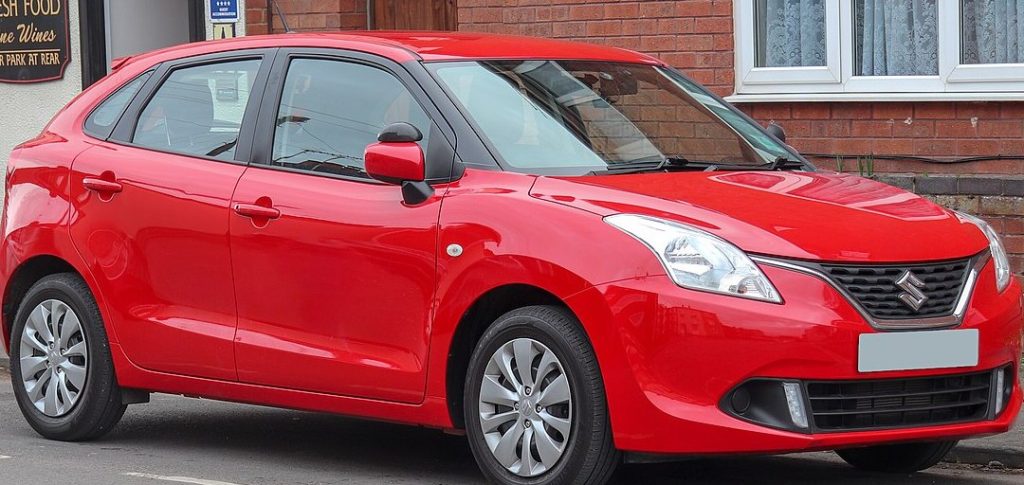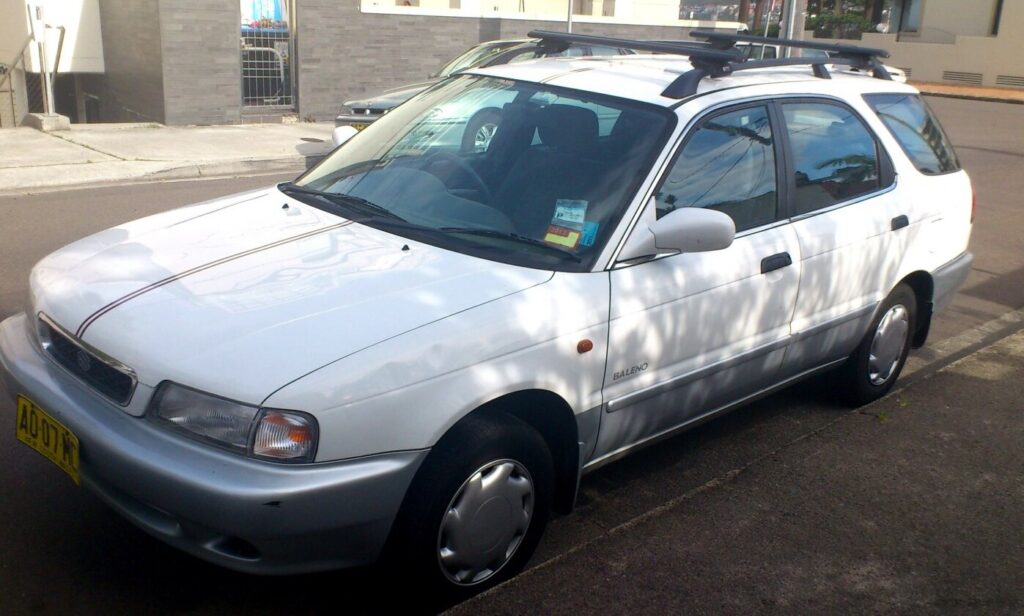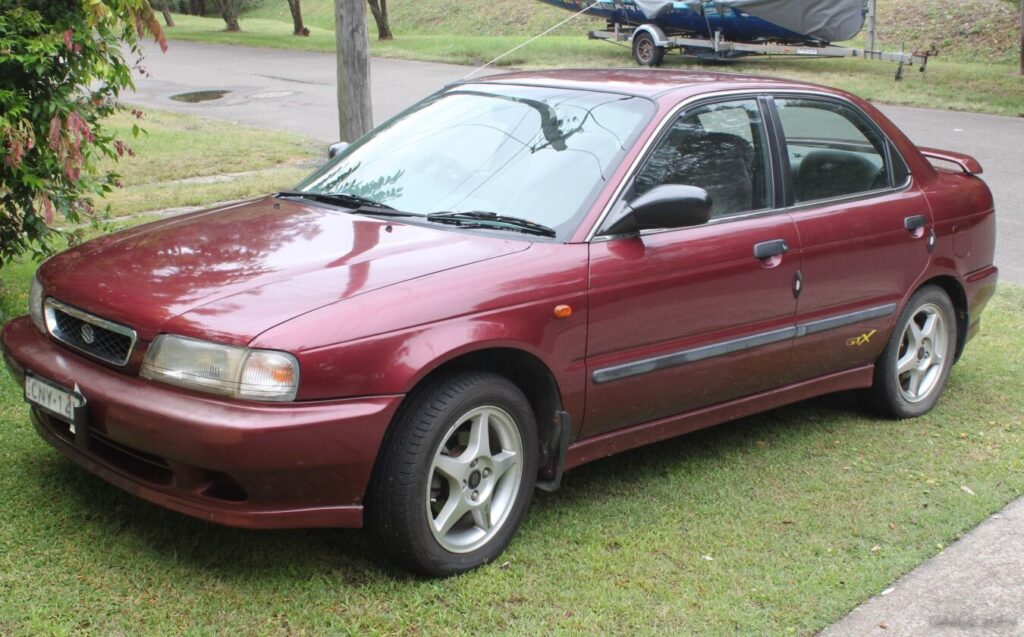
The Suzuki Baleno (EG series), launched in 1995, represented a significant step forward for Suzuki in the compact car segment. Produced from 1998 to 2002 in several markets, the 1.6 i 16V (101 hp) Automatic variant occupied a mid-range position within the Baleno lineup, offering a blend of comfort and reasonable performance. This model was part of the broader EG platform, also known as the A3 platform when shared with other manufacturers, and was available primarily as a four-door sedan. It aimed to provide a more refined experience than the base models while remaining more accessible than the sportier or higher-trim options.
The 1.6L 16V Automatic Baleno: Positioning and Overview
The 1.6L 16V Automatic Baleno was designed to appeal to buyers seeking a comfortable and practical family sedan with the convenience of an automatic transmission. It sat between the lower-spec 1.3L models and the potentially available (depending on market) higher-performance variants. The automatic transmission was a key selling point for drivers prioritizing ease of use, particularly in urban environments. While not offering the outright performance of a manual transmission or a larger engine, the 1.6L Automatic provided adequate power for everyday driving and highway cruising.
Powertrain & Engine Architecture
At the heart of the 1.6 i 16V Automatic Baleno lies the G16B engine, a 1.6-liter (1590 cm3 or 97.03 cu. in.) inline-four cylinder gasoline engine. This engine featured a single overhead camshaft (OHC) valvetrain operating 16 valves – four valves per cylinder – contributing to its relatively high power output for its displacement. The G16B utilized a multi-port fuel injection system, delivering fuel directly into the intake ports for improved combustion efficiency and responsiveness. The engine produced 101 horsepower (hp) at 6000 rpm and 134 Newton-meters (98.83 lb-ft) of torque at 3000 rpm. The compression ratio was set at 9.5:1. Engine oil capacity was 3.3 liters (3.49 US qt | 2.9 UK qt) and coolant capacity was 4.7 liters (4.97 US qt | 4.14 UK qt).
The engine was mated to a four-speed automatic transmission. While not the most modern transmission technology, it provided smooth and convenient gear changes. The transmission was designed for durability and ease of maintenance, prioritizing reliability over outright performance. Specific details regarding the automatic transmission’s internal construction are limited, but it was a conventional hydraulic automatic, relying on torque converter technology for power transfer.
Driving Characteristics
The driving experience in the 1.6L Automatic Baleno was characterized by smooth acceleration and predictable handling. The four-speed automatic transmission, while not offering the responsiveness of a manual, provided adequate performance for typical driving conditions. Acceleration from a standstill was reasonable, but not particularly brisk. The engine delivered its peak torque at 3000 rpm, providing a usable powerband for everyday driving. Highway cruising was comfortable, with the engine maintaining a steady pace without excessive strain. Compared to the manual transmission versions of the 1.6L engine, the automatic variant experienced a slight reduction in fuel economy and a minor decrease in acceleration due to the inherent inefficiencies of the torque converter and automatic gear changes. However, the convenience factor was a significant trade-off for many drivers.
Equipment & Trim Levels
The 1.6 i 16V Automatic Baleno typically came equipped with a range of standard features designed to enhance comfort and convenience. These generally included power steering, air conditioning, and a basic audio system. Interior upholstery was typically cloth, with a relatively simple dashboard layout. Depending on the specific market and optional packages, additional features could include power windows, central locking, and alloy wheels. The trim level often dictated the quality of the interior materials and the availability of features like a sunroof or upgraded audio system. The Baleno aimed for a balance between affordability and comfort, offering a reasonably well-equipped vehicle without the premium price tag of more luxurious competitors.
Chassis & Braking
The Baleno’s chassis featured a front independent suspension with wishbone configuration, providing a comfortable ride and decent handling characteristics. The rear suspension also utilized a wishbone setup. The front brakes were ventilated discs, offering good stopping power, while the rear brakes were typically discs, providing balanced braking performance. Anti-lock Braking System (ABS) was often included as standard equipment, enhancing safety by preventing wheel lockup during hard braking. The steering system employed a rack and pinion setup with hydraulic power assistance, providing precise and responsive steering feel. Tires were typically 175/70 R13, mounted on 13-inch steel or alloy wheels.
Market Reception & Comparison
The Suzuki Baleno 1.6 i 16V Automatic received generally positive reviews from automotive critics. It was praised for its comfortable ride, spacious interior, and reasonable fuel economy. However, some critics noted that the engine lacked significant power, particularly when compared to competitors with larger displacement engines. The automatic transmission was generally well-received for its smoothness, but some reviewers pointed out its lack of sportiness. In terms of fuel economy, the 1.6L Automatic Baleno achieved approximately 9.7 l/100 km (24.2 US mpg / 29.1 UK mpg) in urban driving and 6 l/100 km (39.2 US mpg / 47.1 UK mpg) on the highway. Compared to the 1.3L models, the 1.6L offered improved performance at the expense of slightly higher fuel consumption. Compared to potential higher-trim variants, it offered a more affordable entry point into the Baleno range.
Technical Specifications
| Engine Model/Code | G16B |
| Engine Displacement | 1590 cm3 (97.03 cu. in.) |
| Number of Cylinders | 4 |
| Engine Configuration | Inline |
| Cylinder Bore | 75 mm (2.95 in.) |
| Piston Stroke | 90 mm (3.54 in.) |
| Compression Ratio | 9.5:1 |
| Number of Valves per Cylinder | 4 |
| Fuel Injection System | Multi-port manifold injection |
| Engine Aspiration | Naturally aspirated |
| Maximum Power | 101 hp @ 6000 rpm |
| Maximum Torque | 134 Nm (98.83 lb-ft) @ 3000 rpm |
| Fuel Consumption (Urban) | 9.7 l/100 km (24.2 US mpg / 29.1 UK mpg) |
| Fuel Consumption (Extra Urban) | 6 l/100 km (39.2 US mpg / 47.1 UK mpg) |
| Maximum Speed | 165 km/h (102.53 mph) |
| Kerb Weight | 920 kg (2028.25 lbs.) |
| Max. Weight | 1355 kg (2987.26 lbs.) |
| Fuel Tank Capacity | 51 l (13.47 US gal | 11.22 UK gal) |
| Trunk (Boot) Space (Minimum) | 340 l (12.01 cu. ft.) |
| Trunk (Boot) Space (Maximum) | 840 l (29.66 cu. ft.) |
| Transmission | 4-speed Automatic |
| Drive Type | Front Wheel Drive |
Legacy
The Suzuki Baleno 1.6 i 16V Automatic, while not a particularly rare or highly sought-after model today, remains a reasonably reliable and affordable used car option. The G16B engine is known for its durability, and the automatic transmission, while simple, is generally robust. Common maintenance issues include oil leaks and wear on suspension components. Finding parts is generally not a significant challenge, as many components are shared with other Suzuki and GM models from the same era. The Baleno’s relatively simple construction makes it a good choice for DIY mechanics. In the used car market, these Balenos are often found with relatively high mileage, but well-maintained examples can still provide years of reliable service as an economical and practical daily driver.