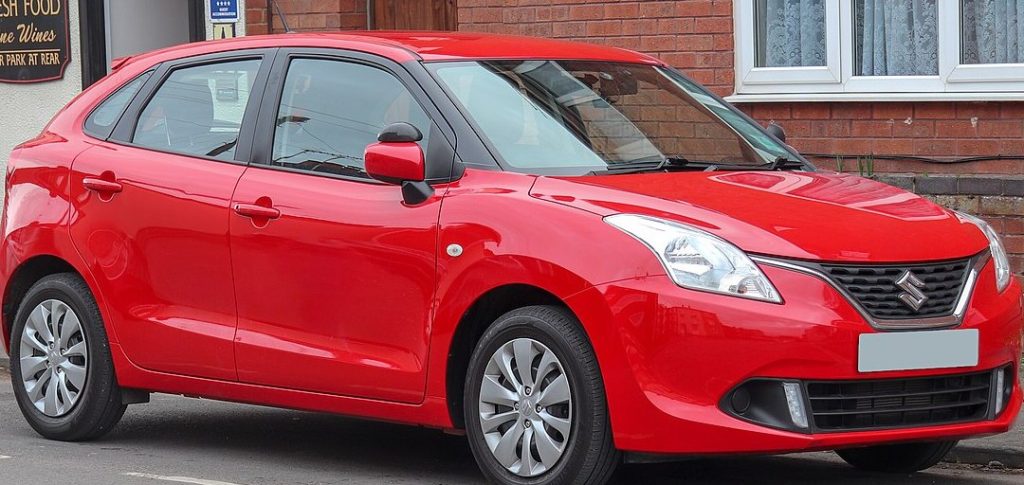
The Suzuki Baleno (EG series), launched in 1995, represented a significant step forward for Suzuki in the compact car segment. Produced from 1998 to 2002 in several markets, the 1.9 TD variant, powered by the XUD9 engine and producing 75 horsepower, occupied a specific niche within the Baleno lineup. This model was primarily aimed at buyers seeking fuel efficiency and practicality, offering a diesel-powered alternative to the gasoline engines available. The EG Baleno was built on Suzuki’s global platform, sharing components with other models of the era and representing a move towards more internationally competitive vehicles.
The 1.9 TD Baleno: Positioning and Overview
The 1.9 TD Baleno was positioned as the entry-level diesel option within the EG series. While Suzuki offered gasoline-powered Balenos with varying levels of equipment and performance, the 1.9 TD focused on providing economical transportation. It was a direct competitor to other small diesel sedans available in Europe and Asia, such as the Peugeot 306 HDi and the Renault 19 Diesel. Compared to the gasoline variants, the 1.9 TD prioritized fuel economy and low-end torque over outright acceleration. It was a popular choice for drivers covering long distances or those seeking a cost-effective vehicle for daily commuting.
Powertrain & Engine Architecture
The heart of the 1.9 TD Baleno is the XUD9 engine, a 1905cc inline four-cylinder diesel engine. This engine, originally developed by Peugeot and later licensed to Suzuki, is known for its robustness and relatively simple design. The XUD9 utilizes precombustion chamber injection, a system where fuel is injected into a small pre-chamber connected to the main combustion chamber. This design aids in smoother combustion and reduces engine noise compared to direct injection systems of the time. The engine features a single overhead camshaft (SOHC) valvetrain operating two valves per cylinder. The engine’s turbocharger significantly boosts power output, bringing it to 75 hp at 4600 rpm and 135 Nm (99.57 lb-ft) of torque at 2250 rpm. The engine oil capacity is 4.5 liters (4.76 US quarts), and the cooling system holds 8 liters (8.45 US quarts). The engine’s compression ratio is a high 21.5:1, typical for diesel engines.
Driving Characteristics
The driving experience in the 1.9 TD Baleno is characterized by its strong low-end torque and relatively relaxed nature. While not a particularly fast car – with a top speed of 160 km/h (99.42 mph) – it offers sufficient power for everyday driving situations. The five-speed manual transmission is well-matched to the engine’s characteristics, providing adequate gear spacing for both city and highway driving. The turbocharger provides a noticeable boost in power once the engine reaches around 2000 rpm, making overtaking maneuvers manageable. Compared to the gasoline-powered Balenos, the 1.9 TD feels heavier and less responsive, but it compensates with significantly better fuel economy. The weight-to-power ratio of 13.7 kg/hp and weight-to-torque ratio of 7.6 kg/Nm reflect this trade-off. The engine is known for being somewhat noisy, a common characteristic of older diesel engines, but it is generally reliable.
Equipment & Trim Levels
The 1.9 TD Baleno typically came with a fairly basic level of equipment, reflecting its position as an entry-level model. Standard features generally included power steering, central locking, and basic instrumentation. Interior upholstery was typically cloth, and the dashboard featured a functional, if somewhat spartan, design. Optional extras available for the 1.9 TD Baleno included air conditioning, power windows, and an upgraded audio system. Higher trim levels, if available in certain markets, might have added features such as alloy wheels and a sunroof. The focus was on providing a practical and affordable vehicle, rather than luxury or high-tech features.
Chassis & Braking
The Baleno’s chassis utilizes a front independent suspension with wishbone configuration, providing a comfortable ride quality. The rear suspension also employs a wishbone setup. The front brakes are ventilated discs, offering good stopping power, while the rear brakes are drums, a cost-saving measure common in this class of vehicle. Anti-lock braking system (ABS) was often included as standard equipment, enhancing safety. The steering system is a rack and pinion type with hydraulic power assistance, providing precise and responsive steering feel. The vehicle rides on 175/70 R13 tires mounted on 13-inch steel wheels. The relatively lightweight construction of the Baleno (kerb weight of 1030 kg / 2270.76 lbs) contributes to its decent handling characteristics.
Market Reception & Comparison
The 1.9 TD Baleno received generally positive reviews for its fuel efficiency and reliability. Critics praised the XUD9 engine for its durability and low running costs. However, some reviewers noted the engine’s lack of refinement and relatively slow acceleration. Compared to the gasoline-powered Balenos, the 1.9 TD offered significantly better fuel economy – around 9.1 l/100 km (25.8 US mpg) in urban conditions and 5.7 l/100 km (41.3 US mpg) on the highway. In terms of reliability, the XUD9 engine is known to be very robust, provided it is properly maintained. The Baleno’s overall build quality was also considered to be good for its price point. The 1.9 TD Baleno competed directly with other small diesel sedans, such as the Peugeot 306 HDi and the Renault 19 Diesel, offering a comparable level of performance and economy.
Technical Specifications
| Brand | Suzuki |
| Model | Baleno |
| Generation | Baleno (EG, 1995) |
| Type (Engine) | 1.9 TD (75 Hp) |
| Start of production | 1998 year |
| End of production | 2002 year |
| Body type | Sedan |
| Seats | 5 |
| Doors | 4 |
| Fuel consumption (urban) | 9.1 l/100 km (25.8 US mpg) |
| Fuel consumption (extra urban) | 5.7 l/100 km (41.3 US mpg) |
| Fuel Type | Diesel |
| Maximum speed | 160 km/h (99.42 mph) |
| Engine Model/Code | XUD9 |
| Engine displacement | 1905 cm3 (116.25 cu. in.) |
| Number of cylinders | 4 |
| Power | 75 Hp @ 4600 rpm |
| Torque | 135 Nm @ 2250 rpm (99.57 lb.-ft. @ 2250 rpm) |
| Kerb Weight | 1030 kg (2270.76 lbs) |
| Max. weight | 1520 kg (3351.03 lbs) |
| Trunk (boot) space – minimum | 210 l (7.42 cu. ft.) |
| Trunk (boot) space – maximum | 495 l (17.48 cu. ft.) |
| Fuel tank capacity | 51 l (13.47 US gal) |
| Length | 4195 mm (165.16 in) |
| Width | 1690 mm (66.54 in) |
| Height | 1390 mm (54.72 in) |
| Wheelbase | 2480 mm (97.64 in) |
| Number of gears | 5 |
| Gearbox type | Manual transmission |
Legacy
The 1.9 TD Baleno, while not a particularly glamorous or high-performance vehicle, has earned a reputation for being a reliable and economical workhorse. The XUD9 engine, in particular, is highly regarded for its durability and relatively simple maintenance requirements. Today, these vehicles are increasingly sought after by enthusiasts and budget-conscious buyers looking for a dependable and affordable car. Parts availability can be a challenge in some markets, but the engine’s robust design means that it can often withstand significant mileage with proper care. The 1.9 TD Baleno represents a practical and sensible choice for those prioritizing fuel efficiency and reliability over outright performance, and it remains a viable option in the used car market.