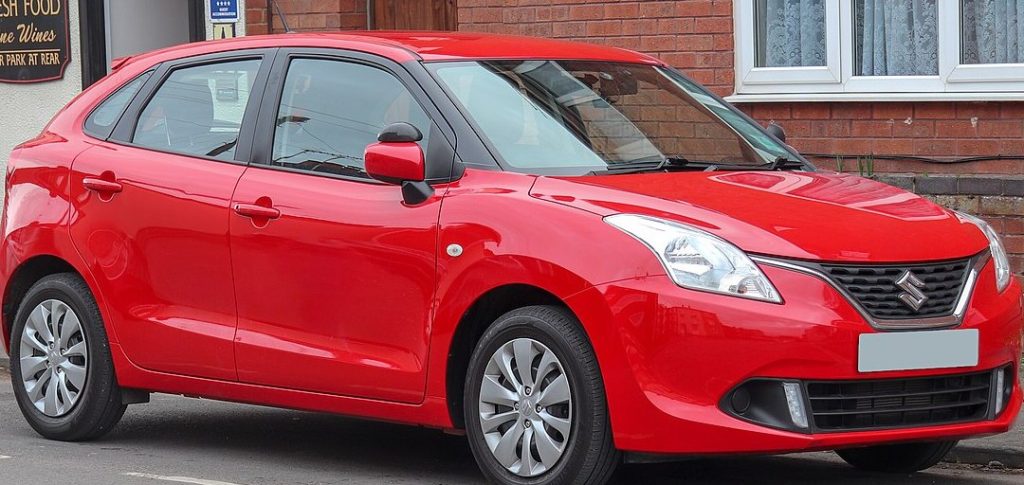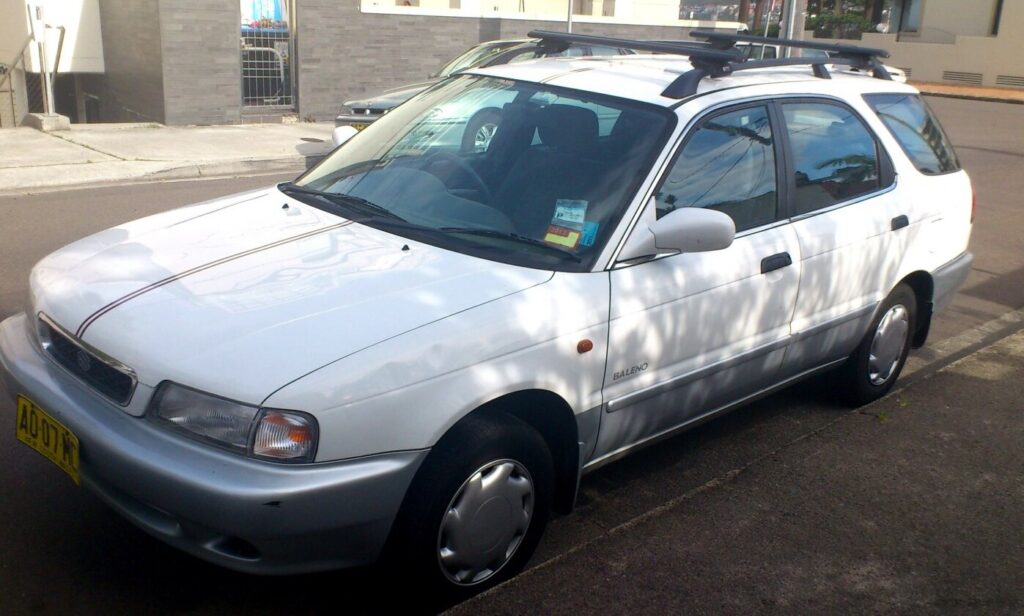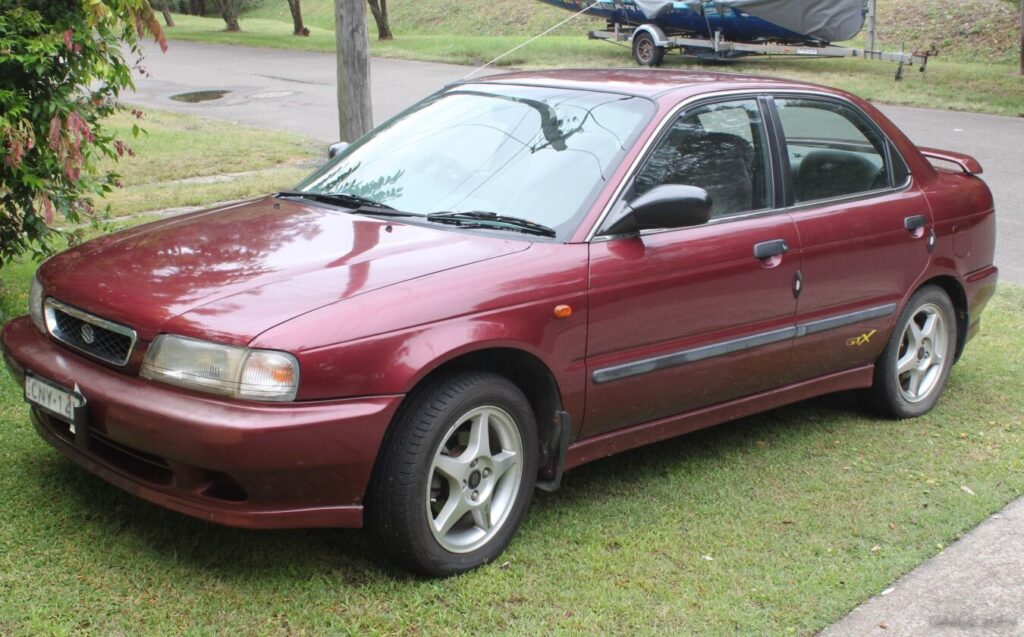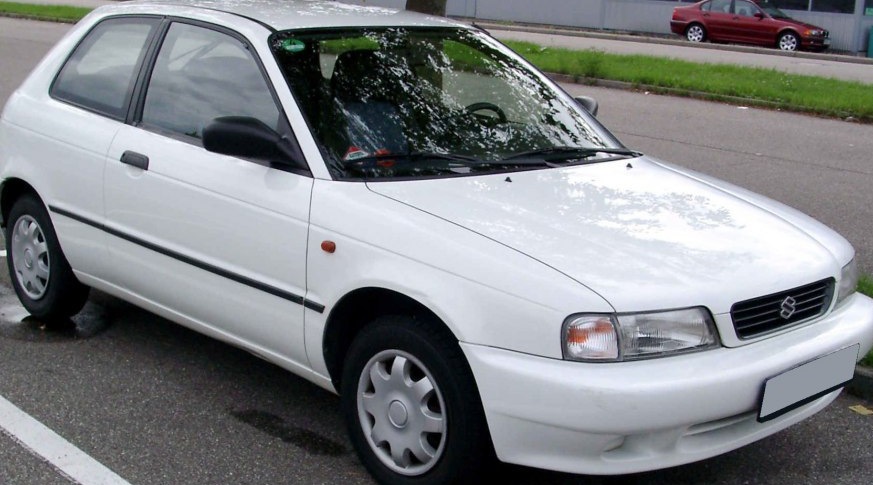
The Suzuki Baleno Hatchback (EG series), launched in 1995, represented a significant step forward for Suzuki in the compact hatchback segment. This generation Baleno, built until 2002, offered a blend of affordability, practicality, and a surprisingly modern design for its time. Within the Baleno range, the 1.3 i 16V variant, producing 85 horsepower, served as a core model, positioned as the entry-level to mid-range offering. It provided a balance between fuel efficiency and acceptable performance, targeting budget-conscious buyers and those prioritizing economy over outright speed. The EG Baleno was built on Suzuki’s platform, offering a relatively spacious interior for its class and a decent level of standard equipment.
Suzuki Baleno 1.3 i 16V (EG, 1995-2002): An Overview
The 1.3 i 16V Baleno was a key component of Suzuki’s strategy to compete in the increasingly competitive European and Asian hatchback markets. It was designed to appeal to a broad audience, including first-time car buyers, small families, and individuals seeking a reliable and economical city car. The “EG” designation refers to the specific chassis code for this generation of Baleno hatchback. This model was available primarily as a three-door hatchback, though five-door versions were also offered in some markets. The 1.3L engine was chosen for its fuel efficiency and relatively low emissions, making it a popular choice in regions with high fuel taxes.
Powertrain & Engine Architecture
At the heart of the Baleno 1.3 i 16V lies the G13BB engine, a 1.3-liter (1298 cc) inline-four cylinder gasoline engine. This engine featured a 16-valve dual overhead camshaft (DOHC) valvetrain, which contributed to its relatively high power output for its displacement. The G13BB utilized multi-port fuel injection, a common technology in the mid-1990s, to deliver fuel directly into the intake ports, optimizing combustion efficiency. The engine’s bore and stroke measured 74 mm x 75.5 mm, resulting in a compression ratio of 9.5:1. The engine produced 85 hp at 6000 rpm and 103 Nm (75.97 lb-ft) of torque at 3000 rpm. While not a powerhouse, the engine was known for its smoothness and willingness to rev.
The Baleno 1.3 i 16V was typically paired with a five-speed manual transmission. However, a four-speed automatic transmission was also available, though less common. The automatic transmission was designed to provide convenient operation in urban environments, but it came at the cost of some performance and fuel economy. The automatic’s gear ratios were optimized for smooth acceleration and comfortable cruising, but it lacked the responsiveness of the manual gearbox. The automatic transmission was a conventional hydraulic unit, lacking the electronic controls found in more modern automatics.
Driving Characteristics
The driving experience in the Baleno 1.3 i 16V was characterized by its light steering, comfortable ride, and adequate, if not exhilarating, performance. Acceleration from 0 to 62 mph (0-100 km/h) took approximately 12.5 seconds, and the top speed was around 108.74 mph (175 km/h). The manual transmission version offered a more engaging driving experience, allowing drivers to fully utilize the engine’s power band. The automatic transmission, while convenient, resulted in slightly slower acceleration and a less responsive feel. The suspension, consisting of wishbone setups front and rear, provided a good balance between ride comfort and handling. The car felt stable and predictable in corners, but it wasn’t designed for aggressive driving. The weight-to-power ratio of 10.5 kg/hp indicated that the car wasn’t particularly powerful, but it was also relatively lightweight, contributing to its decent fuel economy.
Equipment & Trim Levels
The Baleno 1.3 i 16V typically came equipped with a reasonable level of standard features for its price point. These included power steering, central locking, electric front windows, and an adjustable steering column. Interior upholstery was typically cloth, with a simple and functional dashboard layout. Optional extras included air conditioning, a radio/cassette player, and alloy wheels. Higher trim levels, available in some markets, added features such as upgraded upholstery, a sunroof, and power mirrors. The interior was designed with practicality in mind, offering ample space for passengers and luggage. The trunk space ranged from 210 liters (7.42 cu. ft.) with the rear seats up to 495 liters (17.48 cu. ft.) with the rear seats folded down.
Chassis & Braking
The Baleno 1.3 i 16V featured a front-wheel-drive layout and a relatively simple chassis design. The front suspension utilized a wishbone configuration, while the rear suspension also employed a wishbone setup. The brakes consisted of ventilated discs at the front and drum brakes at the rear. Anti-lock braking system (ABS) was available as an option, enhancing safety by preventing wheel lockup during hard braking. The steering system was a rack and pinion type with hydraulic power assistance, providing light and precise steering feel. The car rode on 175/70 R13 tires mounted on 13-inch steel wheels, although alloy wheels were available as an optional upgrade.
Market Reception & Comparison
The Suzuki Baleno 1.3 i 16V was generally well-received by automotive critics as a practical and affordable hatchback. It was praised for its fuel efficiency, comfortable ride, and spacious interior. However, it was also criticized for its relatively modest performance and somewhat basic interior trim. Compared to other hatchbacks in its class, such as the Ford Fiesta and the Opel/Vauxhall Corsa, the Baleno offered a competitive level of equipment and a slightly more spacious interior. The 1.6L and higher-powered variants of the Baleno offered significantly improved performance, but at a higher price point. The 1.3L model was often seen as a sensible choice for buyers prioritizing economy and practicality over outright speed. Fuel consumption figures were respectable, averaging around 8.6 l/100 km (27.4 US mpg) in urban conditions and 5.8 l/100 km (40.6 US mpg) on the open road.
Technical Specifications
| Engine Model/Code | G13BB |
| Engine Displacement | 1298 cm3 (79.21 cu. in.) |
| Number of Cylinders | 4, Inline |
| Power | 85 Hp @ 6000 rpm |
| Torque | 103 Nm @ 3000 rpm (75.97 lb.-ft. @ 3000 rpm) |
| Fuel Injection System | Multi-port manifold injection |
| Valvetrain | DOHC |
| Compression Ratio | 9.5:1 |
| Kerb Weight | 890 kg (1962.11 lbs.) |
| Max. Weight | 1320 kg (2910.1 lbs.) |
| Fuel Tank Capacity | 51 l (13.47 US gal | 11.22 UK gal) |
| Length | 3870 mm (152.36 in.) |
| Width | 1680 mm (66.14 in.) |
| Height | 1390 mm (54.72 in.) |
| Wheelbase | 2480 mm (97.64 in.) |
| Transmission | 5-speed manual or 4-speed automatic |
| Brakes (Front) | Ventilated Discs |
| Brakes (Rear) | Drum |
Legacy
The Suzuki Baleno 1.3 i 16V, while not a particularly iconic or collectible car, has proven to be a reliable and durable vehicle. The G13BB engine is known for its longevity and relatively low maintenance costs. In the used car market, these Balenos are often sought after by buyers looking for an affordable and dependable city car. While age and mileage inevitably take their toll, many examples are still on the road today, testament to their robust construction. The automatic transmission, while less desirable than the manual, remains functional in many vehicles. Overall, the Baleno 1.3 i 16V represents a solid and practical choice for those seeking a budget-friendly and reliable hatchback.