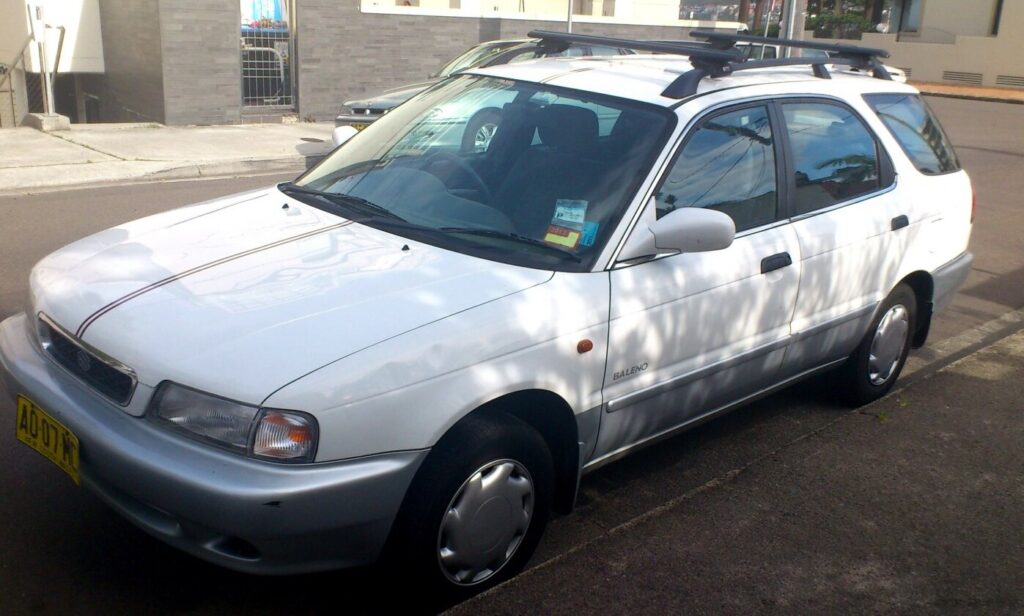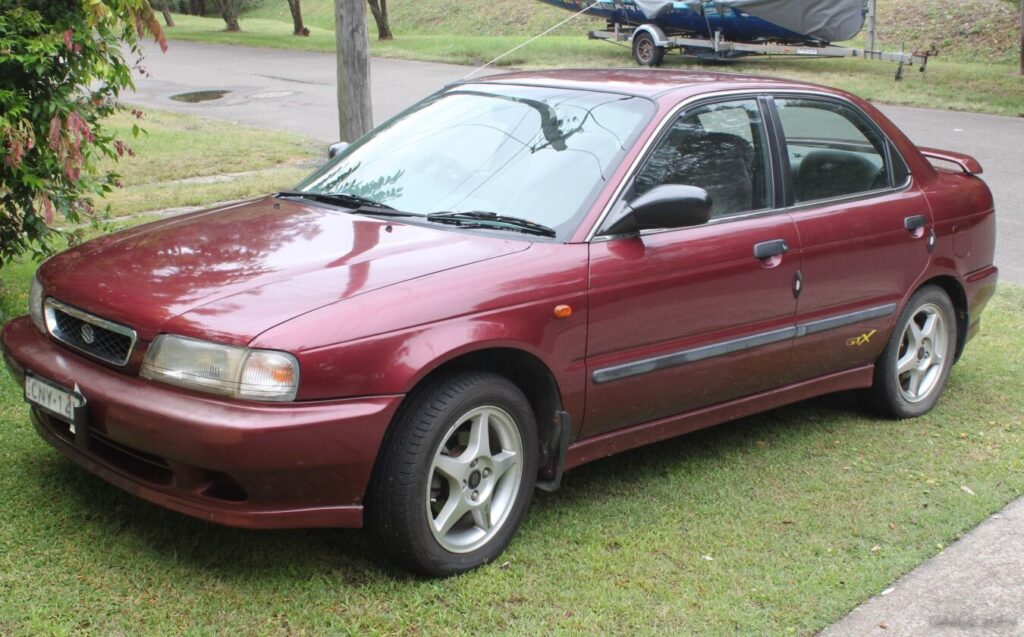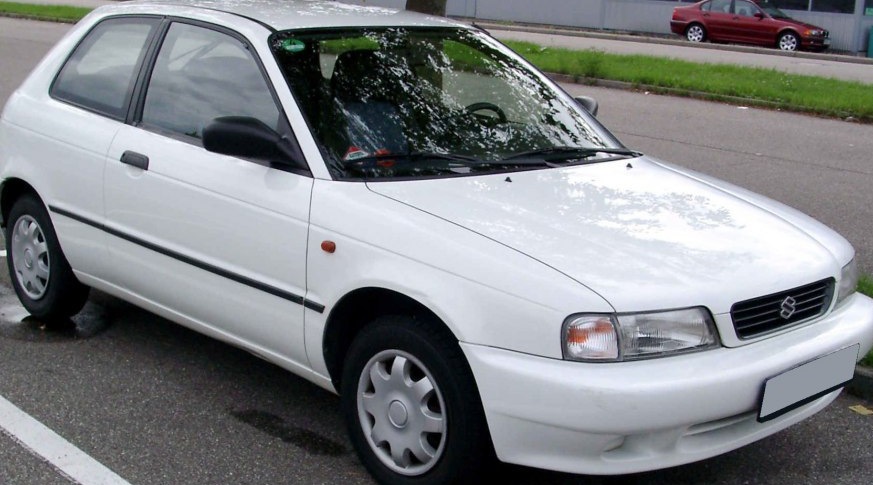
The Suzuki Baleno Hatchback (EG series), launched in 1995, represented a significant step forward for Suzuki in the compact car segment. This generation Baleno, sold globally including in North America (where it was sometimes rebadged), offered a blend of affordability, practicality, and a surprisingly sophisticated engineering package. The 1.6 i 16V (98 hp) Automatic variant occupied a mid-range position within the Baleno lineup, offering a more comfortable and convenient driving experience than the base models, while remaining more accessible than the sportier or higher-trim level options. Production of the EG series Baleno continued through 2002, with this particular engine and transmission combination being a popular choice throughout its lifespan.
The 1.6L 16V Automatic Baleno: Positioning and Overview
The 1.6L 16V Automatic Baleno was designed to appeal to buyers seeking a practical and reliable hatchback with the ease of an automatic transmission. It wasn’t positioned as a performance model; rather, it aimed for a balance between fuel efficiency, reasonable power, and everyday usability. This made it a popular choice for urban commuters, small families, and drivers who preferred the convenience of an automatic gearbox. Compared to the base 1.3L engine options, the 1.6L provided a noticeable increase in power and torque, improving acceleration and making highway driving more comfortable. It sat below the more powerful (and often manual transmission-equipped) variants, offering a more economical and accessible entry point into the Baleno range.
Powertrain & Engine Architecture
At the heart of the 1.6 i 16V Automatic Baleno lies the G16B engine, a 1.6-liter (1590 cc) inline-four cylinder gasoline engine. This engine featured a single overhead camshaft (SOHC) valvetrain with four valves per cylinder (16V), contributing to its relatively high output for its displacement. The G16B utilized multi-port fuel injection, a common technology in the mid-1990s, which improved fuel atomization and combustion efficiency. The engine produced 98 horsepower at 6000 rpm and 127 Nm (93.67 lb-ft) of torque at 3200 rpm. The compression ratio was set at 9.5:1, a typical value for naturally aspirated engines of this era.
The engine was mated to a four-speed automatic transmission. While not the most modern transmission by today’s standards, it provided smooth and reliable gear changes, enhancing the driving experience for those who preferred not to operate a manual gearbox. The transmission was electronically controlled, offering adaptive shifting based on driving conditions. The automatic transmission was designed for durability and ease of use, prioritizing smooth operation over outright performance.
Driving Characteristics
The driving experience in the 1.6L Automatic Baleno was characterized by its smooth and predictable nature. Acceleration from a standstill to 60 mph took approximately 10.6 seconds, and it could reach a top speed of 175 km/h (108.74 mph). While not particularly quick, the engine provided sufficient power for everyday driving situations, including merging onto highways and overtaking slower vehicles. The automatic transmission contributed to a relaxed driving experience, particularly in urban traffic. Compared to the manual transmission versions of the 1.6L, the automatic version sacrificed some responsiveness and fuel economy, but gained in convenience. The gear ratios were tuned for a balance between acceleration and fuel efficiency, with a relatively tall final drive to improve highway cruising.
Equipment & Trim Levels
The standard equipment level for the 1.6 i 16V Automatic Baleno varied depending on the specific market. However, generally, it included features such as power steering, central locking, electric windows, and an AM/FM radio. Interior upholstery was typically cloth, with a relatively simple and functional dashboard layout. Optional extras often included air conditioning, a sunroof, and upgraded audio systems. Higher trim levels might have added features like alloy wheels, body-colored bumpers, and more luxurious interior trim. The Baleno prioritized practicality and value, so even the base models were reasonably well-equipped.
Chassis & Braking
The Baleno Hatchback utilized a front-engine, front-wheel-drive layout. Suspension consisted of wishbone suspension at both the front and rear, providing a comfortable ride quality. The front brakes were ventilated discs, offering good stopping power, while the rear brakes were drums. This configuration was common for vehicles in this price range during the 1990s. Anti-lock Braking System (ABS) was often included as standard equipment or as an optional extra, enhancing safety. The steering system was a rack and pinion setup with hydraulic power assistance, providing precise and responsive steering feel. The tires were typically 175/70 R13 H specification.
Market Reception & Comparison
The Suzuki Baleno Hatchback, and specifically the 1.6L Automatic variant, received generally positive reviews from automotive critics. It was praised for its reliability, affordability, and practical interior space. Critics noted that the 1.6L engine provided a noticeable improvement in performance over the smaller engine options, making it a more enjoyable car to drive, especially on longer journeys. However, some reviewers pointed out that the automatic transmission could feel somewhat sluggish compared to the manual gearbox. In terms of fuel economy, the 1.6L Automatic Baleno achieved approximately 7 l/100 km (33.6 US mpg) combined, which was competitive for its class at the time. Compared to other hatchbacks in the same segment, such as the Toyota Corolla and Honda Civic, the Baleno offered a compelling value proposition, often at a lower price point.
Technical Specifications
| Brand | Suzuki |
| Model | Baleno |
| Generation | Baleno Hatchback (EG, 1995) |
| Type | 1.6 i 16V (98 Hp) Automatic |
| Start of production | 1995 |
| End of production | 2002 |
| Engine Type | Internal Combustion engine |
| Body Type | Hatchback |
| Seats | 5 |
| Doors | 3 |
| Fuel Consumption (Urban) | 8.9 l/100 km (26.4 US mpg) |
| Fuel Consumption (Extra Urban) | 5.9 l/100 km (39.9 US mpg) |
| Fuel Consumption (Combined) | 7 l/100 km (33.6 US mpg) |
| Fuel Type | Petrol (Gasoline) |
| Acceleration 0-100 km/h | 11.2 sec |
| Acceleration 0-60 mph | 10.6 sec |
| Maximum Speed | 175 km/h (108.74 mph) |
| Kerb Weight | 920 kg (2028.25 lbs) |
| Max. Weight | 1350 kg (2976.24 lbs) |
| Engine Displacement | 1590 cm3 (97.03 cu. in.) |
| Power | 98 Hp @ 6000 rpm |
| Torque | 127 Nm @ 3200 rpm (93.67 lb.-ft. @ 3200 rpm) |
| Engine Code | G16B |
| Number of Cylinders | 4 |
| Fuel Injection System | Multi-port manifold injection |
| Transmission | 4 gears, automatic |
| Front Brakes | Ventilated discs |
| Rear Brakes | Drum |
| Tire Size | 175/70 R13 H |
Legacy
The Suzuki Baleno Hatchback (EG) has developed a reputation for being a reliable and affordable used car. The 1.6L engine, while not particularly powerful, is known for its durability and relatively low maintenance costs. The automatic transmission, if properly maintained, can provide years of trouble-free service. Today, these Balenos are often sought after by budget-conscious buyers and those looking for a simple and dependable vehicle. Parts availability can be a concern in some markets, but generally, components are still obtainable. The Baleno’s straightforward engineering and robust construction have contributed to its longevity, making it a viable option for those seeking a classic and practical hatchback.